A fish lying on its side needs prompt attention if it cannot right itself, is breathing hard or has suddenly changed behavior. Its position alone cannot tell you whether the problem is water quality, injury, a buoyancy disorder or another illness.
Observe breathing and movement before handling it. A fish resting briefly and then swimming normally is a different situation from one repeatedly rolling over. Do not dismiss persistent loss of balance as laziness, boredom or old age.
First checks: breathing, balance and the other fish
| What you notice | What to do next |
|---|---|
| Several fish suddenly distressed, gasping or losing balance | Check equipment, improve aeration and test the water immediately; seek urgent help |
| One fish cannot stay upright or reach the surface | Check water conditions and contact a fish veterinarian promptly |
| Visible injury, severe swelling, raised scales or bleeding | Arrange urgent veterinary assessment and prevent further injury |
| Brief resting followed by normal swimming, breathing and appetite | Compare with the species’ usual behavior and monitor for recurrence |
If your fish remains upright but spends time on the substrate, our bottom-sitting fish guide addresses that broader situation. This page focuses on sideways posture and loss of balance.
What to do immediately
- Watch without chasing. Record a short video showing the whole fish, its breathing and attempts to swim. Check whether tankmates are also affected.
- Check equipment. Confirm the filter and air supply are operating. Read a thermometer rather than trusting the heater dial. Note recent power interruptions or maintenance.
- Improve gas exchange if breathing is difficult. Add aeration or increase surface movement without pushing the weakened fish around. Turn off supplemental CO2 while investigating distress. See our oxygenation guide.
- Test and record the water. Check ammonia, nitrite, nitrate, pH and temperature; include salinity for marine fish. Record actual numbers and the test units.
- Act on the findings. Correct an identified water or equipment problem while arranging professional advice. Avoid adding several treatments at once.
The Merck Veterinary Manual’s environmental-hazards table documents that oxygen shortage, temperature problems and toxic exposures can produce serious illness. Similar visible signs can have different causes.
Water problems and careful water changes
Ammonia and nitrite should be zero in an established aquarium. A clear-looking tank can still have harmful chemistry. Check for a failed biofilter, excess food, a dead animal or untreated replacement water, especially when several fish deteriorate together.
When a normally maintained tank has an ammonia or nitrite problem, a partial water change with properly dechlorinated, temperature-matched water can help. Retest afterward; also check the source water. For marine fish, match salinity. Do not scrub or replace all biological filter media as a routine response.
An important exception is a neglected aquarium with very low pH and high ammonia. Raising the pH abruptly can make the ammonia more toxic. Seek urgent expert guidance for controlled correction rather than doing a sudden complete refill. Merck explains this distinction in its new- and old-tank syndrome guidance.
Does lying sideways mean swim bladder disease?
It can indicate a buoyancy problem, but it is not a diagnosis. A fish may float uncontrollably, sink or struggle to maintain orientation. Infection, injury, structural changes and organ problems are among the possibilities; overfeeding is not the explanation for every case.
Aquatic veterinarian Jessie Sanders’ buoyancy-disorder guidance describes checking the environment first and using imaging when needed to identify the cause. Persistent problems need an individual plan. Do not attach homemade floats or weights, squeeze the abdomen or attempt to puncture a swim bladder.
Some affected fish can live with appropriate support, so sideways swimming alone does not establish that a fish is dying. Equally, continuing to eat does not rule out a serious problem.
Injury, illness and changes after maintenance
Tell the veterinarian about recent netting, transport, jumping, aggression, new livestock and any chemicals used nearby. Include the timing of a water change or new product: a sudden change across several fish makes the shared environment especially important to investigate.
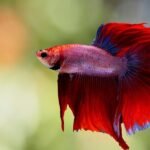
Photograph sores, damaged fins, swelling or spots without repeatedly catching the fish. These are clues, not reliable instructions to choose an antibiotic or parasite treatment yourself. For bettas, our betta health guide explains common signs and appropriate next steps.
Support the fish while arranging help
- Prevent harassment. Separate an aggressor or use a suitable prepared hospital setup if needed. An unfiltered bowl can introduce another water-quality problem.
- Keep conditions steady. Use the temperature appropriate for the species. Do not raise the tank to 82°F as a universal treatment.
- Reduce physical strain. Keep useful circulation and aeration while providing a calm area away from a strong outlet.
- Check food access. If the fish can eat, offer its appropriate food within reach and remove leftovers. Ask for feeding advice if it cannot feed normally; do not force-feed.
Why medication is not the first purchase
Sideways posture does not identify a drug-responsive disease. Salt, essential-oil remedies, antibiotics and antiparasitic products are not interchangeable, and combinations can complicate care. There is no universal pea, fasting or medication protocol for every species and cause.
Use treatment selected for the diagnosed problem, with species compatibility, tank volume and label instructions checked. Merck’s environmental-disease guidance emphasizes how water chemistry itself can cause severe illness. A medication will not repair a failed filter or remove the need to investigate the water.
When to contact a veterinarian
Seek help urgently for persistent inability to stay upright, labored breathing, rapid deterioration, serious injury or multiple affected fish. Do not wait several days for another symptom to appear. Contact a veterinarian experienced with fish; the World Aquatic Veterinary Medical Association can help you look for aquatic veterinary resources.
Have the species, tank size in gallons, temperature in °F, water-test results, symptom timeline, video and names of any treatments ready. Ask the clinic how to transport the fish before moving it. If recovery is uncertain, discuss prognosis and welfare with the veterinarian rather than assuming that a failed home remedy means there is no hope.