Best Fountain Pumps: 5 Current Options Compared

Top [2021] 10 Best Fountain Pumps: Solar, Submersible Water Pumps

The right fountain pump is selected from the flow required at the fountain’s actual lift height—not from its zero-head maximum flow. A tiny solar birdbath, an indoor ornament, a pond fountain and a waterfall all need different pumps.

Submersible pumps for pond fountains and outdoor water features
Fountain pumps range from compact decorative units to high-flow pumps for ponds and waterfalls.

Affiliate disclosure: Aquarium Hunter may earn a commission from qualifying Amazon purchases, at no extra cost to you. Amazon links below are used only for exact products that were available when this guide was reviewed.

Quick comparison

Pump Best suited to Main limitation Buying option
Solatec 1.4W Solar Fountain Small sunny birdbaths and bowls Output changes with direct sunlight; no battery storage Check on Amazon
Sicce Syncra Silent 1.5 Indoor fountains and compact water features Use the correct regional voltage and installation method Read review
Aquascape Ultra 1100 Decorative fountains, small ponds and filters Flow falls as lift and pipe resistance rise Read review
OASE Aquarius Universal Purpose-designed fountain and statuary systems Select the exact regional model from its performance curve Read review
Alpine PAL3100 Large ponds, waterfalls and high-flow fountains Oversized for small bowls and compact ornaments Check on Amazon

How to size a fountain pump

Start with the desired effect

A gentle trickle needs far less flow than a wide waterfall or tall jet. If a fountain head, filter or waterfall spillway specifies a recommended flow, use that as the starting point.

Measure total dynamic head

Vertical head is the height from the operating water surface to the outlet. Pipe length, narrow hose, elbows, valves, filters and fountain nozzles add resistance. Check the manufacturer’s flow chart at the expected head instead of comparing maximum GPH figures measured with no lift.

Match the plumbing

Undersized hose can waste pump capacity and electricity. Use the recommended internal diameter, keep runs direct and avoid unnecessary fittings. Confirm that the supplied outlet and adapters match the planned hose.

Allow adjustment

A valve or controllable pump makes final tuning easier. Throttling the discharge side of a suitable centrifugal pump is normally preferable to restricting its intake, but follow the product manual.

Solatec 1.4W Solar Fountain Pump

Best for: a small birdbath or decorative bowl in strong direct sun.

This self-contained solar unit is simple: place the panel where it receives full sun, submerge the pump and choose a nozzle. It requires no mains cable across the garden and its exact Amazon listing remains available.

Watch for: the pump responds directly to sunlight, so clouds, shadows and a poorly oriented panel reduce or stop the spray. It is a decorative circulation device, not a pond filter or dependable source of aeration for fish. Keep the intake submerged and clean mineral deposits and debris regularly.

Check the exact Solatec 1.4W Solar Fountain on Amazon

Sicce Syncra Silent 1.5

Best for: indoor fountains and compact submerged or correctly plumbed applications where quiet operation matters.

Sicce’s Syncra Silent range is manufacturer-supported with published flow, head, wattage and spare-parts information. The 1.5 model provides a useful middle point for compact water features; the 120V specification lists a maximum of 357 GPH and six feet of head.

Watch for: maximum flow and maximum head do not occur together. Select the regional voltage and cord version, use only an installation method permitted by the manual and never run the pump dry.

Official Sicce Syncra Silent instructions and specifications

Aquascape Ultra 1100 Water Pump

Best for: decorative fountains, small ponds, external filters and modest water features needing flexible fittings.

Aquascape publishes a maximum flow of 1,110 GPH and maximum head of 12 feet for the Ultra 1100, plus a model-specific performance chart. The oil-free magnetic-drive design, prefilter cage, stable base and included multi-hose fittings make it more versatile than a generic bare pump.

Watch for: choose from the performance curve at the real operating head. The maximum numbers are boundaries, not a promise of 1,110 GPH at 12 feet. Clean the prefilter cage before restricted flow causes poor performance.

Official Aquascape Ultra 1100 specifications

OASE Aquarius Universal

Best for: statuary, indoor fountains and larger decorative systems where a dedicated fountain-pump family is useful.

The Aquarius Universal family spans compact classic models and larger premium pumps. OASE publishes model-specific flow and head information, hose connections and installation options. That makes it possible to size a pump from the actual fountain rather than a marketplace headline.

Watch for: product names, voltage and specifications vary by region. Choose the exact local model and follow its manual for submerged or dry installation, winter protection and electrical requirements.

Official OASE Aquarius Universal example and specifications

Alpine PAL3100 Cyclone Pump

Best for: a large pond waterfall, substantial fountain or other high-flow water feature.

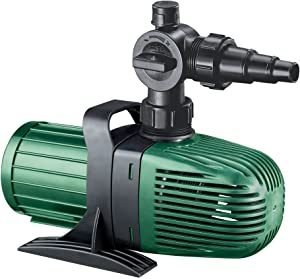
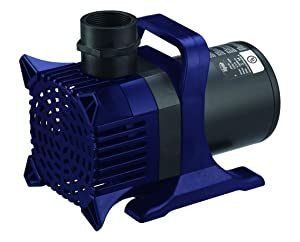
The current exact Amazon listing identifies the PAL3100 as a 3,100 GPH submersible pump with a 21.5-foot maximum lift and long outdoor cord. Its high capacity makes it a different class from the compact solar and indoor pumps above.

Watch for: do not install it merely because a high GPH figure appears impressive. Confirm the required flow at operating head, plumbing diameter, intake protection, electrical load and maintenance access. Excess current can disturb fish and empty a small reservoir rapidly if a hose disconnects.

Check the exact Alpine PAL3100 on Amazon

Solar, magnetic-drive or large pond pump?

  • Direct solar: easiest for a small decorative bowl, but output depends on sunlight and usually stops in shade.
  • Compact magnetic-drive: quiet, adjustable and efficient for indoor ornaments and small features.
  • Dedicated fountain pump: provides published performance options for statuary and engineered nozzles.
  • Large pond pump: designed for high flow and lift, but needs appropriate plumbing, intake protection and electrical installation.

Installation and electrical safety

  • Use equipment rated for the intended indoor or outdoor location and local voltage.
  • Connect mains-powered outdoor equipment through appropriate ground-fault protection and a weatherproof installation that complies with local electrical rules.
  • Create drip loops and keep plugs, controllers and connections out of splash and flood zones.
  • Do not lift a pump by its power cord.
  • Unplug the pump before placing hands in the water or opening its housing.
  • Keep the intake submerged and unobstructed unless the manual explicitly supports dry installation.
  • Test all hose clamps and unions; plan where water will go if a hose separates.
  • Protect wildlife and fish from an exposed intake with the manufacturer’s cage or suitable prefilter.

Maintenance

Disconnect power, remove leaves and string algae from the intake, and clean mineral deposits from the impeller and fountain nozzles using the manual’s method. Restricted intakes reduce output and can increase wear. During freezing conditions, follow the manufacturer’s storage or frost-protection instructions rather than assuming every submerged pump can remain outdoors.

Frequently asked questions

How many GPH does my fountain need?

There is no universal turnover rule for decorative fountains. Start with the nozzle, spillway or desired effect, then use the pump curve at the actual head and plumbing resistance.

Can a fountain pump oxygenate a fish pond?

Surface movement can improve gas exchange, but a decorative fountain is not automatically adequate life support. Fish load, temperature, pond shape, circulation and backup aeration all matter.

Can I use a solar pump for fish?

It can provide supplemental movement in sun, but a direct-solar pump may stop with clouds or darkness. Do not rely on it as the only circulation or aeration for stocked water.

Why is my pump weaker than advertised?

Common causes include vertical lift, narrow or long hose, elbows, a clogged intake, mineral buildup, an undersized solar panel exposure or comparing real flow with the zero-head maximum.

How we selected these pumps

We prioritized distinct use cases, current manufacturer documentation, published performance data, electrical suitability and maintenance access. We removed unavailable AMYER and KEDSUM offers, the broken Jebao listing, rebranded generic pumps and the old affiliate link containing an incorrect tracking tag. No temporary prices or invented ratings are used.

References and product information

Best Goldfish Food: 5 Current Staple Diets

The best goldfish food is a complete diet that matches the fish’s size, feeding position and water temperature while producing minimal waste. Pellets, granules, flakes and gel foods can all work; consistent portions, variety and water quality matter more than promises of rapid growth or instant color.

Healthy goldfish ready for a measured feeding
Feed small, controlled portions and remove leftovers before they degrade water quality.
Quick recommendation: Fluval Bug Bites Goldfish Formula is the best convenient staple here. Repashy Super Gold is the most flexible option for fancy goldfish when you are comfortable preparing and storing gel food.

Quick comparison

Food Best use Format Buying option
Fluval Bug Bites Everyday staple Slow-sinking granules Check on Amazon
Repashy Super Gold Fancy goldfish Prepared gel Check on Amazon
NorthFin Goldfish Dense slow-sinking food 2 mm or 3 mm pellets Check on Amazon
New Life Spectrum Small sinking pellet Pellets Check on Amazon
TetraFin Goldfish Small fish Flakes Check on Amazon

Choose a size the fish can swallow easily and check the current package for formula and feeding changes.

1. Fluval Bug Bites Goldfish Formula

Best for: a convenient complete daily food.

Bug Bites Goldfish Granules use black soldier fly larvae as a leading ingredient and sink slowly, which suits many fancy goldfish that feed below the surface. Fluval lists a 1.4–2.0 mm granule and a fiber-enriched formula. The pellet version is better for larger fish, while flakes suit small mouths.

Check Bug Bites on Amazon   Manufacturer details

2. Repashy Super Gold

Best for: adjustable soft portions and variety.

Super Gold powder is mixed with boiling water to form a soft gel. Repashy directs users to mix one part powder with two to three parts water and store prepared gel for up to two weeks refrigerated or six months frozen. Cut it to the correct size, prepare it hygienically and remove uneaten pieces.

Check Repashy Super Gold on Amazon   Preparation instructions

3. NorthFin Goldfish Formula

Best for: a compact slow-sinking pellet.

NorthFin offers 2 mm and 3 mm slow-sinking pellets and lists 36% minimum crude protein and 5% minimum crude fat. Choose the smaller size for young or small fancy goldfish and ensure every fish gets access.

Check NorthFin on Amazon   Manufacturer analysis

4. New Life Spectrum Goldfish Formula

Best for: a small sinking everyday pellet.

Sinking food suits goldfish that readily forage in midwater or near the bottom. It can reduce frantic surface gulping, although buoyancy disorders have many causes and are not cured simply by changing pellet direction. Persistent floating, rolling, swelling or appetite changes require water testing and veterinary advice.

Check New Life Spectrum on Amazon

5. TetraFin Goldfish Flakes

Best for: small fish and easy portioning.

Flakes are easy to crush and spread across the surface but become soggy and disperse quickly. Feed a small pinch at a time, keep wet fingers out of the container and replace food that smells stale or has absorbed moisture.

Check TetraFin on Amazon

How much should goldfish eat?

Package instructions are a starting point, not permission to feed until fish stop begging. Offer a small measured amount, watch every fish and remove leftovers. Adjust for fish size, number, body condition, activity, water temperature and food density. Weighing a weekly ration is more repeatable than using pinches.

Outdoor pond fish require temperature-specific feeding decisions. Food may need to be reduced or stopped in cold conditions according to the diet manufacturer’s directions and fish behavior.

Variety, growth and color

A complete food should remain the base. Suitable extras can include blanched leafy greens, shelled cooked peas in modest portions and appropriately sourced frozen foods. Peas are not a universal medical treatment. Avoid bread, crackers, seasoned food and wild prey exposed to pesticides or parasites.

Healthy growth depends on genetics, space, water quality, temperature and balanced nutrition. Carotenoid ingredients can support natural coloration but cannot create pigment the fish does not genetically possess.

Feed without polluting the aquarium

  • Test ammonia, nitrite and nitrate routinely.
  • Use several feeding locations when one fish dominates.
  • Remove gel, vegetables and pellets before they decay.
  • Keep biological filter media wet and never replace it all during cleaning.
  • Store food sealed, cool and dry; buy a size that will be used while fresh.

Frequently asked questions

Are sinking pellets better than flakes?

Neither is universally better. Sinking food suits many goldfish, while flakes work well for small mouths. Size, freshness and quantity matter most.

Should pellets be soaked?

Follow the label. Brief wetting may soften food, but prolonged soaking can leach nutrients. Choose a smaller pellet instead of routinely soaking oversized food.

Why is my goldfish always hungry?

Goldfish are persistent foragers and commonly beg. Appetite alone is not a safe portion guide; use measured food and monitor body condition and water quality.

Final verdict

Fluval Bug Bites is the best convenient everyday choice here. Repashy provides the most control over texture and portion size, while NorthFin and New Life Spectrum are strong slow-sinking alternatives. TetraFin remains a practical flake when portions are kept tight.

Affiliate disclosure: Aquarium Hunter may earn a commission from qualifying Amazon purchases, at no additional cost to you. Recommendations are matched to the exact foods discussed.

Best Pond Lights: 4 Options and a Safe Buying Guide

Best Pond Lights: 4 Options and a Safe Buying Guide

The best pond lights depend on what you want to illuminate: a small waterfall, several edges of a pond, a single feature, or the outlet of a decorative fountain. Start with a documented pond-lighting system whose fixtures, power supply, and cable layout suit the job.

For a straightforward warm-white setup, the Aquascape 3-Light Spotlight Kit is a useful starting point. The Pond Guy LEDPro 6-Watt kit offers three higher-wattage fixtures, while a separate Aquascape spotlight suits a compatible system you already own. A fountain-ring light serves a different purpose and should be chosen only after checking the fountain fitting.

How these recommendations were selected: This is a research-based comparison of manufacturer specifications and instructions, not a hands-on test. The products below were listed by their US suppliers when checked in October 2026. Stock, package contents, and prices can change; confirm the exact model before buying.

Recommended pond lights by purpose

Complete kits and individual fixtures are not interchangeable purchases.
Option Best fit Check before buying
Aquascape 3-Light Spotlight Kit, 84030 A small pond or water feature needing warm-white accents Pre-wired spacing must fit your layout
The Pond Guy LEDPro 6-Watt, 3-Pack, 120817 Several larger features needing separate light positions Keep splitter, transformer, and photocell out of water
Aquascape 3-Watt Spotlight A targeted accent in a compatible low-voltage system Individual light requires a suitable transformer
Aquascape Color-Changing Fountain Light Kit, 84055 Color at the outlet of a decorative fountain Fountain and tubing must fit the integrated connection

1. Aquascape 3-Light Spotlight Kit: a simple complete setup

The 84030 kit combines three pre-wired 1-watt spotlights, a 6-watt transformer, and a photocell with digital timer. Its 3000K warm-white output suits an understated waterfall or planted pond edge.

The fixtures can be used submerged or on land, with stands and landscape stakes included. That flexibility lets you mix water and bank accents instead of placing every light on the pond bottom.

Why choose it: The supplied components reduce the number of separate parts to select. Tradeoff: The linked fixtures constrain spacing, so measure the route first. This is accent lighting, not a promise to illuminate an entire large pond evenly. Aquascape lists a five-year limited warranty; check its conditions with the seller.

2. The Pond Guy LEDPro 6-Watt kit: three larger accents

The LEDPro 6-Watt, 3-Pack Light Kit includes three warm-white 6-watt lights, weighted bases, ground stakes, an outdoor transformer, photocell, and splitter. The fixtures can be placed in or out of water.

Why choose it: It is a complete option for lighting several features rather than buying each fixture separately. Tradeoff: Higher wattage alone does not establish better brightness or coverage than another brand. Placement, beam spread, and water clarity still matter.

The supplier says replacement bulbs are not available for this 6-watt model, although replacement light fixtures can be purchased. It lists a three-year warranty. The product page gives inconsistent overall cord-length figures, so confirm the current wiring diagram and reach with the supplier before ordering for a tight installation.

The LEDPro manual requires the transformer, splitter, plug, and photocell to remain out of the water. It also requires removal and protected storage during freezing conditions and excludes swimming pools and swimming ponds. Those restrictions are part of the buying decision, not optional installation details.

3. Aquascape 3-Watt Spotlight: add one focused light

The Aquascape 3-Watt Spotlight is an individual fixture for a compatible 12-volt lighting system. The manufacturer lists 3000K warm-white light, 150 lumens, and a 30-degree beam angle.

It is approved for submerged or landscape placement and includes an adjustable stand and a stake. A focused beam makes it more suitable for a rock, waterfall, or planting group than broad area lighting.

Why choose it: You can add a targeted accent without buying another complete three-light kit. Tradeoff: Budget for a compatible transformer and any required cable, splitter, or control accessories. Verify the available transformer capacity and connection type before adding it to an existing installation; “low voltage” does not mean every brand’s parts work together.

4. Aquascape Color-Changing Fountain Light Kit: for a fountain outlet

The 84055 fountain kit includes one fountain light, a 12-volt transformer, and a wireless remote. It offers color settings as well as warm-white light.

Why choose it: The integrated barbed fitting places illumination at the top of a compatible decorative fountain, where water passes through the light. Tradeoff: This is not a general-purpose pond-floor spotlight. Check fitting dimensions, tubing, and the fountain opening in the linked instructions before ordering. It will not substitute for lights positioned around a large pond.

How to choose the right lighting system

Decide what needs light

Sketch the pond, waterfall, viewing position, and accessible power location. Start with one or two features you want to emphasize. Aim beams away from seating and neighboring windows, and avoid using underwater accent lights as the only illumination for steps or walking routes.

A light shining into cloudy water may highlight suspended particles more than the feature behind them. Deal with water-quality and debris problems first; our guides to pond filters and pond vacuums explain the different jobs those tools perform.

Check each component’s water rating

“Outdoor,” “weatherproof,” and “waterproof” in a listing are not enough to establish suitability for continuous submersion. Read the manufacturer’s permitted use and depth for the exact fixture. The light head may go underwater while its transformer, controller, or splitter must stay dry.

Do not use indoor strip lights or a general landscape fixture underwater unless its own instructions expressly allow that use. Adding sealant yourself does not establish a safe underwater rating.

Measure the full cable route

Measure along the bank and around obstacles, including the drop to the intended light position. A total cord-length figure may include several branches; it does not necessarily describe the distance from the outlet to every light. Leave enough accessible slack for maintenance without creating loops across paths.

Use extensions and connectors specified for the system. For an expandable setup, add up fixture wattage and follow the transformer’s loading limits and cable-length instructions. Do not assume a physically matching plug guarantees electrical compatibility.

Choose controls that fit your evening routine

A photocell responds to darkness; a timer controls operating time. They are different functions. If you want the lights to switch off after a short viewing period, check whether the included controller provides that option or requires a compatible additional timer.

Solar lights can suit a site without a convenient outlet, but runtime depends on the panel’s sun exposure, season, battery condition, and load. Treat an advertised runtime as conditional. Buy only a clearly identified model with appropriate submersion instructions, rather than assuming any solar garden spotlight is suitable for a pond.

Installation and maintenance essentials

Use the exact product manual for installation. These are ornamental pond-lighting recommendations, not instructions for swimming pools or places where people enter the water.

  • Use GFCI protection. Both the Aquascape kit instructions and LEDPro manual call for a GFCI-protected outlet. Have a qualified electrician handle a new outdoor electrical supply or questionable existing wiring.
  • Disconnect power before handling components. Do not install, reposition, or service energized lights. Stop using equipment with a damaged cord, cracked lens, or water inside a component intended to remain dry.
  • Keep non-submersible parts out of water. Place them according to their own instructions and account for rain, splashes, and rising pond levels. Provide the specified drip loop at the power connection.
  • Follow cable instructions. Do not improvise underwater splices or adopt a generic burial depth from a shopping article. Cable protection and routing depend on the system and installation requirements.
  • Clean the lenses. Disconnect power and remove algae or deposits using the manufacturer’s recommended method. Avoid adding cleaning chemicals to pond water.
  • Plan for winter. Follow the model’s freezing restrictions. The LEDPro manual specifically requires removal before freezing conditions.

Common buying questions

How many pond lights do I need?

There is no reliable lights-per-gallon rule. A small feature may need one accent; a long waterfall may need several positions. Choose according to the features, beam angles, depth limits, cable reach, and viewing direction.

Should the lights stay on all night?

For decorative use, schedule them for the hours you enjoy the pond and allow an unlit period afterward. Keep the lighting schedule separate from essential pumps or aeration so switching off the lights does not interrupt life-support equipment.

Why are the lights dim or not switching on?

With power disconnected, check for dirty lenses and visibly damaged or loose connections. A shaded photocell or unsuitable cable run can also affect operation. Follow the manual’s troubleshooting steps. If the GFCI trips repeatedly, stop using the system and have the fault investigated instead of repeatedly resetting it.

The most useful purchase is a system with a clear manual, suitable cable layout, and accessible replacement parts. A short list of correctly specified fixtures is more valuable than a long list of unverified “waterproof” bargains.

Best UV Pond Clarifiers: Four Current Options

Best UV Pond Clarifiers: Four Current Options

A UV pond clarifier can be an effective answer to suspended green-water algae, but only when its flow rate, pond-volume rating and filtration are matched to the installation. For a small pond, the compact TotalPond 9 W unit is the clearest fit. TetraPond GreenFree offers a simple range of matched sizes, OASE Vitronic 18 provides useful fish- and koi-specific capacity guidance, and Aquascape UltraKlear emphasizes service access and safety features.

Know the limitation: UV clarifiers act on organisms that pass through the chamber. They do not remove string algae attached to rocks, sludge on the bottom or the excess nutrients that helped an algae bloom develop.

Disclosure: Aquarium Hunter may earn a commission from qualifying purchases made through clearly identified affiliate links, at no extra cost to you. No product is linked for purchase in this guide unless its exact destination has been verified.

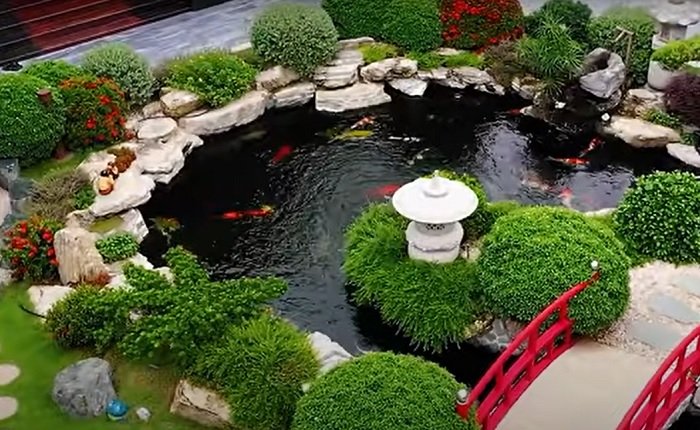
Landscaped koi pond with circulating water
A UV clarifier is one component of a pond system; circulation, stocking and mechanical filtration still determine the result.

Quick comparison

Clarifier Published capacity Published maximum flow Best fit
TotalPond UV Pond Clarifier 52301 Up to 800 gal Use with 300–800 GPH pump Small ponds
TetraPond GreenFree 660–8,800 gal across four sizes 330–4,400 GPH by model Simple model-to-pond matching
OASE Vitronic 18 5,000 gal without fish; 2,500 with fish; 1,250 with koi 925 GPH Fish ponds needing conservative sizing
Aquascape UltraKlear 1,000, 2,500 and 5,000 model family Check exact model manual Accessible maintenance and safety features

Capacity figures are manufacturer ratings, not interchangeable laboratory results. Sun exposure, algae density, water depth, fish load, plumbing resistance and filtration all affect performance. Treat the number on the box as a ceiling under stated conditions, not a reason to undersize the system.

1. TotalPond UV Pond Clarifier — best for small ponds

TotalPond’s current model 52301 uses a 9 W lamp and is rated for ponds up to 800 gallons. The manufacturer specifies a pump range of 300–800 GPH and supplies adapters for 1/2-, 3/4- and 1-inch-ID tubing. This makes it the easiest option here to match to a compact water garden without excessive plumbing.

A blue indicator and clear adapters let you check operation without looking at an exposed lamp. TotalPond says this particular unit can be submerged or concealed out of water; that is a model-specific instruction and must not be assumed for other UV clarifiers. The lamp is rated for up to 8,000 hours, with tool-free access intended to simplify seasonal replacement.

Best for: a small pond already served by a compatible pump and mechanical filter.

Watch for: the one-year warranty is shorter than the warranties listed for the TetraPond and Aquascape families.

2. TetraPond GreenFree — best straightforward product family

GreenFree comes in four clearly paired sizes. Tetra publishes 5 W for 660 gallons at 330 GPH, 9 W for 1,800 gallons at 900 GPH, 18 W for 4,400 gallons at 2,200 GPH and 36 W for 8,800 gallons at 4,400 GPH. This is useful because a pond owner can select a lamp and a flow target together rather than guessing from wattage alone.

The units include adapters for 3/4-, 1- and 1 1/4-inch-ID tubing, a 15-foot cord and a three-year limited warranty. Tetra’s manual also makes an important point: damaged algae must still be trapped by adequate filtration. A UV chamber cannot compensate for a mechanical filter that is too small or rarely cleaned.

Best for: owners who want a familiar range spanning small water gardens through larger ponds.

Watch for: confirm the exact wattage and its allowed flow; do not choose a high-flow pump simply because the hose fits.

3. OASE Vitronic 18 — best capacity guidance for fish ponds

OASE rates the Vitronic 18 very differently according to stocking: up to 5,000 gallons without fish, 2,500 gallons with fish and 1,250 gallons with koi. That distinction is valuable because fish load increases the burden on the complete filtration system. The published maximum flow is 925 GPH through the 18 W unit.

The Vitronic accepts 1-, 1 1/4- and 1 1/2-inch connections and provides a visual function check. A quick-release mechanism assists quartz-glass cleaning, and OASE lists replacement lamps, quartz glass and ballast components. The current US model carries a two-year limited warranty.

Best for: a moderately stocked fish or koi pond where conservative capacity guidance and service parts matter.

Watch for: use the fish or koi rating—not the ornamental-pond maximum—when livestock are present.

4. Aquascape UltraKlear — best maintenance and safety design

Aquascape offers UltraKlear 1000, 2500 and 5000 models. The company describes an internal swirl sleeve that increases contact time around the UV bulb, plus an operating indicator, electronic ballast and a mechanical safety switch that turns the bulb off when the ballast is removed.

The included brackets permit vertical or horizontal mounting, while the bulb and quartz sleeve are designed for straightforward access. The family carries a three-year limited warranty. These features make UltraKlear appealing when the installation will be serviced regularly rather than treated as a sealed, forgotten component.

Best for: owners who prioritize visible operation checks, flexible mounting and easier scheduled maintenance.

Watch for: use the flow and plumbing instructions for the exact 1000, 2500 or 5000 model; the family name alone is not a sizing specification.

How to size a UV clarifier without guessing

  1. Calculate real pond volume. Use measured average length, width and depth rather than the liner’s theoretical maximum.
  2. Choose the correct stocking category. A koi pond normally needs more conservative capacity than an ornamental pond of the same volume.
  3. Check flow through the UV chamber. Use the manufacturer’s target after allowing for head height, bends, fittings and filter resistance.
  4. Check plumbing diameter. Restrictive adapters and undersized hose reduce delivered flow and can waste pump energy.
  5. Leave practical headroom. Full sun, warm water, heavy feeding or a dense fish load can justify moving up a size.

Clarifier flow is about exposure time

Water must spend enough time in the chamber for the intended dose. Faster is not automatically better. If flow exceeds the model’s rating, organisms may receive insufficient exposure; if flow is severely restricted, circulation and filtration can suffer. The correct solution is a matched pump, bypass or dedicated circuit—not an arbitrary valve position with no measured flow.

Place the unit in the sequence specified by its manual. Many systems send clarified water toward a mechanical or biological filter so clumped algae can be captured, but plumbing arrangements vary. Follow the exact manufacturer’s direction rather than copying a diagram for another brand. If the filter is also due for replacement, compare complete-system requirements in our pond filter guide.

What a UV clarifier will and will not fix

Green water is caused by microscopic algae suspended through the water column. When affected by UV-C inside a closed chamber, those cells lose the ability to reproduce and become easier for filtration to remove. Improvement is therefore not always instantaneous.

String or blanket algae grows attached to surfaces and usually does not pass through the clarifier. UV also does not remove leaves, fish waste, sediment, phosphate or nitrate. If green water repeatedly returns, review sunlight, feeding, stocking, circulation, plant competition and mechanical-filter maintenance as part of the wider pond system. Koi keepers can also compare pond-load guidance in our dedicated koi pond UV clarifier guide.

Installation and electrical safety

  • Use a properly installed, weather-protected GFCI outlet and keep plugs and connections dry.
  • Never energize a lamp outside its closed housing or look directly at UV-C light.
  • Disconnect power before opening, cleaning or replacing any component.
  • Do not submerge a unit unless the exact manufacturer instructions expressly permit it.
  • Support the housing and tubing so fittings are not placed under strain.
  • Keep the unit accessible; hiding it completely often leads to missed maintenance.

Maintenance that determines performance

Mineral film and biofilm on the quartz sleeve reduce the light reaching the water. Inspect and clean the sleeve at the interval in the manual, using care because quartz is fragile. Check seals and O-rings when the housing is opened and replace damaged parts before restarting.

A UV lamp may continue to glow after its useful UV-C output has declined. Replace it on the manufacturer’s operating-hours or seasonal schedule rather than waiting for visible failure. In freezing climates, drain and winterize the clarifier exactly as directed so trapped water cannot crack the chamber or sleeve.

When not to buy a UV clarifier

Do not buy one solely for attached string algae, a dirty pond bottom or chronically inadequate filtration. First remove debris, confirm pump circulation and test basic water quality. For a shaded, lightly stocked pond that is already clear, another electrical device and replacement lamp may add cost without solving a real problem.

Sources

Best Koi Pond Filters: How to Choose the Right System

Best Koi Pond Filters: How to Choose the Right System

The best koi pond filter is not one universal product. It is a correctly sized system that can remove solids, provide enough biological filtration for the pond’s real fish load, maintain flow and oxygen, and be cleaned often enough to keep performing.

This guide compares five current filter families from established manufacturers. They cover small-to-medium water gardens through serious high-stock koi ponds. Ratings are based on published manufacturer specifications, system design, maintenance requirements, expandability, and suitability for different pond loads—not invented star scores or temporary prices.

Affiliate disclosure: Aquarium Hunter may earn a commission if you buy through a marked Amazon link, at no additional cost to you. Manufacturer links are provided separately for specification checking. Product availability and model names can vary by country.

Koi pond with clear water supported by mechanical and biological filtration
A koi filtration system must be sized for fish load, feeding, pond volume, flow, and the maintenance routine—not volume alone.

Quick Comparison: Current Koi Pond Filter Options

Filter family Type Best fit Main tradeoff Buying option
OASE BioSmart 10000 Flow-through foam filter Accessible entry-level system with straightforward cleaning Requires gravity return and separately matched pump/UV equipment Read review
OASE BioTec ScreenMatic² Screen-assisted flow-through filter Larger ponds needing better solids removal and reduced foam loading More space, plumbing, and purchase cost than an entry-level box filter Read review
No verified Amazon match
Aqua Ultraviolet Ultima II Pressurized bead-style bio-mechanical filter Compact installations and easy valve-operated backwashing Needs correct pump pressure and responsible wastewater routing Check Amazon
Affiliate link
Aquascape UltraKlean Pressurized filter with UV clarifier Smaller ornamental ponds prioritizing simple backwashing and concealment Not a substitute for a high-capacity dedicated koi system at heavy stocking Check Amazon
Affiliate link
Evolution Aqua Nexus Combined mechanical chamber and moving-bed biological filter Dedicated koi ponds with room for a large serviceable system Large footprint, installation planning, air supply, and higher upfront cost Read review
No verified Amazon match

Important: Manufacturer “pond size” ratings often change with fish load. A filter marketed for a large decorative pond may be rated for a much smaller koi pond. Always use the koi or heavy-fish-load figure when one is supplied, then confirm flow, plumbing, head height, and maintenance requirements in the current manual.

What a Koi Pond Filter Must Do

Mechanical Filtration

Mechanical filtration removes suspended and settled solids such as feces, uneaten food, leaves, and algae. Removing solids promptly matters because trapped waste continues to decompose and consume oxygen. Screens, settlement chambers, sieves, foam, static media, beads, and drum filters handle solids in different ways.

Biological Filtration

Biological media supports microorganisms that convert toxic ammonia into nitrite and then nitrate. A new filter is not biologically mature simply because water is flowing through it. Cycle the pond, test ammonia and nitrite, add fish gradually, and allow enough time for the biofilter to establish.

Circulation and Oxygen

The pump must move water through the real plumbing system, not just meet a flow number printed on the box. Pipe length, diameter, bends, valves, elevation, UV units, and the filter itself add resistance. Biological media and koi also need oxygen, so aeration should be planned separately instead of assuming the waterfall will always be enough.

Clarification

A UV clarifier can help control green water by exposing free-floating algae to ultraviolet light so they can be captured by filtration. It does not clean settled waste, replace a mature biofilter, or make diseased fish safe. Effectiveness depends on bulb condition, chamber cleanliness, flow rate, and exposure.

How to Size a Koi Pond Filter

1. Calculate Actual Pond Volume

Measure the pond rather than relying on a label from construction. For a rectangular pond, multiply average length × average width × average depth × 7.48 to estimate US gallons. Irregular ponds require a shape correction, and a water meter used during filling is more accurate.

2. Use the Heavy-Fish or Koi Rating

Koi produce much more waste than a lightly stocked plant pond. OASE, for example, publishes separate light, medium, and heavy fish-load figures for some systems. Its US BioSmart 10000 configuration is listed for up to 10,000 gallons at light load, 5,000 gallons at medium load, and 2,500 gallons at heavy load. This illustrates why using only the largest number on the packaging can badly undersize a koi system.

3. Estimate Adult Biomass

Count the adult fish the pond is intended to support, not only today’s juveniles. Review how fast koi grow and expected adult koi size before buying equipment. Growth, spawning, and new purchases can quickly increase the load.

4. Match the Pump at Operating Head

Pump flow falls as head pressure rises. Use the pump’s performance curve at the estimated total dynamic head and keep within the filter manufacturer’s minimum and maximum flow limits. Overspeeding a filter can reduce contact time, push debris through, or damage the unit; insufficient flow can leave dead zones and reduce oxygen delivery.

5. Plan Maintenance and Waste Disposal

The filter only works if it is cleaned. Check how often screens, settlement chambers, foam, or media need attention during peak feeding and leaf fall. Confirm that backwash water can drain legally without flooding structures, neighboring property, or natural waterways.

6. Build in Redundancy

High-stock koi ponds benefit from separate aeration, accessible valves, overflow protection, and a power-outage plan. Two circuits can be more resilient than one: for example, a bottom-drain circuit for heavy solids and a skimmer circuit for surface debris.

Current Koi Pond Filter Shortlist

OASE BioSmart 10000: Straightforward Entry-Level Flow-Through Filter

The BioSmart 10000 uses filter foams for mechanical and biological filtration. OASE lists cleaning handles, a bottom drain, a pollutant-level indicator, and a temperature indicator. It is a gravity-return filter, so the outlet must be able to return water without being pressurized.

Choose it when: you want an accessible, manually serviced filter for a modest pond and can position it above the return point.

Watch for: the US product does not include an integrated UV clarifier. OASE pairs it with specific pumps and a separate Vitronic UV unit in qualifying systems. Size it to the fish-load rating, not the 10,000-gallon light-load headline.

Official OASE BioSmart specifications

OASE BioTec ScreenMatic²: Better Solids Handling for Larger Systems

The BioTec ScreenMatic² adds a moving screen ahead of the foam stages. Coarse debris is separated into a tray before it loads the biological section, reducing routine foam contamination. OASE offers multiple capacities and specifies matching pumps and UV clarifiers.

Choose it when: you have a larger pond, meaningful leaf or solids load, and space for a flow-through unit.

Watch for: it remains a serviceable filter, not a maintenance-free appliance. The system requires correct gravity return, level installation, drainage, electrical safety, and access for cleaning.

Official OASE BioTec ScreenMatic² specifications

Aqua Ultraviolet Ultima II: Compact Backwashable Bio-Mechanical Filter

The Ultima II is a pressurized filter family using tubular media and a valve-operated backwash cycle. Aqua Ultraviolet currently lists models for ponds and larger aquatic systems, with its Cyclonic Backwash process intended to agitate the media and discharge trapped debris.

Choose it when: space is limited, the return must remain pressurized, and convenient backwashing is a priority.

Watch for: select the exact model using the current flow and pond-load documentation. Pressurized systems add resistance, and effective backwashing requires suitable pump performance and a safe waste line.

Check Aqua Ultraviolet Ultima II 2000 on Amazon (affiliate link)

Official Aqua Ultraviolet Ultima II specifications

Aquascape UltraKlean: Compact Pressure Filter With UV

The UltraKlean combines plastic biological media, mechanical filtration, an integrated UV clarifier, and a valve-operated cleaning cycle. It can be partly concealed beside the pond while remaining accessible.

Choose it when: you have a smaller ornamental pond with a moderate fish load and want a compact, tidy installation.

Watch for: compare the exact model’s fish-load capacity with the intended adult koi population. A compact pressure filter may be useful in a small system or as part of a broader design, but it should not be stretched to serve a heavily stocked large koi pond.

Check Aquascape UltraKlean 3500 on Amazon (affiliate link)

Official Aquascape UltraKlean specifications

Evolution Aqua Nexus: Dedicated Koi-Pond System

The Nexus family combines an inner mechanical section with an aerated moving-bed biological chamber using K1-type media. It is designed around the larger flow, waste, and service needs of dedicated koi ponds.

Choose it when: koi are the pond’s central purpose, you have installation space, and you want a large biological stage that can be serviced without replacing cartridges.

Watch for: footprint, gravity-fed versus pump-fed layout, pipework, air-pump requirements, waste drainage, and the current model’s stated maximum flow and pond capacity. Read the complete manual before construction because retrofitting large pipework later is difficult.

Official Evolution Aqua koi filtration range · Nexus 320+ manual

Which Filter Type Is Best?

  • Flow-through box filters: simple to understand and usually lower pressure, but they need a gravity return and visible installation space.
  • Pressurized filters: compact and able to return water uphill, but they add head pressure and depend on effective backwashing.
  • Bead-style filters: good mechanical polishing and convenient valve cleaning when correctly pumped, but they are not low-resistance devices.
  • Moving-bed systems: provide well-aerated biological media and suit high loads, but usually need more space and separate mechanical waste capture.
  • Screen, sieve, and drum prefilters: remove solids before biological filtration. They can substantially reduce downstream cleaning, with increasing cost and complexity.

Common Koi Filtration Mistakes

  • Buying from the decorative-pond rating instead of the koi or heavy-load rating.
  • Ignoring adult fish size and future stocking.
  • Choosing a pump by zero-head flow rather than real operating head.
  • Using a UV clarifier as a substitute for mechanical and biological filtration.
  • Cleaning all biological media in untreated tap water and damaging the biofilter.
  • Replacing every piece of mature media at once.
  • Allowing sludge to remain in dead zones or filter chambers.
  • Having no separate aeration or power-outage plan.
  • Making the equipment inaccessible for weekly service.
  • Assuming clear water proves ammonia, nitrite, oxygen, and pH are safe.

Installation and Maintenance Checklist

  • Use a ground-fault protected electrical supply installed to local code.
  • Fit isolation valves and unions so equipment can be serviced safely.
  • Protect the pump intake and pond openings from trapping fish.
  • Confirm the filter is level and supported when full of water.
  • Provide drainage for cleaning and emergency overflow.
  • Test ammonia, nitrite, nitrate, pH, alkalinity, and temperature routinely.
  • Inspect flow and fish behavior daily.
  • Clean mechanical stages before flow is seriously restricted.
  • Rinse biological media only as the manufacturer directs, using pond water when appropriate.
  • Replace UV lamps and clean quartz sleeves according to the manual.
  • Keep spare air equipment or an outage plan for warm weather and heavy fish loads.

Frequently Asked Questions

Does every koi pond need a filter?

A stocked ornamental koi pond normally needs engineered mechanical and biological filtration plus circulation and aeration. Very large, lightly stocked naturalistic ponds behave differently, but they still require water-quality monitoring and careful load management.

How often should pond water pass through the filter?

There is no universal turnover number. Follow the filter and pump manufacturers’ matched-system guidance, then account for operating head, pond shape, stocking, oxygen, and seasonal feeding. High-load systems often need more aggressive circulation than lightly stocked water gardens.

Is a UV clarifier required?

No, but it can be useful for persistent green water. It does not remove feces, convert ammonia, oxygenate the pond, or cure infected fish.

Can I use two smaller filters?

Sometimes. Multiple circuits can improve redundancy and target different waste sources, but their real combined flow and biological capacity must meet the load. Poorly balanced parallel plumbing can send most water through only one branch.

When should I upgrade?

Upgrade before ammonia or nitrite becomes persistent, cleaning becomes impractically frequent, flow cannot be maintained, or the planned adult fish population exceeds the verified rating. Do not wait for chronic water-quality problems.

Our Selection Method

We included products only when a current manufacturer page or manual could be located. We compared filtration method, published fish-load guidance, flow requirements, maintenance access, expandability, installation constraints, and availability of documentation. We did not assign star ratings, quote temporary prices, or treat retailer popularity as proof of performance.

References and Manufacturer Documentation

Best Pond Vacuum Cleaners: 5 Current Options

Best Pond Vacuum Cleaners: 5 Current Options

Disclosure: Aquarium Hunter may earn a commission from qualifying purchases made through links on this page, at no extra cost to you.

A pond vacuum removes settled leaves, silt and decomposing organic debris without draining the entire pond. The right model depends on pond depth, hose reach, debris load and where the dirty water can be discharged. For fish ponds, cleaning should be gradual: removing every layer of material or disturbing the whole bottom at once can stress livestock and release trapped waste into the water.

Using a pond vacuum to remove settled debris from a garden pond
A purpose-built pond vacuum can remove sludge while the pond remains filled, provided fish and wildlife are protected during the work.

Quick comparison

Pond vacuum Operation Best for Buying option
OASE PondoVac Classic Single chamber; automatic fill-and-empty cycle Best small-to-medium pond choice Check on Amazon
Matala Power-Cyclone Dual-pump continuous discharge Best continuous commercial-style cleaning Check on Amazon
OASE PondoVac 4 Alternating two-chamber continuous suction Best premium gravity-discharge model Manufacturer details
OASE PondoVac 5 Continuous suction with discharge pump Deep ponds or uphill discharge Manufacturer details
CleanSweep 1400 Tank-style pond vacuum Budget occasional cleaning Check on Amazon

Best pond vacuum cleaners

1. OASE PondoVac Classic — best overall for smaller ponds

The PondoVac Classic is a compact wet vacuum designed for small-to-medium ponds and water features. OASE lists a 27-liter tank, up to 800 gallons per hour, a maximum suction head of 6 feet and automatic emptying through the discharge hose. The tank fills, pauses to empty and then resumes rather than providing uninterrupted suction.

It is a sensible home-garden choice when the discharge point can sit lower than the vacuum and brief pauses are acceptable. Four nozzle styles help with crevices, string algae and broader surfaces.

Check the OASE PondoVac Classic on Amazon · See OASE specifications

2. Matala Power-Cyclone — best continuous heavy-duty option

The Matala Power-Cyclone combines a suction motor with a separate discharge pump, allowing dirty water to be pumped away while cleaning continues. This is useful for larger jobs and sites where gravity discharge is inconvenient.

It is a substantial, specialized machine. Matala’s instructions require the base of the tank to be at or above the pond water level and state that the unit is for extracting water, not dry vacuuming. Read the full setup and safety instructions before use.

Check the Matala Power-Cyclone on Amazon · Read the manufacturer instructions

3. OASE PondoVac 4 — best continuous gravity-discharge model

The PondoVac 4 uses two alternating internal chambers so one can empty while the other fills. OASE lists suction up to 1,300 GPH, a maximum depth of 2.4 meters and a 1,700-watt motor. Its continuous operation is a meaningful upgrade for a larger pond or frequent cleaning.

The discharge remains gravity-based, so the placement of the machine and waste hose matters. We are linking to OASE because we did not find a sufficiently reliable exact current Amazon listing for this model.

See the OASE PondoVac 4 specifications

4. OASE PondoVac 5 — best for deep ponds and difficult discharge routes

The PondoVac 5 adds an integrated dirty-water pump, so wastewater can be moved across changes in elevation rather than relying only on gravity. OASE lists up to 2,100 GPH and a maximum suction depth of 2.5 meters. It is the strongest choice here for a large or awkward site.

Its capacity and price are unnecessary for many small backyard ponds. Plan the discharge route carefully so nutrient-rich dirty water cannot run back into the pond, enter a storm drain or damage sensitive planting.

See the OASE PondoVac 5 specifications

5. CleanSweep 1400 — budget occasional-use option

The CleanSweep 1400 is a conventional tank-style pond vacuum supplied with a 13-foot intake hose, extension tubes, several nozzles and a debris bag. It can suit occasional cleaning when continuous operation and powered uphill discharge are not required.

Marketplace documentation is less detailed than the established manufacturer ranges above. Confirm the current package contents, electrical rating, suction depth and warranty before ordering, and avoid choosing it solely because the advertised motor wattage appears similar.

Check the CleanSweep 1400 on Amazon

How to choose a pond vacuum

Measure suction depth and hose reach

Measure from the vacuum’s intended position to the deepest area you need to reach. Maximum suction depth is not the same as hose length, and actual performance falls when hoses are extended, lifted or partially blocked. Keep the intake route as direct as practical.

Choose intermittent or continuous operation

A single-chamber unit periodically stops to empty and is normally adequate for light seasonal work. Dual-chamber machines can alternate filling and draining. Models with a separate wastewater pump are better when the discharge hose must run farther or uphill.

Plan the wastewater route

Most pond vacuums remove water with the debris. Direct wastewater to a suitable garden area where local rules allow, keeping it away from edible plant parts, drains and waterways. Avoid returning fine sludge straight to the pond; coarse debris bags are not fine filters and are often specifically unsuitable for pond silt.

Match the nozzles to the pond surface

A wide floor nozzle speeds cleaning on a smooth liner. Narrow crevice tools reach between rocks, and string-algae tools can help lift fibrous growth. Work gently over flexible liners and avoid sharp debris that could damage the pond.

How to vacuum a fish pond safely

  1. Test ammonia, nitrite, pH and temperature before starting so you know the pond’s baseline.
  2. Remove loose sticks and large leaves with a net first.
  3. Position the vacuum on stable, dry ground and route cords and hoses safely.
  4. Move the nozzle slowly and keep it visible. Never chase fish or allow small livestock to be drawn in.
  5. Clean one section at a time rather than aggressively stripping the entire bottom.
  6. Top up with temperature-matched, appropriately conditioned water as needed.
  7. Retest water quality and observe fish after a substantial cleaning.

Electrical and wildlife safety

  • Use an outdoor-rated GFCI/RCD-protected outlet and form drip loops.
  • Keep plugs, extension connections and controls dry and follow the product’s outdoor-use instructions.
  • Unplug equipment before clearing a blockage or opening the collection tank.
  • Check the work area for frogs, tadpoles, snails, newts and small fish before and during vacuuming.
  • Do not use a product intended only for swimming pools if it lacks suitable pond and electrical guidance.

When and how much to clean

Vacuum when accumulated organic debris is affecting depth, appearance, circulation or water quality. Light, regular removal is safer than allowing years of sludge to build and then disturbing everything in one day. Avoid major work during spawning, extreme heat, severe cold or when fish are already stressed.

A thin natural layer and biofilm can support pond ecology; the goal is not a sterile floor. Focus on decaying leaf pockets, dead zones and material that is creating water-quality problems.

Frequently asked questions

Do I need to drain the pond before vacuuming?

No. Purpose-built pond vacuums are designed to remove dirty water and sludge while the pond remains filled. You will need to replace the extracted water safely.

Can a wet/dry shop vacuum clean a pond?

Some wet-rated vacuums can remove water, but their electrical, hose, automatic-drain and outdoor-use design may be less suitable. Use equipment only for applications permitted by its manufacturer.

Can vacuumed pond water be reused?

Nutrient-rich pond water may be useful on ornamental garden beds where local rules allow. Do not discharge invasive plants, fish pathogens, medications or contaminated sludge into natural waterways or stormwater drains.

Will vacuuming remove beneficial bacteria?

It removes some biofilm and organisms from the cleaned area, which is another reason to clean gradually. Most established ponds also hold microbial communities on rocks, liner, plants and filter media. Never combine aggressive bottom cleaning with complete filter-media replacement.

Our verdict

The OASE PondoVac Classic is the best fit for most small-to-medium garden ponds. Choose the PondoVac 4 when continuous gravity discharge will save substantial time, or the PondoVac 5 when wastewater must be pumped farther or uphill. The Matala Power-Cyclone is the strongest specialist alternative for sustained heavy-duty work.

Best Pond Filters: 5 Current Systems Compared

Best Pond Filters: 5 Current Systems Compared

The best pond filter is the one that matches your pond volume, fish load, pump flow and maintenance routine. A small decorative pond may only need a compact prefilter, while a stocked koi pond usually needs a much larger mechanical and biological system. This guide compares five current filter styles rather than pretending one product suits every pond.

Affiliate disclosure: Aquarium Hunter may earn a commission from qualifying Amazon purchases, at no extra cost to you. We only link to an Amazon listing when we can match the exact product confidently.

Quick comparison

System Best suited to Important limitation Buying option
TetraPond Submersible Flat Box Small ponds and pump prefiltration Not a complete high-load biological filter Check on Amazon
Aquascape UltraKlean 2000 Compact pressurized filtration with UV Pump is selected separately Check on Amazon
OASE BioSmart 5000 Accessible flow-through filtration Rated capacity falls as fish load rises Read review
Laguna Pressure-Flo PF1000 Pressurized filtration and flexible return placement Requires correct pump matching and routine cleaning Read review
Aquascape Signature Series 2500 BioFalls Waterfall-based biological filtration Works best as part of a planned skimmer-and-waterfall system Check on Amazon

What a pond filter actually needs to do

A useful pond system combines several jobs. Mechanical filtration traps leaves, algae strands and suspended debris. Biological filtration gives beneficial bacteria a large oxygenated surface on which to convert toxic ammonia and nitrite into less harmful nitrate. A UV clarifier can help control free-floating green-water algae, but it does not remove settled waste or replace biological media. The pump supplies circulation; aeration may still be needed, especially in warm weather or heavily stocked ponds.

That distinction matters because a prefilter, UV unit and complete biological filter are not interchangeable. Start with the pond’s needs, then choose components that work together.

How to size a pond filter

  1. Calculate actual pond volume. For a rectangular pond, multiply average length by average width by average depth, then convert the result to gallons or litres. Irregular ponds require an estimate, so leave a safety margin.
  2. Allow for fish load. Koi and heavily stocked goldfish ponds create substantially more waste than lightly stocked wildlife ponds. Manufacturer maximums often fall when fish are present, so use the fish-load rating rather than the largest number on the box.
  3. Check real pump flow. A pump delivers less water after vertical lift, pipe friction and fittings are considered. Compare the filter’s recommended flow range with the pump’s flow at the system’s actual head height.
  4. Plan maintenance access. A technically capable filter can still be a poor choice if cleaning it is awkward. Make sure drains, backwash outlets and media are accessible.
  5. Think in systems. Bottom drains, skimmers, waterfalls and return jets affect what type of filter will work and where it can be installed.

TetraPond Submersible Flat Box Filter

Best for: protecting a pump and adding basic mechanical filtration in a small pond.

This low-profile box sits underwater and connects to a separate pump. Its foam pads intercept debris before it reaches the pump, and the manufacturer specifies compatibility with pumps from 200 to 2,000 GPH. That wide pump range makes it a flexible, inexpensive component for small water features and lightly stocked ponds.

Watch for: it is best understood as a pump prefilter, not a complete answer for a koi pond or a system with a high biological load. The foam must be rinsed regularly in pond water so accumulated debris does not restrict flow.

Check the exact TetraPond Flat Box listing on Amazon
Official TetraPond specifications

Aquascape UltraKlean 2000

Best for: pond owners wanting compact pressurized mechanical and biological filtration with an integrated UV clarifier.

The UltraKlean design can be positioned away from the pond and returns water under pressure, which is helpful where the outlet must feed a waterfall or stream. Its cleaning controls are more convenient than dismantling a basic submerged box. The integrated UV clarifier targets free-floating algae that cause green water.

Watch for: a UV clarifier is not a substitute for removing sludge and trapped solids. Select a compatible pump, respect the stated flow range, and maintain the filter and UV lamp according to the manual.

Check the exact Aquascape UltraKlean 2000 listing on Amazon
Official Aquascape UltraKlean information

OASE BioSmart 5000

Best for: pond owners who prefer an accessible flow-through filter with visible maintenance indicators.

The BioSmart separates mechanical debris while providing biological media, and its above-ground layout makes routine inspection straightforward. OASE lists different capacities for ponds with no fish, ponds with fish and koi ponds. For the BioSmart 5000, the official koi/heavy-fish figure is much lower than the headline 5,000-gallon light-load rating, illustrating why stocking level must be considered.

Watch for: this is a gravity-return filter, so its outlet position and return route must be planned correctly. Do not size it using the largest nominal pond figure when fish are present.

Official OASE BioSmart 5000 specifications

Laguna Pressure-Flo PF1000

Best for: compact pressurized filtration where a flexible return location is useful.

The Pressure-Flo PF1000 combines mechanical and biological filtration with UV clarification in a sealed canister. A pressurized outlet can return water to an elevated feature, while the cleaning mechanism reduces the need to open the canister for every maintenance cycle.

Watch for: pressure filters still collect waste and need regular cleaning. Performance depends on correct pump sizing, hose diameter and head height. Follow Laguna’s stated pond and flow guidance rather than assuming the model name is a universal capacity guarantee.

Official Laguna Pressure-Flo PF1000 specifications

Aquascape Signature Series 2500 BioFalls filter

Best for: a planned ecosystem pond where the biological filter also forms the head of a waterfall.

A BioFalls unit spreads incoming water through filter media before it flows over a waterfall lip. It can be visually integrated into landscaping and pairs naturally with a pond skimmer at the opposite end, creating circulation across the pond.

Watch for: this is a system component rather than a small stand-alone canister. Installation, liner connection, pump flow and the matching skimmer all need to be planned together. Choose the BioFalls size from Aquascape’s current guidance for the intended pond and waterfall.

Check the exact Aquascape Signature Series 2500 BioFalls on Amazon
Official Aquascape BioFalls information

Which filter type should you choose?

  • Submersible prefilter: simple and inexpensive for small ponds, but frequent hands-in-water cleaning may be required.
  • Flow-through box: accessible media and good gravity return, provided there is space at the correct height.
  • Pressurized filter: compact and flexible to position, with water able to return to a raised feature.
  • Waterfall filter: combines biological media with landscape design, usually as part of a skimmer-and-waterfall layout.
  • Koi-specific system: heavy fish loads often justify larger multi-stage filtration, easier waste purging and conservative sizing. See our koi pond filter comparison.

Maintenance that keeps filtration effective

Remove trapped solids before they break down, but avoid sterilising biological media. Rinse bio-media gently in dechlorinated or pond water, not untreated tap water that may damage beneficial bacteria. Check pump intakes, hoses and seals; purge settled waste; and replace a UV lamp according to the manufacturer’s schedule. Test ammonia and nitrite after starting a new system, adding fish, medicating the pond or performing major maintenance.

If green water is the main problem, read our guide to the best UV clarifiers for koi ponds. If you are planning for growing fish, our guide to how fast koi grow explains why future size matters.

Frequently asked questions

Can a pond be over-filtered?

Extra media capacity is usually helpful, but excessive flow can stress fish, bypass effective contact time or overwhelm a filter’s recommended range. Oversize biological capacity sensibly while keeping water flow within the equipment specifications.

Does a UV clarifier replace a pond filter?

No. UV can reduce free-floating algae and some suspended microorganisms, but it does not remove leaves, sludge, fish waste or dissolved ammonia. Mechanical and biological filtration remain essential in stocked ponds.

How often should a pond filter be cleaned?

There is no single schedule. Check flow and the manufacturer’s cleaning indicator, then adjust for season, feeding, fish load and falling leaves. Mechanical stages may need frequent attention during warm, heavily fed periods; biological media should be disturbed only as much as necessary.

Should the pump run all day?

For most stocked ponds, continuous circulation supports oxygenation and the beneficial bacteria living in the filter. If a filter is shut down long enough to become oxygen-depleted, stagnant water should not simply be flushed back into the pond.

How we selected these systems

We prioritised current manufacturer support, clearly described filtration roles, useful options for different pond layouts and maintainability. We did not rank products solely by a headline gallon figure, and we excluded old listings that could not be matched confidently. Amazon links above point only to exact verified product pages; manufacturer pages are provided for specifications and installation guidance.

References and further reading

Top 10 Best Pond Aerators in 2023– (Reviews & Buying Guide)

Top 10 Best Pond Aerators in 2023– (Reviews & Buying Guide)

Best Pond Aerators in 2022: Everyone knows the importance of using high quality filters for their aquariums. But not many people know how important a pond aerator is.

Pond vents help infuse oxygen into the water, ensuring that fish have enough to survive.

Comparison Table

Pond aerators come with a variety of different features. Finding the best pond aerators is difficult if you’ve never bought one before.

If you like to take care of fish on a large scale, it is essential that you include them in your environment.

In this article, we will discuss the 12 best pond aerators in existence in 2022.

However, before we get into the exact products we have listed, let’s first make sure that all our readers are on the same page and know exactly what a pond aerator can be used for and why it is needed. any pond, but especially if you have fish and other marine life.

Ponds must be properly maintained and cared for because they are closed, which means that water has no means of moving freely without external force or external help.


Benefits of a Best pond aerators

The main function of aeration is to add dissolved oxygen to the pond water. Air is pushed through the tube into a diffuser using an electric pump. This causes a column of bubbles to rise from the diffuser to the surface of the water.

This process allows much needed oxygen to enter the water and also emits carbon dioxide gas.

It also makes your pond move. When the bubbles rise to the surface, they create a lifting effect. This causes the water at the bottom of the pond to travel upwards with bubbles and then flow back to the bottom.

This circulation of water is very useful for several reasons:

  • Algae growth slows down.
  • It prevents the stratification of the tin
  • Prevents the formation of ice in winter

Increasing the flow of water can help reduce algae growth as the spores will be pushed away from the surface, giving them less time for the sunlight they need to grow.

Since pond water does not normally circulate, it stratifies. That is, it tends to be hot and oxygen-rich at the top and colder and completely oxygen-free at the bottom. For this reason, fish cannot swim in deeper areas as they have no oxygen to breathe.

The circulation of water from the aeration keeps all the water mixed and prevents stratification. This allows fish to use the entire pond rather than just the higher layers.

If you live in an area where freezing temperatures are common in winter, the entire pond can freeze, cutting oxygen to the water and killing your fish.

Operating an aerator during the cold months will prevent ice from forming directly on your head and provide your fish with a safe area to spend the winter.


Why use a pond aerator?

Unless you’ve never looked after fish in a pond before, you may not know why a pond aerator helps create a healthy aquarium.

In nature, ponds and lakes aerate themselves with the movement of water. Smaller artificial ponds without natural movement can greatly benefit from an aerator.

A pond aerator is useful for many things. Perhaps most importantly, it increases the oxygen levels in the water.

The aerator also helps to mix hydrogen peroxide from the top of the surface with the water on the bottom of the pond. This extends oxygen but also keeps the water at the perfect hot / cold temperature for fish.

The ventilation also helps to circulate the water and prevents the formation of dirt on the bottom. This manure not only smells bad and changes the color of the water, it also becomes a living space for leeches.

Aside from mud, non-aerated water is more susceptible to pieces of food and other debris. This makes the water cloudy and also increases the ammonia level in the water.


The 10 Best Aerators for Small & Large Ponds


Best Ponds Aerators Reviews

1. Aquascape Pond Air Aeration Kit

Best Pond Aerators

The first aerator in the list is the Aquascape aeration kit. Aquascape designs effective and inexpensive aquarium equipment, so you can trust this brand.

This aeration kit is supplied with a pump positioned outside the pond. It also has options for two or four outlets. You can adjust the amount you buy depending on how big or small your pond is.

The aeration discs are robust and made with a strong rubber cover, which protects them from any friction under water. The pump for this kit is also supplied with a replaceable filter cartridge. This facilitates replacement and repair when cleaning is needed.

The only problem with the Aquascape ventilation kit is that the discs supplied are not heavy. Therefore, they are not safe underwater.

They remain underwater for the most part, but tend to move easily. If these records had been held back by something, it would have been a more effective product.

Check Price On Amazon

2. Air Pro Deluxe Pond Aerator Kit By Living Water


Best Pond Aerators

Air Pro Deluxe is a powerful air pump classified for a pond up to 1 acre. It is certainly intended for very large ponds as it can emit 2.3 CFM of air.

The ¼ horsepower compressor comes with 100 feet of weighted overhead line and a large membrane diffuser mounted on a metal plate.

The compressor comes with a 2 year warranty and the pipes and diffuser are covered for 5 years. It is a high quality ventilation system which would be an excellent choice for larger ponds.

Check Price On Amazon

3. Airmax – Pond Air 2 Aeration Kit

Best Pond Aerators

For any aquatic equipment you need, Airmax has always been one of the best suppliers in the world.

The Pond Air 2 ventilation kit has all the basics you need to keep your pond clean and clean. It can help clean ponds that have a maximum capacity of 1000 gallons and can reach a 2 foot deep pond.

It is perfect for any small pond because it has a simple installation and is convenient to operate with only 4 watts. It also comes with an air flow control valve that can be used to easily adjust the output of your ventilation.

In addition, this type of aeration system can help mix the various layers of water through its bubbling air, ensuring that no water remains to remain stagnant.

Check Price On Amazon

4. Laguna Aeration Kit for Ponds

Next is the Laguna Pond ventilation kit. This ventilation kit is another great option because of the value you get for the cost of the items. The Laguna ventilation kit is particularly useful for use during the winter months.

Ponds generally tend to freeze and threaten the life of the fish that live in them. However, with this ventilation kit, the pond can remain active even in winter.

The ventilation system allows water to circulate with its 30-inch tube liner safe for the winter. Continuously infuses oxygen into the water.

The downside of the Laguna ventilation kit is that it is not absolutely silent. This is generally not a problem for external filters.

If you prefer to have peace and quiet near your pond, you may want to reconsider this option. This kit is fine elsewhere, but tranquility is not a quality it has.

Check Price On Amazon

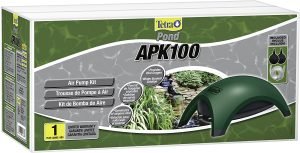
5. Tetra Pond APK100 Air Pump Kit


Tetra Pond APK100 is designed for a small pond and is only rated for a depth of 60 cm.

The dual outlet and 30 feet of airline allows you to aerate two different areas.

Product information indicates that it is possible to manage a pond of up to 5,000 gallons (18,900 liters), but you would take it with a grain of salt and say up to 500 gallons (1,800 liters).

Check Price On Amazon

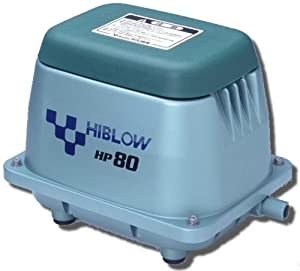
6. Hi-Blow Linear Air Pump Pond Aeration Septic Aerator


Towards the end of the list is the Hi-Blow septic aerator. This is another excellent product which is well designed and has excellent customer reviews.

You can easily infuse up to 80 liters of air into the water per minute. This gives it excellent reviews compared to other aeration pumps on the market.

It has a 71 watt power system, is sturdy and can last for years before needing to be replaced. An interesting feature it has is an alarm link accessory.

The problem with this ventilation kit is that it has very few additional features included. You only get the aeration filter and some pipes, but other than that nothing.

You can find many different products with multiple tubes, for example at a better price. If you want an aeration pump, this is a good option for you. If you are looking for a real kit, you should try something else.

Check Price On Amazon

7. EasyPro PA6SWN Single Diffuser Shallow Pond Aeration Kit

Another exceptional option for pond aeration kits is the one designed by EasyPro. This kit works perfectly for ponds that start from seven feet deep to 3/8 acres deep. This means that it can handle almost any size of the pond, deep or not.

It comes with a DM4 diffuser and 50 feet of tube. The beauty of the tube is that it is designed to sink quickly.

This means you don’t have to worry about it always floating around the pond. It is also designed for use in all types of weather conditions and has additional pump protection for this reason.

The problem with the EasyPro diffuser ventilation kit is that it is a bit expensive for what is included.

There are other kits on the market that do similar things and have similar characteristics. However, they are less expensive than that. With a little research, you can probably find a similar model at a lower cost.

Check Price On Amazon

8. Airmax Koi Air 1 Water Garden Aeration Kit


The Airmax KoiAir 1 is an excellent choice for medium sized ponds (2,000-8,000 gallons / 7,500-30.00 liters), which are up to 4 feet (120cm) deep.

The dual diffusers are designed to maximize unobstructed air flow. They are also flexible, helping to prevent cracks.

The weighted airline and diffuser plate should keep everything the way you want.

Check Price On Amazon

9. Danner – 0450 AP-20 Pond Air Pump with Diffuser (Multiple Sizes Available)


Danner is one of the reputable companies when it comes to pond conservation. Their product, Danner Pondmaster AP 20 Pond Air Pump is one of their pride and it really shows why.

The air pump for pond AP 20 can be used both indoors and outdoors. It can be used for a pond that has a maximum capacity of 2,500 gallons and a depth of up to 7 feet. It has an air flow rate that reaches a maximum capacity of 1.0 CFM and has a noise level of 40 dba.

For a unit with such a high power, it stores an electrical power of 20 watts.

It should be noted that this pond air pump should not be submerged in water and should be installed at least 12 inches above the pond water level to prevent water from returning to the pump.

It is also recommended to avoid any use of the pump in swimming pools and salt water.

Check Price On Amazon

10. Blue Diamond ET 80 Septic or Pond Linear Diaphragm Air Pump

One of the best things about this Blue Diamond aerator is the aluminum frame which makes it really durable. Since it has no wearing parts, it is weatherproof and can work intermittently or continuously.

Silent and oil-free operation is ideal for ponds because there is no excessive noise to distract or disturb the fish. If you ever need to make a repair, there are affordable replacement kits available and generally easy to find.

This air pump has a flow rate of 75 liters / minute which is suitable for up to 500 gallons and water up to six feet deep. It is covered by a two year warranty. Blue Diamond also tends to have good customer service, so if you have any questions or problems don’t hesitate to get in touch.

Check Price On Amazon

What is the best pond aerator?

Each aeration kit mentioned above had some good and bad qualities. However, one stood out. Read on to find out what it is!

The best aeration kit to get if you have just started in the world of pond aeration is the Aquascape Pond Air Aeration Kit. This kit is the best because it offers you the best investment for your money. It is truly amazing for beginners.

There are many useful features offered with this kit. This includes robust aeration discs. They are easy to install and have easily interchangeable filter cartridges.

The price of the item is also good. The use of the element is very simple and is very effective in his work. This makes Aquascape Pond Air Vent Kit the best on the list!

How to choose a pond aerator?

Now you have a good idea of ​​the different features and costs of pond aerators. Therefore, it is time to find the one that best suits your needs, especially the needs of your fish. It is easy to find out which option is correct.

Of all the big pond vents, choosing one seems like a daunting task. But if you remember a few key details about your pond, finding the perfect aerator becomes much easier.

Size of the pond

The size of your pond is the first thing to look at before deciding which aerator to get. Measure or professionally measure the amount of water in the pond area in gallons.

If it is a large body of water, it may be necessary to measure it in acres. In most cases it will not be an exact measurement, but an estimated size is also useful for finding the aerator pump.


Depth of the pond

The depth of your pond also plays an important role in obtaining an aerator for this. Some aerators have a point of maximum depth where they can work effectively. Make sure to keep that in mind.

If they go below this, there is no guarantee that your water will be properly aerated. Measuring the depth of the pond can also help you find a suitable aerator for the job.


Shape of the pond

This may be surprising, but the shape of your pond also influences the types of aerators you should buy. Circular or round ponds can be easily aerated using any type of diffusion system. This is because oxygen can be easily distributed around the pond.

Ponds with irregular shapes or depths can be difficult to cover since the area is not deep enough. Talking to an aeration service provider can help you with this problem if you are unsure.


Types of pond aerators

You should know the types of pond aerators before purchasing one for your pond. There are several types. The main ones are floating or submersible fountain aerators.

A submerged aeration system releases oxygen directly into the water. This system works well for irregularly shaped ponds.

Floating aerators often float in the middle of the pond. They provide ventilation through a falling water source. They work best for ponds with more regular shapes, such as circular or triangular.


compressors

The compressor in the aerator influences the progress of the aeration process. Two very common compressors are the linear compressor and the oscillating piston compressor.

The linear compressor uses an internal diaphragm to create and release air. This is perfect for smaller ponds.

On the other hand, oscillating piston compressors are perfect for any situation. Both shallow and deep ponds can benefit from this type of compressor.


Where to place the pool vents?

Once you find the right type of aerator, you should place it in an area of ​​your pond where it can be most effective. This is typically the deepest area of ​​your pond. Because?

Because it is where the greatest amount of dirt and the least amount of circulation is found. Alternatively, you can ask a ventilation service technician for advice on where to place it.


How to install a pond aerator?

Installing a pond aerator is a quick and easy process. You might be surprised at how easy it really is.

First, remove the aerator from the package and unroll the tube.

Then fill the diffuser and weigh it with gravel or something else to keep it underwater. It is also necessary to install the pump on dry ground. This ensures that you are well protected from the elements and have ample access to a power source.

Immerse the diffuser in the deepest part of the pond, then turn on the aerator. If all went well, your aerator should run smoothly! It couldn’t be simpler


conclusion

After all this information, you should feel a little better when buying an aerator for your pond. There seems to be a lot of research involved. For this reason, many people blow their ponds completely on air.

As a pet owner and pond lover, pay close attention to the environment you create for your fish. You want to make sure they have a healthy life and that vents are the perfect tool to make it a reality. If you need further help, don’t hesitate to contact a professional. They can offer even more advice on which kit is best for your needs.

Top 10 Best Pond Pumps – 2023 Reviews (Top Picks) & Guide

Top 10 Best Pond Pumps – 2023 Reviews (Top Picks) & Guide

To give your pet the best home, you need to use a quality pond pump. The best pond pumps work smarter, not harder, and you should too. You don’t need an expensive or large pond pump to get the job done.

Even the cheapest and lightest pumps can clean your pond completely efficiently. The main thing to consider when buying a pond pump is functionality.

Comparison Table

CustomSiteStripe ImageTitleReviewBuy
Top PerformanceTetra Pond Water Garden Pump,4.4/5.0Check Price
cheapestAQUANIQUE Waterfall Pump4.6/5.0Check Price

Choosing a pump can be difficult, but once you understand its functions, you can make a better decision. With summer in full swing and gardens in bloom all over the country, it’s time to sit on the patio and enjoy the open space. Relaxing in your garden is one of the greatest pleasures in life for any homeowner.

Watching the birds and bees flutter around your flowers as they gather pollen is a satisfying experience. As you sit there in awe of nature’s wonders, you may be wondering what you can do to make your garden even more beautiful.

Whether you have a koi pond with a waterfall, a fountain adorned with pretty statues, or an aquarium with your favorite goldfish, a pond pump will keep the fountain’s aquatic life healthy and vibrant. However, not only any type of pond pump will do, it must also deliver reliable and energy-efficient performance so you can save money on your water and electricity bills.

Hello and welcome to my website, aquariumhunter.com, dedicated to providing the best pond pump reviews. Why did I decide to create a website on a topic like pond pumps? The answer is simple, I was in your position a couple of years ago. I needed to purchase a pump for our new garden pond and had no idea how to decide which one was best for my needs. I did a lot of research and finally managed to choose the right one. Now I want to help you in your decision by giving you tips and reviews.


Does a Pond Need a Pump?

Many people wonder if ponds need pumps too. After all, it seems that nature would take care of itself, since the ponds are in the open air. But it’s not like that.

Your pond needs a pump just as much as your indoor aquarium or tank. In fact, your pond needs the help of a pump even more. This is because your pond is susceptible to more litter outside than it is inside.

Your pond will likely need a pump for the filter to work. Without the pump, there would not be enough force to push the water through the filter. Even with the best pond filter, there is nothing you can do unless you have a powerful rotary water pump.

Your pond pump also ensures that the water is filtered evenly. If your pond has a unique shape that is not circular, having a pump is even more important. Irregularly shaped ponds have different depths and crevices that normal filters cannot reach.

Good quality and powerful pumps ensure that pressure and filtration are also possible. They take water from the entire pond and feed it through the filter, giving it a thorough cleaning.


Why Your Water Element Needs a Pump

There are three main reasons why your pond needs a pump:

1. Prevent the breeding of pests in the water

The water pump will prove to be an invaluable asset for any type of fountain. The reason why the pump is such an indispensable tool is because there is no aeration without it as it pumps the water into and out of the pond to keep the water circulating well. No water circulation means there will be green standing water in the pond or fountain.

It will become the perfect breeding ground for mosquitoes and other pests, turning your once beautiful water paradise into a hell filled with dead fish and rotting plants.

2. Ensures adequate water filtration

A pond pump in combination with a high-quality pond filter will improve the water quality. These two components working together will ensure that the good bacteria stay in the water. It will also remove any build-up of harmful bacteria as well as keep the water free from contamination. The pump plus filter is clean water and a blooming aquatic environment that will attract all species of wild animals.

3. Maintains proper water flow

The water pump also keeps the pond water flowing properly, which is especially important if you have additional water features such as a waterfall or fountain. If the pump has abnormal water flow and is producing too much water, gallons per hour (GPH), the waterfall will produce too much water, annoying the fish and looking more like a wave on the beach.

If the pump is not strong enough your waterfall or fountain will be weak and ineffective. It will also look more like a leaky faucet that hasn’t been properly closed.

The right type of pump will provide the right amount of water to your waterfall or fountain screen to create the effect you want, whether it’s a gentle trickle or a stunning Niagara Falls style water show that cascades down a beautiful rock formation. or spray a stunning arc in the catchment area.


The 10 Best Pond Pumps for the Money


1. Tetra Pond Debris-Handling Pump Energy Efficient

A good choice as the best pump for waterfalls and large ponds is the Tetra Pond waste management pump. This pump is great because, despite its small size, it has a strong impact.

In fact, this pump was built to handle 3,000 gallons of water with ease. There are also models of this product with increased or reduced capacity. This means there is more room to customize what you need.

This pump is also built with a large basket which reduces the possibility of being blocked by debris to 1/4 inch. Fewer blockages also mean less maintenance in the long run.

Pros

  • Very powerful
  • Perfect for pond, waterfall or stream filters
  • The large basket reduces clogging

Cons

  • Difficult to clean and disassemble
Check Price On Amazon

2. Tetra Pond Water Garden Pump, Powers Waterfalls/Filters/Fountain Heads

Third, on the list is the TetraPond waterfall filter. This filter can serve as a great starter filter for someone new to the world of joints. It is also very easy to set up and clean.

This filter is unique in that it supports filters, waterfalls, and fountains. There are many different caps to be worn with a pump, but this product does it all.

Another great thing about the TetraPond filter is that it comes with a three-year warranty. Not many other brands offer this, so it’s definitely a bonus.

The disadvantage of this pump is that it does not have a very strong flow. It has a below-average rate but does well for the price

While this pump works well in some ponds, it may not work in others depending on the flow rate. If you are looking for an efficient pond pump, this may not be for you.

Pros

  • A good guarantee
  • Durable and silent
  • Many uses

Cons

  • Not very powerful; may not be suitable for large ponds
Check Price On Amazon

3. AQUANIQUE Waterfall Pump

The Aquanique waterfall pump is small, but just as good as the rest of the pumps on this list. First, it has a decent 1,250 GPH rate. It is ideal for use with waterfalls up to five feet high.

The maintenance of this pump couldn’t be easier as it comes with a mesh bag that locks out large external debris. Cleaning is also easier with this protective bag.

The Aquanique pump has a spiral shape which allows for better water flow. You also have customization options with a 1 or 1.5 inch tubing hole for connecting to the filter.

The only problem with this pump is that it is not as quiet as other similar models. Although it is small, it can still make a lot of noise.

This is usually not the case with submersible pumps, so this may not be the right solution for you.

Pros

  • Perfect for waterfalls
  • It is equipped with a mesh barrier to prevent dirt build-up.

Cons

  • Not very quiet
Check Price On Amazon

4. Laguna PowerJet 600 Fountain/Waterfall Pump Kit for Ponds

If you’re looking for an inexpensive yet efficient option, the Laguna PowerJet pump kit is for you.

This pump is available at the best price on this list. The cost of this pump in relation to the GPH rate it offers is by far its strongest point.

The maximum tank capacity of this pump is 1,200 gallons. This pump is equipped with a vertical spindle and two fountain heads for a perfect waterfall effect in your pond.

Installation with a Laguna Power Jet pump is a breeze thanks to snap-on connectors. These couplings facilitate the connection of various tubing between the pump and filter.

One of the problems with the Laguna PowerJet pump is that the length of the included tubing is quite short. It has a 16 ‘cable length, which is shorter than some of the products on this list. If you have a small pond this won’t be a problem, but it could be with larger ponds.

Pros

  • Perfect properties for a waterfall effect.
  • Easy parts to connect pipes

Cons

  • Short cable length
Check Price On Amazon

5. EcoPlus Submersible Water Pump

Finally, we have the EcoPlus submersible water pump. This pump combines many of the good qualities of the various products on this list into one single item.

For starters, the EcoPlus water pump can be used as a submersible or in-line pump. If you want to use it as a submersible pump, just put it under water. If you prefer to use it outdoors, you can use the vertical drain option.

This pump comes with other great products such as high quality Rare Earth Rotor Magnet and Ceramic Rotor. It helps to ensure an efficient, strong and constant water flow.

Pros

  • Flexible submersible or in-line pumps
  • It comes with other great features included.
  • Easy to assemble

Cons

  • The cable was very short.
Check Price On Amazon

6. Little Giant 566409

This model is ideal for use in ponds that require a pump to operate the water sources. The powerful direct drive motor produces 1,900 GPH, making it a good choice for ponds up to 4,000 gallons in size. The motor in this unit is cleverly designed. You get a unique dual discharge port design for better starting torque and long-lasting power while running.

The corrosion resistant design of this model makes it an excellent choice for underwater use. However, it is important to note that this pump is not suitable for fishing and the engine can leak oil and contaminate the water.This pump can move pressure heads up to 6 meters high and has a three-year manufacturer’s warranty. The 5-meter cord on this model makes it suitable for use in the deepest ponds.

This model is low maintenance and we hope it will be a solid option for homeowners looking for multiple water features in their pond. The dual pump design makes it suitable for running two water screens at the same time.

Benefits:

  • Pumps up to 1,900 gallons per hour
  • Suitable for large ponds up to 4,000 liters
  • Excellent starting torque and powerful operation
  • Double drain design to serve two water sources
  • 20 ft. Maximum delivery head

Cons:

  • Too big for small ponds
  • Not suitable for fish ponds
Check Price On Amazon

7. VIVOSUN 3567

This Vivosun model is one of the top contenders for the best overall pump in this review. It has a powerful magnetic drive motor that drives 3567 liters per hour.
You get a durable construction with a silicon carbide shaft and ring, as well as energy efficiency and quiet operation.

This submersible model has a mesh filter in the pump housing, which prevents coarse debris from entering the pump and causing blockage. This pump is an excellent choice for larger ponds and has enough power to move a 20 foot print head. Use this model to easily drive up to two water sources in a 3000 liter pond.

Benefits:

  • Pumps up to 3,567 gallons per hour
  • Fits in the largest fish ponds
  • Filters waste from water
  • Energy-saving design
  • Quiet operation

Cons:

  • Not suitable for smaller fish ponds
Check Price On Amazon

8. Active Aqua Submersible Water Pump

To round out our review of the best pond pumps, we have the Active Aqua submersible pump. This model has a powerful magnetic drive construction with an oil-free motor for fish-friendly use. The pump housing is fitted with a mesh filter to prevent coarse dirt from entering the motor and causing a blockage.

The Active Aqua comes with a bottom pull adapter and is the ideal choice for use in hydroponic aquaculture applications. This model is suitable for use in 100 liter tank systems, with a capacity of 1,110 liters per hour.

Benefits:

  • Pumps up to 1,110 gallons per hour
  • Oil-free engine
  • Affordable Prices
  • A powerful magnetic drive motor

Cons:

  • Not suitable for ponds larger than 500 liters
Check Price On Amazon

9. Fish Mate Pond Pump

The Fish Mate 1900 Pond Pump is designed for use in fish ponds, water gardens and fountains.

The maximum flow rate is 1850 GPH, but the manufacturer does not provide a flow chart based on the height of the head.

For the typical ornamental water pond the flow is probably closer to 900 GPH.

The Fish Mate has an inlet grille but no foam filter. This is because the pump can pass particles up to ¼ â€.

If the pump needs cleaning, the handle makes it easy to remove from the water. The inlet screen is removable to clean the impeller. Ceramic paddle wheel bearings for a long service life. The pump has a 24 ‘power cord for easy installation. A telescopic fountain kit with four nozzles is included. The diverter valve makes it possible to reduce or distribute the flow between the source and a waterfall.

Benefits

  • Long power cord.
  • It is unlikely to be clogged with small debris.
  • Hose adapter for 3/4 “1” and 1 1/4 “tube.
  • Includes fountain kit.

Cons

  • No.
Check Price On Amazon

10. Alpine PAL3100 Cyclone Pond Pump

The Alpine Cyclone water pump can be used submerged or in line outside the pond.

The pump is not self-priming, but can be used outside the water, below the water level.

The pump comes with a very handy manual that fully describes how to use the pump and how to disassemble it for cleaning and replacing parts.

Supplied with barbed hose adapter for ¾ â€to 1 ½†I.D.

Alpine PAL3100 3100GPH cyclone pump, 33 ‘
More about Amazon
The pump set includes adapters to connect PVC and fountain heads directly to the pump. The pump has a 10 meter grounded power cord.

Actual flow rate at 5, 10, and 15 feet is 2251, 1390, and 479 gallons per hour. Dimensions are 33 cm L x 23 cm W x 20 cm H.

Benefits

  • 3 year guarantee.
  • Extensive manual.
  • Long power cord.
  • The company offers current flow rates.

Cons

  • The suction grille does not have a foam insert to protect against clogging.
Check Price On Amazon

How to install a pond pump?

Installing a pond pump is a simple process for almost all models. Start by classifying the bottom of your pond. Make sure you have a smooth surface to place your submersible filter.

Then start filling your pond with water. Once it’s half full, add your pump. If you are using an external pump, install it outside your pond, near a power source.

Continue filling your pond until it is completely full. Connect your pump to your filter and turn it on. Let the pump and filter run through the water for at least a day before adding any fish or plants.

After you have waited about a day, check that your pump is properly connected to the filter. Also, make sure there are no strange sounds or leaks anywhere, and voila!

conclusion

Choosing a best pond pumps is difficult for new aquarium enthusiasts, but it is not impossible! A large pond is not built overnight. It takes a little practice to find an affordable and efficient pond pump.

But with the right advice and research, you can find a pump that is perfect for you and your fish. Then you are on your way to a beautiful pond with happy fish!

Top [2023] 10 Best Pond Sludge Remover: Promotes a Healthy Fish Environment

Top [2023] 10 Best Pond Sludge Remover: Promotes a Healthy Fish Environment

API Pond-Zyme Sludge Destroyer Pond Cleaner has been named our best pond sludge remover. It has some great features and is easy to use. It is designed to remove fish waste and biologically clean the pond. It digests old leaves and grass clippings and can make your pond much brighter. Plus, it only needs to be sprayed a few times a week, which makes maintenance minimal. There are 10 pond sludge remover reviews on our list as we bring you different options done in different ways. This can ensure that you get the ideal option for you no matter what size or type of pond you have.

Pond sludge is not only unsightly, it can also cause many pond health problems. The bigger the problem, the harder it is to get rid of it. But don’t worry, there are many great products that can help you solve the problem.

Comparison Table

The best pond sludge remover can help you clean up your pond quickly. In fact, some of these products provide visible results in just 12 hours. Let’s learn a little more about pond mud, why it happens and how to get rid of it.

The important features we discussed include type (whether natural or not), area of ​​coverage, and duration of treatment. These will affect how often you need to treat the pond, you don’t want to do this on a daily basis. Our information is broken down into a summary table, detailed reviews of our 10 options, and a buying guide that explains more about pond sludge separators.

There are several things that contribute to pond mud. Overfeeding, hot weather, animal waste and debris all contribute to pond sludge. Fortunately, there are some great products available that will help keep your pond looking great. Read on to discover ways to remove mud from your beautiful pond.

Why Do You Need to Remove Pond Sludge?

To some extent, pond sludge is unavoidable, but that doesn’t mean you have to sit back, put up your hands and say, “Ah!” Keeping pond sludge under control is very important to maintain a healthy pond.

There are many reasons why you should remove mud from your pond, but the easiest explanation is that it makes water unhealthy and can make or even kill your fish.

To understand how to get rid of mud, it’s important to understand why it appears at all.

What is pond mud?

Pond sludge is the thick, viscous greenish-brown residue that collects at the bottom of the pond. It covers rocks, sits on ledges and planks, and can even water muddy.

One of the biggest problems with pond mud is that it can lower the oxygen content of the water, leaving your fish out of breath. This also creates anaerobic conditions in the water that stimulate the growth of dangerous bacteria.

The low oxygen content also contributes to the production of hydrogen sulfide, which causes significant damage to the plants, animals and other living things in your aquarium. This is also the cause of unpleasant odors.

Why does it happen?

The main reason for sludge formation is poor pond maintenance. It occurs when plants, leaves, uneaten food and fish waste accumulate at the bottom of the pond. Algae are often a secondary problem of sludge because the sludge provides the necessary ingredients for algae growth.

A major cause of pond sludge development is fish overfeeding or overcrowding. Both contribute to the waste in the pond, which can quickly get out of hand. Other causes include falling leaves, grass clippings or other organic debris that ends up in the water.

Why should you delete it?

Removing mud from the pond is the only way to maintain a healthy pond environment. If you don’t fix it, the problem will keep getting worse.

It is true that removing mud from the pond is not always easy. It can even be hard work if you use a vacuum cleaner or a net. Fortunately, we have found eight effective products that can make work a bit more manageable.


Top 10 Best Sludge Removers For Your Ponds

If you are looking for an effective way to control pond sludge, you are in the right place. Here are eight of the best pond sludge removers available on the market.


Best Pond Sludge Remover Reviews

1. API Pond ECOFIX Sludge Destroyer


Check Price On Amazon

This product is called Sludge Destroyer and it really delivers. This 64-ounce bottle uses natural ingredients to break down waste and destroy pond mud, including dead algae and grass clippings. With regular use, you can reduce overall maintenance and still have a clean pond.

Most pond sludge is a build-up of debris and other organic matter that not only reduces water quality, but can quickly clog filters and pumps. This product can be used twice a week for two weeks at the beginning of the season to get you started in the right direction.

As the year progresses, use it for quick cleanings when needed and once every two weeks for end-of-season maintenance. This product is safe for catfish, koi, goldfish, and more. Additionally, it was designed to work in conjunction with other API products for the best possible results.


2. PondWorx Pond Bacteria


Check Price On Amazon

This PendWorx product is a good choice if you have sludge without algae formation. It eliminates much of the pond in general, as well as bad odors, dead leaves, and other organic matter that gets into the water and can harm its residents.

It works by increasing the effectiveness of the bacteria that naturally occur in the pond. In addition, it helps remove harmful phosphates and nitrates that cause excess algae and weeds.

One gallon treats an acre of water up to six feet deep. If your pond is not that big, just use what you need and use the rest to reapply every 30 days or so, more if there is a significant amount of rain or runoff that can add more organic matter to the pond.

This product is safe for all types of fish, birds and livestock. It is not harmful to irrigation water and is even safe for humans to swim in.


3. Natural Waterscapes Muck Remover Pellets


Check Price On Amazon

These Natural Waterscapes manure removal granules are formulated to later devour organic matter, such as fish waste or decomposing vegetation on the bottom of your pond. This is part of a treatment plan the company has developed to maintain the health of your pond.

This pond sludge remover is in granular form and therefore very easy to apply. A 10-pound container will treat a 1/4 acre pond for five months. Use two tablespoons per ¼ acre for application and spread the granulate over the pond.

One of the reasons this treatment is so effective is because it comes in the form of granules. Rather than adding treatment to the water and waiting for it to circulate through the pond, the pellets get right to the bottom of the pond and get to work.


4. Pond Champs Pond Cleaner


Check Price On Amazon

A gallon of this Pond Champs pond cleaner will treat an acre area for ponds four to six feet deep. It is made with aquatic chemicals that are completely safe for fish, birds, livestock and humans, as well as irrigation water.

This product works by overloading the natural beneficial bacteria in your pond. This not only removes sludge, but also aids in the removal of nitrates and phosphates to maintain a healthy water balance.

While this is a great sludge cleaning product, it is not intended to get rid of algae, although it may have some effect. Add the treatment directly to water and reapply every 30 days for best results, more often depending on runoff and rain.


5. KoiWorx Muck Reducer

Check Price On Amazon

This KoiWorx sludge remover is an excellent choice for koi ponds, although it is safe for all types of fish and pond life. It is formulated to reduce thick mud on the pond bottom by sinking to the bottom and getting the mud right where it lives.

This container comes with approximately 145 tablets which are enough to treat up to 6000 liters of water. Since it sinks directly to the bottom of the pond, it is an excellent choice for thick, deep mud caused by fish debris, old leaves or algae.

Each tablet contains a blend of beneficial bacteria that is safe for all types of fish and animals. You can get results quite quickly. In fact, you can see an improvement in just 12 hours, although the full effect will last much longer.


6. CrystalClear MuckOff – Muck & Sludge Reducer


Check Price On Amazon

This High Sludge Reducer is specially designed for optimal use in bottom pond sludge and silt and on rocky surfaces. Rocks can be a nightmare. Dead algae can cling to rocks and even create crevices where leaves and debris can stick and be uncomfortable.

These are tablets, and although you will need to apply them regularly, a bottle of 384 tablets can treat as much as 64,000 gallons of water or 16,000 gallons once a month for four months.

It’s made from natural bacteria and enzymes, so dirt is quite responsible.

This is a reliable remover and if you find yourself with a lot of debris on the bottom of your pond, something like this could be essential.


7. Macro-ZymeTM Time Release Muck Block


Check Price On Amazon

The Macro-ZymeTM Time Release Manure Block is a smart idea and a great way to keep your pond clean at all times. If you’ve ever used fish food that gradually ends up in the water over time, this is essentially the same.

This is sold in 12 pound packs, which are 2 x 6 pound blocks that can be used in your pond. They last for 30 days and can provide cover for up to two acres.

They come in airtight and sealed bags, so you don’t have to worry about them starting to fall apart before you need to use them. The slow-releasing bacteria makes it feel like you are applying a new treatment every day.

This means that you have a great pool and always clean. However, these manure blocks are expensive and there is no option for smaller basins. A full block can be an exaggeration for a small pool.


8. EasyPro Products SRB80


Check Price On Amazon

We’ve listed it as the best overall pond sludge remover if you need to cover large areas. It has a 1,000 gallon coverage area and you can buy 5 pounds of the product at that point, which means it can handle large ponds.

Capacities up to 3000 gallons can be treated for 6 months. It comes in water soluble packets that you can drip in and they will dissolve and attack the mud.

It also contains barley straw powder for natural enzymes. It is excellent for treating natural odors and improving the clarity of your pond.

There aren’t many other brands that offer these convenient packs and they make your life easier – you don’t have to scoop out individual portions to throw in the water.
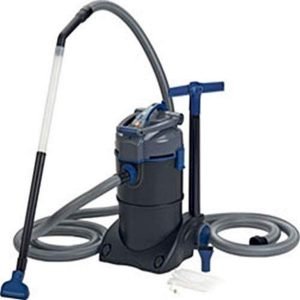


9. Mechanical Pond Sludge Removers


Check Price On Amazon

Another option for pond sludge removal is to use a professional vacuum cleaner designed for pond sludge and pond sediment. This method is slightly more expensive than using a bacteria-based pond sludge remover, but it gives you more control over the cleaning process and works with any amount of sludge. It also allows you to remove more than just organic matter, and the pond vacuum also doubles as a universal pond floor cleaning system. Since bacteria-based pond treatments are slower and cannot break down 100% of the material present, it may be preferable to use a pond sludge vacuum as a long-term investment. A pond sludge sucker also has the advantage of being effective all year round, while bacteria-based treatments are often only effective at warmer temperatures.

If you have a much smaller pond, such as a preformed pond, you can also try to get rid of the mud by piercing the pond bottom with a wide-rimmed net. While this would require much lower pond work, it is a cheaper option for pond owners on a budget and smaller water gardens.

Combining both pond sludge removal treatments is also not uncommon for optimal results, as a vacuum cleaner is best suited to remove most soil debris and a natural sludge-retaining product that is then replenished to control future build-up.


10. PondCare Ecofix Sludge Destroyer (100% Natural)


Check Price On Amazon

A highly concentrated natural bacteria-based sludge remover, PondCare’s EcoFix Sludge Destroyer is a great way to get your pond up and running in spring and refill in late summer. The sludge remover contains 100% natural active ingredients in the form of efficient bacteria capable of breaking down pond sediment in your pond soil. This particular remover works best in spring or summer, as bacteria require warmer temperatures to work. The best time to use this remover would be early spring as a starting point, and then regular doses until late summer to ensure a clean, sludge-free pond of water during the colder months.

The 5 strains of beneficial bacteria contained in this remover are not only capable of breaking down sludge, but also contribute to the removal of dead algae. As the bacteria formula removes organic matter, the oxygen levels in your pond water will naturally increase. This is especially good for pond fish and will help prevent further algae growth in the future. The best pond sludge remover for the warmer months.


How do you remove mud from a pond?

There are a few ways to remove mud from a pond, some easy, some not. Ultimately it depends on how bad the mud has gotten.

Sludge removal products like the one we recommend in this review are a great option that doesn’t take a lot of time or effort. While there are different formulas, they all work by speeding up the decomposition process, removing sludge and the things that cause it quickly.

If the debris has not yet broken down into sludge, the sludge removal products will continue to work to keep it from getting too thick and solidifying. In this case it is also a good idea to use a net to remove what you can when it is still light and loose enough.

Once the sludge has become heavy and hard it may be a bit more difficult to remove. You may need to invest in a pond vacuum to remove sludge if sludge removal products don’t work.

If the worst turns out to be worse and the mud is too difficult to remove, you may need to change the water completely. This basically means draining the entire pond and starting all over. This will work, but it is not an ideal solution.
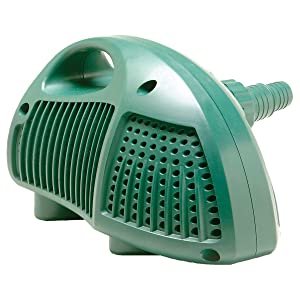
Draining the pond is considered a last resort. It destroys the water chemistry and balance of beneficial bacteria and requires you to find a new temporary home for the fish. A sludge remover is definitely worth trying before you proceed with emptying the pond.


How to use the pond sludge remover?

Each product is a little different, so follow the instructions on the packaging of the product you choose. That said, there are a few things that most of these products have in common when it comes to their application.
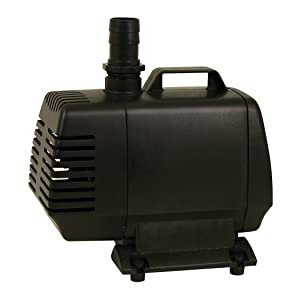
While you can put these products in your pond at any time, it’s a good idea to manually remove as much mud as possible with a net, shovel, or vacuum cleaner.

It’s not that these products don’t work if there is too much mud, they will. But the less build-up they have to go through, the sooner you’ll see results.

Some of these products come in liquid form and are simply added to water. They circulate through the pond and increase the activity of bacteria to remove sludge with Best Pond Sludge Remover. Liquid products are effective across the board and particularly good for long-term maintenance.

We also include some products that are available in granular form. They are a great option if you have a lot of mud on the bottom of your pond. To apply, simply spread the granules over the pond.

The pellets sink to the bottom of the pond and rest directly on the mud. This makes them slightly more effective for heavy and difficult mud than liquid products, although liquid products are certainly effective as well.


How to prevent pond sludge?

You know what they say, prevention is better than cure and that is certainly true when it comes to pond sludge. While it is not always likely to get rid of the last bit of dirt, regular pond maintenance is a miracle for the health of your aquarium.

One thing you can do is make sure you are using proper pond filtration. Ponds must have good mechanical and biological filtration to keep out as much organic waste as possible while encouraging the growth of beneficial bacteria.
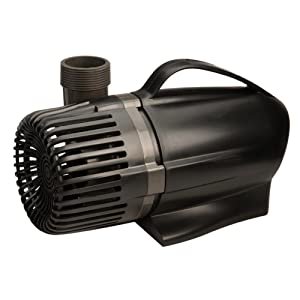
Be careful not to overload your pond or overfeed your fish. Excess fish waste and uneaten food contribute to a rapid increase in waste build-up. It’s good to remember that the fewer fish you have, the easier it is to keep them healthy.

You also need to make sure that the oxygen level in the water is adequate. More dissolved oxygen helps beneficial bacteria function efficiently and supplies fish with extra oxygen when not enough is available.

Keeping plants pruned can also help. The better care is taken, the smaller the chance that leaves and plant debris will reach the pond. If leaves are a major problem, you can also use a leaf net as a more effective way to keep them out of the water.

The products proposed by us are also excellent for preventing the formation of sludge. You can use them to clean up a major sludge problem and continue with maintenance applications to ensure that no other problem occurs.


Conclusion

The API Pond-Zyme Sludge Shredder is our best pond sludge remover with a rating of 9.9 / 10. It can be used twice a week as a crash course to quickly remove sludge, then used during the summer months. and healthy pond.

Pond mud not only looks dirty, it can also quickly make your pond unsafe for plants, fish and other animals. By preventing adequate oxygenation, the pond mud prevents the fish from getting enough air and increases the hydrogen sulfide in the water, which can lead to significant problems.

There are many ways to get the mud out of your pond, but the pond mud remover is one of the easiest and most effective. It is not as laborious as physically removing the sludge with a shovel or vacuum cleaner.

With these products, all you have to do is add them to the water and wait, and reapply if necessary. They stimulate the beneficial bacteria already living in your pond to remove sludge and dirt that could generate more sludge. They are great for both treatment and prevention.