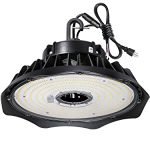
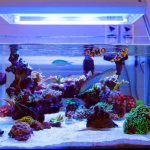
The best reef LED is the fixture—or group of fixtures—that can deliver even, controllable light across the places where your corals actually live. For a compact reef, the AquaIllumination Prime 16HD is the most approachable option here. The Kessil A360X suits reef keepers who value point-source shimmer and modular placement, while the EcoTech Radion XR15 G6 Blue is the premium high-output choice. Fluval Marine 3.0 is the broad bar-light option for fish-only marine displays and lower-demand, shallow systems.

Reef LED lights at a glance
| Fixture | Best use | Published power and coverage | Main limitation |
|---|---|---|---|
| Fluval Marine 3.0 | Fish-only or lower-demand shallow marine display | 59 W for the 48–60 inch model; bar spans that length | Not our default for demanding SPS reefs |
| AI Prime 16HD Reef | Nano and small reefs | 59 W; manufacturer states a 24 × 24 inch spread | Mount is separate; one unit may not give uniform edge-to-edge coral light |
| Kessil A360X Tuna Blue | Mixed reefs, shimmer and modular placement | 90 W; 24 × 24 inches mixed reef or 20 × 20 inches SPS | Point source can shadow growing colonies; app control needs an accessory |
| Radion XR15 G6 Blue | Demanding, scalable reef systems | 95 W; manufacturer describes use on tanks 24–30 inches wide and deep | Premium cost; mount is separate and output still requires careful acclimation |
These are four different use cases, not a universal ranking. We have not independently bench-tested them, and published coverage figures are not directly comparable because manufacturers use different optics, mounting conditions and measurement methods.
Fluval Marine 3.0 — best broad bar for a fish-only or lower-demand marine display
Best for: a long, shallow marine aquarium where even visual coverage, a low profile and simple daily programming matter more than concentrated SPS-level output.
The current 48–60 inch Marine 3.0 model is a 59 W bar with 336 LEDs. Fluval lists seven controllable bands: white rated at 10,000–13,000 K, plus 400, 420, 440, 460 and 480 nm channels and pink LEDs. The FluvalSmart schedule supports sunrise, midday, sunset and night phases. The enclosed aluminum body carries an IP67 rating, and the wide individual optics are intended to reduce obvious dark zones.
Fluval reports PAR of 102 µmol m−2 s−1 at 12 inches and 63 at 18 inches for this exact 59 W model. Treat those as manufacturer measurements, not values your corals are guaranteed to receive. Mounting, water clarity, surface movement and distance from the sensor all change the result.
This is the least suitable of the four for a deep, SPS-dominant aquascape. It makes more sense for fish-only viewing or a lower-light plan whose actual intensity has been checked at coral height.
Official Fluval Marine 3.0 specifications
AquaIllumination Prime 16HD Reef — best compact reef option
Best for: a nano or small reef where a compact fixture, broad channel control and an easy upgrade path are more useful than buying a large panel.
The Prime 16HD is 4.88 inches square and draws 59 W at full power. Its cluster contains cool white, blue, royal blue, photo red, green, violet, UV and moonlight emitters. AI states a 24 × 24 inch spread and a peak of 100 µmol m−2 s−1 at 24 inches. The TIR lens has a diffuse exit surface to improve color blending.
The HD system can redirect unused power from one color channel to channels that are active. That is useful control flexibility, but it is not a reason to start with every preferred channel at maximum. Use a conservative program and measure at several coral positions.
The box includes the fixture and power adapter. The tank mount, flex arm and hanging kit are separate, so include one in the real installed price. A single light can be appropriate over a compact aquascape, but a marketing spread does not ensure uniform coral-ready intensity at all edges. Wide rockwork or branching colonies may require a second light or different placement.
Official AI Prime 16HD Reef page · Prime 16 manual
Kessil A360X Tuna Blue — best for point-source shimmer and modular coverage
Best for: a mixed reef where natural-looking shimmer, compact fixtures and the freedom to place multiple light sources around the aquascape are priorities.
The A360X uses up to 90 W. Kessil rates its bare-lens coverage at 24 × 24 inches for a mixed reef and 20 × 20 inches for an SPS-dominant system. The dense-matrix array blends its Tuna Blue spectrum with controllable red, green and violet/indigo channels. Manual knobs provide immediate intensity and color changes.
The concentrated source produces the shimmer many reef keepers want, but point-source light can cast hard shadows behind branches and rock. As colonies grow, review placement rather than assuming the original layout still lights every surface. Optional reflectors trade spread for greater concentration and must be considered when using published coverage guidance.
A hanging ring and basic hanging hardware are included. A mounting arm or gooseneck is separate. Networked schedules and the acclimation program require a compatible Kessil Wi-Fi dongle or Spectral Controller X, so confirm the controller arrangement before purchase.
Official Kessil A360X page · Kessil coverage guide
EcoTech Marine Radion XR15 G6 Blue — best premium high-output option
Best for: a demanding mixed or SPS-oriented reef that needs high output, broad optical spread and a scalable multi-fixture ecosystem.
The XR15 G6 Blue is a 7-inch-square, 95 W fixture. Its blue-weighted cluster includes royal blue and blue channels, several violet wavelengths from 395 to 430 nm, white, red and moonlight emitters. EcoTech describes the fixture for aquariums 24–30 inches wide and deep, while its HEI2 optics are designed to increase spread and reduce shadowing.
A wide optic does not eliminate the need to map PAR. Depth, mounting height and coral structure can still produce bright and shaded zones. The Blue model is deliberately blue-weighted; buyers who want a broader white-balanced appearance should compare EcoTech’s current Pro configuration rather than assuming one spectrum suits every preference.
Programming uses the Mobius ecosystem. RMS arms, tracks and hanging hardware are separate options. Plan the mount, cable path, total fixture count and controller behavior after a power interruption before committing to the system.
Official EcoTech Radion G6 specifications
How to choose a reef LED
Start with the animals, not the color setting
A fish-only marine tank needs enough even light for viewing and a sensible day/night rhythm; it does not need coral-growth intensity. A reef must be planned around the actual coral species and their positions. “Soft coral,” “LPS” and “SPS” are useful shopping shorthand, but they are not precise light prescriptions.
Map footprint, depth and shadows
Record the tank’s internal length, width and water depth. Then mark where each coral will sit. A fixture may illuminate the water surface broadly while providing much less light at the sand bed or behind a tall rock. Wide tanks and mature branching corals often benefit from multiple lower-intensity sources rather than one severe hot spot.
Use PAR as a measurement, not a promise
PAR is the photon flux from 400 to 700 nm and is more useful for photosynthetic organisms than human-oriented lumens. It does not describe the spectral distribution, and one reading cannot reveal every light environment within a colony. Coral tissue and skeleton alter and redistribute light; primary research has found steep, species-dependent gradients inside coral tissue.
Manufacturer charts help with initial planning. For light-demanding corals, use a suitable underwater quantum sensor—owned, borrowed or rented—to measure several positions after the fixture is mounted. Record the schedule and channel settings with each reading. Avoid treating a generic online PAR range as a guarantee for every species.
Do not choose by Kelvin or wattage
Kelvin describes the visual appearance of nominal white light; it is not a complete spectrum report or a coral-growth score. Wattage describes electrical demand, not how much usable light reaches a coral. Optics, mounting, spread, spectrum and thermal management all affect the result.
Likewise, violet or marketing-labeled “UV” emitters do not sterilize aquarium water. They are not a substitute for an enclosed, correctly sized UV sterilizer, and the fixture should never be promoted as disease prevention.
Include every accessory in the price
Compare the fixture count, mounts, controller or dongle, power supplies, diffuser or reflector and any rail needed for the finished installation. Check the exact regional package and local voltage. A cheaper fixture can become the expensive option if it needs several accessories or cannot cover the aquascape evenly.
How to acclimate corals to a new light
- Record the old schedule and, where possible, measure light at the coral positions before the change.
- Install the new fixture at the manufacturer-approved height and begin below the intended final intensity. Use the maker’s acclimation mode if it is understood and appropriate.
- Keep the photoperiod stable while increasing intensity gradually over multiple weeks. Change one major variable at a time.
- Observe tissue paling, recession, persistent retraction and unusual darkening, but do not diagnose from appearance alone. Check temperature, salinity, alkalinity, nutrients and flow when coral condition changes.
- Re-measure after moving the light, changing optics or altering rockwork, and again as colonies grow and create new shadows.
More light is not automatically safer or faster. Excess light can contribute to photodamage, especially when temperature or other conditions are already stressful. Keep a real dark period. Controlled studies have found that even low artificial light throughout the night can impair coral physiology, so decorative moonlight should be dim and limited rather than bright all night.
Saltwater electrical and mounting safety
- Use a correctly installed GFCI/RCD-protected circuit where applicable and create drip loops below plugs and controllers.
- Keep power supplies, connectors and extension joins dry and protected from splash and salt creep.
- Use only the specified tank mount, rated suspension point and required water clearance. Do not improvise hanging hardware over an aquarium.
- Keep fans and heat sinks unobstructed. LEDs still produce heat even when they transfer less of it directly to the water than some older lamps.
- Disconnect power before cleaning. Follow the manual when removing salt deposits and replace damaged or corroded cables and mounts.
- Check what the fixture does after a power or network interruption. A safe local schedule is more important than decorative weather effects.
Lighting is only one part of reef stability. Maintain appropriate salinity and water chemistry with a consistent process; our reef salt guide explains why matching the mix to the system matters. If equipment will sit below the display, plan drainage, operating depth and power-off capacity with the reef sump guide.
Frequently asked questions
How many hours should reef lights run?
There is no single correct duration for every spectrum and intensity. Use a stable schedule with gradual ramps if desired, a defined main-light period and a genuine dark interval. Do not compensate for inadequate intensity by extending light late into the night without measuring and observing the system.
Is blue light all coral needs?
Blue wavelengths are important to coral photosynthesis and fluorescence, but “bluer is always better” is not a safe rule. Spectrum, total intensity, duration, coral species, prior light history and the rest of the aquarium environment interact.
Can an LED fixture replace a UV sterilizer?
No. Violet or near-UV diodes in a reef light illuminate the aquarium; they do not provide the controlled dose and enclosed contact chamber of a water sterilizer.
Should I rent a PAR meter?
For a demanding reef, borrowing or renting a suitable underwater PAR meter can be more useful than buying a stronger fixture blindly. Measure multiple coral positions with the final mounting height, water level and schedule settings.
Sources
- Fluval — Marine 3.0 59 W specifications
- AquaIllumination — Prime 16HD Reef
- Kessil — A360X Tuna Blue
- EcoTech Marine — Radion G6
- Wangpraseurt et al. — Light gradients and optical microniches in coral tissues
- Wangpraseurt et al. — In vivo light and photosynthesis during coral bleaching
- Tamir et al. — Artificial light at night and coral stress
Manufacturer specifications and availability were checked October 13, 2026. Verify the exact regional model and package before purchase.