Best Betta Water Conditioners: 5 Current Options

Best Betta Water Conditioners: 5 Current Options

Short answer: a good betta water conditioner must neutralize both chlorine and chloramine at a dose you can measure accurately. For most filtered betta aquariums, Seachem Prime is our best-value choice; Tetra BettaSafe is easier to measure for very small water changes.

Betta water conditioner bottles for treating aquarium tap water
Choose a conditioner for your tap-water disinfectant and measure it for the actual volume being replaced.

Best betta water conditioners at a glance

Product Best for Important distinction Where to buy
Seachem Prime Best overall value Very concentrated; accurate small-volume dosing matters Check on Amazon
Tetra BettaSafe Small betta tanks Betta-labelled, less concentrated format Check on Amazon
API Stress Coat General freshwater use Conditions tap water; includes aloe Check on Amazon
Aqueon Betta Bowl Plus Simple small-volume changes Convenient bottle, but still measure the dose Check on Amazon
Seachem Betta Basics Betta-and-plant setups Also buffers toward pH 7; not ideal when you want to preserve a different stable pH Check on Amazon

Product formulas and directions can change. Read the current label before dosing. As an Amazon Associate, Aquarium Hunter earns from qualifying purchases.

Our five current picks

1. Seachem Prime — best overall value

Prime is a practical choice when you maintain more than one aquarium or make regular water changes. It removes chlorine and chloramine and is extremely concentrated, so a bottle lasts a long time. That concentration is also its main drawback in a nano tank: use a marked syringe or dropper instead of guessing.

The manufacturer also says Prime temporarily detoxifies ammonia, nitrite and nitrate. Treat that as a short-term safety measure, not a substitute for a cycled filter, testing and water changes. Total-ammonia tests may still register bound ammonia.

Check Seachem Prime on Amazon · Manufacturer information

2. Tetra BettaSafe — best for small, straightforward changes

BettaSafe is designed for betta aquariums and neutralizes the common tap-water disinfectants. Its small bottle and betta-specific directions suit an owner who changes only a few gallons at a time. Confirm the dose on your bottle and calculate it from the replacement-water volume.

Check Tetra BettaSafe on Amazon

3. API Stress Coat — best multipurpose freshwater option

API Stress Coat removes chlorine, neutralizes chloramine and heavy metals, and contains aloe. It is suitable for bettas, but aloe is not a cure for infection, fin damage or poor water quality. Diagnose illness separately instead of relying on a conditioner as medicine.

Check API Stress Coat on Amazon · Manufacturer information

4. Aqueon Betta Bowl Plus — best for simple small-volume dosing

This is another easy-to-find betta-labelled conditioner for tap-water changes. It can be convenient for one small aquarium, although the cost per treated gallon is usually higher than a concentrated general-purpose conditioner. A betta still needs a heated, filtered and cycled aquarium; conditioner does not make an unfiltered bowl self-sustaining.

Check Aqueon Betta Bowl Plus on Amazon

5. Seachem Betta Basics — best when neutral buffering suits your water

Betta Basics removes chlorine and chloramine and, according to Seachem, buffers water toward pH 7. That can be useful in some betta-and-plant setups, but it is not automatically better than a non-buffering conditioner. A stable, appropriate pH is generally safer than repeatedly forcing a particular number.

Check Seachem Betta Basics on Amazon · Manufacturer information and directions

How to choose safely

  • Check your utility report. Water that contains chloramine needs a product explicitly labelled for chloramine, not merely chlorine.
  • Prioritize measurable dosing. In a small aquarium, a syringe or graduated pipette is much more reliable than an unmarked cap.
  • Avoid unnecessary additives. If your pH is already stable, a simple dechlorinator may be preferable to a buffering product.
  • Calculate the replacement volume. Follow the current label; do not assume every brand uses the same concentration.

How to condition water for a betta

  1. Measure how much old water you removed.
  2. Fill a clean, aquarium-only bucket with replacement tap water.
  3. Measure the label dose for that volume. Do not mix conditioners unless a veterinarian or manufacturer directs you to.
  4. Match the replacement water reasonably closely to the aquarium temperature.
  5. Add the treated water gently and keep the filter running normally.
  6. Test ammonia, nitrite and nitrate on schedule. Conditioner does not complete the nitrogen cycle.

If you add tap water directly to a large aquarium, follow the manufacturer’s instructions for that method. Severe overdosing of reducing conditioners can lower available oxygen, so never use an arbitrary “extra-safe” dose; increase aeration and seek product-specific advice if a major mistake occurs.

What conditioner cannot fix

Dechlorinator does not remove all dissolved minerals, lower nitrate caused by poor maintenance, correct an unsuitable temperature, or replace biological filtration. It also cannot make distilled or reverse-osmosis water nutritionally complete; those waters generally require remineralization before routine freshwater use.

Frequently asked questions

Can I add my betta immediately after conditioning tap water?

Most conditioners act quickly when correctly dosed, but safe water also needs the right temperature and a cycled aquarium. For a new setup, dechlorination is only one part of preparation.

Does leaving tap water out overnight make it safe?

Not reliably. Free chlorine may dissipate, but chloramine is designed to remain stable. Use a conditioner labelled for the disinfectant in your supply.

Can I use bottled, distilled or RO water instead?

Bottled water varies, while distilled and RO water lack minerals fish need for stable chemistry. They are not automatic substitutes for properly conditioned tap water.

How often should I add conditioner?

Use it whenever untreated tap water enters the aquarium, following the product label. Do not add routine extra doses to compensate for missed water changes or an uncycled filter.

Is betta conditioner different from ordinary aquarium conditioner?

Often the main differences are concentration, bottle size and dosing instructions. A standard freshwater conditioner that handles both chlorine and chloramine can be suitable for bettas when measured correctly.

Verdict

Seachem Prime offers the best value for most established aquariums, while Tetra BettaSafe is an approachable choice for accurately measured small water changes. Whichever you choose, the label, your tap-water disinfectant and precise dosing matter more than the word “betta” on the bottle.
Best Betta Fish Tanks: 4 Safe Current Options

Best Betta Fish Tanks: 4 Safe Current Options

Disclosure: Aquarium Hunter may earn a commission from qualifying purchases made through links on this page, at no extra cost to you.

The best betta tank is a heated, filtered aquarium with a secure lid and enough room for stable water quality. For most keepers, a standard 10-gallon tank is the easiest starting point. A well-designed 5-gallon aquarium can work, but tiny bowls and novelty tanks do not provide the swimming space, temperature stability or waste dilution a betta needs.

Betta fish swimming in a planted aquarium with open horizontal space
A betta aquarium should combine calm swimming space, warm stable water, gentle filtration and easy access for maintenance.

Quick comparison

Tank or kit Size Best for Important note Buying option
Aqueon Rectangle LED Kit 10 gal Best overall betta starter kit Confirm current kit contents Manufacturer details
Tetra Complete LED 20 20 gal Best larger setup Protect intake and manage flow Check on Amazon
Fluval Spec 16 16 gal Best premium planted display Heater normally sold separately Check on Amazon
Marineland Portrait 5 5 gal Best compact option Minimum practical size; tune flow carefully Check on Amazon

Best betta fish tanks

1. Aqueon Rectangle LED Kit — best overall

A conventional 10-gallon rectangular aquarium is our strongest general recommendation. It gives one betta useful horizontal swimming space, more stable temperature and water chemistry than a desktop bowl, and room for plants and hides without crowding the fish. The current Aqueon 10-gallon rectangle kit is listed with a glass tank, LED hood, QuietFlow filter, heater, thermometer, net, food, water conditioner and setup guide.

Kit contents can change, so confirm the exact package. The filter may need a prefilter sponge or other gentle adjustment if the intake or current is too strong. We are linking to the manufacturer because we did not find a sufficiently reliable exact current Amazon listing for this kit.

See the current Aqueon Rectangle LED kits

2. Tetra Complete LED 20 — best larger setup

A 20-gallon tank is easier to keep stable and provides more aquascaping room. The Tetra Complete LED 20 includes a rectangular glass aquarium, LED hood, Whisper PF20 filter and 100-watt heater. It can make a spacious home for one betta and carefully researched compatible livestock, but a larger tank does not automatically make every tank mate safe.

Check the filter intake and current around the surface where a betta breathes and rests. Add broad-leaved plants or a dedicated resting leaf near the surface without blocking access to air.

Check the Tetra Complete LED 20 on Amazon · See Tetra specifications

3. Fluval Spec 16 — best premium planted display

The Fluval Spec 16 has a clean display profile, integrated three-stage rear filtration and a plant-capable 7000K LED. Its 16-gallon volume offers a useful safety margin over nano tanks while keeping equipment out of the main display.

A heater is normally an additional purchase. The return flow should be adjusted or diffused if it pushes the betta around, and openings around a lid or equipment must not provide an escape route.

Check the Fluval Spec 16 on Amazon · See Fluval specifications

4. Marineland Portrait 5 — best compact option

The Marineland Portrait is a five-gallon glass kit with concealed three-stage filtration, adjustable flow and an LED light. It can support one betta when properly heated, cycled and maintained, and its small footprint suits spaces that cannot take a standard 10-gallon tank.

Five gallons is much less forgiving than 10 or 20 gallons. Test the water consistently, keep up with maintenance and avoid adding fish tank mates. Vertical volume does not replace horizontal swimming length, so this is a compromise for limited space rather than the overall best choice.

Check the Marineland Portrait 5 on Amazon · See Marineland specifications

What a betta tank needs

At least 5 gallons, preferably 10

Five gallons is a practical minimum for a permanent single-betta aquarium, while 10 gallons is easier to heat, filter and maintain. Prioritize a rectangular footprint over a tall, narrow shape because bettas use horizontal space and regularly visit the surface.

A secure lid

Bettas can jump. Use a fitted lid and check gaps around cables, filters and feeding openings. Leave an air space between the water surface and lid so the fish can use its labyrinth organ, and keep the air above the water warm rather than exposing the fish to cold drafts.

A reliable adjustable heater

Bettas are tropical fish. A useful general target is around 78–80°F (25.5–26.5°C), but use a separate thermometer and avoid sudden changes. Choose a heater appropriate for the aquarium volume and room temperature, position it where water circulates, and never operate it dry.

Gentle, established filtration

A filter processes waste and moves oxygenated water, but the current should not force a betta to fight continuously. Sponge filters, baffled outlets and prefilter sponges can help. Preserve mature biological media during maintenance; replacing every cartridge and washing the filter in untreated tap water can disrupt the nitrogen cycle.

Resting places and safe cover

Use live or soft silk plants, caves without sharp edges and at least one resting place near the surface. Avoid rough plastic decorations that can snag fins. Keep enough open space for swimming and make sure the fish cannot become trapped.

Set up and cycle the tank before the betta arrives

  1. Rinse the empty tank and equipment with water only; do not use household soap.
  2. Add rinsed substrate, safe decorations, plants, heater and filter.
  3. Fill with tap water and add a conditioner that treats chlorine or chloramine as appropriate.
  4. Run a fishless cycle using an ammonia source and a reliable liquid test kit.
  5. Add the betta only when the cycle can process ammonia and tests show zero ammonia and zero nitrite, with nitrate being produced.
  6. Acclimate the fish carefully, keep the light low at first and test frequently after introduction.

Maintenance

Test ammonia, nitrite and nitrate and perform regular partial water changes based on the results and livestock load. Vacuum accessible waste from the substrate, wipe algae as needed and rinse reusable filter media gently in removed aquarium water. Match new water temperature closely and always use conditioner.

Do not replace all water, deep-clean every surface and replace all filter media together. That removes much of the biological stability the aquarium depends on.

What to avoid

  • Unheated bowls, vases and tanks under five gallons as permanent homes
  • Divided tanks that allow fish to see and flare at one another continuously
  • Sharp plastic plants and rough decorations
  • Strong unprotected intakes or relentless current
  • Adding a fish to an uncycled aquarium
  • Assuming a “self-cleaning” planter or small ecosystem replaces filtration and water changes
  • Adding tank mates without researching temperament, space and backup separation

Frequently asked questions

Can a betta live in a bowl?

A bowl is not a suitable permanent home. It is difficult to heat and filter reliably, holds little water and usually provides inadequate swimming space.

Does a betta tank need a filter?

Yes, a gently filtered aquarium is the most dependable setup. Bettas can breathe atmospheric air, but that does not remove ammonia or make dirty water safe.

Does a betta tank need a heater?

Usually yes. Unless the room keeps the aquarium consistently within an appropriate tropical range day and night, use a correctly sized aquarium heater and a separate thermometer.

Can I keep two bettas together?

Two male bettas should not share a tank. Female groups are advanced, risk-prone setups that need substantial space, cover, close observation and a separation plan; they are not a beginner recommendation.

Our verdict

A conventional 10-gallon rectangular kit such as the Aqueon Rectangle LED Kit is the best overall starting point for one betta. The Tetra Complete LED 20 provides the most stability and space, while the Marineland Portrait 5 is the smallest option here that we would consider for a permanent, carefully maintained setup.

Best Betta Fish Food: 5 Current Staple Diets

Best Betta Fish Food

The best betta food is a complete, appropriately sized staple that the fish eats readily without leaving waste. Bettas are insect-oriented carnivorous fish, but no single ingredient or protein percentage guarantees quality. Pellet size, freshness, controlled portions and suitable variety all matter.

Betta fish approaching a measured portion of food
Offer a few correctly sized pieces at a time and remove anything the betta does not eat.
Quick recommendation: Fluval Bug Bites Betta Formula is the strongest general staple here because its micro-granule range suits different feeding positions. Hikari Betta Bio-Gold is easier to count precisely for a betta that accepts floating pellets.

Quick comparison

Food Best use Format Buying option
Fluval Bug Bites Betta Best all-round staple Slow-sinking micro granules Check on Amazon
Hikari Betta Bio-Gold Precise counting 1.1–1.4 mm floating pellets Check on Amazon
Omega One Betta Buffet Fish-based floating pellet Pellets Check on Amazon
New Life Spectrum Betta Small daily pellet Pellets Check on Amazon
Ocean Nutrition Atison’s Betta Food Alternative floating staple Pellets Check on Amazon

Packaging and formulas can change. Check the exact current label, pellet size and feeding directions before ordering.

1. Fluval Bug Bites Betta Formula

Best for: a versatile everyday staple.

Bug Bites Betta Micro Granules are slow sinking and range from approximately 0.25 to 1 mm, allowing a betta to feed at the surface or as particles descend. Fluval lists black soldier fly larvae among the core ingredients and 45% minimum crude protein. Feed only what the fish takes promptly rather than treating a two-minute maximum as a required quantity.

Check Bug Bites on Amazon   Manufacturer details

2. Hikari Betta Bio-Gold

Best for: owners who want a countable floating pellet.

Bio-Gold pellets are approximately 1.1–1.4 mm. Hikari advises feeding pellets individually, confirming each is eaten and removing leftovers. Its published amounts vary with body length, which is more useful than an unqualified “three pellets for every betta” rule.

Check Betta Bio-Gold on Amazon   Manufacturer feeding guide

3. Omega One Betta Buffet Pellets

Best for: a floating pellet led by fish ingredients.

Omega One lists salmon and whole herring first and gives a guaranteed analysis of 42% minimum crude protein and 8% minimum fat. Floating pellets make it easy to see whether the fish has eaten, but remove any pellet that begins drifting into plants or the filter.

Check Omega One on Amazon   Manufacturer analysis

4. New Life Spectrum Betta Formula

Best for: a compact alternative pellet.

This betta-specific food is useful for fish that prefer small pellets. Introduce any new staple gradually and keep the previous proven food available until acceptance is clear. Refusal can also result from low temperature, stress or illness rather than taste.

Check New Life Spectrum on Amazon

5. Ocean Nutrition Atison’s Betta Food

Best for: another floating staple option.

Atison’s Betta Food provides a small floating pellet that can be counted and observed. Confirm the current container is the everyday Betta Food rather than Atison’s Betta Pro, as similarly named formulas and pellet sizes can differ.

Check Atison’s Betta Food on Amazon

How much and how often?

Start with the exact label and the fish’s body size. Offer one piece at a time and stop when the measured portion is gone; do not feed until the fish loses interest. Many adult bettas do well with one or two small meals daily, but pellet density varies widely. Monitor body condition from above: the abdomen should not remain markedly swollen after feeding.

A routine weekly fast is not a cure-all and is unnecessary when portions are already appropriate. Persistent swelling, pineconing, abnormal feces, loss of appetite or buoyancy change requires prompt water testing and advice from an aquatic veterinarian.

Staples and treats

Freeze-dried bloodworms, brine shrimp and similar foods are treats or rotation foods, not complete staples. Frozen foods can add variety when sourced and stored safely. Live food carries pathogen and parasite risks unless cultured under controlled conditions. Avoid wild mosquito larvae from water that may contain pesticides.

Prevent waste and stale food

  • Use feeding rings or a consistent feeding corner so leftovers are visible.
  • Pause filter flow only if necessary and restart it immediately after feeding.
  • Buy small containers that will be used while fresh.
  • Keep the lid dry and tightly closed; discard damp, moldy or rancid-smelling food.
  • Test ammonia and nitrite whenever appetite changes or food has been left in the tank.

Vacation feeding

A healthy adult betta is usually safer with a carefully planned short fast than with an untested dissolving vacation block or a large pre-trip meal. For longer absences, pre-measure each portion for a reliable caretaker. Test any automatic feeder well before departure and make sure it cannot dump its contents.

Frequently asked questions

Are flakes suitable for bettas?

Betta-specific flakes can work, but they are harder to measure and scatter more quickly than pellets. A fish that accepts an appropriate pellet is generally easier to portion.

Should pellets be soaked?

Choose a suitable small pellet and follow its instructions. Prolonged soaking can leach nutrients and does not prevent every cause of bloating.

What if the betta spits food out?

The piece may be too large or unfamiliar. Try a smaller particle and transition gradually. Repeated refusal alongside other symptoms warrants a husbandry and health check.

Final verdict

Fluval Bug Bites is the best versatile staple in this group. Hikari Bio-Gold is easiest to count precisely, while Omega One offers a strong fish-based floating pellet. New Life Spectrum and Atison’s provide useful alternatives for selective fish.

Affiliate disclosure: Aquarium Hunter may earn a commission from qualifying Amazon purchases, at no additional cost to you. Recommendations are matched to the exact foods discussed.

Best Betta Filters: 5 Gentle, Effective Options

Best Betta Filters: 5 Gentle, Effective Options

Disclosure: As an Amazon Associate, Aquarium Hunter earns from qualifying purchases.

A betta filter should keep ammonia and nitrite at zero without forcing the fish to fight a strong current. For most single-betta aquariums, the best choice is a small adjustable filter or a properly sized sponge filter. Our top pick is the AquaClear 20 for tanks from 5 to 20 gallons because its flow can be reduced and its media basket is easy to customize.

Important: manufacturer tank ratings are only a starting point. Observe your fish after installation. If the betta is pushed sideways, hides constantly, cannot reach food, or has fins pulled toward the intake, reduce or diffuse the flow and fit an intake sponge.

Best Betta Filters: Quick Comparison

Filter Best for Flow control Amazon
AquaClear 20 Best overall, 5–20 gallons Adjustable; may still need a baffle View on Amazon
Penn-Plax Cascade 20 Compact tanks Adjustable View on Amazon
Aqueon QuietFlow Internal 10 Quiet internal installation Adjustable placement; baffle as needed View on Amazon
Marina S10 Slim hang-on-back option Adjustable View on Amazon
Tetra Whisper Internal 5–10 Simple internal filtration Fixed; intake sponge/baffle recommended View on Amazon

Do Betta Fish Need a Filter?

Yes, a filter is strongly recommended. Bettas can breathe air at the surface with their labyrinth organ, but that does not protect them from ammonia, nitrite, dissolved waste, or unstable water conditions. A filter gives beneficial bacteria a large, oxygen-rich surface where they convert toxic ammonia to nitrite and then nitrate.

A filter does not eliminate routine maintenance. Test the water and perform regular partial water changes based on the results and the tank’s stocking. Never replace all mature filter media at once, and rinse reusable sponge or biomedia gently in removed aquarium water rather than untreated tap water.

1. AquaClear 20 — Best Overall

AquaClear 20 filter for a betta tank

The AquaClear 20 is currently listed for 5- to 20-gallon aquariums. Its roomy media basket lets you use sponge and biological media without relying entirely on disposable cartridges. The output is adjustable, which makes it easier to tune than a fixed-flow filter.

Even at its lowest setting, a long-finned betta may need a sponge on the intake and a simple output baffle. Keep the aquarium water level high so the returning water does not create a steep waterfall.

Pros: adjustable flow, reusable media, flexible media basket. Cons: occupies space behind the tank and may require baffling.

Check the AquaClear 20 on Amazon


2. Penn-Plax Cascade 20 — Best Compact Hang-On Filter

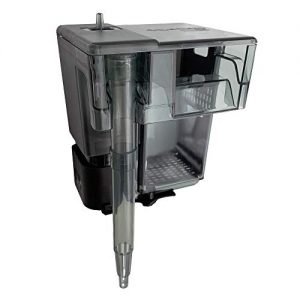
Penn-Plax Cascade 20 nano aquarium filter

The Cascade 20 is a mini hang-on-back filter with adjustable flow and compact dimensions. It suits a small aquarium where space inside the tank is limited. Its leveling adjustment helps keep the unit positioned correctly, while the intake extension lets you choose where water is drawn from.

The small media area clogs faster than a larger filter, so inspect it frequently. Avoid treating a printed cartridge-replacement schedule as mandatory: preserve established biological media whenever it remains intact, and replace chemical carbon only when it has a specific job.

Pros: compact, adjustable flow, straightforward access. Cons: small media capacity and possible waterfall noise if the water level drops.

Check the Cascade 20 on Amazon


3. Aqueon QuietFlow Internal 10 — Best Quiet Internal Filter

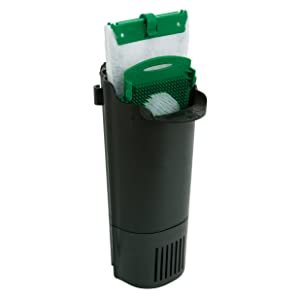
Aqueon QuietFlow internal filter for betta fish

This internal model keeps the motor underwater, which can reduce mechanical and waterfall noise. It is designed for small aquariums and can be positioned to limit surface disturbance. Internal filters also allow the tank to sit closer to a wall.

The tradeoff is that the unit uses swimming space and must be unplugged before maintenance. Protect the intake, position the outlet away from the betta’s preferred resting area, and make a drip loop in the power cord.

Pros: quiet, space-saving outside the aquarium, flexible placement. Cons: uses interior space and may need an intake sponge.

Check the Aqueon QuietFlow 10 on Amazon


4. Marina S10 — Best Slim Hang-On-Back Filter

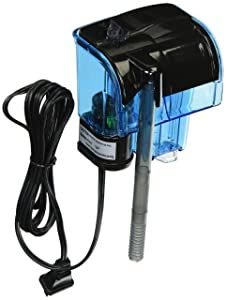
Marina S10 power filter for a betta aquarium

The Marina S10 is listed for aquariums up to 10 gallons. Its slim body and adjustable flow are useful where a bulky power filter would be awkward. The submerged motor is self-priming, so it should restart without the manual priming required by some hang-on filters.

As with every intake-driven filter, add a prefilter sponge if the slots can catch fins, shrimp, or fry. A prefilter also adds biological surface area, but it must be rinsed when debris restricts the flow.

Pros: slim design, adjustable output, simple restart. Cons: cartridge-based layout and limited media space.

Check the Marina S10 on Amazon


5. Tetra Whisper Internal 5–10 — Best Simple Internal Option

Tetra Whisper internal filter for 5 to 10 gallon tanks

The current Tetra listing covers 5- to 10-gallon aquariums and uses mechanical, chemical, and biological filtration. It clips inside the tank and is easy to access. It is inexpensive and widely supported with replacement media.

Its flow is fixed rather than truly adjustable, and recent buyer feedback includes reports of strong intake and output for small or weak fish. For a betta, we would only use it with a correctly fitted intake sponge and an output baffle if observation shows the fish struggling.

Pros: simple, quiet motor, easy-to-find media. Cons: fixed flow, significant interior footprint, and extra protection may be necessary.

Check the Tetra Whisper Internal on Amazon

What About Sponge Filters?

An air-driven sponge filter is often the gentlest choice for a betta, shrimp, fry, or a hospital tank. Water drawn through the sponge receives mechanical and biological filtration; beneficial bacteria on the sponge process ammonia and nitrite. It is incorrect to say a sponge filter provides only mechanical filtration.

You need a separate air pump, airline, check valve, and usually a control valve. Select a sponge rated for the tank, place the check valve in the correct direction, and keep the pump above the waterline or use a proper anti-siphon arrangement. Because models change frequently, compare current sponge filters on Amazon and verify the included accessories.

How to Choose a Betta Filter

Flow matters more than headline turnover

A filter rated for the tank is not automatically betta-safe. Long fins create drag, and individual fish vary. Adjustable flow, a broad outlet, a spray bar, or a baffle can make the current usable. Do not switch filtration off for long periods to solve a flow problem.

Protect the intake

A coarse prefilter sponge prevents fins, food, shrimp, and plant debris from entering the impeller. It also provides extra bacterial surface area. Choose one that fits securely without starving the pump of water.

Keep biological media mature

Most beneficial bacteria live on surfaces, especially sponge and biomedia. Clean media only when flow drops, using removed tank water. Replacing every cartridge at once can remove much of the biofilter and trigger an ammonia or nitrite spike.

Size the filter to the real aquarium

Use actual water volume after substrate and decor, stocking level, flow tolerance, and media capacity—not marketing alone. A five-gallon aquarium is a practical minimum starting point for one betta because it is easier to heat, filter, and stabilize than a bowl.

Setup and Safety Checklist

  • Cycle the aquarium before adding the fish and test ammonia, nitrite, nitrate, and pH.
  • Fit an intake sponge where fins could reach the intake.
  • Keep a clear route to the surface because bettas breathe atmospheric air.
  • Use a lid, heater, and gentle but continuous filtration.
  • Make drip loops and use a GFCI-protected outlet where available.
  • Unplug electrical equipment before putting hands into the tank.
  • After maintenance, confirm the filter restarts and water is flowing normally.

Frequently Asked Questions

How often should I clean a betta filter?

Clean it when debris noticeably reduces flow rather than on a rigid calendar. Many small filters need attention every few weeks, but the interval depends on feeding, plants, stocking, and media size. Rinse reusable media gently in water removed during a water change.

Should I replace the cartridge every month?

Not automatically. If the pad is structurally sound, rinse it and preserve the bacteria. Carbon becomes exhausted and can be replaced when you specifically need chemical filtration, but permanent sponge and biomedia are usually better biological foundations.

Can a filter hurt a betta?

Yes, if the intake traps fins or the current exhausts the fish. Add an intake guard, diffuse the output, and reassess the filter size. Torn fins, persistent hiding, or difficulty feeding are warning signs.

Can a betta live in a bowl without a filter?

A bowl is not a suitable long-term home. Small unfiltered containers accumulate waste quickly and are difficult to heat consistently. Use a cycled, covered aquarium with adequate swimming space, a heater, and gentle filtration.

Final Verdict

The AquaClear 20 is our best overall betta filter for 5- to 20-gallon tanks because it combines adjustable flow with reusable, customizable media. The Penn-Plax Cascade 20 is a compact alternative, while an air-driven sponge filter remains an excellent gentle option when paired with a suitable air pump.

Continue your setup with our guides to why bettas need filtration, betta heaters, safe betta plants, and complete betta tank setup.

5 Best Betta Tank Heaters: Safe, Adjustable Picks

5 Best Betta Tank Heaters: Safe, Adjustable Picks

Disclosure: Aquarium Hunter may earn a commission from qualifying Amazon purchases made through links on this page, at no extra cost to you.

The Hygger Small Aquarium Betta Heater is our best betta tank heater for most small aquariums because the current line offers appropriately sized wattages, adjustable control, a digital display and automatic protection features. For a conventional glass heater from a long-established aquarium brand, the Fluval M50 is a strong alternative. Always choose wattage for the tank volume, room temperature and heater maker’s chart—not the fish name on the package.

Bettas are tropical fish. Most should be kept at a stable 78–80°F (25.5–26.5°C), unless an aquatic veterinarian recommends otherwise. A heater should maintain that range without hot spots or rapid swings, and a separate aquarium thermometer should verify the actual water temperature.

Best Betta Tank Heaters: Quick Comparison

Heater Best for Control Amazon
Hygger Small Betta Heater Best overall Digital adjustable Check on Amazon
Fluval T50 Electronic Heater Premium small-tank option Electronic adjustable Check on Amazon
Fluval M50 Best conventional glass heater Adjustable dial Check on Amazon
Eheim Thermocontrol e50 Calibration and established design Adjustable and recalibratable Check on Amazon
Aqueon Submersible 50W Simple adjustable option Adjustable dial Check on Amazon

Important: Amazon may display several wattages on one listing. Confirm the selected wattage, dimensions, voltage and seller before ordering.

Our Betta Heater Picks

1. Hygger Small Aquarium Betta Heater — Best Overall

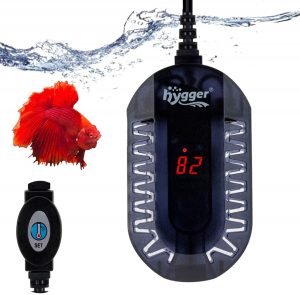
Hygger adjustable heater for a small betta aquarium

Hygger’s current small-heater line is available in multiple wattages and combines an external digital display with adjustable temperature control. This makes it easier to see the setting than on a tiny submerged dial. The listing also describes over-temperature and out-of-water protection, useful safeguards for small aquariums where the water level can change quickly.

Choose the wattage from the manufacturer’s current chart. A 10-watt model may be inadequate in a cold room, while 100 watts can be excessive for a small betta tank. The digital reading is convenient, but it does not replace a separate thermometer placed away from the heater.

Pros: several small-tank wattages; visible digital control; compact; automatic protection features.
Cons: model and controls vary by wattage; electronic display adds equipment and cable; independent verification is still necessary.

Check the Hygger Small Betta Heater on Amazon

2. Fluval T50 Electronic Heater — Best Premium Option

The Fluval T50 is a fully electronic heater marketed for freshwater aquariums up to 15 gallons. Its 50-watt output is a practical range for many 5- to 10-gallon betta tanks, provided the room-to-water temperature difference fits Fluval’s guidance. Electronic control and a protective exterior make it attractive where a bare glass tube is undesirable.

This is the most expensive option in the shortlist, and the “up to” tank rating is not a guarantee in a very cold room. Measure the aquarium’s true water volume and ambient temperature before choosing it.

Pros: electronic control; protective format; appropriate output for many standard betta tanks; established aquarium brand.
Cons: premium price; one wattage cannot suit every room and tank; freshwater-only listing should be followed.

Check the Fluval T50 on Amazon

3. Fluval M50 — Best Conventional Glass Heater

Fluval M-series adjustable aquarium heater

The M50 is a straightforward 50-watt adjustable submersible heater for freshwater or saltwater aquariums. Its slim glass body is easy to position near gentle filter flow, which helps distribute warmed water. It suits aquarists who prefer a familiar dial-controlled design without a separate electronic controller.

Glass heaters must be handled carefully. Inspect the tube before use, mount it where décor cannot strike it and never expose hot glass to air or cold replacement water. Read the current manual for orientation and minimum-water-line requirements.

Pros: adjustable; slim; widely established model; 50 watts suits many standard small aquariums.
Cons: glass body; dial is less convenient than an external display; requires careful handling during maintenance.

Check the Fluval M50 on Amazon

4. Eheim Thermocontrol e50 — Best for Calibration

Eheim adjustable aquarium heater

The Eheim Thermocontrol e50 uses the brand’s long-running adjustable glass-heater format and allows the control to be recalibrated if the setting and an accurate thermometer consistently disagree. This can be useful for a stable permanent setup.

Eheim heaters are relatively long. Check the product dimensions against the usable height or width of the tank before buying. The heater must be installed in an orientation allowed by its instructions and kept submerged to the marked level.

Pros: adjustable; recalibratable; established design; clear operating indicator.
Cons: long glass body; may be awkward in compact tanks; usually costs more than basic dial heaters.

Check the Eheim Thermocontrol e50 on Amazon

5. Aqueon Submersible 50W — Simple Adjustable Choice

Aqueon adjustable submersible aquarium heater

Aqueon’s current 50-watt submersible listing is a simple adjustable option for aquariums within its specified range. It is a better fit for a typical heated betta aquarium than the tiny, nonadjustable bowl heaters that appeared in the old version of this review.

The listing may show a generous maximum tank size, but heater capacity depends strongly on room temperature. Select conservatively for the temperature rise required and verify performance over a full day before adding a fish.

Pros: adjustable; familiar submersible design; practical wattage for many small tanks.
Cons: dial must be checked against a thermometer; glass requires care; advertised maximum volume may not apply in a cold room.

Check the Aqueon 50W Heater on Amazon

How to Choose the Right Betta Heater

Tank volume and room temperature

Start with the manufacturer’s wattage chart, then account for the difference between the coolest room temperature and the desired water temperature. A five-gallon tank in a 75°F room needs less heating than the same tank beside a winter window. Use actual filled volume after substrate and décor displacement.

Adjustable versus preset

An adjustable heater gives more control when room temperature changes, a fish needs veterinary treatment or a preset unit runs warm or cool in a particular tank. Preset heaters can be simple, but their fixed nominal setting and small wattage do not guarantee a safe temperature. For most permanent betta aquariums, adjustable control is preferable.

Independent thermometer

Every heated tank needs a separate thermometer. Place it away from the heater and check it daily at first. After installation, allow the system to stabilize in a fishless tank for at least 24 hours while monitoring the highest and lowest readings.

Heater guards and placement

Position the heater where filter circulation distributes warmth, without pinning it against substrate, décor or the tank wall contrary to its instructions. A protective guard can reduce direct contact, especially around long-finned fish, but must not trap debris or block circulation.

Safe Installation and Maintenance

  1. Inspect the heater, plug and cord. Do not use damaged equipment.
  2. Mount it exactly as the current manual permits and respect its minimum water line.
  3. Create a drip loop and use a GFCI-protected outlet where available.
  4. Let a glass heater acclimate in the water for the maker’s stated period before switching it on.
  5. Verify the temperature with a separate thermometer before adding the betta.
  6. Unplug the heater before water changes. Allow it to cool before exposing it to air, and let it re-acclimate after refilling.
  7. Replace any heater with cracks, condensation inside a sealed tube, erratic cycling or a damaged cable.

Never operate an aquarium heater in a container below its stated minimum water level. Do not repair or splice a heater cord. If a tank is overheating, unplug the heater safely, increase surface agitation, cool the room gradually and avoid sudden temperature shocks.

Frequently Asked Questions

Does a betta need a heater?

Usually, yes. Unless the room keeps the water consistently within the betta’s appropriate tropical range day and night, a thermostatically controlled heater is needed.

What temperature is best for a betta?

A stable 78–80°F (25.5–26.5°C) is a practical range for most healthy domestic bettas. Stability and accurate measurement matter more than chasing one exact number.

Is a 50-watt heater too strong for a five-gallon tank?

Not automatically. Many thermostatic 50-watt heaters are designed for small tanks, but the maker’s chart, room temperature and product dimensions must all fit. An oversized or malfunctioning heater can overheat water quickly, so independent monitoring is essential.

Can I put the heater beside the filter?

Often yes. Gentle flow near the heater can distribute warmth, provided the position and orientation comply with the heater instructions and fish cannot become trapped.

Verdict

The Hygger Small Aquarium Betta Heater offers the most convenient mix of appropriate wattage choices, adjustment, visible temperature information and protection features. The Fluval M50 is our preferred conventional glass alternative, while the Fluval T50 offers a more protected electronic design. Whichever heater you choose, size it for the actual aquarium and room, test it before adding the fish, and keep a separate thermometer in the tank.