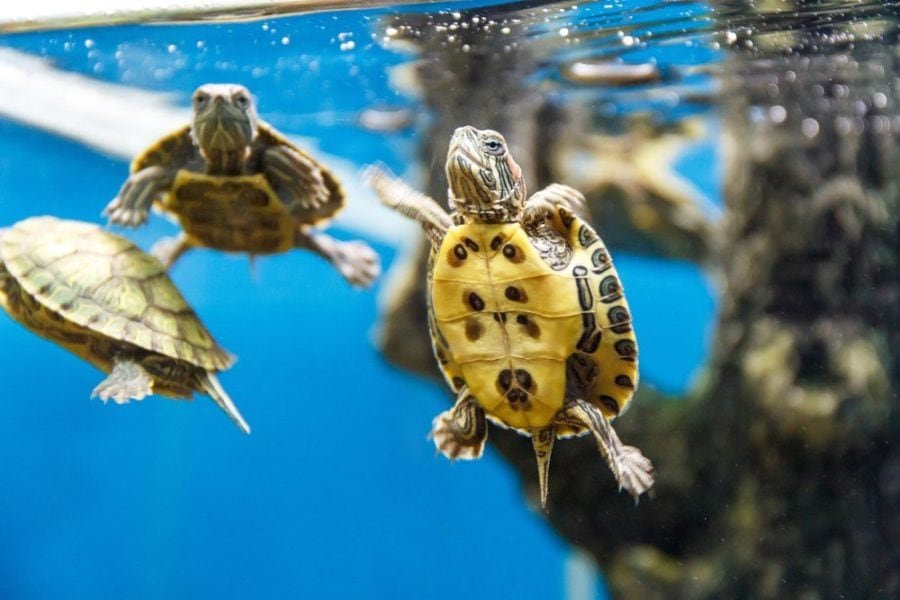
A baby snapping turtle is a wild animal or specialist reptile—not a beginner aquarium pet. The hatchling may be small, but it can grow into a large, powerful, long-lived turtle that requires extensive aquatic housing, heavy-duty filtration, safe handling procedures, and access to a reptile veterinarian.
If you found a healthy baby snapping turtle outdoors, the best response is usually to leave it where it is and keep people and pets away. Do not take it home. If it is visibly injured or in immediate danger, contact a licensed wildlife rehabilitator or local wildlife authority for instructions.

Identifying a baby snapping turtle
North American snapping turtles (Chelydra serpentina) have a large head, a long flexible neck, strong legs, webbed feet, a relatively small plastron underneath, and a long tail with a saw-toothed upper ridge. Hatchling shells are more strongly ridged than those of older adults.
Alligator snapping turtles belong to the genus Macrochelys. They have a more heavily sculptured shell with three prominent ridges and a worm-like lure on the tongue. Identification matters because adult size, distribution, conservation status, legal protection, and husbandry differ. Use a wildlife agency or qualified reptile professional rather than an image-search guess.
Should you keep a wild hatchling?
No. A wild hatchling belongs in its ecosystem. Taking it can be illegal, removes an animal from the breeding population, exposes the household to parasites and Salmonella, and creates a care commitment that may last for decades.
Do not move a healthy turtle to a pond that seems better, and never release a captive turtle. Relocation can spread disease, place the animal outside its home range, or introduce it where it is not native. If a hatchling is crossing a road and it is safe for you to help, seek local wildlife guidance and move it only in the direction it was already traveling.
Adult size changes everything
A tiny juvenile soon outgrows ordinary aquariums. Wildlife sources commonly report adult North American snapping-turtle carapaces around 8–16 inches, with powerful bodies and long necks adding substantially to the working space required. Alligator snapping turtles can become much larger.
There is no responsible universal “gallons per inch” formula for this animal. The enclosure must allow normal swimming, turning, surfacing, resting, and thermoregulation, while leaving safe clearance from heaters, plumbing, lids, and hands. Large custom tubs, indoor ponds, or legally compliant secure outdoor systems are often more realistic than glass tanks.
Housing priorities
Water depth and access to air
A young turtle must be able to reach the surface easily and rest near it without continuous swimming. Depth should be increased with the animal’s strength and ability, with stable structures that cannot trap or crush it. The enclosure must prevent escape: snapping turtles climb surprisingly well.
Filtration and water quality
Snapping turtles are messy feeders and produce a heavy waste load. Use robust mechanical and biological filtration with protected intakes. Keep ammonia and nitrite at 0 ppm, control nitrate with maintenance, remove uneaten food promptly, and condition tap water for chlorine and chloramine.
Size the system for adult waste production and real flow after media and plumbing losses. A filter advertised for a similarly sized fish aquarium may be inadequate for a large turtle.
Temperature, heat, and UVB
Do not rely on a single generic temperature range. Requirements depend on species, age, health, and origin. Ask a reptile veterinarian for a suitable water and basking-temperature plan and measure both with reliable instruments.
Provide an accessible, stable basking area and species-appropriate UVB when advised. Follow the lamp maker’s distance and replacement directions; ordinary glass and plastic can block UVB. Protect lamps and heaters from water, impact, and the turtle, and use electrical safety devices and drip loops.
Substrate and furnishings
A bare, easy-to-clean bottom may be safest in temporary juvenile housing. If substrate is used, avoid pieces the turtle can swallow and structures that can collapse. Smooth, stable hides and visual cover can reduce stress, but open swimming and turning space must remain.
What baby snapping turtles eat
Snapping turtles are omnivores. Wild juveniles eat small aquatic invertebrates, amphibian larvae, other suitable animal matter, and plant material. In captivity, a quality formulated aquatic-turtle diet can provide a consistent foundation, supplemented with suitable whole foods under veterinary guidance.
Do not feed only meat, fish fillets, dried shrimp, or live feeder fish. Muscle meat alone has an unsuitable calcium-to-phosphorus balance, and wild-caught or feeder animals can introduce parasites and disease. Bread, dairy, processed meat, and seasoned human food are inappropriate.
Food must be appropriately sized. Remove leftovers and monitor growth and body condition rather than feeding every time the turtle begs. See our evidence-based guide to wild and captive snapping-turtle diets.
Feeding frequency and supplements
Young turtles generally eat more frequently than adults, but a rigid schedule is unsafe without considering the species, size, body condition, diet, and water temperature. Follow the formulated food label as an initial guide and have a reptile veterinarian review growth.
Do not add calcium or vitamin supplements by guesswork. Deficiency is harmful, but excessive vitamin A, vitamin D, and minerals can also cause serious disease. UVB, dietary calcium, and temperature work together; one product cannot compensate for poor husbandry.
Can baby snapping turtles live together?
They should generally be housed separately. Competition, biting, food guarding, size differences, and unnoticed injuries make shared housing risky. Fish and other tank mates may be eaten, injured, or introduce disease. Adding fast fish does not make a safe community aquarium.
Safe handling
Handle only when necessary. Even a small turtle can bite, and an adult’s neck reaches much farther than many people expect. Never lift a snapping turtle by the tail because this can injure the spine and soft tissues. Do not use routine handling to try to “tame” it.
Ask a reptile veterinarian or trained wildlife professional to demonstrate a safe method for the identified species and size. Keep hands away from the head and front half of the shell, and never allow children to handle the animal.
Health monitoring
Record weight, appetite, activity, shell condition, water-test results, and measured temperatures. Arrange veterinary care for:
- open-mouth breathing, nasal discharge, wheezing, or abnormal buoyancy;
- swollen or closed eyes, mouth lesions, or inability to eat;
- shell softness, ulcers, wounds, discharge, or foul odor;
- persistent lethargy, weakness, swelling, or weight loss;
- suspected ingestion of substrate, fishing tackle, or another foreign object.
Do not force-feed or medicate a hatchling without veterinary direction. If appetite declines, use our guide on responding when a turtle stops eating.
Hygiene and household safety
Turtles can carry Salmonella while appearing healthy. Wash hands with soap and running water after contact with the turtle, its food, water, or equipment. Keep the enclosure and cleaning equipment away from kitchens and food-preparation areas.
Reptiles are a poor fit for households with very young children, older adults, or people with weakened immune systems. Discuss household risk with a healthcare professional and reptile veterinarian.
Long-term planning
Before acquisition, budget for the adult enclosure, high-capacity filtration, water use, drainage, heating, UVB equipment, electricity, structural floor load, veterinary care, and emergency power. Confirm who will care for the turtle during travel and what will happen if the owner moves or can no longer manage it.
If rehoming becomes necessary, contact a licensed reptile rescue, zoo, wildlife agency, or veterinarian. Never release the animal or advertise it without checking local transfer rules.
Frequently asked questions
Can a baby snapping turtle live in a 10-gallon tank?
A very small hatchling may physically fit for brief, closely managed care, but a 10-gallon aquarium is not a responsible long-term plan. Water quality and temperature change quickly in small volumes, and the turtle will outgrow it. Plan the adult system before acquisition.
Do baby snapping turtles need land?
They are highly aquatic but should have an easy, stable route to a dry resting or basking area when the care plan calls for it. The design must prevent trapping and escape.
Are baby snapping turtles aggressive?
Snapping is defensive behavior, especially on land where the turtle cannot retreat easily. A calm juvenile can still bite suddenly. Treat every individual as capable of injury.
Where should I buy one?
First decide whether this specialist animal is appropriate and legal. If so, obtain only a legally documented, captive-bred animal from a transparent source—never a wild turtle. Verify the scientific name and adult requirements before paying.
Key takeaway
A baby snapping turtle is not a miniature version of an easy pet. Its adult size, bite risk, waste production, lifespan, legal status, and enclosure needs demand expert preparation. Leave healthy wild hatchlings where they belong; for legal captive-bred animals, build care around accurate identification, adult-scale planning, measured water quality, balanced nutrition, minimal handling, and reptile-veterinary support.
This article provides general information and does not replace advice from a reptile veterinarian or local wildlife authority.