Can a Turtle Live in a 10-Gallon Tank? Housing and Upgrade Guide

Turtle in a 10-gallon tank

A 10-gallon tank is not a suitable long-term home for a red-eared slider or the other commonly kept aquatic turtles discussed here. A tiny hatchling fitting inside it does not make it a sound adult-housing plan. Buy for the species’ expected adult needs, including swimming space and a dry basking area.

If you already have a turtle in a ten-gallon aquarium, use this guide to plan an upgrade. Do not rely on a promise that the tank will last a year: growth, species, health and the layout determine when housing becomes inadequate.

Why ten gallons is misleading

The capacity printed on an aquarium assumes a full container. A turtle setup may hold substantially less water because it needs escape clearance and a dry area. Rocks and equipment also take up space. The useful swimming footprint matters as much as the nominal volume.

A large filter cannot create swimming room, and a small floating dock is not automatically a usable basking platform. Before buying a kit, ask whether an adult turtle could turn, swim, surface and climb out comfortably in the completed layout.

How much space should you plan for?

VCA’s aquatic turtle housing guidance, using red-eared sliders as its example, describes 10 gallons of water per inch of shell length as one planning guideline, alongside adequate swimming dimensions and a dry basking zone. This refers to water volume, not simply the aquarium’s label.

Under that guideline, a turtle with a 6-inch shell suggests roughly 60 gallons of water before allowing for the rest of the enclosure. It is a planning example, not a guarantee that every six-inch turtle belongs in the same setup. Confirm species, adult size and swimming ability with a reptile veterinarian.

MedVet’s aquatic turtle guide gives a 40–55-gallon enclosure example for a five-inch turtle. Both references illustrate why a ten-gallon starter tank should not be treated as a lasting solution.

Identify the turtle before deciding water depth

Red-eared sliders are not interchangeable with every turtle sold as a pet. Species differ in swimming ability, preferred habitat and adult size. A box turtle or tortoise needs a different housing approach altogether.

Do not automatically fill a deeper tank to the top when moving a weak, sick or unfamiliar turtle. Get species-specific guidance, provide secure access to the surface and avoid gaps where the animal could become trapped. An enclosure should prevent escape without blocking necessary ventilation.

What the replacement enclosure needs

  • Usable swimming space: sufficient length, width and appropriate depth for the individual.
  • A stable dry basking area: the turtle must be able to climb out and dry completely.
  • Suitable heat and UVB: these serve different functions; a decorative LED does not replace either.
  • Effective filtration: chosen for the actual water volume and the turtle’s waste load.
  • Safe construction: a support rated for the filled enclosure, secured equipment and no swallowable gravel or unstable rock piles.

Plan the whole enclosure before buying accessories. A cheap kit is not a saving if its tank, dock and lighting all need replacing immediately.

Heating and lighting: measure, don’t guess

MedVet lists adult aquatic-turtle water temperatures of about 75–80°F and a basking area around 85–90°F in its general guide. Treat these as reference points to discuss for the species and age you keep, not universal settings for every turtle. Measure water and basking temperatures separately.

Use reptile UVB equipment with positioning and replacement intervals appropriate to the product and animal. Ordinary glass between a UVB lamp and the turtle interferes with useful exposure. Follow the lamp’s distance, fixture and screen guidance rather than assuming one bulb strength or one mounting distance fits every enclosure. Provide a normal dark period instead of decorative colored lighting all night.

If your turtle is currently in a ten-gallon tank

  1. Confirm its identity and shell length. Arrange a reptile veterinary visit if the species or health is uncertain.
  2. Assess the immediate setup. Check water quality, measured temperatures, basking access and whether the turtle can move safely.
  3. Arrange appropriate larger housing promptly. A purpose-built enclosure or a suitable water-safe stock tank may be an option when a glass aquarium is impractical.
  4. Prepare equipment before moving the turtle. Check the filter, temperature controls, dry area and escape prevention.
  5. Seek responsible rehoming help if necessary. Contact a reptile rescue or veterinarian rather than releasing the animal outdoors.

Temporary medical or emergency housing should follow the veterinarian’s instructions. It is not an exception that makes a ten-gallon tank a recommended purchase for permanent care.

Keep water clean without destroying the filter

Remove uneaten food and waste promptly, test the water and adjust partial water changes to the actual conditions. Prepare replacement water appropriately and avoid abrupt temperature changes. A filter reduces the maintenance burden but does not eliminate it.

Do not routinely discard all biological filter media or scrub an occupied setup with household soap. Preserve established media during normal servicing and follow equipment instructions. Disinfection after disease requires a separate plan. Our filtration explanation covers the shared principle of biological waste processing; it is not a turtle-specific stocking formula. The rock-cleaning guide explains gentle routine cleaning and why unknown materials deserve caution.

US turtle ownership and hygiene

The FDA states that turtles with shells under four inches cannot be sold as pets in the United States. A tiny animal offered for sale is not evidence that a tiny aquarium is appropriate.

Healthy-looking turtles can carry Salmonella. Wash hands after contact with the turtle, its water or equipment; keep turtle supplies out of food-preparation areas and use dedicated cleaning equipment. Follow the FDA’s advice on protecting young children and other people at greater risk.

Choose the habitat before the turtle

Budget for adult housing, ongoing electricity, filtration, UVB replacement, food and veterinary care. Ten gallons may be useful for other aquarium projects, but it should not dictate which turtle you bring home. For general water and equipment concepts, see our aquarium basics hub, alongside a species-specific reptile care plan.

This research-based guide focuses on housing decisions. It does not claim personal testing of turtle kits or replace an examination of an unwell turtle.
Best Filters for Turtle Tanks: 5 Current Options

Turtle in a 10-gallon tank

Disclosure: Aquarium Hunter may earn a commission from qualifying purchases made through links on this page, at no extra cost to you.

Aquatic turtles produce much more solid waste than a lightly stocked fish aquarium. The best turtle-tank filter therefore needs generous mechanical-media capacity, dependable biological filtration, easy maintenance and an intake that works at the habitat’s actual water depth. For most full-size turtle aquariums, a canister filter is the most practical choice.

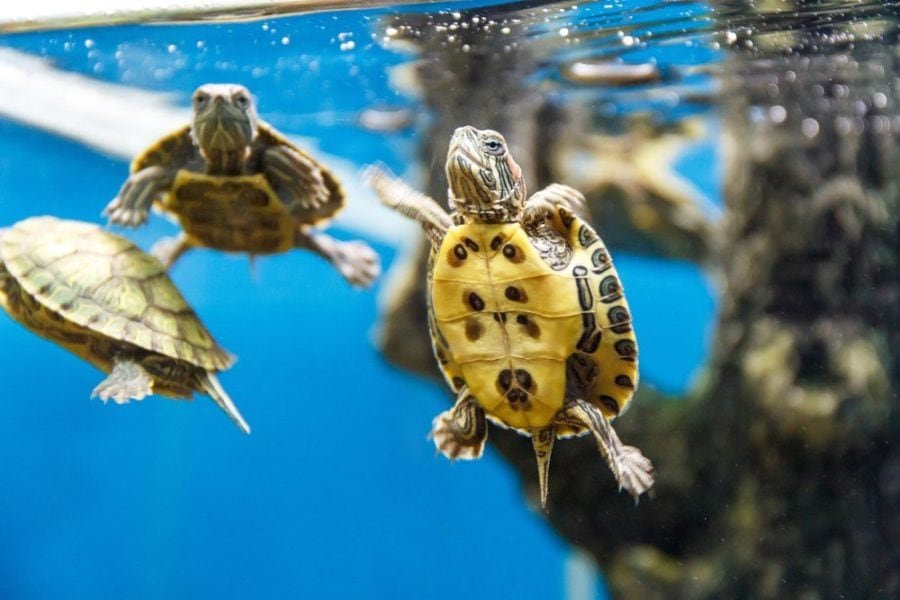
Aquatic turtles swimming in a filtered aquarium
A strong filter helps manage turtle waste, but it does not replace partial water changes, substrate cleaning or an appropriately sized habitat.

Quick comparison

Filter Manufacturer aquarium rating Best for Buying option
Fluval 407 50–100 gal Best all-round canister Check on Amazon
Fluval FX4 Up to 250 gal Large, heavily stocked turtle habitats Check on Amazon
Penn-Plax Cascade 1000 Elite Confirm current model rating Value canister option Check on Amazon
Zoo Med Turtle Clean 50 Turtle habitats up to 50 gal Purpose-built smaller turtle setup Check on Amazon
Tetra ReptoFilter 125 GPH Check habitat volume and water depth Shallow juvenile or small-species setups Check on Amazon

Rating caution: a fish-aquarium capacity printed on a box is not a promise that the filter can manage the waste of a turtle in a tank of that size. Compare actual circulation, media volume, intake-depth requirements and maintenance access, and choose generous capacity.

Best filters for turtle tanks

1. Fluval 407 — best overall

The Fluval 407 balances useful media capacity with manageable size. Fluval rates it for 50–100-gallon aquariums, with 383 GPH pump output, 245 GPH stated filter circulation and 4.2 liters of basket volume. Multiple baskets let you separate coarse mechanical media, finer pads and durable biological media.

It is a strong fit for a medium turtle habitat when the installed water depth and plumbing allow the canister to prime and operate correctly. As waste accumulates, real flow will fall, so clean the mechanical stages before they become packed without sterilizing all biological media.

Check the Fluval 407 on Amazon · See Fluval specifications

2. Fluval FX4 — best for a large, messy setup

The FX4 offers substantially more canister and mechanical-media area for a large turtle aquarium. Fluval lists a 700 GPH pump output, 450 GPH filter circulation, 3.7-gallon canister volume and 1-gallon biological-media volume. The utility valve can also help with controlled water removal during maintenance.

This filter is physically large and produces meaningful current. Check cabinet clearance, hose routing, outlet placement and the turtle’s ability to rest and swim without being pushed continuously. Manufacturer aquarium ratings should still be treated conservatively for turtles.

Check the Fluval FX4 on Amazon · See Fluval specifications

3. Penn-Plax Cascade 1000 Elite — value canister option

The Cascade 1000 Elite is a multi-basket external canister that provides space for staged mechanical, biological and optional chemical media. It can be a useful lower-cost alternative to premium canisters for a medium habitat.

Penn-Plax sells several Cascade sizes with similar names. Confirm the exact model, current flow and aquarium rating, included media, hose dimensions and replacement-part availability before ordering. Size for the turtle’s adult habitat, not only its current juvenile tank.

Check the Penn-Plax Cascade 1000 Elite on Amazon

4. Zoo Med Turtle Clean 50 — purpose-built compact canister

Zoo Med designed the Turtle Clean 50 for turtle tanks, tubs and similar habitats up to 50 gallons. The company lists 200 GPH, mechanical, biological and chemical media, easy priming and an included spray bar.

This model is useful when a standard aquarium canister’s intake arrangement does not suit a smaller turtle setup. Zoo Med says the motor head should be level with or below the waterline, so confirm that the planned water depth and stand position meet the installation requirements.

Check the Zoo Med Turtle Clean 50 on Amazon · See Zoo Med setup and maintenance guidance

5. Tetra ReptoFilter 125 GPH — for shallow smaller habitats

The internal Tetra ReptoFilter is intended for terrariums and turtle setups where a conventional canister intake may not work at the lower water level. Its 125 GPH rating and compact internal design suit a smaller habitat or juvenile setup rather than a large adult turtle aquarium.

Internal filters occupy swimming space and hold less waste than large canisters, so expect more frequent service. Guard the cord and installation so a turtle cannot dislodge the filter, become trapped or rest against an unsafe intake.

Check the Tetra ReptoFilter 125 GPH on Amazon

How to size a turtle filter

Start with the adult habitat

Identify the turtle species and expected adult shell size before choosing the tank or filter. Many commonly sold aquatic turtles grow far larger than buyers expect. A filter purchased for a small juvenile enclosure may become inadequate quickly.

Favor media capacity over headline flow

High flow helps carry waste to the intake, but a turtle filter also needs room to trap solids without clogging and to support a stable biofilter. Compare basket volume, sponge area and maintenance access. Advertised pump output is measured under favorable conditions; real circulation falls with hose height, media and accumulated debris.

Check minimum operating water depth

A turtle habitat may be only partly filled to provide a basking area or prevent escape. Canister filters depend on specific intake and canister placement for priming. Internal filters also have minimum and maximum waterline requirements. Follow the exact model’s instructions.

Control the current

Strong circulation should not pin a turtle against a surface or prevent it from resting. Aim outlets along a wall, use a spray bar where approved, and leave calm areas. Never improvise a restriction that overheats the motor or creates unsafe suction.

Recommended media arrangement

  1. Coarse mechanical foam first to collect food pieces, shed skin and large waste.
  2. Finer mechanical media to polish smaller suspended particles.
  3. Durable biological media in oxygenated flow after most solids are removed.
  4. Optional carbon or specialty media only for a defined purpose and according to its instructions.

Carbon can help with odor or removing certain medications after treatment, but it is not a substitute for an established biological filter or water changes. Zeolite and ammonia-binding products have finite capacity and should not be used to avoid cycling the habitat.

Maintenance without losing the biofilter

Turtle filters collect solids quickly. Inspect flow and service mechanical media before it becomes heavily clogged. Rinse reusable sponges in removed tank water and replace fine disposable pads when they break down. Biological media usually needs only gentle partial rinsing when debris restricts flow.

Do not replace every sponge, cartridge and biological medium on the same day. Beneficial microorganisms live on these surfaces, and removing them can cause ammonia or nitrite to rise. Test both after major maintenance, a long power interruption or any unexplained change in water quality.

Filtration does not replace water changes

A filter converts and traps waste; it does not remove everything from the system. Perform regular partial water changes, siphon settled debris and remove uneaten food. Use a conditioner appropriate for chlorine or chloramine in the source water and match the replacement-water temperature reasonably closely.

Frequency depends on habitat volume, turtle size, feeding and test results. Ammonia and nitrite should remain at zero in a cycled habitat. Rising nitrate, odor or cloudy water calls for testing and corrective maintenance rather than a fragrance or clarifying product.

Installation and electrical safety

  • Use a GFCI/RCD-protected outlet and form drip loops in all cords.
  • Keep power connections dry and unplug equipment before putting hands in the water.
  • Secure intakes, outlets and hoses so a strong turtle cannot detach them.
  • Use an intake guard and inspect it for blockage; protect small turtles from unsafe suction.
  • Keep the filter accessible—equipment that is difficult to service is more likely to be neglected.
  • Never run a canister or submerged motor dry.

Frequently asked questions

Does a turtle tank really need a filter?

Yes. A filter is essential for dependable mechanical and biological waste processing, but it must be combined with water changes and cleaning.

Can I use a fish-tank filter for a turtle?

Yes, if it works at the habitat’s water depth, offers generous real-world capacity and can be installed safely. Manufacturer fish-aquarium ratings should be treated conservatively because turtles create a heavy waste load.

How often should I clean a turtle filter?

Clean mechanical stages when flow declines or collected debris begins to accumulate substantially. The interval varies with the turtle, tank and filter. Preserve biological media and never wait until the filter is completely blocked.

Can I turn the filter off at night?

No. Biological filtration needs continuous oxygenated flow. Extended shutoff can damage the biofilter and allow stagnant water to develop inside a canister.

Our verdict

The Fluval 407 is the most balanced option for a medium turtle habitat. The Fluval FX4 provides substantially more media capacity for a large or heavily stocked setup, while the Zoo Med Turtle Clean 50 is the best purpose-built compact choice. Size every filter for the adult animal and actual installation rather than trusting the box rating alone.