There is no beginner-safe list of fish that can simply be put in an unfiltered bowl. All fish need oxygen and a way to keep waste from accumulating. A mature planted aquarium can sometimes run without a conventional filter, but its success depends on the whole system, not a fish being immune to dirty water.
For a first aquarium, our recommendation is a properly sized, cycled filter. If noise, cost or strong current is the concern, choose equipment that solves that problem instead of removing filtration. This research-based guide explains the difference and what to do if a filter stops.
What a filter actually does
Filtration has three different jobs:
Mechanical filtration catches suspended particles in sponge or floss. The trapped waste still needs to be removed during cleaning.
Biological filtration provides surfaces for microbes that process ammonia into nitrite and then nitrate. Ammonia and nitrite are hazardous to fish.
Chemical filtration uses materials such as activated carbon to remove certain dissolved substances. It does not replace an established biological filter.
Water movement also helps circulation and gas exchange at the surface. Aqueon’s filtration overview explains these functions and common filter designs. A bare air stone moves water but does not provide the same media area as a sponge filter.
Does breathing air mean a fish needs no filter?
No. A betta can take oxygen from the air, but it still releases waste into its water. Surface breathing does not protect it from ammonia. The RSPCA recommends suitable filtration for bettas, with gentle flow. Keep surface access available.
“Hardy” should mean a fish is appropriate for a well-managed beginner aquarium, not that it can be expected to tolerate pollution. Nor does a fish’s ability to live at cooler temperatures settle whether it needs filtration: heating and waste processing are separate questions.
Can a planted aquarium work without a conventional filter?
That is not the same as removing a working filter from an ordinary tank. Plants, microbes, animal numbers, feeding and maintenance must be considered together. A few decorative stems in a newly filled bowl do not establish that balance.
If you want to explore this approach, study the complete method before stocking, establish healthy plant growth, monitor water quality and keep backup aeration and filtration available. Choose animals only after researching their adult size, social needs and habitat. We recommend that beginners learn routine care with a filtered aquarium first.
Common “no-filter fish” claims to avoid
Bettas: the ability to breathe air is not a substitute for clean water.
Guppies and small schooling fish: small size does not make stocking unlimited or remove the need to manage waste.
Goldfish: choose a system for their adult requirements, rather than using a small juvenile to justify a bowl.
Shrimp and snails: these are animals with their own needs, not replacements for aquarium maintenance.
A simpler alternative: gentle, reliable filtration
An air-driven sponge filter combines biological media with modest mechanical filtration. It can be a practical option for small, lightly stocked aquariums when correctly sized and maintained. The air pump is a separate component unless supplied in the kit. Compare the requirements of the complete setup, including tubing and a check valve where appropriate.
For a hang-on-back or internal filter, look for adjustable flow and an intake suitable for the fish you keep. Preserve useful biological media during maintenance; do not replace every established component at once merely to make the filter look new. A filter should run continuously apart from necessary servicing.
If your filter stops working
Check the equipment safely. Disconnect power before servicing it, follow its manual, and do not handle wet plugs or damaged electrical equipment.
Provide aeration. During an outage, a battery-powered air pump can maintain water movement. Watch fish closely for unusual breathing.
Keep existing biological media wet. Avoid letting it dry out or washing it in untreated tap water. Restore appropriate flow as soon as possible.
Test ammonia and nitrite. Aim for zero detectable readings. Use conditioned, temperature-matched partial water changes when needed and retest.
Reduce the waste load. Remove uneaten food, avoid adding livestock and feed cautiously while filtration is compromised.
Power-outage guidance from UK Power Networks emphasizes backup aeration and reducing food while filtration is unavailable. There is no universal number of safe hours without a filter: stocking, temperature, oxygen and the condition of the system change the risk.
Warning signs that need prompt attention
Gasping, unusually rapid gill movement, loss of balance or marked lethargy require prompt water testing and attention to aeration. The Merck Veterinary Manual identifies low oxygen and high ammonia as major immediate threats. Contact a fish veterinarian if distress is severe or persists after conditions are corrected.
Build the system before choosing the fish
Budget for the aquarium, suitable filter, water conditioner, test kit and temperature control where needed before buying livestock. A cycled filter is a living part of the aquarium, not an optional polishing accessory. Our aquarium basics guides can help you plan the next steps.
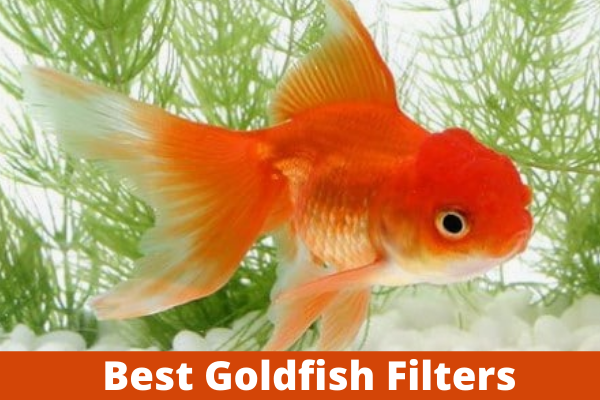
Goldfish need a filter with generous mechanical and biological capacity, reliable oxygenation and flow that does not exhaust the fish. They produce substantial solid waste, so choose by adult fish load and maintenance access—not only by the gallon number printed on the box.
Goldfish filtration must handle heavy solid waste while maintaining oxygen and comfortable swimming conditions.
Affiliate disclosure: Aquarium Hunter may earn a commission from qualifying Amazon purchases, at no extra cost to you. Buying links are included only for exact products that could be matched confidently.
Mechanical filtration captures feces, uneaten food and suspended debris before they break down. Biological filtration provides oxygenated surfaces for bacteria that convert ammonia to nitrite and then nitrate. Surface agitation and aeration support both fish and filter bacteria.
No filter makes an aquarium maintenance-free. Water changes remove dissolved waste that media cannot, and the substrate still needs appropriate cleaning. Test ammonia, nitrite, nitrate, pH and temperature rather than judging water quality by clarity alone.
How to size a filter for goldfish
Plan for adult fish. Fancy and single-tail goldfish differ in swimming ability and eventual size, but both create more waste than many small tropical fish.
Use the rating conservatively. A filter’s maximum tank label often assumes a lighter biological load than a goldfish aquarium.
Prioritize media volume. Space for coarse mechanical foam and established biological media is more useful than a high flow number alone.
Control current. Long-bodied single tails often tolerate more movement than round-bodied fancy goldfish. Fish should be able to rest and feed without being pushed continuously.
Build redundancy. Two appropriately sized filters can improve circulation and preserve some biological capacity during maintenance or failure.
AquaClear 70
Best for: owners wanting a large, open media basket with reusable components.
The AquaClear 70 is intended for 40–70 gallon aquariums and separates foam, chemical media and BIOMAX. The open basket lets the owner use coarse and fine mechanical media without replacing the entire bacterial colony on a schedule. Adjustable flow helps when a fancy goldfish needs gentler current.
Watch for: protect the intake around small or weak fish and keep the aquarium water level high enough to reduce splashing. After maintenance or an outage, confirm that the filter has restarted and is moving water.
Best for: a roomy basket, surface skimming and automatic restart.
The Tidal 75 is manufactured by Sicce for Seachem and provides a broad media basket rather than a sealed disposable cartridge. Its self-priming pump, adjustable intake and maintenance indicator are convenient for a heavily maintained aquarium.
Watch for: the flow can be substantial. Observe fancy goldfish and reduce or diffuse output if they struggle to hold position. The surface skimmer does not replace substrate cleaning or regular water changes.
Best for: owners who prefer clearly separated mechanical, chemical and biological stages.
The Fluval C4 uses staged compartments that can be serviced independently. This makes it easier to rinse mechanical pads without replacing established biological media. Flow control and a visible cleaning indicator help with routine maintenance.
Watch for: the C4 has more individual parts than a simple basket filter. Clean them methodically and avoid replacing all biological media together. Confirm clearance behind the aquarium.
Best for: a straightforward hang-on-back filter with adjustable intake flow.
The verified Amazon listing is the 130 GPH Whisper IQ model. Its simple cartridge format is accessible to newer keepers, and flow control can help in a smaller fancy-goldfish setup or quarantine aquarium.
Watch for: the specific 130 GPH model is not suitable as the sole filtration for a large or heavily stocked goldfish aquarium. Cartridge replacement can remove useful bacteria, so preserve permanent biological surfaces and monitor water quality after maintenance.
Best for: supplemental biological filtration, quarantine tanks and gentle flow.
An air-driven sponge adds biological surface area and aeration without a dangerous intake. It is useful alongside a main mechanical filter and can be kept mature for emergency or quarantine use.
Watch for: a sponge does not capture large goldfish waste as efficiently as a strong mechanical stage. It needs an air pump, airline, check valve and regular squeezing in removed aquarium water. No clearly purchasable exact Amazon offer was available during this review.
Inspect flow and visible debris weekly. Rinse mechanical foam or pads in removed aquarium water before they clog, but do not sterilize every media stage at once. Clean the impeller and intake as directed by the manufacturer. Replace chemical media only when it is used for a defined purpose and exhausted; biological media normally remains in service unless physically deteriorated.
Use test results and nitrate trends to determine water-change frequency. Any detectable ammonia or nitrite requires prompt investigation and corrective action.
Common mistakes
Choosing only by the box’s maximum tank rating.
Replacing every cartridge and biological medium together.
Using very strong current that prevents fancy goldfish from resting.
Allowing coarse waste to accumulate because the water still looks clear.
Assuming a filter compensates for crowding or inadequate aquarium volume.
Failing to test restart after a power outage or cleaning.
Frequently asked questions
Is a canister filter better for goldfish?
A canister can provide large media volume and neat plumbing, but it is not automatically better. Hang-on-back filters are easier to inspect and clean, while canisters require disciplined servicing. Choose the system you can maintain reliably.
Can I use two filters?
Yes. Two filters can improve circulation, mechanical capacity and redundancy. Arrange the intakes and returns so debris does not collect in dead zones and the fish retain calm resting areas.
Do goldfish need an air pump?
A filter return that strongly agitates the surface may provide adequate gas exchange, but an air pump adds useful redundancy and powers a sponge filter. Warm water, heavy stocking and medication can increase aeration needs.
How often should filter media be replaced?
Replace it when it is exhausted or physically deteriorated, not simply because a calendar says so. Rinse reusable mechanical media and preserve established biological media unless there is a specific reason to change it.
How we selected these filters
We prioritized current manufacturer support, meaningful media capacity, serviceability, controllable flow and distinct uses. We removed discontinued or unavailable products, generic marketing claims, temporary prices and ten old low-resolution product thumbnails. Amazon links point to exact models; manufacturer pages are included for specifications.
Disclosure: Aquarium Hunter may earn a commission from qualifying purchases made through links on this page, at no additional cost to you. Recommendations are based on filtration design, maintainability, current manufacturer documentation, and suitability—not commission size.
The best aquarium power filter is one that fits the tank, supports a stable biological filter, offers enough mechanical media for the fish’s waste load, and remains easy enough to maintain consistently. For most freshwater community aquariums, a hang-on-back (HOB) power filter is a practical balance of performance, access, and price.
After removing discontinued, mismatched, and poorly supported choices from the old list, these five current filters remain worth comparing. Our most flexible recommendation is the Fluval AquaClear/AC platform; the Fluval C4 is the stronger choice for clearly separated filtration stages, while the Aqueon QuietFlow is convenient when automatic restart is a priority.
Best aquarium power filters: quick comparison
Filter
Best for
Media style
Flow control
Main tradeoff
Fluval AquaClear 110
Large aquariums and reusable media
Open media basket
Yes
Large unit; must be primed after service
Fluval C4
Organized multi-stage filtration
Separate mechanical, chemical, and biological stages
Yes
More parts to clean
Aqueon QuietFlow 75 LED PRO
Easy restart and cartridge convenience
Cartridge plus biological grid
Model-dependent
More reliance on proprietary consumables
Tetra Whisper 60
Basic filtration for a larger community tank
Cartridge-based
Limited
Less media customization
Marina Slim S15
Small tanks with limited rear clearance
Compact cartridge system
Yes
Lower media capacity
Manufacturer tank ratings are starting points, not stocking guarantees. Choose from the exact model’s specifications and increase filtration capacity for messy fish, heavy stocking, or unusual tank dimensions. Never use a stronger current that prevents fish from resting or swimming normally.
1. Fluval AquaClear 110: best for flexible reusable media
The AquaClear 110 is the established large-tank version of Fluval’s HOB platform. Its open basket holds foam, activated carbon, and BIOMAX separately, allowing each stage to be accessed without discarding everything at once. That is an important advantage: biological media can remain established while mechanical foam is rinsed.
Fluval rates the AquaClear 110 for 60–110 US gallons and provides adjustable flow. The official AquaClear line includes smaller models, so select the version matched to your aquarium rather than buying the 110 for every setup. The waterfall return improves surface movement, but the water level must be kept high to reduce splashing and noise.
Best features
Large, accessible media basket.
Reusable foam and separate biological media.
Adjustable output for different fish and feeding conditions.
Replacement parts and media remain documented by the manufacturer.
Limitations
The 110 requires substantial clearance behind the aquarium.
Like many conventional HOB filters, it may need to be refilled and primed after cleaning or a power interruption.
Its intake requires a sponge prefilter for shrimp, fry, or long-finned fish.
The AquaClear 110 uses a large basket with independently serviceable filter media.
The Fluval C4 separates filtration into two mechanical stages, one chemical stage, and two biological stages. Fluval rates it for aquariums up to 70 US gallons, with a stated 120-volt circulation rate of 264 US gallons per hour. A cleaning indicator helps identify a clogged mechanical pad, although it does not replace routine visual checks.
The C4 is a good match for keepers who want each filtration role clearly defined. Its wet/dry biological area receives oxygen-rich water, and the adjustable output can extend media contact time. The tradeoff is complexity: more trays, pads, screens, and channels require careful cleaning than a simple open basket.
Best features
Clearly separated mechanical and biological stages.
Adjustable flow and documented model specifications.
Mechanical pad slides out for rinsing.
Good choice when you prefer organized media rather than a single cartridge.
Limitations
Higher maintenance complexity than simpler HOB filters.
Replacement pads and parts must match the C-Series model.
Maximum rim thickness should be checked before purchase; Fluval lists 1 1/8 inches for the C4.
The Fluval C4 separates mechanical, chemical, and biological filtration into accessible stages.
3. Aqueon QuietFlow 75 LED PRO: best for automatic restart
The Aqueon QuietFlow 75 LED PRO uses an internal pump that is designed to self-prime and restart automatically after power returns. That convenience is useful for an aquarium that may experience short outages, although every filter should still be checked after power restoration.
Aqueon describes five filtration stages, including floss, activated carbon, a biological holder and grid, and space for a specialty pad. The LED indicator responds to restricted water flow through the cartridge; it is a maintenance reminder, not a water-quality monitor.
Best features
Self-priming internal pump.
Simple cartridge removal and broad model range.
Permanent biological surfaces are separate from the disposable floss cartridge.
Current manufacturer documentation and replacement media.
Limitations
Ongoing cartridge cost.
Replacing all media together can remove useful bacteria; keep the permanent biological grid wet and do not replace it routinely.
The LED does not measure ammonia, nitrite, nitrate, or filter maturity.
Aqueon’s QuietFlow LED PRO emphasizes automatic restart and cartridge-based maintenance.
4. Tetra Whisper Power Filter 60: best straightforward large-tank option
The Tetra Whisper 60 is a basic three-stage HOB filter marketed for aquariums up to 60 US gallons. Its simple cartridge system is approachable for a new keeper, and the model remains available through major retailers.
This filter works best for someone who values straightforward replacement media over customization. The downside is reduced flexibility and the temptation to replace a complete cartridge on a calendar. When the cartridge contains an established bacterial population, rinse reusable portions gently in removed aquarium water and avoid changing every biological surface at once.
Best features
Simple installation and familiar replacement cartridges.
Twin-sided design on the 60-gallon model distributes intake and return flow.
Widely available consumables.
Limitations
Less media flexibility than AquaClear or Fluval C-Series baskets.
Cartridge costs accumulate.
Model rating may be optimistic for heavily stocked or high-waste aquariums.
The Tetra Whisper 60 is a straightforward cartridge-based filter for larger community aquariums.
The Marina Slim S15 has a narrow body and adjustable flow, making it useful when rear clearance is limited or a gentler current is needed. Its compact size is also its main constraint: media volume is modest, so it suits an appropriately stocked small aquarium rather than a messy or crowded tank.
Confirm the exact S15 model, voltage, aquarium rating, and included cartridges on the retailer page before buying. Product variants and regional electrical specifications can differ.
Best features
Slim profile.
Adjustable flow.
Easy access for routine cleaning.
Limitations
Small media capacity.
Cartridge-dependent design.
Not appropriate as the only filter for large, messy fish.
The Marina Slim S15 trades media volume for a compact profile and adjustable flow.
Amazon listing currently unavailable; review retained for readers comparing an existing or locally available unit.
How we selected these filters
We prioritized models that remain available, have current manufacturer or retailer documentation, and represent meaningfully different use cases. We compared:
Mechanical and biological media capacity.
Ability to service one stage without discarding the entire bacterial colony.
Flow adjustment and suitability for delicate livestock.
Restart behavior after cleaning or power loss.
Availability of compatible media, parts, and instructions.
Clear limitations, including clearance, noise, cartridge cost, and maintenance complexity.
We removed the old Marineland Emperor and Penguin listings because their linked versions were not reliably available, the Penn-Plax entry lacked enough verified detail to outrank the current choices, and the Aqueon internal filter did not belong in a HOB comparison. The Green Killing Machine was also removed because a UV sterilizer is a specialized water-clarifying device, not a general substitute for a properly sized mechanical and biological filter.
How to size a power filter
Do not choose by tank gallons alone. Consider adult fish size, stocking, feeding, plant debris, substrate, and how often you can service the filter. A lightly stocked planted aquarium and a goldfish aquarium of the same volume have very different waste loads.
Manufacturer “up to” ratings are useful for comparing models within a product line, but they assume conditions that may not match your tank. When uncertain, choose more media capacity and distribute the flow safely. Two filters can provide redundancy and better circulation in a long aquarium, but both still require maintenance.
Check physical fit
Measure the aquarium rim, distance to the wall, hood openings, and the vertical distance from the intake to the substrate. Keep the water level high enough for the return and follow the manufacturer’s leveling instructions.
Protect small animals
Add a sponge prefilter over the intake for shrimp, fry, snails, and delicate fins. Rinse it regularly because a clogged sponge reduces flow.
Understanding filter media
Mechanical filtration
Foam, floss, and pads trap uneaten food, waste, and plant fragments. Rinse reusable mechanical media in removed aquarium water before it becomes severely clogged. Replacing dirty mechanical media is not a substitute for removing waste from the substrate.
Biological filtration
Porous foam, ceramic media, and permanent grids support nitrifying bacteria that process ammonia and nitrite. Keep biological media wet in dechlorinated aquarium water during service. Never replace all mature media at once unless contamination makes it unavoidable.
Chemical filtration
Activated carbon can remove some dissolved organic compounds, odors, discoloration, and medications, but it is not required continuously in every aquarium. It becomes exhausted and must be replaced when used for a specific purpose. Chemical media cannot compensate for an uncycled tank or overdue water changes.
Power filter maintenance
Unplug the filter and heater before lowering the aquarium water level.
Remove and rinse mechanical media in discarded tank water.
Swish biological media gently only when debris is restricting flow.
Clean the intake, impeller well, and return channel according to the manual.
Reassemble, refill the HOB chamber if required, and restore power.
Confirm normal flow and restart before leaving the aquarium.
Test ammonia and nitrite after major maintenance or any loss of filter bacteria.
Clean according to flow and waste accumulation rather than an inflexible calendar. Never wash mature biological media under chlorinated tap water, and never allow it to dry during maintenance.
Frequently asked questions
Is a HOB filter enough for an aquarium?
Yes, for many appropriately stocked freshwater aquariums. It must provide adequate media capacity, circulation, and oxygen exchange. Large fish, marine systems, very long tanks, or specialized aquascapes may benefit from canister filters, sumps, sponge filters, or multiple units.
Does a higher flow rate mean better filtration?
No. Flow must carry waste to the media and distribute oxygen, but water moving too quickly can bypass fine debris or exhaust fish. Media volume, contact, maintenance, and tank circulation matter alongside gallons per hour.
Should I replace a filter cartridge every month?
Replace disposable media when it is damaged or cannot be cleaned enough to restore flow—not merely because a date has passed. Preserve established biological media whenever possible. If a cartridge combines carbon and floss, consider whether the design offers a separate permanent biological surface.
What happens during a power outage?
Keep media wet and restore oxygenation as soon as possible. After power returns, confirm that the filter has restarted; conventional HOB units may need manual priming. For a long outage, discard foul stagnant water from the filter chamber, restart with conditioned water, and monitor ammonia and nitrite.
Final recommendation
Choose the Fluval AquaClear/AC platform when reusable media flexibility and easy access are your priorities. Choose the Fluval C4 for organized multi-stage filtration, or the Aqueon QuietFlow 75 LED PRO for convenient automatic restart. The Tetra Whisper 60 and Marina Slim S15 are simpler choices for their respective tank sizes, but their cartridge systems offer less customization.
Whichever filter you buy, correct sizing, mature biological media, routine cleaning, and water testing matter more than the brand name.
Disclosure: Aquarium Hunter may earn a commission from qualifying purchases made through links on this page, at no extra cost to you.
Aquatic turtles produce much more solid waste than a lightly stocked fish aquarium. The best turtle-tank filter therefore needs generous mechanical-media capacity, dependable biological filtration, easy maintenance and an intake that works at the habitat’s actual water depth. For most full-size turtle aquariums, a canister filter is the most practical choice.
A strong filter helps manage turtle waste, but it does not replace partial water changes, substrate cleaning or an appropriately sized habitat.
Rating caution: a fish-aquarium capacity printed on a box is not a promise that the filter can manage the waste of a turtle in a tank of that size. Compare actual circulation, media volume, intake-depth requirements and maintenance access, and choose generous capacity.
Best filters for turtle tanks
1. Fluval 407 — best overall
The Fluval 407 balances useful media capacity with manageable size. Fluval rates it for 50–100-gallon aquariums, with 383 GPH pump output, 245 GPH stated filter circulation and 4.2 liters of basket volume. Multiple baskets let you separate coarse mechanical media, finer pads and durable biological media.
It is a strong fit for a medium turtle habitat when the installed water depth and plumbing allow the canister to prime and operate correctly. As waste accumulates, real flow will fall, so clean the mechanical stages before they become packed without sterilizing all biological media.
The FX4 offers substantially more canister and mechanical-media area for a large turtle aquarium. Fluval lists a 700 GPH pump output, 450 GPH filter circulation, 3.7-gallon canister volume and 1-gallon biological-media volume. The utility valve can also help with controlled water removal during maintenance.
This filter is physically large and produces meaningful current. Check cabinet clearance, hose routing, outlet placement and the turtle’s ability to rest and swim without being pushed continuously. Manufacturer aquarium ratings should still be treated conservatively for turtles.
3. Penn-Plax Cascade 1000 Elite — value canister option
The Cascade 1000 Elite is a multi-basket external canister that provides space for staged mechanical, biological and optional chemical media. It can be a useful lower-cost alternative to premium canisters for a medium habitat.
Penn-Plax sells several Cascade sizes with similar names. Confirm the exact model, current flow and aquarium rating, included media, hose dimensions and replacement-part availability before ordering. Size for the turtle’s adult habitat, not only its current juvenile tank.
4. Zoo Med Turtle Clean 50 — purpose-built compact canister
Zoo Med designed the Turtle Clean 50 for turtle tanks, tubs and similar habitats up to 50 gallons. The company lists 200 GPH, mechanical, biological and chemical media, easy priming and an included spray bar.
This model is useful when a standard aquarium canister’s intake arrangement does not suit a smaller turtle setup. Zoo Med says the motor head should be level with or below the waterline, so confirm that the planned water depth and stand position meet the installation requirements.
5. Tetra ReptoFilter 125 GPH — for shallow smaller habitats
The internal Tetra ReptoFilter is intended for terrariums and turtle setups where a conventional canister intake may not work at the lower water level. Its 125 GPH rating and compact internal design suit a smaller habitat or juvenile setup rather than a large adult turtle aquarium.
Internal filters occupy swimming space and hold less waste than large canisters, so expect more frequent service. Guard the cord and installation so a turtle cannot dislodge the filter, become trapped or rest against an unsafe intake.
Identify the turtle species and expected adult shell size before choosing the tank or filter. Many commonly sold aquatic turtles grow far larger than buyers expect. A filter purchased for a small juvenile enclosure may become inadequate quickly.
Favor media capacity over headline flow
High flow helps carry waste to the intake, but a turtle filter also needs room to trap solids without clogging and to support a stable biofilter. Compare basket volume, sponge area and maintenance access. Advertised pump output is measured under favorable conditions; real circulation falls with hose height, media and accumulated debris.
Check minimum operating water depth
A turtle habitat may be only partly filled to provide a basking area or prevent escape. Canister filters depend on specific intake and canister placement for priming. Internal filters also have minimum and maximum waterline requirements. Follow the exact model’s instructions.
Control the current
Strong circulation should not pin a turtle against a surface or prevent it from resting. Aim outlets along a wall, use a spray bar where approved, and leave calm areas. Never improvise a restriction that overheats the motor or creates unsafe suction.
Recommended media arrangement
Coarse mechanical foam first to collect food pieces, shed skin and large waste.
Finer mechanical media to polish smaller suspended particles.
Durable biological media in oxygenated flow after most solids are removed.
Optional carbon or specialty media only for a defined purpose and according to its instructions.
Carbon can help with odor or removing certain medications after treatment, but it is not a substitute for an established biological filter or water changes. Zeolite and ammonia-binding products have finite capacity and should not be used to avoid cycling the habitat.
Maintenance without losing the biofilter
Turtle filters collect solids quickly. Inspect flow and service mechanical media before it becomes heavily clogged. Rinse reusable sponges in removed tank water and replace fine disposable pads when they break down. Biological media usually needs only gentle partial rinsing when debris restricts flow.
Do not replace every sponge, cartridge and biological medium on the same day. Beneficial microorganisms live on these surfaces, and removing them can cause ammonia or nitrite to rise. Test both after major maintenance, a long power interruption or any unexplained change in water quality.
Filtration does not replace water changes
A filter converts and traps waste; it does not remove everything from the system. Perform regular partial water changes, siphon settled debris and remove uneaten food. Use a conditioner appropriate for chlorine or chloramine in the source water and match the replacement-water temperature reasonably closely.
Frequency depends on habitat volume, turtle size, feeding and test results. Ammonia and nitrite should remain at zero in a cycled habitat. Rising nitrate, odor or cloudy water calls for testing and corrective maintenance rather than a fragrance or clarifying product.
Installation and electrical safety
Use a GFCI/RCD-protected outlet and form drip loops in all cords.
Keep power connections dry and unplug equipment before putting hands in the water.
Secure intakes, outlets and hoses so a strong turtle cannot detach them.
Use an intake guard and inspect it for blockage; protect small turtles from unsafe suction.
Keep the filter accessible—equipment that is difficult to service is more likely to be neglected.
Never run a canister or submerged motor dry.
Frequently asked questions
Does a turtle tank really need a filter?
Yes. A filter is essential for dependable mechanical and biological waste processing, but it must be combined with water changes and cleaning.
Can I use a fish-tank filter for a turtle?
Yes, if it works at the habitat’s water depth, offers generous real-world capacity and can be installed safely. Manufacturer fish-aquarium ratings should be treated conservatively because turtles create a heavy waste load.
How often should I clean a turtle filter?
Clean mechanical stages when flow declines or collected debris begins to accumulate substantially. The interval varies with the turtle, tank and filter. Preserve biological media and never wait until the filter is completely blocked.
Can I turn the filter off at night?
No. Biological filtration needs continuous oxygenated flow. Extended shutoff can damage the biofilter and allow stagnant water to develop inside a canister.
Our verdict
The Fluval 407 is the most balanced option for a medium turtle habitat. The Fluval FX4 provides substantially more media capacity for a large or heavily stocked setup, while the Zoo Med Turtle Clean 50 is the best purpose-built compact choice. Size every filter for the adult animal and actual installation rather than trusting the box rating alone.