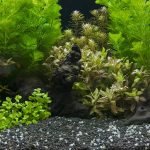
The best substrate for a planted aquarium depends on the plants, livestock, source water and maintenance plan. Nutrient-rich aquasoils are useful for demanding rooted plants and can lower pH, but they may release ammonia during setup and eventually deplete. Stable mineral substrates such as Flourite or Eco-Planted last much longer and do not need routine replacement, although additional root and water-column fertilizer may be required.

Affiliate disclosure: Aquarium Hunter may earn a commission from qualifying Amazon purchases, at no extra cost to you. Products are included for suitability and current availability rather than commission.
Quick comparison
| Substrate | Type | Best use | Important tradeoff | Buying option |
|---|---|---|---|---|
| CaribSea Eco-Planted Black | Porous basaltic mineral substrate | General planted community tanks | Broad grain range; nutrients still need management | Check on Amazon |
| ADA Aqua Soil Amazonia Ver.2 | Active nutrient-rich aquasoil | High-growth aquascapes with compatible soft-water livestock | Can lower pH and release ammonium during startup | Official product details |
| Seachem Flourite Black | Stable porous clay gravel | Long-term planted tanks where pH should remain unchanged | Dusty preparation; fertilizer may still be needed | Check on Amazon |
| Fluval Plant and Shrimp Stratum | Lightweight volcanic-soil granules | Planted shrimp and soft-water community aquariums | Light grains move easily and should not be heavily vacuumed | Check on Amazon |
Active aquasoil or inert mineral substrate?
Active aquasoil
Granulated soils such as ADA Amazonia are designed to supply nutrients and create mildly acidic water. They are valuable for demanding plants, but they change the aquarium chemically. Fresh soil can release ammonium, lower carbonate hardness and alter pH. It must be cycled and tested before animals are added, and it is unsuitable for livestock that require hard alkaline water.
Stable mineral substrate
Porous clay or basaltic substrates provide root structure and surfaces that hold nutrients without aggressively controlling pH. They can last for the life of the aquarium. Their mineral content does not mean plants receive every required nutrient automatically, so root tabs and balanced water-column fertilization remain part of the plan.
Plain sand or gravel
Many plants grow well in inert sand or fine gravel when the grain anchors roots and nutrients are supplied correctly. This is often the best choice for bottom-dwelling fish needing a smoother bed. Avoid very coarse material that traps waste and very deep fine sand that is difficult to maintain.
Four current planted-substrate options
CaribSea Eco-Planted Black
Best for: a low- to medium-tech planted community tank needing a durable dark substrate.
CaribSea renamed Eco-Complete Planted as Eco-Planted. The Black version uses a porous basaltic base containing several mineral elements, with no artificial dyes, paints or chemical coatings. The existing exact Amazon listing may still show the former Eco-Complete name.
Tradeoffs: the published particle range is broad, so check it against delicate bottom-dwellers. Bacteria packaged with substrate do not instantly cycle a tank; verify zero ammonia and zero nitrite before stocking. Root-feeding plants may still need root tabs.
Check CaribSea Eco-Planted/Eco-Complete Black on Amazon | Manufacturer specifications
ADA Aqua Soil Amazonia Ver.2
Best for: a plant-focused aquascape where nutrient availability and mildly acidic water are deliberate goals.
ADA’s current Ver.2 uses natural black soil and includes a separate Amazonia Supplement. ADA documents that the substrate can create slightly acidic water and that ammonium, nitrite and nitrate can be measurable during startup. This makes it a strong plant substrate but also one that demands patient cycling and water testing.
Tradeoffs: do not rinse the granules; ADA warns that washing can break them down and cloud the water. Pour water gently over a plate, perform water changes as required during setup, and do not add fish or shrimp until ammonia and nitrite are zero. The previously linked Amazon listing was for an older unavailable generation, so no Amazon button is shown.
View ADA Amazonia Ver.2 specifications | Read the official instructions
Seachem Flourite Black
Best for: a long-lived planted substrate that does not alter pH.
Seachem describes Flourite Black as stable porous clay gravel that is not chemically coated, can be used alone and does not need scheduled replacement. It provides a durable root bed without the initial ammonia behavior of nutrient-rich soil.
Tradeoffs: shipping can create dust. Rinse thoroughly, fill slowly and use fine mechanical media while the water clears. Flourite is not a complete fertilizer, so fertilize according to plant demand and water-test results.
Check Seachem Flourite Black on Amazon | Manufacturer specifications
Fluval Plant and Shrimp Stratum
Best for: a planted shrimp or soft-water community aquarium needing lightweight granulated substrate.
The verified 17.6-pound listing is the exact Fluval Plant and Shrimp Stratum product rather than a small accessory bag. The porous granules make planting straightforward and provide extensive surface area.
Tradeoffs: the lightweight grains shift when plants are moved or when a siphon is pushed deeply into the bed. Hover above the surface rather than gravel-vacuuming aggressively. Test pH, KH and GH before choosing livestock, and cycle fully before adding sensitive shrimp.
Check Fluval Plant and Shrimp Stratum on Amazon
Match substrate to plant type
- Heavy root feeders: Cryptocoryne, Echinodorus and many bulb plants benefit from root-zone nutrients.
- Stem plants: often use both root and water-column nutrients; substrate alone is not enough.
- Epiphytes: Anubias, Java fern and Bucephalandra should be attached to rock or wood with the rhizome exposed.
- Carpeting plants: benefit from fine stable grains, strong appropriate light, balanced nutrients and, for demanding species, carbon dioxide supplementation.
How much substrate?
Calculate from tank length, width and desired depth rather than gallons alone. A common planted layout uses roughly two to three inches, often sloped higher toward the back. Follow the product calculator or coverage instructions because density varies substantially between clay gravel and lightweight aquasoil.
Installation and cycling
- Test tap water and define livestock pH, KH and GH requirements.
- Read the exact product instructions. Rinse stable mineral substrates when directed; do not rinse granulated aquasoil unless the manufacturer says to.
- Place structural rocks on stable supports before building loose substrate around them.
- Create the planned slope and plant heavily from the start where practical.
- Fill slowly onto a plate or bag to prevent disturbance.
- Start filtration, lighting and carbon-dioxide equipment according to the planting plan.
- Test ammonia and nitrite frequently. Perform water changes during active-soil startup as needed.
- Add animals only after the biofilter is established and parameters are stable and appropriate.
Maintenance and replacement
Remove visible debris from the surface without repeatedly churning plant roots. Use root tabs in depleted zones rather than dismantling a mature aquarium. Stable clay and basaltic substrates can remain indefinitely. Aquasoil granules gradually soften and their nutrient and buffering effects decline; replacement is based on physical breakdown, plant performance and water chemistry, not a universal calendar.
Common mistakes
- Adding livestock before fresh aquasoil has completed its ammonia and nitrite cycle.
- Choosing an acidic active soil for hard-water fish or snails without checking compatibility.
- Assuming a nutrient-rich substrate replaces light, carbon, water-column fertilizer and maintenance.
- Rinsing aquasoil that the manufacturer says must remain unwashed.
- Using terrarium soil or unknown garden soil in an aquarium.
- Installing a bed so deep that routine cleaning and planting become impractical.
Frequently asked questions
Do planted tanks need special substrate?
No. Many plants grow in inert sand or gravel when roots are anchored and nutrients are supplied appropriately. Special soil is helpful for demanding rooted plants and aquascapes but introduces additional chemistry and startup requirements.
Can aquasoil harm fish?
Fresh active soil can release ammonium and change pH or KH. It is safe only after cycling and once the resulting water chemistry matches the species.
Does planted substrate need replacement?
Stable mineral substrates generally do not. Active aquasoil eventually loses buffering and nutrient capacity and may break down; refresh nutrients or replace sections based on actual performance.
Can I cap aquasoil with sand?
Some designed soil systems can be capped, but loose layers often mix during planting and maintenance. Follow the manufacturer’s system instructions rather than combining products at random.
Bottom line
Choose Eco-Planted or Flourite Black for durable, lower-risk long-term beds; choose ADA Amazonia Ver.2 for a deliberately active high-growth aquascape; and choose Fluval Stratum for a lightweight planted shrimp setup. The best result comes from matching substrate chemistry to the livestock, cycling patiently and managing light, carbon and nutrients as a complete system.