Aquarium plants do not need a single magic color. For most freshwater planted tanks, the best choice is a balanced white, full-spectrum LED that includes useful red and blue wavelengths, has adjustable intensity, and spreads light evenly across the substrate. Spectrum matters, but intensity at plant level, photoperiod, plant choice, nutrients, and carbon dioxide usually determine success more than the Kelvin number printed on the box.
Quick answer: choose a planted-aquarium light with a natural-looking white spectrum, start with six to eight hours per day, and adjust intensity gradually from the plants’ response. Avoid selecting a light solely because it advertises a very high Kelvin rating or exaggerated red and blue peaks.
What Light Spectrum Can Aquarium Plants Use?
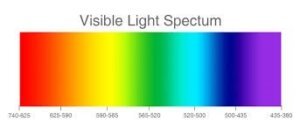
Photosynthetically active radiation covers roughly 400–700 nanometers, the visible range used for photosynthesis. Chlorophyll absorbs strongly in the blue and red regions, but submerged plants also use other visible wavelengths. Green light is not wasted; it can penetrate leaf tissue and water differently from red light. A broad spectrum therefore supports natural appearance and avoids reducing plant lighting to only two colors.
Different species and even different growth forms respond differently to spectral composition. Research on aquatic plants shows that red and blue light can both support photosynthesis, while balanced white light can produce more natural morphology than narrow monochromatic lighting. For a mixed home aquarium, a well-designed full-spectrum fixture is the practical default.
Spectrum, Kelvin, PAR and Lumens Are Different
Color temperature (Kelvin)
Kelvin describes the visual appearance of white light, from warmer yellow-white to cooler blue-white. It does not measure plant-growing power. Many aquarists like fixtures around 5,000–8,000 K because plants and fish look natural, but two lights with the same Kelvin rating can have very different spectral output and intensity.
PAR and PPFD
PAR describes the wavelength range used in photosynthesis. PPFD describes how many photosynthetically active photons reach a surface each second and is commonly expressed in micromoles per square meter per second. When a manufacturer supplies a trustworthy PAR map measured at a stated distance, it is more useful than wattage alone. Light falls with distance and is also reduced by lids, floating plants, tannins, turbidity, and shadows.
Lumens
Lumens are weighted for human vision. They help compare visible brightness, but they do not show how much useful light reaches plants or how evenly it covers the tank. Likewise, watts show electrical consumption, not a universal level of plant illumination. The old watts-per-gallon or watts-per-liter rules are unreliable across modern LEDs.
Best Spectrum for a Typical Planted Aquarium
Look for a fixture with a broad white output plus red and blue diodes, adjustable brightness, and coverage matching the aquarium’s length and depth. A high color-rendering index can make green and red plants look more natural, although it is not a direct growth measurement.

- Low-light tanks: Anubias, Java fern, many Cryptocoryne and mosses usually do well under moderate, evenly distributed light.
- Medium-light tanks: many stem plants and carpeting plants need stronger light, consistent nutrition, and good circulation.
- High-light tanks: demanding carpets and intense red coloration may require high PPFD and carefully balanced carbon dioxide and fertilizer. More light also increases the cost of instability and algae.
Do not assume that red plants need a red-only lamp. Their coloration also depends on species, overall light intensity, nutrient balance, plant health, and sometimes carbon availability. Excessive light cannot compensate for missing nutrients or unstable CO2.
How Long Should Aquarium Lights Stay On?
Start a new or recently replanted aquarium at about six hours of full light per day. Once plants are established and algae is controlled, many tanks settle between seven and nine hours. A timer provides consistency. Longer is not automatically better: plants reach a point where additional light adds little benefit, while algae can exploit excess light and nutrients.
Fish also need a predictable dark period. Decorative moonlight should be dim and brief rather than left on all night. Daylight entering the room counts toward the tank’s total exposure, especially if direct sun reaches the glass.
Adjusting Intensity Without Triggering Algae
Begin below maximum brightness and change only one setting at a time. Give plants roughly one to two weeks to show a meaningful trend unless livestock is stressed or algae is rapidly worsening. Keep notes on intensity, duration, fertilizer, CO2, pruning, and water changes.
- Possible insufficient light: persistent stretching toward the surface, sparse lower growth, or a carpeting plant growing upright. First check whether shading, nutrients, or unsuitable species are the real cause.
- Possible excess light: algae increasing on leaves and hardscape, pale or damaged exposed growth, or a tank that becomes difficult to balance. Reduce intensity or duration modestly rather than making repeated large changes.
- Uneven coverage: healthy growth in the center but weak corners may indicate poor spread rather than the wrong spectrum.
Tank Depth, Placement and Safety
Deeper tanks need more output or better optics to deliver the same light to the substrate. Mount the fixture level and follow its clearance instructions. Clean mineral deposits from lids and splash guards because buildup reduces transmission. Dense floating plants may need thinning so lower plants are not shaded.
Use aquarium-rated equipment around water, create drip loops, and use a GFCI-protected outlet where available. Keep non-waterproof connectors dry and unplug the fixture before cleaning or repositioning it.

LED, Fluorescent or Metal Halide?
Adjustable LED fixtures are the best fit for most home planted aquariums because they are efficient, cool-running, controllable, and available in many sizes. T5 fluorescent lighting can still grow plants well, but bulbs decline with age, produce more heat, and offer less control. Metal halide systems can deliver intense light to deep tanks, but their heat, power use, and limited control make them unnecessary for most freshwater setups.
Before buying, compare the fixture length, mounting method, dimming range, timer behavior after a power outage, warranty, and any PAR data at a depth similar to your aquarium. Our planted aquarium LED guide explains the practical product choices.
Frequently Asked Questions
Is blue light better than red light for aquarium plants?
Neither color is universally best. Both contribute to photosynthesis and plant development, and species respond differently. A balanced spectrum is a safer general recommendation for a mixed planted aquarium.
Does blue light cause algae?
Algae is driven by the whole system, including excess light, unstable nutrients or CO2, maintenance, and competition from healthy plants. Blaming one wavelength oversimplifies the problem.
Is 6,500 K ideal for aquarium plants?
It is a popular natural-looking color temperature, but it is not a guarantee of good growth. Intensity, spectrum distribution, coverage, and tank depth must also suit the plants.
Should aquarium lights run for 12 hours?
Usually not. Most planted aquariums do better with a consistent six- to nine-hour photoperiod. Twelve hours often creates more algae pressure without improving growth.
Final Recommendation
For most freshwater planted tanks, use an adjustable full-spectrum LED with balanced white light, useful red and blue output, and even coverage. Start conservatively at six to eight hours, monitor new growth and algae, and adjust intensity gradually. Treat spectrum as one part of a balanced system alongside suitable plants, nutrition, circulation, maintenance, and carbon availability.