

Unusual freshwater fish can make a striking aquarium, but “exotic” does not mean easy. Some species below suit a well-planned community tank, while others require specialist water, large groups, territorial management or an aquarium measured in hundreds of gallons.
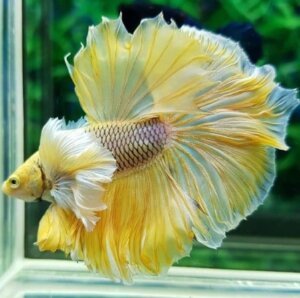
15 unusual freshwater aquarium fish compared
| Fish | Key need | Experience level |
|---|---|---|
| Betta | Warm, filtered tank; males normally housed separately | Beginner with research |
| Silver arowana | Enormous covered aquarium and specialist planning | Expert |
| Neon tetra | Stable mature tank and a proper school | Beginner–intermediate |
| Discus | Warm, exceptionally stable water and group management | Advanced |
| Blue lyretail killifish | Secure lid and species-aware stocking | Intermediate |
| Zebra pleco | Warm, oxygen-rich water and caves | Advanced |
| Dwarf gourami | Warm planted tank and careful health selection | Intermediate |
| Elephantnose fish | Large dim tank, soft substrate and specialised feeding | Expert |
| Redtail sharkminnow | Territory and robust compatible tank mates | Intermediate |
| African rift-lake cichlids | Species-specific chemistry and aggression plan | Intermediate–advanced |
| Three-spot gourami | Room, cover and temperament monitoring | Intermediate |
| Jewelfish | Dedicated territorial setup | Advanced |
| Indian glassfish | Group, stable water and undyed specimens | Intermediate |
| Boesemani rainbowfish | Long tank and an active school | Intermediate |
| Pearl gourami | Long planted tank with gentle companions | Intermediate |
1. Betta
Betta splendens is familiar, but selectively bred forms remain among the most visually unusual aquarium fish. Adults reach about 6.5 cm (2.6 in). Keep a betta in a heated, filtered aquarium with gentle flow, a secure lid and access to the surface. Male bettas are territorial and should not be placed together. Tank-mate success varies by individual, so always have a separation plan.
2. Silver arowana
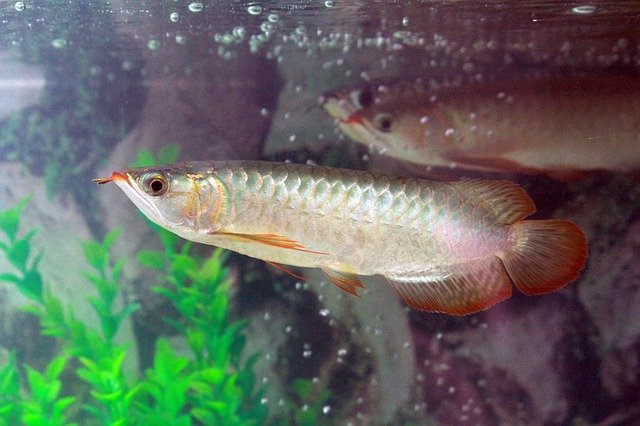
The silver arowana, Osteoglossum bicirrhosum, can reach about 90 cm (35 in). It is a surface-feeding predator and powerful jumper. This is not a normal home-community fish: it needs an exceptionally large, wide aquarium with a strong covered top, heavy filtration and a long-term plan made before purchase. Check local ownership rules and buy only legally sourced fish.
3. Neon tetra
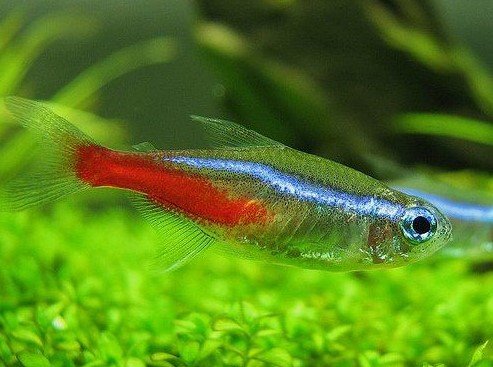
Neon tetras (Paracheirodon innesi) are small schooling fish, reaching roughly 2.5 cm standard length. Keep at least a proper group—preferably more than the bare minimum—in a mature, stable aquarium with peaceful tank mates. Their blue and red stripes look best against plants and darker surroundings. They are a poor match for large predators or boisterous fish.
4. Discus
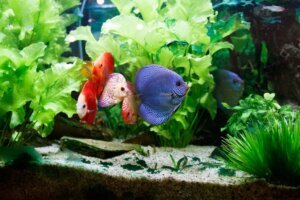
Discus are deep-bodied South American cichlids. FishBase records blue discus at 13.7 cm standard length and describes them as group fish outside breeding. They require warm, clean, stable water, a spacious aquarium and careful feeding. Their sensitivity to poor water quality and social stress makes them better for experienced keepers than first-time aquarists.
5. Blue lyretail killifish
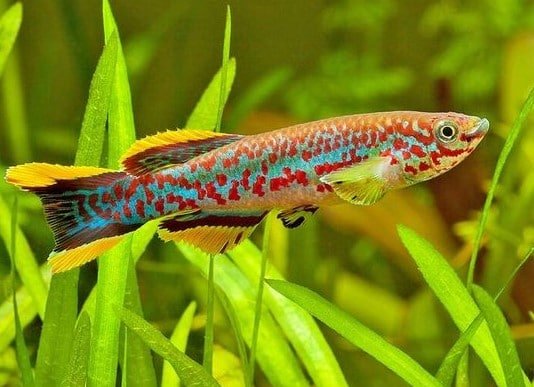
Fundulopanchax gardneri reaches about 6.5 cm (2.6 in). Unlike annual killifish that survive dry seasons as eggs, this species is non-annual. It still needs a tight-fitting lid because killifish can jump. Use calm tank mates, cover from plants and a feeding plan that includes suitably sized foods.
6. Zebra pleco
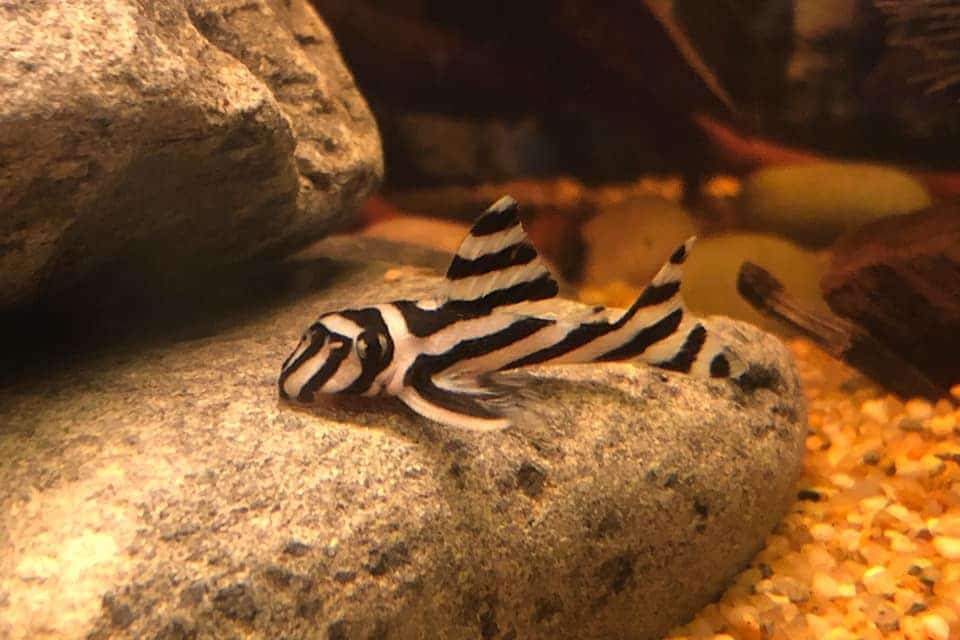
The zebra pleco (Hypancistrus zebra) reaches around 7 cm (2.8 in) and comes from Brazil’s Xingu system. It needs warm, highly oxygenated, very clean water, strong circulation without unsafe suction, and multiple secure caves. It is not an all-purpose algae cleaner; provide a species-appropriate varied diet. Verify legal, captive-bred sourcing because wild populations are conservation-sensitive.
7. Dwarf gourami
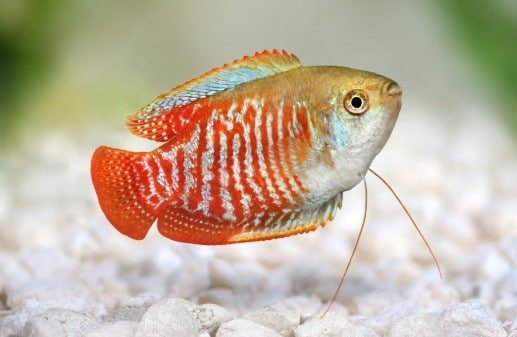
Dwarf gouramis (Trichogaster lalius) can reach roughly 9.5 cm (3.7 in). They are labyrinth fish that breathe atmospheric air as well as using their gills, so keep the surface accessible. A planted aquarium with gentle flow and visual barriers suits them. Males can be territorial, and poor-quality stock can have health problems; quarantine and careful source selection matter.
8. Elephantnose fish
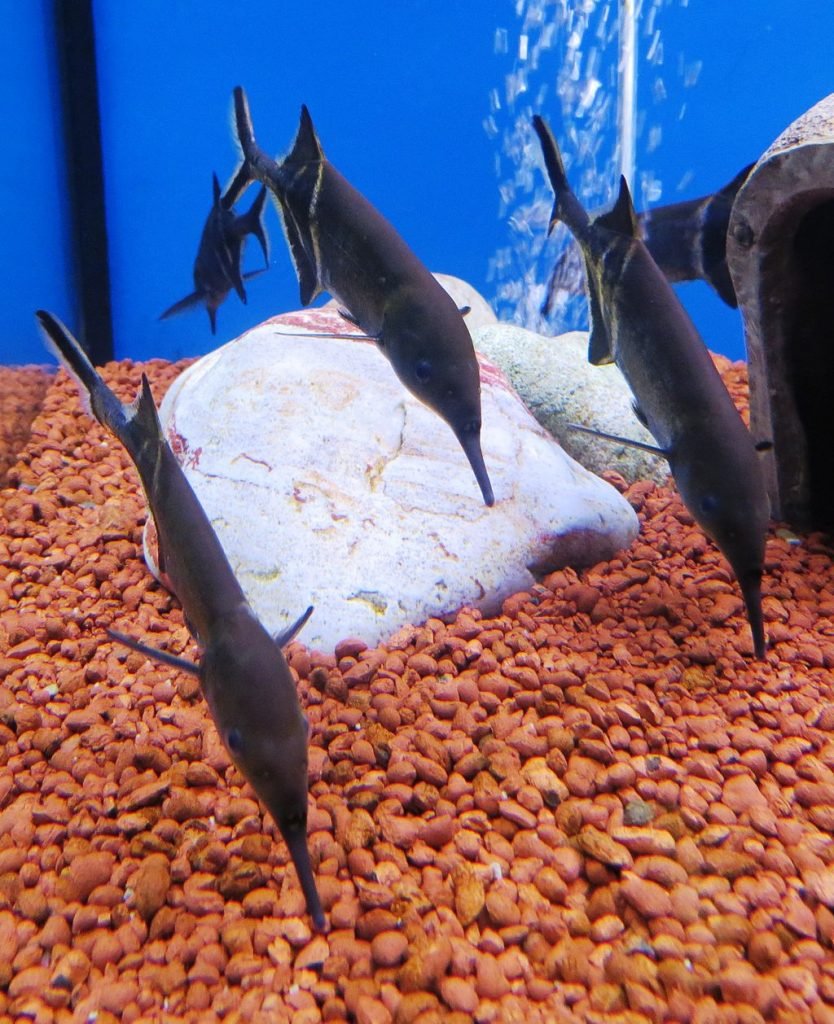
Gnathonemus petersii can reach 35 cm (14 in). It navigates and communicates using weak electric fields and searches the bottom for worms and insects. Provide a large, dimly lit aquarium, soft substrate, hiding places and careful feeding after lights dim. It can be territorial toward its own kind and is easily outcompeted, making it an expert-level choice.
9. Redtail sharkminnow

The redtail sharkminnow (Epalzeorhynchos bicolor) reaches about 13 cm (5 in). Adults defend bottom territory and may bully similar-shaped fish, so keep one unless you have a genuinely specialist plan. A long aquarium with caves, wood and broken sight lines works better than a small open tank. Aquarium specimens are captive-bred; the wild species is critically endangered.
10. African rift-lake cichlids

“African cichlid” covers many species with very different adult sizes, diets and social systems. Lake Malawi mbuna, peacocks and haps should not be treated as interchangeable, and Tanganyikan species have their own requirements. Identify the exact species before purchase, match water chemistry, provide appropriate rockwork or shells, and plan aggression and sex ratios rather than mixing fish by colour.
11. Three-spot gourami

Blue, gold and opaline gouramis are colour forms of Trichopodus trichopterus. The species can reach 15 cm (6 in), larger than many store juveniles suggest. Provide a roomy, planted tank with surface access and visual barriers. Individuals vary from calm to assertive, so avoid timid or fin-nipping companions and watch for harassment.
12. Jewelfish

The true jewelfish is now classified as Rubricatochromis bimaculatus and can reach about 12 cm in captivity. Its brilliant breeding colour comes with strong territorial behaviour. FishBase characterises it as aggressive and pair-forming. A dedicated, structured aquarium with a contingency for incompatible partners is safer than adding a pair to a peaceful mixed community.
13. Indian glassfish
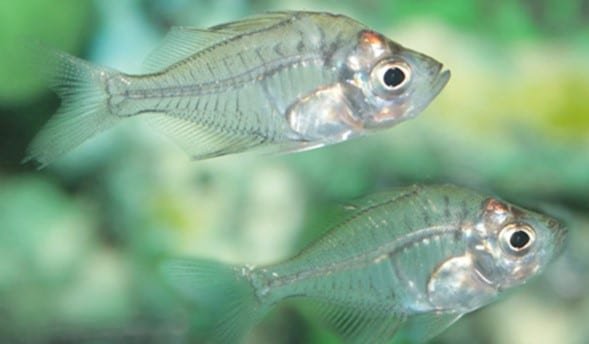
Indian glassfish (Parambassis ranga) naturally have translucent bodies and reach about 9.5 cm (3.7 in). Keep a group in stable water with peaceful companions. Avoid artificially dyed “painted” fish: the colour is not natural and the practice raises serious welfare concerns. These fish can occur in fresh or brackish habitats, so match the water to the source and avoid adding salt automatically.
14. Boesemani rainbowfish
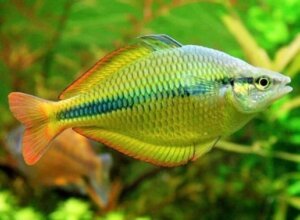
Melanotaenia boesemani is an active schooling species from Indonesia’s Ajamaru Lakes region. FishBase records males around 9 cm standard length and recommends groups of at least five; a larger balanced group is usually better. Provide a long covered tank, open swimming space, stable warm water and a varied diet. Choose captive-bred stock because the wild species is endangered.
15. Pearl gourami
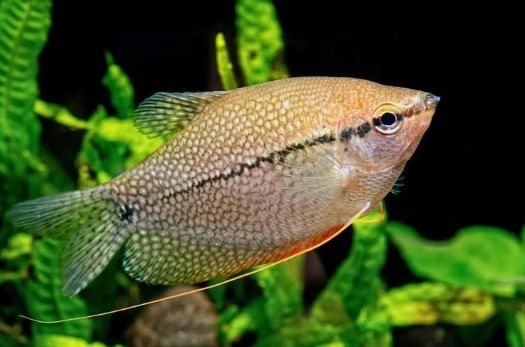
Pearl gouramis (Trichopodus leerii) grow to about 12 cm (4.7 in). They suit a long, planted aquarium with floating cover, gentle circulation and peaceful tank mates. Keep surface access open for their labyrinth organ. Males can become territorial, particularly when breeding, so use plants and wood to create visual separation.
How to choose responsibly
- Research the scientific name. Common names can describe several species with different adult sizes.
- Plan for the adult fish. Do not buy a juvenile arowana, pleco or cichlid on the assumption that a future upgrade will somehow appear.
- Match social needs. Schooling fish need groups, while territorial species may require a single specimen, a compatible pair or a carefully structured colony.
- Match water and temperature. A shared “freshwater” label does not make species compatible.
- Check legal and conservation status. Buy captive-bred animals from traceable sellers where possible.
- Prepare quarantine. A separate cycled quarantine setup reduces the risk of introducing disease.
Setting up before the fish arrives
Complete a fishless nitrogen cycle, confirm 0 ppm ammonia and 0 ppm nitrite, and test the source water’s pH and hardness. Choose filtration for the fish’s waste load and oxygen needs, not merely the tank’s marketing label. Use a secure lid for known jumpers and protect intakes where small fish could be trapped.
Add compatible fish gradually and monitor water quality after every stocking change. Quarantine new arrivals when practical. Feed species-appropriate portions and remove leftovers. If a fish gasps, hides constantly, loses appetite, develops lesions or swims abnormally, test the water immediately and seek qualified aquatic-veterinary advice rather than medicating blindly.
Frequently asked questions
Which unusual freshwater fish is best for a newer keeper?
A responsibly housed betta or a properly sized school of neon tetras is more realistic than an arowana, discus, elephantnose fish or zebra pleco. “Beginner” still requires a cycled aquarium, testing and routine maintenance.
Can all 15 species live together?
No. Their temperatures, water chemistry, adult sizes, diets and temperaments conflict. The list is a menu of possibilities, not a stocking plan.
Are unusual freshwater fish more difficult to keep?
Not always, but rarity and appearance are poor guides to care. Some need only standard good husbandry; others have specialised feeding, group, flow, chemistry or space requirements.
Should I add aquarium salt?
Not routinely. Freshwater species differ in salt tolerance, and Indian glassfish occurring in brackish habitats does not mean every specimen needs salt. Match the conditions used by the breeder or seller and change chemistry only for a clear species-specific reason.
Sources
- FishBase species database — taxonomy, recorded adult size, habitat, temperature and aquarium notes
- Merck Veterinary Manual: Providing a Home for Fish
- Merck Veterinary Manual: Management of Aquarium Fish
- RSPCA: Choosing an Aquarium for Pet Fish