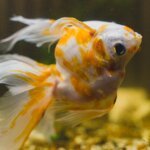
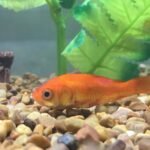
A betta resting briefly on the bottom may be behaving normally. A betta that suddenly stays there, breathes rapidly, loses balance or cannot reach the surface needs prompt attention. Bottom-sitting is a sign to investigate, not a diagnosis of “swim bladder disease.”
Start with the aquarium conditions before choosing a treatment. Record the temperature, ammonia, nitrite and nitrate readings, when the behavior began, and any recent changes to food, equipment, water or tank mates.
Is your betta resting or in trouble?
| What you see | What to do |
|---|---|
| Brief resting, normal breathing, normal swimming and appetite afterward | Observe quietly and check that the pattern is normal for this fish |
| New persistent inactivity, clamped fins or reduced appetite | Test water and check temperature and equipment now |
| Rapid breathing, repeated gasping, rolling or inability to reach the surface | Treat as urgent: correct environmental problems and contact a fish veterinarian |
| Swelling, raised scales, wounds, fuzzy growth or deteriorating fins | Seek a diagnosis; appearance alone cannot identify the cause |
Do not tap the glass, chase the fish or repeatedly net it to “wake it up.” Watch its gills and its ability to swim voluntarily. Do not wait several days when breathing or balance is abnormal.
First check: water quality
Clear water can still contain harmful dissolved waste. Test ammonia and nitrite separately; both should be undetectable. Check nitrate and pH too. A filter does not guarantee safety if it is immature, clogged, switched off or has recently lost its established biological media.
If ammonia or nitrite is detected in an otherwise routinely maintained aquarium, make a partial water change with temperature-matched water treated for chlorine and chloramine. Retest and use the results to guide further changes. Remove uneaten food and check filter operation; avoid replacing all biological media at once.
In a long-neglected tank with very low pH, sudden large changes can increase ammonia toxicity. Get experienced veterinary advice on a controlled correction rather than abruptly changing pH or replacing all the water. The Merck Veterinary Manual explains this “old tank syndrome” exception.
Use our aquarium test kit guide to choose the measurements you need. Keep the actual readings, not just a description that the water is “fine.”
Check temperature, surface access and flow
For a typical domestic betta, a stable 78–80°F is a practical target. Read a separate thermometer rather than trusting the heater dial. Cold water can reduce activity; an overheating heater also requires attention. Restore a suitable temperature gradually, without pouring hot water or dropping ice into the aquarium.
Bettas breathe air as well as using their gills. Keep the surface accessible and provide smooth resting places near it. Maintain gentle surface movement and filtration without forcing the fish to swim continually against a strong outlet. If it is being pushed around, baffle or redirect the flow rather than leaving the filter off.
PetMD’s veterinarian-written betta care sheet covers warm, stable water, gentle filtration and accessible resting places. Our betta care guide explains a suitable long-term setup.
Consider food, stress and injury
Review what the fish actually eats. Food falling into the gravel does not prove it was swallowed. Offer appropriate small portions of a complete betta food and remove leftovers. Do not use peas, prolonged fasting or extra feeding as a universal response to bottom-sitting.
Look for chasing, fin nipping, reflection-related agitation, sharp decorations or an intake that could trap fins. A solitary betta does not need additional fish to cure hiding. Separate incompatible animals using suitable heated, filtered accommodation.
Older fish may rest more, but age should not be used to explain a sudden decline without checking water, appetite and physical condition.
Why “swim bladder disease” is not a complete answer
A fish struggling to maintain depth may have a buoyancy problem, but weakness, poor water conditions and inadequate nutrition can look similar. Infection, injury and internal abnormalities also require different responses. A photograph cannot reliably separate them.
Aquatic Veterinary Services explains the limits of a home swim-bladder diagnosis. A veterinarian may need an examination or imaging. Never puncture, squeeze or manipulate the fish’s abdomen or swim bladder yourself.
Avoid treatments that can make matters worse
- Do not add household essential oils or combine medications experimentally.
- Do not assume salt or Epsom salt treats every cause of lethargy.
- Do not diagnose every white patch as fungus or every swollen eye as one specific bacterial infection.
- Do not raise the temperature sharply to treat suspected ich. Treatment must address the identified problem and the animals in the system.
- Do not move a sick fish into an unheated, unfiltered bowl as a routine treatment.
The Merck guide to environmental fish disease emphasizes checking water quality because environmental problems can directly harm fish and complicate illness.
When to get veterinary help
Seek urgent help if your betta cannot remain upright, cannot reach air, has severe breathing difficulty or is rapidly deteriorating. Persistent loss of appetite, progressive fin damage, ulcers or swelling also warrant professional assessment.
Prepare a short video, test results, tank size, temperature, feeding history and a list of everything recently added. This helps the veterinarian distinguish a tank problem from an individual illness. Continue careful observation after correcting water conditions: improvement is encouraging, but it does not prove that every underlying problem has resolved.