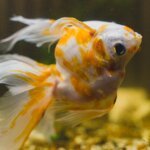
There is no reliable average or safe time limit for a fish out of water. Survival depends on the species, its condition, temperature, moisture, and injuries. If an aquarium fish has jumped out, return it to suitable water immediately rather than spending time estimating how long it can survive.
Stories about a fish surviving for hours are not a handling guide. A fish can suffer serious harm before it stops moving, and surviving the initial incident does not guarantee recovery.
What to do if your fish jumps out
- Return it to water promptly. Use clean, wet hands to gently support the body, avoiding the eyes and gills. Do not squeeze it, peel away dried mucus, or rub dirt off with a dry towel.
- Use water appropriate for that fish. If the aquarium is safe, return it there. If contamination or a serious water-quality problem is suspected, use a clean holding aquarium with conditioned, closely temperature-matched water and appropriate chemistry. A marine fish needs correctly prepared saltwater, not a freshwater rinse.
- Reduce further stress. Keep lighting subdued, protect the fish from aggressive tank mates and filter intakes, and maintain suitable oxygenation without blasting it with a strong jet.
- Get help for serious signs. Persistent breathing difficulty, inability to remain upright, bleeding, or major skin injury warrants prompt advice from a veterinarian who treats fish. Do not wait for an arbitrary recovery deadline.
NOAA’s fish-handling guidance emphasizes minimal handling, wet hands, and avoiding the eyes and gills. These are useful handling principles, although catching wild fish and rescuing a small aquarium fish are different situations.
A motionless fish is difficult to assess on the floor. If you are unsure whether a recently discovered fish is alive, gently return it to suitable water and look for breathing without repeatedly lifting it out. An aquatic veterinarian can advise on an unresponsive fish. Do not put fingers or tools into its mouth or gills.
Why being out of water is dangerous
Most familiar aquarium fish extract dissolved oxygen through their gills. Water supports the delicate respiratory surfaces; out of water, those surfaces can lose their effective shape and dry. Air containing oxygen does not mean an ordinary aquatic fish can use it effectively.
Drying also damages the skin and protective mucus layer. A fall can add impact injuries, while carpet fibers, grit, and cleaning products create further problems. Dr. Richmond Loh’s veterinary discussion of fish that jump out highlights skin damage, fluid-balance problems, pain, and possible secondary infection. These complications help explain why a fish may initially swim away but still need monitoring and treatment.
What affects survival?
- Species: ordinary gill-breathing fish, air-breathing fish, and amphibious specialists have very different adaptations.
- Moisture: a damp surface is different from dry carpet, but neither is a safe resting place for an ordinary aquarium fish.
- Temperature and exposure: heat, direct sun, and moving air can accelerate drying. Do not put a fish in a refrigerator or on ice in an attempt to extend survival.
- Health and exertion: a fish already struggling with poor water quality or illness may have less reserve.
- Injury: a hard fall or damaged gills can matter as much as time out of water.
For these reasons, a single number such as “eight minutes” cannot describe fish generally. Saltwater fish do not, as a group, have a dependable advantage over freshwater fish on land.
What about bettas and fish that breathe air?
Bettas use a labyrinth organ to take air at the surface, as described in Aqueon’s betta care guide. This helps them in their aquatic habitat; it does not turn a betta into a land animal or protect it from drying and fall injuries. Treat a betta on the floor as an emergency too.
Gouramis and other air-breathing fish also have species-specific needs. Do not test their survival by leaving them exposed. An aquarium lid should prevent escape while allowing appropriate ventilation and access to the water’s surface.
Fish genuinely adapted to time on land
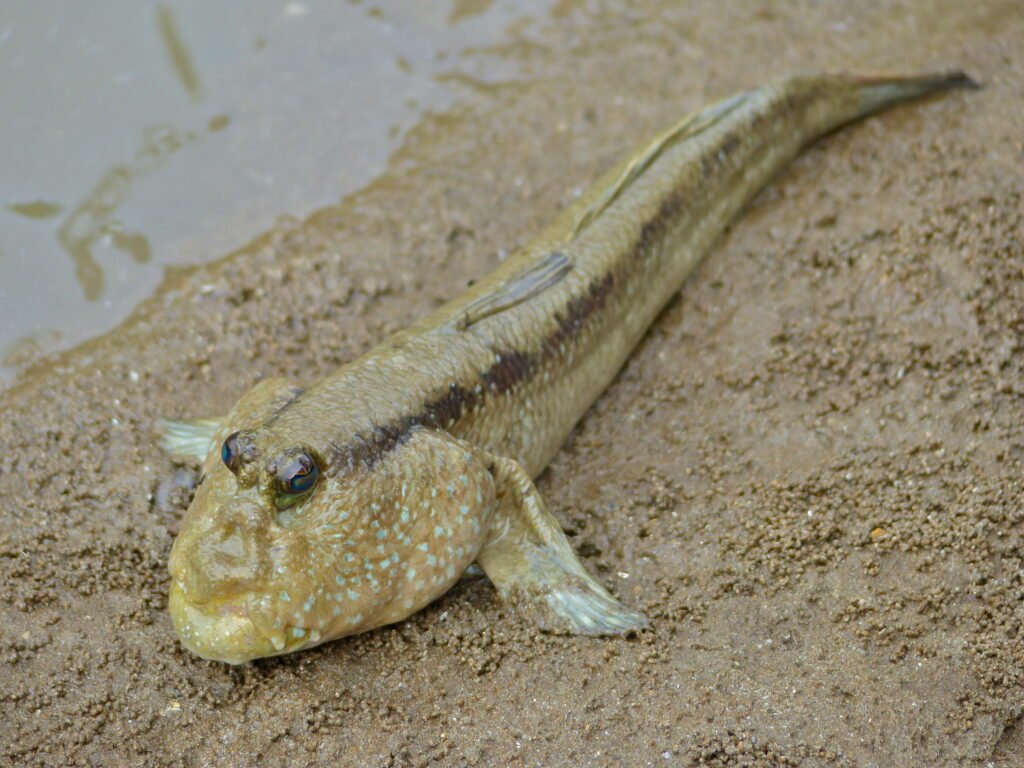
Mudskippers
Mudskippers are amphibious fish, not amphibians such as frogs. They move between water and exposed intertidal habitat. The Aquarium of the Pacific’s Atlantic mudskipper profile explains their reliance on humid conditions and oxygen uptake through moist skin and the lining of the mouth and throat. This specialized lifestyle is very different from a tetra stranded on a dry floor.
Lungfish
Some lungfish can survive seasonal drought through dormancy called estivation. San Diego Zoo describes West African lungfish forming a protective cocoon in mud with access to air. That controlled biological response is not equivalent to leaving a fish on a countertop. Lungfish species differ, so a claim about one species should not be applied to all of them.
After the rescue: monitor and prevent another jump
Watch breathing, balance, appetite, skin, and fins over the following days. Take photographs without removing the fish. If swimming remains abnormal, our guide to sideways swimming explains checks that can help you describe the problem to a veterinarian. Do not automatically add antibiotics, salt, or several “recovery” products; treatment depends on the injury and species.
Then investigate the escape:
- Test ammonia, nitrite, pH, and temperature. Check nitrate as part of the wider maintenance review. Our aquarium test kit guide explains test coverage.
- Confirm that the filter is running and the water surface is moving. If fish are gasping, see our emergency oxygenation guide.
- Look for bullying, sudden disturbances, and unsuitable flow. Jumping can be a startle response; it does not prove the water is bad.
- Fit a secure lid and close escape gaps around cables and hoses with aquarium-appropriate covers. Leave the ventilation needed by the setup.
- Keep transfer containers covered. Prepare the destination before moving fish, and minimize time in a net.
Common questions
Can a goldfish survive out of water for an hour?
An individual survival story cannot predict another fish’s outcome. Do not assume a goldfish is safe for any length of time out of water, or give up on a recently discovered fish solely because you do not know when it jumped.
Should I move a fish backward and forward to revive it?
Do not repeatedly drag a small aquarium fish through the water or force water into its mouth. Return it to an appropriate, gently oxygenated environment and minimize handling. Severe breathing problems require expert help.
Can I remove my fish while cleaning the tank?
Routine partial water changes usually do not require catching the fish. If a move is necessary, use a suitable container of water and a prepared destination. Never leave fish in an empty bucket while you clean.