Disclosure: Aquarium Hunter may earn a commission from qualifying purchases made through links on this page, at no extra cost to you.
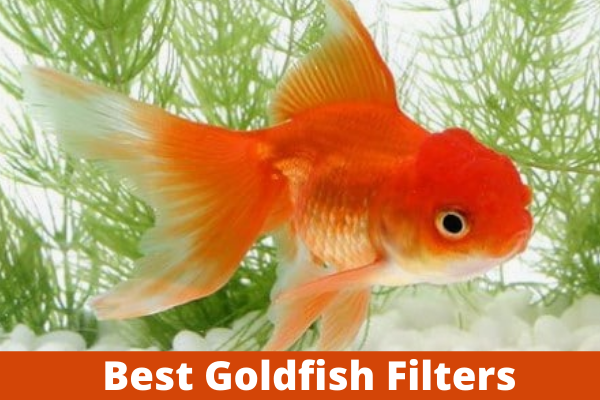
Goldfish need substantially more swimming room, filtration and oxygen than bowls and small “goldfish kits” provide. The best tank is a wide, rectangular aquarium sized for the fish’s adult body length and waste load—not merely the number printed on a product box.
Quick comparison
| Tank | Best use | Important limitation |
|---|---|---|
| Aqueon 40 Breeder | Best overall footprint for fancy goldfish | Tank only; equipment and lid are separate |
| Tetra 55-Gallon Kit | More length and water volume | Narrower front-to-back; filter may need help |
| Fluval Flex 32.5 | Compact all-in-one for one fancy goldfish | Smallest option; rear filter reduces swim space |
Best goldfish tanks reviewed
1. Aqueon 40 Breeder — Best overall footprint

The Aqueon 40 Breeder is our best overall choice because its approximately 36-by-18-inch footprint provides more turning room and surface area than a tall tank of similar volume. That matters for bulky fancy goldfish and for oxygen exchange. Aqueon lists high-quality glass construction, clean silicone edges and black trim.
This is a bare tank, which is an advantage if you want to choose a filter with generous reusable mechanical and biological media. It also means you must budget for a properly fitted lid, light, stand, filter, thermometer, air supply if required, water conditioner and liquid test kit. Aqueon says a filled and decorated aquarium weighs roughly 10 pounds per gallon, so use a purpose-built, level stand and include drip loops on every electrical cord.
- Pros: wide footprint; easy equipment customization; good surface area; standard shape makes accessories easier to source.
- Cons: not a complete kit; only three feet long; unsuitable as a permanent home for adult common, comet or shubunkin goldfish.
2. Tetra 55-Gallon Aquarium Kit — Best larger starter kit
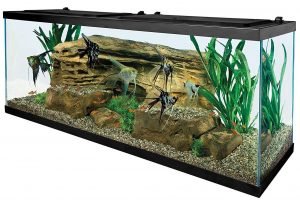
Tetra’s current 55-gallon kit measures about 48 by 13 by 20 inches and includes two LED hoods, a Whisper PF60 filter, thermometer, 200-watt heater, net and starter samples. The four-foot length is useful for swimming, and the greater water volume gives more dilution and stability than the smaller tanks here.
The included heater is not automatically needed for goldfish; temperature requirements depend on variety, room conditions and stability. The supplied filter is a starting point, not permission to overstock. Goldfish produce substantial solid waste, so monitor ammonia, nitrite and nitrate and be prepared to add a second mature filter or replace the included unit with one offering more reusable media. Never replace all biological media at once.
- Pros: four-foot swimming length; larger water volume; lids and basic equipment included.
- Cons: only about 13 inches front-to-back; bundled filter may be limiting for a heavy goldfish bioload; heater may be unnecessary.
3. Fluval Flex 32.5 — Best compact all-in-one
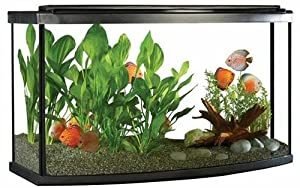
The Fluval Flex 32.5 is a compact all-in-one with app-controlled lighting, two independent three-stage media chambers and twin adjustable output nozzles. Fluval lists dimensions of about 32.5 by 15.35 by 15.75 inches and pump output of 214 gallons per hour.
Its filtration compartments provide useful media space, but they also reduce the display volume. This is the minimum and most restrictive option in our comparison, so we would reserve it for one fancy goldfish rather than treating the label volume as a stocking target. Angle the outlets to avoid forcing a slow-swimming fancy fish to fight a strong current, add prefilter protection if necessary, and test water frequently.
- Pros: integrated multi-stage filtration; adjustable outlets; covered, tidy layout; programmable light.
- Cons: least swimming space here; curved front and rear chamber complicate cleaning; unsuitable for long-bodied goldfish.
How large should a goldfish tank be?
There is no responsible one-number rule for every goldfish. Adult body length, body shape, activity, number of fish, filtration, oxygen, maintenance and actual water quality all matter. The RSPCA advises at least 50 litres as a baseline and a tank at least four times the adult body length long and twice the body length wide, with more space for additional fish. Its UK guidance also notes that goldfish may need at least 60 litres each. Treat those figures as minimum starting points, not targets to crowd.
Fancy goldfish are shorter-bodied and slower than common, comet and shubunkin varieties, but they still need a large footprint. Long-bodied varieties can reach substantial sizes and are active swimmers; FishBase records a maximum length of 48 cm for Carassius auratus. Plan a much larger aquarium or suitable filtered pond from the start rather than relying on a temporary small tank.
Why footprint matters more than a tall shape
Goldfish swim horizontally and benefit from turning room. A wide rectangular tank also exposes more water surface for gas exchange. Bowls, jars and novelty tanks have little usable volume, limited filtration space and unstable temperature and water chemistry. They are not suitable goldfish homes.
Filtration and cycling
Goldfish excrete ammonia and produce abundant solid waste. Choose a filter with accessible mechanical media for debris and substantial biological media for nitrifying bacteria. Manufacturer tank ratings are broad marketing guides; the real test is whether the aquarium consistently maintains 0 ppm ammonia and 0 ppm nitrite with nitrate controlled by maintenance.
Cycle the aquarium without fish before stocking. A mature nitrogen cycle converts ammonia to nitrite and then nitrate. Use a liquid test kit and do not add fish simply because the filter has been running for a fixed number of days. Read our aquarium nitrogen cycle guide and goldfish filter comparison for more detail.
Stand, floor and electrical safety
- Use a stand designed for the exact aquarium footprint and filled weight.
- Place it on a level, stable floor; never allow a rimmed tank to overhang.
- Keep outlets and power boards away from splash zones and form a drip loop in every cord.
- Do not move an aquarium containing water, substrate or fish.
- Check the tank and seams for damage before setup, then leak-test it in a safe area.
Setting up a goldfish tank
- Rinse the empty tank with water only; never use household soap.
- Install the stand, tank, filter, lid, thermometer and any air equipment.
- Choose smooth substrate or a bare bottom that can be cleaned thoroughly. Avoid gravel small enough to enter a goldfish’s mouth but large enough to lodge.
- Use smooth, stable decor and leave an open swimming lane.
- Fill with temperature-matched, properly conditioned water.
- Complete a test-confirmed fishless cycle before adding goldfish.
- Introduce compatible fish conservatively and quarantine newcomers when possible.
- Test water and perform regular partial water changes with substrate cleaning.
Frequently asked questions
Can goldfish live in a bowl?
No. Bowls do not provide adequate swimming room, stable water quality, filtration or oxygen exchange for long-term goldfish welfare.
Do goldfish need a heater?
Not always. Many goldfish do well at stable room temperatures, but some fancy varieties and cold rooms may require controlled heating. Avoid abrupt temperature changes and use a separate thermometer.
Can two goldfish live in a 20-gallon tank?
A 20-gallon tank is not a responsible permanent plan for two adult goldfish. It offers limited swimming space and little margin for their waste load. Choose a larger footprint based on adult size and verify capacity through water testing.
How often should the water be changed?
Use test results to set the schedule. Many goldfish systems need weekly partial changes and gravel cleaning, but stocking and filtration can require more. Any ammonia or nitrite reading calls for prompt corrective water changes and investigation.
Verdict
The Aqueon 40 Breeder is our strongest all-round starting point for fancy goldfish because of its useful width and customizable filtration. The Tetra 55 kit adds length and water volume for keepers who want a more complete package. The Fluval Flex 32.5 is a polished compact option for one fancy goldfish, but it provides the least margin and demands conservative stocking. For common, comet or shubunkin goldfish, plan substantially larger from the outset.