

The best aquarium background is the one that fits your glass exactly, installs cleanly, and complements the fish and hardscape without becoming visual clutter. For most aquariums, a simple black, frosted, or natural printed background attached outside the rear glass is safer and easier to maintain than a bulky decoration placed inside the tank.
Disclosure: Aquarium Hunter may earn a commission from qualifying Amazon purchases, at no extra cost to you. Availability, sizes, and prices can change.
Quick Comparison
| Background | Style | Best for | Buy |
|---|---|---|---|
| Two-Sided River/Lake | Laminated print | Flexible natural scenes | Check on Amazon |
| Driftwood/Plant Print | Two-sided print | Planted-tank look | Check on Amazon |
| SPORN Tropical | Static cling | Removable installation | Check on Amazon |
| Silver Rock Print | Neutral stone scene | Unobtrusive texture | Check on Amazon |
| Underwater Forest | Self-adhesive vinyl | High-depth visual effect | Check on Amazon |
Measure the actual rear glass before ordering. Product names can cover several dimensions, so select by width and height—not by a seller’s gallon label.
How We Chose
A background is mainly a design product, so there is no meaningful laboratory winner. We compared attachment method, sizing flexibility, reversibility, glare, visual detail, maintenance, and whether the material stays outside the water. We excluded duplicate designs and did not use invented star ratings or temporary prices.
1. Two-Sided River and Lake Background — Best All-Round Print

This reversible laminated design gives two natural-looking options without requiring a second purchase. It works well when you want more detail than a solid color but still want a background that can be trimmed and taped outside the glass.
Pros: reversible, easy to trim, and simple to remove. Cons: tape can show if applied untidily, and any air gap can create reflections.
2. Driftwood and Plant Background — Best for a Planted Look
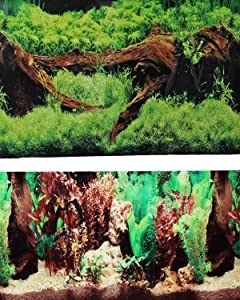
Deep greens and brown driftwood can visually extend a planted aquascape or add structure behind a lightly decorated tank. Because the print is busy, it works best when the foreground layout is simple enough to remain readable.
Pros: natural palette and useful depth. Cons: may compete with dense real plants or patterned fish.
3. SPORN Tropical Static Cling — Best Removable Option

A static-cling background is useful if you rent, redesign tanks frequently, or want to avoid permanent adhesive. Careful wet application helps you position the sheet and push bubbles toward the edges.
Pros: removable and generally low-mess. Cons: installation shows bubbles and dust easily; thin film can tear if handled roughly.
4. Silver Rock Background — Best Neutral Texture
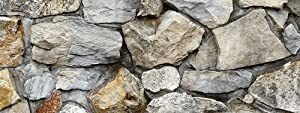
A gray stone pattern adds texture without the strong blues and greens of many photographic backgrounds. It can suit freshwater, marine, and paludarium-style displays, provided it is installed outside the enclosure and kept dry.
Pros: restrained color and easy coordination. Cons: a low-resolution print may look artificial at close range.
5. Underwater Forest Adhesive Background — Best Depth Effect

The receding forest scene creates a pronounced sense of depth. Self-adhesive vinyl can produce a close, low-glare finish, but installation needs patience because trapped dust or creases are difficult to correct after the adhesive sets.
Pros: strong depth illusion and clean finish when installed well. Cons: less reversible than tape or static cling.
Printed, Static-Cling, Adhesive, or Painted?
Laminated printed sheets
These are inexpensive, easy to trim, and often reversible. Tape only the top and sides for quick removal, or use a purpose-made clear background gel for closer glass contact. Avoid household products that may damage the print, seals, stand, or nearby equipment.
Static-cling film
Static film is reusable and has no permanent glue. It needs very clean glass and careful smoothing. Follow the maker’s wet- or dry-application instructions because films differ.
Self-adhesive vinyl
Vinyl can look seamless but is the least forgiving. Measure twice, clean thoroughly, align an edge, and apply gradually with a soft squeegee. Never install an exterior-only adhesive sheet inside the water.
Solid paint or removable board
Matte black or dark blue paint on the outside rear panel reduces visual clutter, but it is a commitment. A cut sheet of black foam board or plastic is reversible and often gives a similarly calm result.
How to Measure Correctly
- Measure only the visible rear glass, not the advertised tank volume.
- Record width and height in the same units used by the listing.
- Allow a small trimming margin.
- Check for braces, filter pipes, cords, and overflow boxes.
- If joining sheets, place the seam behind hardscape or plants where possible.
Installation Guide
- Move electrical plugs away from the work area and create drip loops.
- Clean the outside rear glass and remove dust, grease, and mineral deposits.
- Hold the uncut background in place and mark the final size.
- Cut with a straightedge on a protected surface—not against the aquarium.
- Apply it using the exact product instructions.
- Push bubbles outward gently and wipe away moisture.
- Check that tape or film does not obstruct ventilation or equipment.
Do not use blades against a filled aquarium or near silicone seams. Do not spray cleaners where mist can enter the water.
Does a Background Help Fish?
An opaque rear background can reduce visual distraction and reflections from behind the tank, and it hides cords and filters. It does not replace plants, caves, shade, or species-appropriate cover. Fish responses vary, so watch for persistent glass surfing, hiding, faded color, or aggression after a design change.
Highly reflective films can worsen reflection-related behavior. If a betta or territorial fish reacts to the glass, try a matte exterior background, adjust room and tank lighting, and add appropriate cover. A photograph of habitat is decoration for the viewer; it is not functional habitat for the animal.
Frequently Asked Questions
Should an aquarium background go inside or outside?
Most printed, cling, and adhesive products belong outside the rear glass unless the manufacturer explicitly certifies them for permanent underwater use. Exterior mounting is easier to clean and avoids introducing unknown materials.
Is black the best aquarium background color?
Black is popular because it hides equipment and lets fish and plants stand out, but it is not universally best. Dark blue, frosted, and natural prints can also work. Choose a matte finish and observe the animals’ behavior.
Can I use ordinary window film?
Only if it is suitable for the glass, heat, humidity, and installation method. Never allow adhesives, sprays, or films of unknown composition to contact aquarium water.
How do I remove bubbles?
Follow the film instructions. For products designed for wet application, use the recommended liquid and work from the center outward with a soft card or squeegee. Do not puncture bubbles next to aquarium glass.
Verdict
The two-sided river and lake print is the most flexible all-round choice. Pick the static-cling option if reversibility matters, the rock print for a calmer texture, or the underwater forest for a dramatic depth effect. Accurate measurement and careful installation matter more than the image name.
Continue with our guides to aquascaping plants, aquarium gravel, and artificial aquarium plants.