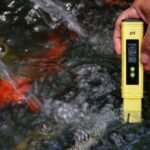
The best aquarium pH meter is one you can calibrate, store correctly and check against a second method when a reading looks wrong. For a straightforward handheld option, the Apera PH20 offers useful routine accuracy. The Apera PH60 and Milwaukee PH56 add replaceable probes, while the Bluelab pH Pen places more emphasis on guided calibration and probe care.
Disclosure: Aquarium Hunter may earn a commission from qualifying purchases made through clearly identified Amazon links, at no extra cost to you. Product inclusion is based on documented features and aquarium usefulness, not commission rate.

Quick comparison
| Meter | Stated pH accuracy | Calibration | Probe | Best fit |
|---|---|---|---|---|
| Apera PH20 | ±0.1 | Automatic, 1–3 points | Fixed | Routine aquarium checks |
| Apera PH60 | ±0.01 | Automatic, 1–3 points | Replaceable | Owners who want a serviceable pen |
| Milwaukee PH56 PRO | ±0.05 | Automatic, 1–2 points | Replaceable | Higher-resolution handheld testing |
| Bluelab pH Pen | See current manufacturer specification | Two-point process | Integrated pen sensor | Users willing to follow a structured care routine |
Accuracy is a manufacturer specification under stated conditions, not a promise that every reading will be correct. Buffer freshness, electrode condition, temperature, storage and sample contamination all affect real-world results. Displaying two decimal places does not by itself make a meter more accurate.
1. Apera PH20 — practical entry option
The PH20 is a sensible choice when you want a waterproof pen for routine freshwater or marine aquarium checks without paying for a replaceable probe. Apera specifies a 0.0–14.0 pH range, 0.1-pH resolution and ±0.1-pH accuracy. It supports automatic one-to-three-point calibration and automatic temperature compensation from 0–50°C.
The IP67 floatable housing and stable-reading indicator are helpful around an aquarium. The tradeoff is the fixed electrode: when the sensor reaches the end of its useful life, the complete tester is replaced. For many hobbyists, that is acceptable if the meter is used regularly and cared for correctly.
Best for: routine trend checking and aquarists who want a simple digital reading.
Not ideal for: buyers who specifically want a replaceable electrode or finer stated accuracy.
Check the Apera PH20 on Amazon
2. Apera PH60 — replaceable-probe upgrade
The PH60 family is the more serviceable Apera option. Its general-purpose replacement probe incorporates a temperature sensor and double-junction design. Being able to replace the probe matters because the glass electrode is a consumable component even when the meter body and display remain usable.
Check that a listing identifies the exact PH60 kit rather than another PH60-family probe designed for flat surfaces, spear measurements or smart-app operation. Specifications and included buffers vary by kit. Match the model number on the listing, packaging and manufacturer page before purchasing replacement parts.
Best for: regular users who prefer replacing a worn sensor instead of discarding the whole instrument.
Not ideal for: occasional testing where a liquid kit may be simpler to maintain.
Check the Apera PH60 kit on Amazon
3. Milwaukee PH56 PRO — higher-resolution waterproof tester
Milwaukee specifies the PH56 at -2.00 to 16.00 pH, 0.01-pH resolution and ±0.05-pH accuracy at 25°C. It provides automatic one- or two-point calibration, automatic temperature compensation and a replaceable MI56P probe. The product page describes an IP65 waterproof housing, stability indicator and hold function.
This is the strongest fit of the four when stated accuracy and a replaceable probe are priorities. It still requires fresh buffers and proper storage. The extra displayed decimal should not encourage constant adjustment of an aquarium that is otherwise stable.
Best for: frequent testing and owners who value a replaceable probe and finer manufacturer specification.
Buying note: no exact current Amazon affiliate listing was verified during this review, so this recommendation is intentionally not accompanied by a shopping button.
4. Bluelab pH Pen — maintenance-led option
The Bluelab pH Pen measures pH and temperature and includes automatic temperature compensation, a hold function, calibration indicator and waterproof body. Its most useful feature may be the supporting care procedure: Bluelab instructs owners to hydrate the probe in KCl storage solution before first use, complete a two-point calibration and keep the probe tip wet.
Bluelab recommends calibrating with fresh pH 7 and pH 4 solutions for the acidic range common to many aquariums, or pH 7 and pH 10 when readings are normally alkaline. The calibration indicator expires after 30 days as a reminder. That routine is more important than the brand name printed on the pen.
Best for: owners who want clear care guidance and will maintain the probe consistently.
Buying note: the old article linked a Bluelab combo meter intended for nutrient systems, not a verified current pH Pen listing. That mismatched affiliate link has been removed from this draft.
How to obtain a dependable aquarium reading
- Inspect and hydrate the electrode. Follow the meter manual if the probe is new or has dried out.
- Use fresh calibration buffers. Select points that bracket the expected aquarium range. Do not pour used buffer back into its bottle.
- Rinse between solutions. Shake off droplets gently; avoid rubbing the glass bulb.
- Test a clean sample. A cup of aquarium water reduces contamination and keeps the meter away from submerged electrical equipment.
- Wait for stability. Gently stir as the manual directs and wait for the reading to settle.
- Confirm surprises. Recheck calibration or compare with a fresh liquid test before changing water chemistry.
- Store the probe correctly. Use the specified storage solution. Do not assume distilled or RO water is suitable.
What automatic temperature compensation does
Automatic temperature compensation adjusts for the temperature-dependent response of the electrode. It does not calculate what the aquarium’s pH would be at a different temperature, and it does not correct a dry, dirty or poorly calibrated sensor.
Why RO and very soft water can be slow to test
Low-conductivity samples can produce a slow or unstable response with a general-purpose electrode. Apera notes that ordinary PH20 and PH60 testers may take one to five minutes to stabilize in pure water. Do not keep adding chemicals while waiting for a weakly buffered sample to settle.
pH is only part of aquarium chemistry
A pH result needs context. Carbonate hardness influences buffering, while general hardness describes dissolved calcium and magnesium. Carbon dioxide, biological activity, substrate and source water can also move pH. A stable aquarium outside a generic internet target may be safer than repeatedly forcing a number with acids or alkaline products. If a lower reading is genuinely needed, follow a measured approach such as the one in our guide to lowering aquarium pH safely.
Compare readings at similar times of day, particularly in planted tanks where photosynthesis changes dissolved carbon dioxide. Record pH alongside KH, temperature and maintenance events so a trend has meaning.
When a liquid test kit may be the better choice
A liquid color test does not require electrode storage or electronic calibration. It can be a better fit for occasional users, provided the reagent is in date and the color can be read reliably. A digital pen becomes worthwhile when you test often, need a numerical display, or find color matching difficult—and when you are willing to maintain it.
Sources
- Apera Instruments: PH20 specifications
- Apera Instruments: replacement probes
- Apera Instruments: measuring low-conductivity water
- Milwaukee Instruments: PH56 specifications
- Bluelab: pH Pen setup and features
- Bluelab: two-point calibration
- Bluelab: measurement and storage procedure