5 Best Tropical Fish Foods for a Healthy Community Tank

How Long can a betta fish go without food?

Disclosure: Aquarium Hunter may earn a commission from qualifying Amazon purchases made through links on this page, at no extra cost to you.

New Life Spectrum Naturox Optimum All Purpose Flakes are our best tropical fish food for a typical mixed community tank because they provide a practical complete staple in a form that can be crushed for different mouth sizes. Hikari Micro Wafers are the better choice for many small midwater fish that prefer a compact, slowly sinking bite. No single food suits every “tropical fish,” so match the format and ingredients to the species you actually keep.

Best Tropical Fish Foods: Quick Comparison

Food Best use Format Amazon
New Life Spectrum Naturox Optimum Best overall staple Flakes Check on Amazon
Hikari Micro Wafers Small community fish Slow-sinking micro wafers Check on Amazon
TetraMin Tropical Flakes Widely available everyday option Flakes Check on Amazon
Aqueon Tropical Flakes Budget staple Flakes Check on Amazon
Omega One Freeze-Dried Bloodworms Occasional supplement only Freeze-dried worms Check on Amazon

Important: Check the current label before purchase. Formulas and package sizes can change, and a food appropriate for one species may be unsuitable for another.

Our Tropical Fish Food Picks

1. New Life Spectrum Naturox Optimum Flakes — Best Overall

New Life Spectrum Naturox tropical fish flakes

New Life Spectrum’s all-purpose flakes are a useful staple for omnivorous tropical community fish. Flakes float initially and then disperse through the upper water, while aquarists can crush them for smaller mouths. The current Naturox product is preferable to retaining a vague, outdated “color food” claim because it is sold as a complete all-purpose formula.

Large flakes can still be missed by nano fish, and bottom dwellers may receive little unless some food sinks. Feed a small pinch, watch which fish actually eat, and supplement with an appropriate sinking food when the community includes corydoras, loaches or other bottom-oriented species.

Pros: complete staple; crushable; useful for mixed communities; current identifiable formula.
Cons: flakes can drift into the filter; not ideal for every bottom feeder; costs more than basic flakes.

Check New Life Spectrum Naturox on Amazon

2. Hikari Micro Wafers — Best for Small Community Fish

Hikari Micro Wafers for small tropical community fish

Hikari Micro Wafers are small, compact pieces designed for tropical fish with small mouths. Their gradual sinking behavior helps fish feed below the surface and gives shy midwater fish more opportunity than a flake that immediately drifts away.

“Micro” does not automatically mean suitable for fry, and some tiny species may still need the pieces crushed. Observe feeding rather than relying on the package name. Remove uneaten food and use a dedicated species-appropriate diet for strict herbivores, specialized predators or fry.

Pros: small consistent pieces; reaches midwater fish; less easily blown apart than flakes.
Cons: may still be large for fry; sinking pieces can be lost in substrate; not a universal diet.

Check Hikari Micro Wafers on Amazon

3. TetraMin Tropical Flakes — Best Widely Available Option

TetraMin tropical flake fish food

TetraMin is a familiar complete flake food that is easy to find in multiple container sizes. It works as a straightforward staple for many common omnivorous community fish and is easy to crumble. The broad availability also makes replacing a nearly empty container simpler.

Buy a package your fish can finish while it remains fresh rather than choosing the lowest price per ounce. Repeated opening exposes food to air and moisture. Keep the container tightly closed, cool and dry, and discard food with an unusual smell, visible moisture or mold.

Pros: readily available; complete staple; multiple sizes; easy to crush.
Cons: flakes can create waste when overfed; large tubs may go stale; bottom feeders need another format.

Check TetraMin Tropical Flakes on Amazon

4. Aqueon Tropical Flakes — Best Budget Staple

Aqueon tropical fish food flakes

Aqueon Tropical Flakes are a practical budget choice for common tropical community fish. They are easy to portion and crush, and the current Amazon listing remains clearly identifiable. They make more sense in this shortlist than the old article’s duplicate specialty treats and generic search links.

Value depends on the fish eating the food cleanly. An inexpensive flake that is too large, ignored or overfed costs more in wasted food and water-quality problems. Start with a small container and confirm acceptance.

Pros: economical; easy portioning; suitable staple for many omnivorous community fish.
Cons: not specialized for herbivores or carnivores; floats initially; easily overfed.

Check Aqueon Tropical Flakes on Amazon

5. Omega One Freeze-Dried Bloodworms — Best Occasional Supplement

Omega One freeze-dried bloodworms for occasional fish feeding

Freeze-dried bloodworms can add variety and encourage feeding in many insect-eating or omnivorous fish. They are shelf-stable and avoid some handling issues associated with live food. However, they are a supplement, not the everyday foundation of a balanced tropical community diet.

Use a small portion once or twice a week if appropriate for the species and reduce the normal meal accordingly. Pre-soaking can make dry pieces easier for some fish to consume. Avoid inhaling dust and wash hands after handling any fish food.

Pros: useful variety; shelf-stable; appealing to many fish.
Cons: not a complete staple; easy to overuse; unsuitable for some herbivores and very small mouths.

Check Omega One Bloodworms on Amazon

How to Choose Tropical Fish Food

Start with the species, not the word “tropical”

Tropical aquariums can contain surface-feeding livebearers, midwater tetras, bottom-feeding catfish, algae grazers and specialized predators. Research each species’ natural feeding strategy and choose a complete staple that reaches its feeding zone. A mixed tank may need two complementary staple formats.

Match the particle to the mouth

Fish should be able to swallow food without repeatedly spitting it out. Crush flakes or choose micro pellets for small fish. Larger pellets are not automatically more nutritious, and uneaten pieces quickly add organic waste.

Read the purpose statement and label

Choose a product labelled as a complete or staple diet for the relevant type of fish. Treats, dried invertebrates and single-ingredient foods should not displace a balanced staple. Ingredient lists are useful, but no one ingredient alone proves quality; digestibility, formulation and species suitability all matter.

Use variety intelligently

Rotation can provide different textures and feeding opportunities, but random variety is not the goal. Keep one reliable complete staple, add a second appropriate format where needed, and use treats sparingly. Sudden changes can cause refusal, so transition gradually.

How Much and How Often to Feed

Feed an amount the fish consume promptly while every individual has a fair chance to eat. For many adult community fish, one or two small meals per day is reasonable, but species, age, health and temperature change the requirement. Fry often need smaller, more frequent meals; some predators eat less often.

Do not rely on a rigid “two-minute rule.” A slow bottom feeder and a fast surface feeder behave differently. Watch body condition and water quality, and reduce food if pieces remain, fish become overweight, or nitrate and detritus accumulate unusually quickly. Ammonia and nitrite should remain at zero in a cycled aquarium.

Frequently Asked Questions

Are flakes or pellets better?

Neither is universally better. Flakes are easy to crush and spread across the surface; pellets provide consistent portions and can target different depths. The better food is the complete diet that fits the species, mouth size and feeding zone.

Do color-enhancing foods change a fish’s natural color?

Some nutrients and pigments support normal coloration, but food cannot create genetic colors a fish does not have. Good water quality, low stress, appropriate lighting and health are equally important. Avoid products promising dramatic transformation.

Can tropical fish eat bloodworms every day?

Usually they should not. Bloodworms are better used as an occasional species-appropriate supplement. A complete staple should provide the foundation unless a qualified aquatic veterinarian designs another diet.

Should uneaten food be removed?

Yes. Siphon accessible leftovers before they decay, then reduce the next portion. Persistent refusal can indicate unsuitable particle size, stress, poor water quality or illness.

Verdict

New Life Spectrum Naturox Optimum Flakes are our best general staple for a mixed tropical community, while Hikari Micro Wafers better serve many small midwater fish. TetraMin and Aqueon offer accessible flake alternatives. Omega One bloodworms can add occasional variety, but should not replace a complete daily food. Match every purchase to the species in the aquarium and feed by observation rather than by package marketing alone.

5 Best Betta Tank Heaters: Safe, Adjustable Picks

5 Best Betta Tank Heaters: Safe, Adjustable Picks

Disclosure: Aquarium Hunter may earn a commission from qualifying Amazon purchases made through links on this page, at no extra cost to you.

The Hygger Small Aquarium Betta Heater is our best betta tank heater for most small aquariums because the current line offers appropriately sized wattages, adjustable control, a digital display and automatic protection features. For a conventional glass heater from a long-established aquarium brand, the Fluval M50 is a strong alternative. Always choose wattage for the tank volume, room temperature and heater maker’s chart—not the fish name on the package.

Bettas are tropical fish. Most should be kept at a stable 78–80°F (25.5–26.5°C), unless an aquatic veterinarian recommends otherwise. A heater should maintain that range without hot spots or rapid swings, and a separate aquarium thermometer should verify the actual water temperature.

Best Betta Tank Heaters: Quick Comparison

Heater Best for Control Amazon
Hygger Small Betta Heater Best overall Digital adjustable Check on Amazon
Fluval T50 Electronic Heater Premium small-tank option Electronic adjustable Check on Amazon
Fluval M50 Best conventional glass heater Adjustable dial Check on Amazon
Eheim Thermocontrol e50 Calibration and established design Adjustable and recalibratable Check on Amazon
Aqueon Submersible 50W Simple adjustable option Adjustable dial Check on Amazon

Important: Amazon may display several wattages on one listing. Confirm the selected wattage, dimensions, voltage and seller before ordering.

Our Betta Heater Picks

1. Hygger Small Aquarium Betta Heater — Best Overall

Hygger adjustable heater for a small betta aquarium

Hygger’s current small-heater line is available in multiple wattages and combines an external digital display with adjustable temperature control. This makes it easier to see the setting than on a tiny submerged dial. The listing also describes over-temperature and out-of-water protection, useful safeguards for small aquariums where the water level can change quickly.

Choose the wattage from the manufacturer’s current chart. A 10-watt model may be inadequate in a cold room, while 100 watts can be excessive for a small betta tank. The digital reading is convenient, but it does not replace a separate thermometer placed away from the heater.

Pros: several small-tank wattages; visible digital control; compact; automatic protection features.
Cons: model and controls vary by wattage; electronic display adds equipment and cable; independent verification is still necessary.

Check the Hygger Small Betta Heater on Amazon

2. Fluval T50 Electronic Heater — Best Premium Option

The Fluval T50 is a fully electronic heater marketed for freshwater aquariums up to 15 gallons. Its 50-watt output is a practical range for many 5- to 10-gallon betta tanks, provided the room-to-water temperature difference fits Fluval’s guidance. Electronic control and a protective exterior make it attractive where a bare glass tube is undesirable.

This is the most expensive option in the shortlist, and the “up to” tank rating is not a guarantee in a very cold room. Measure the aquarium’s true water volume and ambient temperature before choosing it.

Pros: electronic control; protective format; appropriate output for many standard betta tanks; established aquarium brand.
Cons: premium price; one wattage cannot suit every room and tank; freshwater-only listing should be followed.

Check the Fluval T50 on Amazon

3. Fluval M50 — Best Conventional Glass Heater

Fluval M-series adjustable aquarium heater

The M50 is a straightforward 50-watt adjustable submersible heater for freshwater or saltwater aquariums. Its slim glass body is easy to position near gentle filter flow, which helps distribute warmed water. It suits aquarists who prefer a familiar dial-controlled design without a separate electronic controller.

Glass heaters must be handled carefully. Inspect the tube before use, mount it where décor cannot strike it and never expose hot glass to air or cold replacement water. Read the current manual for orientation and minimum-water-line requirements.

Pros: adjustable; slim; widely established model; 50 watts suits many standard small aquariums.
Cons: glass body; dial is less convenient than an external display; requires careful handling during maintenance.

Check the Fluval M50 on Amazon

4. Eheim Thermocontrol e50 — Best for Calibration

Eheim adjustable aquarium heater

The Eheim Thermocontrol e50 uses the brand’s long-running adjustable glass-heater format and allows the control to be recalibrated if the setting and an accurate thermometer consistently disagree. This can be useful for a stable permanent setup.

Eheim heaters are relatively long. Check the product dimensions against the usable height or width of the tank before buying. The heater must be installed in an orientation allowed by its instructions and kept submerged to the marked level.

Pros: adjustable; recalibratable; established design; clear operating indicator.
Cons: long glass body; may be awkward in compact tanks; usually costs more than basic dial heaters.

Check the Eheim Thermocontrol e50 on Amazon

5. Aqueon Submersible 50W — Simple Adjustable Choice

Aqueon adjustable submersible aquarium heater

Aqueon’s current 50-watt submersible listing is a simple adjustable option for aquariums within its specified range. It is a better fit for a typical heated betta aquarium than the tiny, nonadjustable bowl heaters that appeared in the old version of this review.

The listing may show a generous maximum tank size, but heater capacity depends strongly on room temperature. Select conservatively for the temperature rise required and verify performance over a full day before adding a fish.

Pros: adjustable; familiar submersible design; practical wattage for many small tanks.
Cons: dial must be checked against a thermometer; glass requires care; advertised maximum volume may not apply in a cold room.

Check the Aqueon 50W Heater on Amazon

How to Choose the Right Betta Heater

Tank volume and room temperature

Start with the manufacturer’s wattage chart, then account for the difference between the coolest room temperature and the desired water temperature. A five-gallon tank in a 75°F room needs less heating than the same tank beside a winter window. Use actual filled volume after substrate and décor displacement.

Adjustable versus preset

An adjustable heater gives more control when room temperature changes, a fish needs veterinary treatment or a preset unit runs warm or cool in a particular tank. Preset heaters can be simple, but their fixed nominal setting and small wattage do not guarantee a safe temperature. For most permanent betta aquariums, adjustable control is preferable.

Independent thermometer

Every heated tank needs a separate thermometer. Place it away from the heater and check it daily at first. After installation, allow the system to stabilize in a fishless tank for at least 24 hours while monitoring the highest and lowest readings.

Heater guards and placement

Position the heater where filter circulation distributes warmth, without pinning it against substrate, décor or the tank wall contrary to its instructions. A protective guard can reduce direct contact, especially around long-finned fish, but must not trap debris or block circulation.

Safe Installation and Maintenance

  1. Inspect the heater, plug and cord. Do not use damaged equipment.
  2. Mount it exactly as the current manual permits and respect its minimum water line.
  3. Create a drip loop and use a GFCI-protected outlet where available.
  4. Let a glass heater acclimate in the water for the maker’s stated period before switching it on.
  5. Verify the temperature with a separate thermometer before adding the betta.
  6. Unplug the heater before water changes. Allow it to cool before exposing it to air, and let it re-acclimate after refilling.
  7. Replace any heater with cracks, condensation inside a sealed tube, erratic cycling or a damaged cable.

Never operate an aquarium heater in a container below its stated minimum water level. Do not repair or splice a heater cord. If a tank is overheating, unplug the heater safely, increase surface agitation, cool the room gradually and avoid sudden temperature shocks.

Frequently Asked Questions

Does a betta need a heater?

Usually, yes. Unless the room keeps the water consistently within the betta’s appropriate tropical range day and night, a thermostatically controlled heater is needed.

What temperature is best for a betta?

A stable 78–80°F (25.5–26.5°C) is a practical range for most healthy domestic bettas. Stability and accurate measurement matter more than chasing one exact number.

Is a 50-watt heater too strong for a five-gallon tank?

Not automatically. Many thermostatic 50-watt heaters are designed for small tanks, but the maker’s chart, room temperature and product dimensions must all fit. An oversized or malfunctioning heater can overheat water quickly, so independent monitoring is essential.

Can I put the heater beside the filter?

Often yes. Gentle flow near the heater can distribute warmth, provided the position and orientation comply with the heater instructions and fish cannot become trapped.

Verdict

The Hygger Small Aquarium Betta Heater offers the most convenient mix of appropriate wattage choices, adjustment, visible temperature information and protection features. The Fluval M50 is our preferred conventional glass alternative, while the Fluval T50 offers a more protected electronic design. Whichever heater you choose, size it for the actual aquarium and room, test it before adding the fish, and keep a separate thermometer in the tank.

How Long Is a Fish’s Memory? What Research Shows

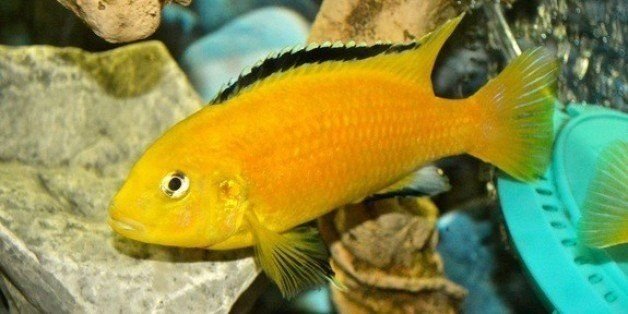
The idea that fish remember things for only three seconds is a myth. Research has shown that fish can learn visual cues, remember food locations, recognize familiar situations and retain some memories for days or even months. In one controlled experiment, electric yellow cichlids remembered a food-associated visual pattern after a 12-day break.

That result does not mean every fish remembers everything for exactly 12 days. Memory depends on the species, the task, the strength of the learning experience and the type of memory being tested. What the evidence does show is that fish learning and memory are far more capable than the familiar “three-second memory” claim suggests.

African cichlid used to illustrate research into long-term fish memory

How Long Is a Fish’s Memory?

There is no single fish-memory span. “Memory” includes several different abilities: learning an association, remembering a location, recognizing an individual, adapting to a changed reward and recalling a threatening event. Scientists test these abilities in different ways, so one result cannot be turned into a universal countdown for every fish.

Published studies have documented memory lasting at least 10 days in zebrafish, 12 days in electric yellow cichlids, about three months in paradise fish and longer periods in certain wild species and tasks. These findings do not establish the maximum memory of those animals. They show that the fish retained the particular information until the experimenters tested them again.

The practical answer is therefore simple: aquarium fish can form meaningful long-term memories, and many can retain useful information for much longer than a few seconds.

The 12-Day African Cichlid Study

The study most closely associated with this story involved electric yellow cichlids (Labidochromis caeruleus), a Lake Malawi species commonly kept in aquariums. Researchers Erica Ingraham, Nicole Anderson, Peter Hurd and Trevor Hamilton published the peer-reviewed paper in Frontiers in Behavioral Neuroscience in 2016.

Rather than simply placing food in one corner, the experiment trained fish to associate a moving visual pattern with a food reward. The fish saw upward- and downward-moving line patterns in different zones. Approaching the reinforced pattern produced food.

After three short training sessions, the fish had a 12-day rest period without that training. When returned to the testing arena, they showed a significant preference for the visual pattern that had previously predicted food. This demonstrated retention of the learned association for at least 12 days.

The researchers also explored reversal learning. After a longer break, they rewarded the previously unrewarded downward-moving pattern. The fish did not immediately reverse their preference after the first new training period, but did so after additional training. The authors interpreted this as evidence that cichlids could form a new association while the earlier memory still affected learning.

What the Study Proved—and What It Did Not

The experiment supports three careful conclusions:

  • Electric yellow cichlids can learn to discriminate between moving visual cues.
  • They can associate one of those cues with a food reward.
  • The learned preference can remain detectable after at least 12 days without reinforcement.

It did not prove that 12 days is the limit of a cichlid’s memory. Because the fish were tested after 12 days, the study could establish a minimum retention period for this task, not a maximum. The later reversal phase suggested that the original learning may have continued to influence behavior after a longer interval, but that was not a direct test of a universal memory span.

It also does not allow us to assign the same memory duration to goldfish, bettas, guppies or every other aquarium species. Different species face different ecological challenges and may excel at different cognitive tasks.

Why Would a Fish Need Long-Term Memory?

Memory can help a fish find feeding areas, navigate a territory, recognize social partners, avoid predators and respond to seasonal or environmental change. A fish that remembers where food was available can search efficiently instead of exploring every part of its habitat again.

For social cichlids, remembering competitors, territories and previous interactions may also affect aggression and group behavior. A useful memory does not need to resemble human autobiographical recall. It only needs to help the animal make a better decision later.

Forgetting can be useful too. If an old feeding site stops producing food, clinging indefinitely to the old association wastes time. The ability to update or reverse a learned preference—as the cichlids eventually did—is an important part of behavioral flexibility.

Can Aquarium Fish Recognize Their Keeper?

Many aquarists notice fish gathering near the glass when a familiar person approaches. The fish may be responding to a combination of visual features, movement, timing and the learned expectation of food. This behavior is consistent with associative learning, but it should not automatically be described as human-like affection or individual facial recognition without a species-specific test.

Fish can certainly learn routines. They may anticipate feeding at a particular place or time, approach a feeding tool, enter a shelter on cue or distinguish a rewarded target from another target. Consistent positive training can be a useful form of enrichment when it does not involve overfeeding or stress.

What Fish Memory Means for Aquarium Care

Provide more than an empty container

An animal capable of learning and remembering benefits from an environment that permits natural behavior. Appropriate plants or rockwork, safe shelter, swimming space, compatible social conditions and varied but predictable enrichment are more useful than a constantly changing tank that removes every familiar landmark.

Use consistent, low-stress routines

Fish can learn that a net, hand or sudden movement predicts capture. Move calmly, maintain regular care routines and use a container rather than prolonged chasing when transferring a fish where practical. A remembered negative event does not prove that a fish is permanently traumatized, but minimizing avoidable stress is good husbandry.

Train without overfeeding

Food rewards can teach a fish to approach a target or enter a particular area. Use a portion of the animal’s normal ration rather than adding extra meals. Stop if the fish shows persistent hiding, frantic swimming, color loss or other signs that the session is stressful.

Do not use memory research to excuse poor care

A fish’s ability to adapt or learn does not make an undersized, uncycled or incompatible aquarium acceptable. Water quality, species-appropriate space, filtration, temperature and social needs remain fundamental. Cognitive ability is another reason to provide thoughtful care, not a substitute for it.

Other Evidence of Long-Term Memory in Fish

The cichlid paper discusses earlier experiments in which zebrafish retained spatial information for 10 days and paradise fish reacted differently to a fish they had encountered three months earlier. Research methods and interpretations vary, but the broader literature consistently contradicts the claim that fish memory disappears after a few seconds.

A newer study of another cichlid, Neolamprologus pulcher, tested memory for a food-reward task at intervals extending beyond 12 days. Results such as these continue to show why “How many seconds can a fish remember?” is the wrong scientific question. Researchers instead ask what information a species can learn, how long a specific memory remains detectable and how experience affects later decisions.

Frequently Asked Questions

Do goldfish really have a three-second memory?

No. The three-second claim is not supported by the scientific literature. Goldfish can learn locations and cues and change their behavior based on previous experience.

Can fish remember being fed?

Yes. Food-reinforcement experiments show that fish can associate a visual cue or location with a reward. Aquarium fish also commonly learn the timing and location of regular feeding.

Can a fish remember a frightening event?

Fish can learn avoidance associations, although the duration and strength depend on the species and experience. Calm handling and minimizing repeated chasing help reduce avoidable fear and stress.

Are cichlids smarter than other fish?

Cichlids display complex territorial, parental and social behavior, but intelligence is not a single ladder on which every species can be ranked. Different fish are adapted to solve different problems, and performance also depends on how a test is designed.

Sources and Further Reading

Bottom Line

Fish do not live in a three-second present. Electric yellow cichlids retained a learned visual association for at least 12 days, while other experiments have demonstrated different kinds of memory over still longer periods. The exact duration varies with species and task, but the practical lesson is clear: aquarium fish learn from their environment and deserve care that respects their behavioral as well as physical needs.

5 Best Aquarium Air Stones for Better Aeration

Best Aquarium Air Stones

Disclosure: Aquarium Hunter may earn a commission from qualifying Amazon purchases made through links on this page, at no extra cost to you.

The Hygger 4-Inch Nano Air Stone Kit is our best aquarium air stone for most medium and large tanks because its broad ceramic disc produces a wide curtain of fine bubbles and the kit includes the fittings needed for a secure installation. For inexpensive aeration in small tanks, quarantine containers or multiple setups, the Pawfly 1.2-Inch Cylinder 10-Pack offers better flexibility.

Air stones do not create oxygen by releasing oxygen into the water. An air pump pushes room air through the porous stone, and the rising bubbles move water toward the surface. That surface agitation improves gas exchange. The right choice therefore depends on the pump, tank depth, desired bubble pattern and how much surface movement the aquarium needs.

Best Aquarium Air Stones: Quick Comparison

Air stone Best for Bubble pattern Amazon
Hygger 4-Inch Nano Air Stone Kit Best overall Wide, fine-bubble disc Check on Amazon
Pawfly 1.2-Inch Cylinder, 10 Pack Best value multipack Compact streams Check on Amazon
Pawfly 2-Inch Bread Air Stone Small aquariums and buckets Short oval plume Check on Amazon
6-Inch Air Stone Bar with Control Valve A horizontal bubble line Linear curtain Check on Amazon
EcoPlus Large Round Air Stone Large reservoirs and high airflow Broad round plume Check on Amazon

Important: An air stone needs a separate air pump, airline tubing and usually a check valve. Confirm the product’s connection size and the pump’s recommended tank depth before ordering.

Our Aquarium Air Stone Picks

1. Hygger 4-Inch Nano Air Stone Kit — Best Overall

Hygger round aquarium air stone kit

This four-inch round diffuser is the most versatile choice in the shortlist for a medium or large display aquarium. Its larger face spreads bubbles across a broader area than a small cylinder, and the current Amazon listing includes the air stone as a kit rather than a bare disc. A weighted base helps it stay in place.

Fine-pore diffusers generally need more air pressure than basic coarse stones. Check that your pump can drive the diffuser at the aquarium’s depth. If output weakens, soak and rinse the stone according to the maker’s directions before assuming the pump has failed.

Pros: broad bubble pattern; tidy round profile; kit format; suitable for display tanks.
Cons: needs adequate pump pressure; larger footprint; fine pores require maintenance.

Check the Hygger 4-Inch Air Stone on Amazon

2. Pawfly 1.2-Inch Cylinder 10-Pack — Best Value

Pawfly small cylinder aquarium air stones

A multipack of small cylinder stones is practical when one elaborate diffuser is unnecessary. Use them in small aquariums, sponge-filter lift tubes, brine-shrimp hatcheries, quarantine containers or separate buckets. Keeping spares also makes it easy to replace a clogged stone without interrupting aeration.

The compact size produces a narrower stream and will not create the same visual curtain as a disc or bar. Each additional stone also divides the pump’s output, so running several at once may require a stronger pump, a gang valve and careful balancing.

Pros: inexpensive per stone; easy to position; useful spares; suitable for multiple small setups.
Cons: narrow bubble stream; small units can move unless secured; several stones increase pump demand.

Check the Pawfly Cylinder 10-Pack on Amazon

3. Pawfly 2-Inch Bread Air Stone — Best for a Small Tank

Pawfly oval bread-style aquarium air stone

This small oval diffuser gives a wider plume than a narrow cylinder without taking up the space of a four-inch disc. It suits a small aquarium, fish-transport bucket or other compact container where moderate surface movement is needed.

Airflow should be adjusted to the livestock. Bettas and other slow-water fish can be stressed by excessive current even though extra gas exchange is useful. A control valve can reduce the output, but never restrict a pump beyond its manufacturer’s guidance.

Pros: compact; broader plume than a tiny cylinder; simple shape; economical.
Cons: not intended to aerate a large tank alone; may need soaking before first use; airflow is not adjustable without a valve.

Check the Pawfly 2-Inch Air Stone on Amazon

4. 6-Inch Air Stone Bar with Control Valve — Best Bubble Line

Six-inch bar-style aquarium air diffuser

A bar creates a horizontal line of bubbles that can sit along the back wall or beneath hardscape. This listing includes an air-control valve, which makes it easier to tune the appearance and current. It is a good visual choice when a round column of bubbles is not the look you want.

Long bars can release unevenly if the pump lacks pressure or if mineral deposits block part of the diffuser. Position it level, soak it before use if directed, and clean it when one end stops producing bubbles.

Pros: linear bubble curtain; included control valve; easy to conceal along the back of a tank.
Cons: needs even pressure across the bar; may clog unevenly; generic listing offers less brand support.

Check the 6-Inch Air Stone Bar on Amazon

5. EcoPlus Large Round Air Stone — Best for High Airflow

EcoPlus large round air stone

The EcoPlus large round stone is aimed at applications where a broad plume and substantial airflow are more important than a discreet appearance. It can suit a large aquarium, holding container or hydroponic reservoir when paired with a capable pump.

Its size is unnecessary for a nano aquarium, and strong bubbles can create too much current for delicate fish. Because Amazon availability can vary by country and seller, confirm that the displayed listing and connector size match your system before purchase.

Pros: broad output; established simple design; useful for larger water volumes.
Cons: bulky in a display tank; requires stronger airflow; excessive for small or calm-water aquariums.

Check the EcoPlus Large Round Air Stone on Amazon

How to Choose an Aquarium Air Stone

Match the stone to the air pump

A larger or finer-pore diffuser needs more pressure. Tank depth also increases resistance. Pump ratings are estimates, so use the pump maker’s depth and outlet guidance rather than selecting by aquarium gallons alone. If one pump runs several devices, allow for the combined demand.

Choose the bubble pattern

Cylinders create compact columns, discs create broad circular plumes, and bars create a line. Fine bubbles look attractive and provide plenty of moving surface area, but the aquarium gains most of its oxygen through agitation at the water surface. A coarse diffuser that moves enough water can therefore be more useful than a fine diffuser driven by an underpowered pump.

Consider the livestock

Warm water holds less dissolved oxygen than cool water, and heavily stocked tanks, medication, power outages and summer heat can make extra aeration especially valuable. However, fish adapted to calm water should still have quiet areas. Watch behavior and reduce excessive current when fish struggle to swim, hide continuously or cannot feed normally.

Plan for noise and maintenance

Most “air-stone noise” comes from pump vibration or bursting bubbles. Put the pump on a stable vibration-absorbing pad, keep it dry and never cover it in a way that traps heat. Diffusers accumulate algae, biofilm and mineral deposits. Clean or replace them when output drops; do not compensate indefinitely by forcing an undersized pump harder.

Safe Installation

  1. Rinse the new stone and soak it if the manufacturer recommends it.
  2. Connect aquarium-safe airline tubing firmly.
  3. Place the pump above the aquarium’s waterline, or install a correctly oriented check valve to reduce back-siphon risk.
  4. Form a drip loop in every electrical cord and keep the pump away from splashes.
  5. Position the diffuser where bubbles can move water without blasting fish or substrate.
  6. Start the pump and check for secure connections, balanced airflow and normal fish behavior.

An air stone is supplemental equipment, not a replacement for a cycled filter, regular water changes or correcting ammonia and nitrite. It also does not replace a heater where tropical fish require one.

Frequently Asked Questions

Does every aquarium need an air stone?

No. A filter return that produces adequate surface movement may provide sufficient gas exchange. Air stones are useful when circulation is weak, water is warm, oxygen demand is high, a sponge filter needs to be driven, or extra aeration is required during treatment or an emergency.

Where should an air stone go?

Place it low enough that rising bubbles circulate water through much of the tank, but do not bury it unless the product is designed for that use. Keep it away from loose substrate that can be blown around and adjust its position if it creates excessive flow.

How often should an air stone be replaced?

There is no fixed schedule. Replace it when cleaning no longer restores even airflow, the body cracks, or the connection becomes unreliable. Keeping a spare is sensible for quarantine and emergency aeration.

Can an air stone add too much oxygen?

Ordinary aquarium air stones rarely cause oxygen toxicity, but they can create excessive current, noise or salt creep. Powerful pumps can also disturb fish and substrate. Size and adjust the system for the tank rather than maximizing bubbles.

Verdict

Choose the Hygger 4-Inch Nano Air Stone Kit when you want a broad, fine-bubble display and have a pump with enough pressure. Choose the Pawfly 1.2-Inch Cylinder 10-Pack when flexibility, spares and low cost matter more than a dramatic bubble curtain. Whichever style you select, match it to the pump and aquarium depth, install a check valve where needed, and judge performance by surface movement and fish behavior—not by bubble size alone.