Best Aquarium Plant Fertilizers: 4 Options and Safe Dosing

Best Aquarium Plant Fertilizers: 4 Options and Safe Dosing

The best aquarium plant fertilizer is the one that fills a gap in your tank’s nutrition. A planted aquarium with low nutrient levels may benefit from a liquid containing nitrogen, phosphorus and trace elements. A tank with sufficient nitrogen and phosphorus may need only selected supplements. Rooted plants in plain gravel may also need nutrients in the substrate.

This guide compares four current products by their intended use and manufacturer information. These are research-based recommendations, not claims of hands-on testing. Check the exact product label before dosing; similarly named formulas are not interchangeable.

Four options for different planted tanks

  • Tropica Specialised Nutrition: a liquid option when a planted tank needs nitrogen and phosphorus as well as other nutrients.
  • Seachem Flourish: a micronutrient supplement when substantial nitrogen and phosphorus additions are not needed.
  • API Root Tabs: a substrate supplement for rooted freshwater plants.
  • NilocG ThriveS: a liquid formulated for planted aquariums where freshwater shrimp are the main focus.

There is no reason to buy all four. Choose a routine that matches your plants, substrate, livestock and maintenance, then adjust it using observations and water tests.

1. Tropica Specialised Nutrition: for tanks needing broader liquid nutrition

Tropica’s current product information lists nitrogen and phosphorus alongside potassium, magnesium, iron and other micronutrients. That makes it a useful candidate for a heavily planted aquarium where fish feeding alone does not supply enough nutrients.

Choose it when: you want one liquid covering several nutrient groups and can monitor the tank’s response. Consider another approach when: nitrate and phosphate already accumulate faster than plants use them. Adding more of those nutrients may not address the actual limitation.

Follow the bottle’s starting schedule and adapt it to plant demand. More fertilizer does not compensate for inadequate light, poor planting or an unstable CO2 system.

2. Seachem Flourish: for micronutrient supplementation

Seachem Flourish supplies iron and a range of other elements, but the manufacturer specifically says it does not provide significant nitrogen or phosphorus. Treat it as part of a nutrient plan rather than assuming the word “comprehensive” means it meets every tank’s needs on its own.

Choose it when: your aquarium needs micronutrients while other sources already meet its larger nutrient requirements. Its limitation: it will not correct a substantial nitrogen or phosphorus shortage at its normal dose.

Flourish, Flourish Advance, Flourish Excel and Flourish Tabs are different products. Select by the full label name, not just the shared brand word. Do not multiply the Flourish dose to try to supply a missing macronutrient.

3. API Root Tabs: for nutrients in the substrate

API Root Tabs are placed in the gravel rather than poured into the water. They are a practical option for rooted plants when the substrate provides little nutrition or its initial nutrient supply has been depleted.

Choose them when: you need localized feeding around rooted plants. Their limitation: substrate tablets do not provide the same delivery method as a liquid for floating plants or plants attached above the substrate.

API bases placement on gravel surface area and recommends monthly replacement. Follow the package’s spacing and burial instructions; do not assume every tank with the same gallon rating has the same footprint. Keep tablets buried and avoid placing them where digging animals repeatedly expose them.

4. NilocG ThriveS: for shrimp-focused planted aquariums

NilocG’s current ThriveS listing describes a macro- and micronutrient formula with no added copper. It is intended for planted freshwater shrimp aquariums, with dosing frequency adjusted to plant load and lighting.

Choose it when: shrimp are the priority and you want a fertilizer designed around that type of aquarium. Its limitation: a shrimp-oriented label does not make overdosing safe or replace stable water conditions.

Check the formula and directions on the bottle you receive. Do not transfer an old pump-count recipe from Thrive, Thrive+ or another NilocG product to ThriveS. The manufacturer sells several formulas with different purposes.

Liquid fertilizer, root tabs or both?

Start by identifying where your plants grow. Floating plants and plants attached to wood or rock need nutrients available in the water. Rooted plants can also benefit from nutrients around their roots. Some aquariums use both methods, but combining products without checking their ingredients can unnecessarily duplicate doses.

Fish food, source water and substrate all affect nutrient supply. A lightly planted aquarium may need less supplementation than a fast-growing aquascape. Read our Hygrophila corymbosa care guide for an example of matching fertilization to a particular plant.

A simple dosing routine

  1. Check the basics first. Confirm appropriate lighting, temperature, planting depth and water quality. Fertilizer cannot rescue a plant buried incorrectly or kept under unsuitable conditions.
  2. Estimate actual water volume. A nominal 20-gallon tank contains less than 20 gallons of water after substrate and decorations. Use US gallons for US label directions and a marked syringe or measuring device for small doses.
  3. Begin with the exact label’s instructions. Record the product, amount and date. Avoid stacking several complete liquids at full strength.
  4. Observe new growth and test consistently. Nitrate and phosphate trends can help, but they do not measure every nutrient. Leaf damage alone does not identify a specific deficiency.
  5. Change one variable at a time. Keep maintenance consistent so you can judge whether the adjustment helped. Our aquarium test-kit guide explains useful testing choices.

Safety and common mistakes

Use products labeled for freshwater aquarium plants. Do not add ordinary garden fertilizer or enriched potting soil to an established stocked tank as an improvised substitute. An aquarium fertilizer’s safety claims depend on following its directions and considering the animals you keep.

Liquid carbon is a separate category. Seachem describes Flourish Excel as an organic carbon source; it is not a replacement for a balanced mineral nutrient supply. Follow its own precautions, especially with sensitive plants, and do not improvise concentrated spot treatments.

If algae increases, review lighting duration, feeding, nutrient additions and maintenance together. Simply adding more fertilizer or withholding every nutrient can leave the underlying problem unchanged. If fish or shrimp show distress after dosing, stop further additions, check water quality and follow the product’s emergency guidance.

For a first purchase: decide whether the missing supply is in the water or substrate, check whether nitrogen and phosphorus are actually needed, and buy one suitable product before adding complexity.

Top 10 Best Nano Protein Skimmer (2023 Buyer Guide) For Small Saltwater Tanks

Top 10 Best Nano Protein Skimmer (2023 Buyer Guide) For Small Saltwater Tanks

The best protein skimmers include an advanced filtering technique that you can take advantage of when using them in your aquarium. They are a great way to keep your water quality in the best possible condition.

If you have a nano aquarium, you always need a protein skimmer to clean your aquarium. So what’s the best nano protein skimmer?

Comparison Table

CustomSiteStripe ImageTitleReviewBuy
Top PerformanceComline DOC Protein Skimmer 90014.1/5.0Check Price
cheapestHydor USA SlimSkim Internal Skimmer3.6/5.0Check Price

Most people would have that question in mind by thinking about the best way to make sure their aquariums are always kept clean. Most manufacturers understand what humans need in a nano aquarium protein skimmer.

Designed specifically for these challenges, some owners recognize that having one of the best nano protein skimmer models is a great step in keeping the water clean and your nano aquarium thriving (depending on the type of coral you want to keep ).

With many models available, you may not know which model to choose, but you don’t have to worry about that. We’ve shared some of the best models you can choose for your aquarium today. Check out the models below to make an informed decision about the best nano protein skimmers.

All saltwater aquariums benefit from a protein skimmer and nano tanks are no exception. Just because your tank is small doesn’t mean you can’t enjoy all the benefits of a protein skimmer.


Top 10 Best Nano Protein Skimmers For Small Saltwater Aquariums


Nano Protein Skimmer Reviews


1. Tunze nano doc protein skimmer – 9004

This model opens you up to a different type of skimmer that you have seen on the market before. The model has designed its components for internal function. With such a design you get a model that is very advanced and also ultra functional.

This type of model will eventually clean the water in your tank and still take up less space. The goal is that you can use less space and still get more performance from a skimmer.

The model can be used without any problem for seawater aquariums or soft coral aquariums. The water supply is excellent for keeping the water in your aquarium at the correct level. The presence of the suction function is excellent so that it can remove the bacteria film on top of the water surface.

The skimmer also ensures efficient foam production. It is important that you get the right amount of foam. Too much foam sometimes makes it difficult for the process to be effective.

Pros

  1. Very efficient
  2. Produces fine bubbles
  3. Efficient foam production
  4. Removal of the superficial bacterial film

Cons

  1. Expensive model
Check Price On Amazon

2. Comline DOC Protein Skimmer 9001

It may be a new model on the market, but it often delivers the right performance that people want. It is one of the smallest models that you will see today. The small size does not mean that it would not work properly.

This new model comes as a simple plug-and-play device. This should mean that the model is easy to position and operate. It will work well for the nano aquarium up to a 37 gallon capacity.

Another thing the model does is use a partially closed system. The model is designed to work through the diffusion process. The results are that the model will not remove any important live plankton for your aquarium.

The model has the important surface suction design to remove the film from the surface. It will be easy for you to filter the water in your aquarium leaving it clean all the time.

There is the use of an intermediate chamber that comes with a patented system, which avoids the case of excess foam. The results are that the outgoing water without bubbles returns to the aquarium.

You still get better airflow regulation and an important muffler to keep the operation quiet. You will always love having a silent skimmer in your room. It is also important to use silicone dampers to avoid any transfer of vibrations from the skimmer to the aquarium.

Pros

  • Surface suction for film removal.
  • Outgoing water without bubbles
  • Silicone dampers to prevent the transfer of vibrations.

Cons

  • Some think it’s too big
Check Price On Amazon


3. Hydor USA SlimSkim Internal Skimmer

This model comes in two sizes and we can see the largest model up to 65 gallon capacity. It also works great for nano saltwater tanks up to 35 gallons in capacity. If it may have been difficult to get the best skimmers for the smallest tanks, this one should give you the performance you need.

Based on a number of reviews you can easily see that the product works very well for your nano aquarium. The model is designed to occupy a small space. This means you don’t have to worry about how much space it would take up after installation. Even if you have a small opening, it can always be easy to tighten it in place.

The manufacturer has also made an adjustable collection tray for it. This makes it excellent to adapt the model to work on demand. You still have the rubber o-ring on the cup, which is important for holding it tight and avoiding leakage problems. You also get a valve on the major airline to tune the skimmer’s performance.

Most people would like to learn more about the installation process. Well, this model takes about 10 minutes to unpack and put it in the tank. The instructions are also clear to make it easy for you to get the job done quickly and smoothly.

Benefits

  1. Great capacity
  2. Adjustable foam level
  3. Efficient energy

Cons

  1. Expensive model
Check Price On Amazon


4. Bubble Magus QQ1 Hang On Nano Protein Skimmer

This is one of the best skimmers you can get today when it comes to available nanoprotein skimmers. The model is designed to be robust, so you can use it for years without worrying that it won’t work the next minute. This is different from the other models you will find in the market today.

Using an efficient pump is ideal for a protein skimmer. The Rock SP600 pump is great for making sure you get the best performing skimmer.

Due to its low power, it generates less heat in the aquarium water. You always want to keep the water temperature within a certain range, even if it goes through the skimmer.

As part of reducing the noise level, you get this model with a silent air intake. A sound-absorbing silencer in the air intake has been used. This ensures that you can enjoy a moment of silence around your aquarium without worrying about the noise of a protein skimmer.

The size of the model also ensures that it has a small footprint. With the pump mounted internally, you should be able to save space for a sump. You also get a stylish design with this model. The use of beautiful colors should easily improve the look of the collection compartment.

It is still a reliable model that you can get in the market today. It will continue to provide you with the best performance at all times so that you can enjoy value for money with it. There is the use of the inlet guard to help prevent fish from entering the pump easily.

Pros

  1. Silent air intake
  2. Maximum skimming
  3. Reliable
  4. Efficient pump

Cons

  1. Less capacity for the price
Check Price On Amazon


5. AQUATICLIFE INTERNAL MINI SKIMMER 115

This compact protein skimmer is made for nano aquariums with a capacity of up to 30 liters. The AquaticLife Internal Mini Skimmer 115 has a very strong needle wheel drive that increases the contact of air with water. It is well known that it is easy to install and also maintain. This internal nano skimmer is relatively quiet when installed and working properly. The canister is made of clear plastic, so you can easily tell when it’s time to clean it. Primarily, this is a hanging skimmer, but it can also be used in a collection tray.

Due to its size, the AquaticLife Internal Mini Skimmer 115 is by far the best nanoprotein skimmer for very small saltwater aquariums. The extra suction cups make it more stable in your tank. Known to leak if not installed correctly. The AquaticLife Internal Mini Skimmer 115 is inexpensive and easily manageable for most budgets.

Check Price On Amazon

6. AQUAC NANO REMORA PROTEIN SKIMMER

The AquaC Nano Remora Protein Skimmer is very compact and uses a powerful Maxi jet 900 pump, this is also an excellent choice for nano tanks under 20 liters. It is a very powerful and reliable nanoprotein skimmer. The installation of the AquaC Nano Remora Protein Skimmer is fairly easy. It costs more than other small nano protein skimmers in the comparable category, but the pump of this nano protein skimmer is comparable with higher capacity. Microbubble formation during the running-in period can take up to 2 days. The only drawback is the noise, especially during outages. However, it tends to decrease or disappear significantly when used over a few weeks.

Check Price On Amazon

7. ESHOPPS NANO PROTEIN SKIMMER 10-35

If you are looking for a quality skimmer, chances are you will get it. Many people who have used it agree that it has helped them get their money’s worth with its construction and performance.

Small size is more important to someone looking for a great skimmer than a nanoprotein skimmer. The model is compact in size so you can easily and conveniently add it to your aquarium setup.

The installation part makes most people like it even more. The model is easy to install, so you can get it up and running in no time. The manufacturer has included an easy-to-understand manual with diagrams that you can use to follow the installation procedure.

The pump is designed to provide better energy efficiency. You do not have to worry that the model will eventually use more energy, increasing your energy bill.

The needle wheel drive is also great for making sure you can enjoy the skimmer for longer. You end up with clearer, cleaner water.

Check Price On Amazon

8. Mame Nano Skimmer

When you look at Mame’s nanoprotein skimmer, the small size and design immediately catches your eye. If you want to maximize the space your tank has to offer, this may be the best option for you.

The housing of the Mame nano skimmer is remarkably thin, which means it can be stored out of the way and won’t distract the aquatic life in your tank. We are talking about a 3.9 by 3.9 by 11.4 inch footprint here!

Another thing we like about the Mame nano skimmer is the aesthetics of the entire device. It’s a joy to see and the sleek design means you can put it in any tank and it looks fantastic.

The simple glass case that Mame chose is something we wish other manufacturers would try with their own products. Even the clip you use to mount the nano skimmer on your aquarium is transparent, so it really fits!

When it comes to functionality and cleaning efficiency, this mini protein skimmer doesn’t disappoint either. The Mame nano skimmer creates air bubbles in the glass body that carry foam and unwanted debris to the top of the tube. From there, everything is taken to a separate collection container that is outside your tank.

Despite being so small and fairly quiet, you can expect this nanoprotein skimmer to do a fantastic job of keeping your water quality in top condition. One thing to note is that you will need an air pump if you decide to pick up this skimmer, so try to find a quiet one!

Check Price On Amazon

9. The AquaMaxx Ws-1

It wouldn’t be an aquarium products checklist if we didn’t have AquaMaxx! If you’re looking for a nanoprotein skimmer that impresses and comes from a long-trusted manufacturer, consider the AquaMaxx Ws-1.

This nano skimmer mimics the design of your larger protein skimmers that have performed pretty well for years. Don’t fix what’s not broken, right?

In terms of cleaning efficiency, the Ws-1 is probably as good as it can be when it comes to handling nanotanks. As long as you put it in a tank that holds less than 65 gallons, it will do its job with ease.

Not only that, but this is a nanoprotein skimmer that will last you a long time, too. AquaMaxx is a reliable manufacturer and since your nanotank won’t brave the skimmer, it will likely use it solidly before it needs to be replaced.

The main problem with this nano skimmer is that it has to be housed in a collection bin. This makes this impossible for many nano tank owners. One of the main reasons people get small tanks is primarily because of the convenience and limited space, which is why sinks are not very common.

However, if you have a receptacle with your nanotank and you want something that can easily remove organic materials, then you should definitely consider the Ws-1.

Check Price On Amazon

10. Innovative Marine Skimmate Ghost Protein Skimmer

The Innovative Marine Skimmate is available in three sizes. The super small “desktop” version is designed for tanks of twenty gallons or less, making it one of the smallest nanoprotein skimmers you can find. The slightly more robust “Medium” model is suitable for tanks of 40 liters or less, making it also suitable for many nano tanks.

With a very simple skimmer design, things like installation and cleaning are no problem.

However, having the Skimmate under control gave many customers a headache. These nano skimmers can be extremely sensitive to the creation of a large volume of micro bubbles in your aquarium. The correct settings can minimize this problem, but even when installed correctly, the Skimmate appears to produce a significant amount of micro bubbles compared to other nano protein skimmers.

For those who manage to tame the Skimmate, it can really free up some space in your tank as the desktop version is truly one of the smallest protein skimmers on the market. They also operate extremely quietly, consuming only 6.5 watts of electricity.

Check Price On Amazon

What is the Best Nano Protein Skimmer?

To be one of the best nanoprotein skimmers, you have to look for a model that can offer performance, reliability and a lot more features. For the list mentioned above, the Bubble Magus QQ1 Nanoprotein Skimmer should give you the best performance every time.

It still comes with the best pump that should give the best important bubbles for cleaning the aquarium water. The sleek design should also interest you in the model as it will look better too.


How to Set Up a Nano Protein Skimmer?

The first thing you need to do is check the capacity of the protein skimmer. You need to make sure it is correctly marked for your tank. Always make sure that the capacity is greater than the volume of the aquarium.

With some protein skimmers, most parts would be assembled. You may need to assemble the remaining parts before installing them in the tank. See the assembly process in the manual to get it right.

Configure the skimmer according to the supplied skimmer type. Make sure to connect the hoses correctly to avoid problems with aquarium water leaks. Check the connections and make sure they are correct. Turn on the skimmer and see how it works best.

If you’re stuck with the skimmer mount, you can always watch YouTube and see how other people have connected a similar model.


Conclusion

You will always feel comfortable having a model that can deliver performance and reliability every time you use it. It’s the reason you can always rely on reviews for the best nano protein skimmer models.

Choose the right model and you no longer have to worry about protein skimmers not working when needed. The models we reviewed are among the best in the industry. You shouldn’t have a problem with it.

4 Best Aquarium Water Conditioners: Safe Tap-Water Picks

4 Best Aquarium Water Conditioners: Safe Tap-Water Picks

Aquarium water conditioner makes treated tap water safer for fish by neutralizing disinfectants such as chlorine or chloramine. The right choice depends less on marketing claims than on your water supply, tank type, dosing method, and whether you need a simple dechlorinator or a concentrated multi-purpose formula.

Quick answer: Seachem Prime is our best all-round choice because it is highly concentrated and labeled for freshwater and marine use. API Tap Water Conditioner is an economical straightforward dechlorinator, while Tetra AquaSafe Plus and Aqueon Water Conditioner are convenient alternatives with easier doses for smaller aquariums.

Healthy planted aquarium after conditioned water is added

Always condition new tap water according to the current label before it reaches fish or biological filter media.

Best Aquarium Water Conditioners at a Glance

Product Best for Manufacturer dose Key use
Seachem Prime Best overall 5 mL per 50 US gal Chlorine and chloramine treatment; highly concentrated
API Tap Water Conditioner Best simple value option Follow current bottle label Concentrated tap-water treatment
Tetra AquaSafe Plus Best easy-measure formula 5 mL per 10 US gal Chlorine, chloramine, and metal treatment
Aqueon Water Conditioner Best widely available alternative 5 mL per 10 US gal Tap-water conditioning for routine changes

Formulas and labels can change. Confirm the directions on the bottle you receive; never copy a dose from a different product or bottle size.

How We Chose

We compared current manufacturer directions, intended aquarium types, dose concentration, ease of measuring, and whether the product clearly addresses chlorine and chloramine. We did not rank products by marketplace star ratings or repeat unsupported claims from retailer listings.

All four choices can serve routine aquarium maintenance when used exactly as labeled. “Best” therefore means best suited to a particular dosing preference—not that one bottle can replace cycling, testing, water changes, or veterinary treatment.

Best Aquarium Water Conditioner Reviews

1. Seachem Prime — Best Overall

Prime is a concentrated liquid conditioner labeled by Seachem for both freshwater and saltwater. The manufacturer directs users to add 5 mL per 200 L (50 US gallons) of new water and says it removes chlorine and chloramine. That concentration makes it economical for medium and large aquariums, but very small tanks require careful measurement with a syringe or dropper.

Seachem also describes temporary detoxification of ammonia, nitrite, and nitrate. Treat that as short-term support rather than removal: the aquarium still needs a functioning biological filter, testing, and corrective water changes. Prime can produce a sulfur-like smell, which the manufacturer says is normal.

  • Pros: concentrated; fresh and saltwater use; clear manufacturer directions.
  • Consider: tiny doses are easy to mismeasure; not a substitute for cycling or maintenance.

Check Seachem Prime on Amazon

Read Seachem’s current Prime directions.

2. API Tap Water Conditioner — Best Simple Value Option

API Tap Water Conditioner is a concentrated product intended to make tap water suitable for aquarium use. It is a sensible choice for keepers who mainly want dechlorination without paying for a long list of extras.

API sells several water-treatment formulas with different strengths, so check that the bottle actually says Tap Water Conditioner and follow its current dosage. Do not apply directions from API Aqua Essential, Stress Coat, or another similarly packaged product.

  • Pros: straightforward purpose; concentrated; widely recognized brand.
  • Consider: the small dose needs accurate measurement; packaging variants can be confused.

Check API Tap Water Conditioner on Amazon

Check the current API product page.

3. Tetra AquaSafe Plus — Best Easy-Measure Formula

Tetra AquaSafe Plus uses a comparatively easy 5 mL per 10 US gallons dose. Tetra says it works on chlorine, chloramine, and heavy metals and is suitable for freshwater and marine fish. The larger dose can be simpler to measure accurately than ultra-concentrated products, especially for a small bucket change.

The manufacturer says to shake the bottle and use it for new setups and partial water changes. Match replacement-water temperature before adding it to the aquarium. In a marine system, always follow current protein-skimmer guidance on the bottle.

  • Pros: convenient measuring dose; multiple bottle sizes; freshwater and marine use.
  • Consider: less concentrated, so large systems use more product per change.

See current Tetra AquaSafe Plus options on Amazon

Read Tetra’s current AquaSafe Plus directions.

4. Aqueon Water Conditioner — Best Widely Available Alternative

Aqueon’s standard Water Conditioner is labeled for use when filling an aquarium or performing water changes. The manufacturer lists a dose of 5 mL per 10 gallons and says the product addresses chlorine, chloramine, ammonia from tap water, and heavy metals.

This is another approachable option for small and medium aquariums because the dose is easy to divide. As with API, confirm the exact Aqueon formula: Betta Bowl Plus and AquaPacs are separate products with their own instructions.

  • Pros: easy routine dose; commonly available; suitable for regular water changes.
  • Consider: ensure you are reading the label for the standard Water Conditioner formula.

Check Aqueon Water Conditioner on Amazon

Check Aqueon’s current directions.

How to Choose a Water Conditioner

Check whether your utility uses chlorine or chloramine

Chlorine can harm fish and filter bacteria. Chloramine is a bonded chlorine-and-ammonia disinfectant and requires a conditioner labeled for chloramine. Your local water utility’s current water-quality report should identify the disinfectant used, but treatment can change seasonally.

Compare treated volume, not bottle price

A concentrated bottle can cost more initially yet treat far more water. Calculate the manufacturer’s dose for your normal water-change volume and compare cost per treated gallon. Do not automatically choose the strongest concentrate if measuring fractions of a milliliter will be difficult.

Choose a dose you can measure accurately

Use a clean oral syringe, pipette, or marked measuring cup reserved for aquarium maintenance. A bottle cap is convenient for large changes but often imprecise for nano tanks. Never return unused conditioner to the bottle.

How to Use Aquarium Water Conditioner Safely

  1. Test or confirm the volume of new tap water—not just the aquarium’s advertised size.
  2. Read the current bottle directions and check the product name carefully.
  3. Match the replacement water temperature to the aquarium.
  4. Measure the conditioner with dedicated equipment.
  5. For bucket changes, condition the new water before adding it to the aquarium.
  6. For direct-fill systems, follow the manufacturer’s instructions about whether to dose for the replacement volume or full aquarium volume.
  7. Keep filters running where practical and never rinse biological media under untreated chlorinated tap water.
Important: Water conditioner does not cycle an aquarium. A new tank still needs an established nitrogen cycle and regular ammonia, nitrite, and nitrate testing. See our aquarium nitrogen-cycle guide.

Frequently Asked Questions

Do I need conditioner for every water change?

Use it whenever untreated tap water containing chlorine or chloramine is added. Dose according to the exact product label and the method you use to refill the tank.

Can water conditioner remove ammonia?

Some labels claim temporary detoxification or binding, but that is not the same as permanently removing ammonia. Test the water, protect the biological filter, find the cause, and perform appropriate conditioned water changes.

Can I overdose water conditioner?

Do not intentionally exceed the label. Some manufacturers publish emergency instructions, but high doses may reduce available oxygen or interfere with testing. Use an accurate measure and contact the manufacturer if a major dosing error occurs.

Does letting water sit remove chloramine?

No reliable household standing period should be used in place of a chloramine-rated conditioner. Chloramine is deliberately more persistent than free chlorine.

Our Verdict

Seachem Prime is the strongest all-round choice for keepers comfortable measuring a concentrated dose. API Tap Water Conditioner suits buyers who want a straightforward concentrated option. Tetra AquaSafe Plus and Aqueon Water Conditioner use easier-to-measure routine doses. Whichever you choose, the correct label dose, stable temperature, and a healthy biological filter matter more than brand loyalty.

Affiliate disclosure: As an Amazon Associate, Aquarium Hunter earns from qualifying purchases. Product availability and packaging can change; verify the exact formula and current label before buying or dosing.

3 Best Aquarium-Safe Silicone Sealants for Repairs

Disclosure: Aquarium Hunter may earn a commission from qualifying purchases made through links on this page, at no extra cost to you.

Aquarium silicone has one unusually important job: it must hold a watertight bond without introducing ingredients that could harm aquatic life. For that reason, this guide now recommends only sealants whose manufacturers specifically describe them for aquarium use—not general-purpose bathroom, automotive or marine products.

Short answer: ASI 509 is our best overall choice for substantial glass-aquarium work; Aqueon is the easiest small-tube option for minor repairs; Marineland is a practical alternative for ornaments and small glass repairs. Always follow the label, allow a full cure, and water-test before returning livestock.

Quick comparison

Product Best for Color/format
ASI 509 Aquarium Sealant Larger glass repairs and builds Clear or black; cartridge
Aqueon Silicone Aquarium Sealant Small repairs and first-time users Clear or black; tube/cartridge
Marineland Silicone Sealant Small leaks and ornaments Clear; squeeze tube

The best aquarium-safe silicone sealants

1. ASI 509 Aquarium Sealant — Best overall

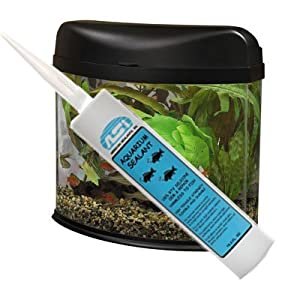
ASI 509 clear aquarium silicone sealant

ASI 509 is the strongest all-round recommendation here because it is made specifically for aquarium manufacture and repair. The manufacturer describes it as a one-part RTV silicone suitable for fresh- and saltwater aquariums, with strong adhesion to glass and a non-slump consistency that helps on vertical seams.

It is available in clear and black. Clear is less visually prominent on an existing tank, while black can suit aquariums already built with black seams. ASI says the material typically skins and cures progressively, but recommends allowing a full seven days before strength testing. That conservative wait is sensible for an aquarium: “dry to the touch” is not the same as fully cured through the bead.

  • Pros: aquarium-specific formulation; suitable for fresh or salt water; clear and black options; useful cartridge size.
  • Cons: longer wait before testing; a caulking gun and careful technique are helpful; not a remedy for cracked glass or uncertain structural damage.

Check price on Amazon


2. Aqueon Silicone Aquarium Sealant — Best for small repairs

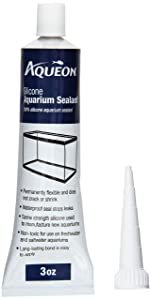
Aqueon silicone aquarium sealant

Aqueon’s sealant is a convenient choice when you need a smaller amount. Aqueon states that it is 100% silicone, waterproof, permanently flexible and non-toxic to freshwater and saltwater fish after proper curing. It is sold in clear and black and in several sizes, so you can match the format to the job.

The squeeze tubes are easier to manage for a short interior bead or an ornament repair than a full cartridge. For a long seam, however, a cartridge provides better flow control. Check the current package instructions for surface preparation and cure time; do not rely on an old online estimate.

  • Pros: aquarium-labelled; accessible tube sizes; clear and black options; permanently flexible.
  • Cons: small tubes are inefficient for long seams; opened tubes may be difficult to store; structural repairs still require expert judgment.

Check price on Amazon


3. Marineland Silicone Sealant — Best compact alternative

Marineland clear silicone aquarium sealant

Marineland describes this as a 100% clear silicone rubber sealant for repairing leaking aquariums and broken ornaments. Its compact squeeze-tube format is useful for modest jobs where buying a large cartridge would create waste.

Because it is a small tube, it is not our first choice for rebuilding a long seam. It is best reserved for repairs that are genuinely minor and non-structural. As with every sealant here, the aquarium must be empty, clean and completely dry before application, then left for the label’s full cure period.

  • Pros: explicitly intended for aquarium repair; compact and convenient; clear finish.
  • Cons: limited quantity; harder to produce a consistent long bead; not a safe fix for damaged glass.

Check price on Amazon

What makes silicone aquarium-safe?

“100% silicone” is not enough by itself. Look for a current manufacturer statement that the exact product is intended for aquariums or safe for aquatic life after curing. Avoid kitchen-and-bath caulks marketed for mold or mildew resistance, products containing biocides, automotive gasket makers, thread lockers, and polyurethane marine adhesives such as 3M 5200 unless the aquarium manufacturer explicitly specifies them.

Product names and formulas can change. Read the exact label and technical data for the tube you receive; do not assume that a similarly named variant has the same suitability.

Can you safely reseal the aquarium yourself?

A cosmetic interior bead and a structural seam are not the same thing. Silicone between the glass panes carries the load. If a bottom seam leaks, glass is chipped or cracked, panes have shifted, or you do not know why the seal failed, move the fish to a safe temporary setup and consult an aquarium professional—or replace the tank. Smearing new silicone over an old or wet bead is not a dependable structural repair.

Safer preparation, curing and leak testing

  1. Relocate livestock. Move fish, invertebrates, plants and filter media to a heated, aerated temporary container as appropriate.
  2. Drain, clean and dry. The repair area must be completely dry. Work with good ventilation and follow the product label.
  3. Remove only the failed interior bead. Use a fresh razor carefully on glass and avoid cutting into the structural silicone between panes. Wear cut-resistant gloves and eye protection.
  4. Remove residue. Follow the sealant manufacturer’s cleaning instructions. Do not sand aquarium glass or use a heat gun on a tank.
  5. Apply one continuous bead. Tool it as directed while fresh, without touching it with bare skin.
  6. Allow the full cure. Cure time changes with bead thickness, humidity and temperature. Use the longest applicable manufacturer instruction; ASI 509 recommends seven days before testing.
  7. Water-test safely. Fill the aquarium in a garage, outdoors or another area where a leak will not cause damage. Leave it full for at least 24 hours while inspecting every seam.
  8. Re-establish the system. Confirm temperature and water parameters before returning livestock. If the filter was offline, protect beneficial bacteria and check the aquarium nitrogen cycle.

Frequently asked questions

Can aquarium silicone cure underwater?

No. These products need clean, dry surfaces and adequate air exposure to cure. Never attempt an underwater emergency patch.

Is silicone safe as soon as it feels dry?

No. A surface skin can form well before the centre of the bead has cured. Wait for the full label-specified cure period before water testing.

Can silicone repair cracked aquarium glass?

Silicone does not restore the strength of cracked glass. Empty the tank and seek professional advice or replace the aquarium.

Will new silicone stick to old silicone?

Not reliably enough for a leak repair. New silicone bonds best to properly prepared glass, not to cured silicone residue.

Verdict

ASI 509 is the best overall choice when you need an aquarium-specific cartridge and can allow a conservative cure. Aqueon is the most convenient for small jobs, while Marineland is a useful compact alternative. Whichever you choose, correct diagnosis and preparation matter more than brand: never gamble with a compromised structural seam.

5 Best Artificial Aquarium Plants: Safe, Lifelike Picks

5 Best Artificial Aquarium Plants: Safe, Lifelike Picks

Artificial aquarium plants add cover and color without lighting, fertilizer or pruning. The best choices have smooth leaves, stable bases and proportions that suit the tank. They should never have sharp seams, exposed wire, loose paint or small pieces that livestock can pull off.

Our top pick: the Marina Naturals silk foreground plant is soft enough for delicate fins and works well in small community and betta tanks. For a taller background, the Fluval Anubias offers a convincing broad-leaf shape.

Best Artificial Aquarium Plants: Quick Comparison

Plant Best for Material/style Placement
Marina Naturals Foreground Silk Plant Bettas and delicate fins Soft silk-style leaves Foreground
biOrb Easy Plant Set Coordinated display Mixed artificial set Midground/background
MyLifeUNIT Seaweed 10-Pack Budget coverage Flexible plastic fronds Background
Fluval Anubias 12-Inch Lifelike broad leaves Artificial Anubias Background
SunGrow Plastic Leaf Plant Extra hiding cover Broad plastic leaves Midground

As an Amazon Associate, Aquarium Hunter earns from qualifying purchases. Prices and availability can change.

Artificial Aquarium Plant Reviews

1. Marina Naturals Foreground Silk Plant — Best Overall

Marina Naturals silk artificial aquarium plant

This compact silk-style plant adds low cover without filling the swimming area. Its softer leaves are a better starting point for bettas, fancy goldfish and other fish with easily torn fins than stiff, pointed plastic foliage. The muted shape also looks more natural than neon decorations.

Because it is a foreground plant, one piece will not hide equipment or fill a tall aquarium. Check the base and every leaf edge before use, then position it where fish can rest beside it without becoming trapped.

  • Pros: soft leaves; compact footprint; natural appearance.
  • Cons: limited height and coverage.

Check the Marina Naturals price on Amazon

2. biOrb Easy Plant Set — Best Coordinated Set

biOrb Easy artificial aquarium plant set

The biOrb Easy Plant Set pairs plants of different heights so a display gains depth without buying pieces separately. It is a neat match for rounded biOrb aquariums, but the plants can also be used in other tanks when their bases sit securely.

The stylized design is more decorative than botanical. Measure the available height and leave clear space around the filter intake. Fish should be able to pass around the leaves without being funneled into a narrow gap.

  • Pros: coordinated sizes; quick aquascape; reusable.
  • Cons: distinctive style will not suit every natural layout.

Check the biOrb plant set price on Amazon

Manufacturer details

3. MyLifeUNIT Artificial Seaweed 10-Pack — Best Value

MyLifeUNIT artificial seaweed aquarium plants

This multipack is useful for creating a continuous background or distributing cover through a larger aquarium. Each flexible frond has its own base, so spacing can be adjusted around rocks, heaters and open swimming lanes. The green color is less intrusive than brightly colored plastic.

Inspect every piece before adding it. Budget multipacks can vary in finish, and any rough flashing, loose strands or unstable base should be removed from service. Use fewer plants in small tanks so debris cannot collect in dense clumps.

  • Pros: ten pieces; flexible layout; strong coverage for the cost.
  • Cons: requires careful inspection; dense groups can trap waste.

Check the MyLifeUNIT set price on Amazon

4. Fluval Anubias 12-Inch — Best Lifelike Background Plant

Fluval Anubias artificial aquarium plant

Fluval’s artificial Anubias uses broad leaves and restrained green shades to imitate a familiar aquarium plant. At roughly 12 inches tall, it can soften a heater or back corner while leaving useful open water in front.

The broad leaves provide visual shelter, but artificial foliage does not absorb nitrate or produce oxygen like a healthy live plant. Keep the plant away from an intake and check that large fish cannot uproot the base.

  • Pros: convincing shape; useful height; established aquarium brand.
  • Cons: one plant provides less coverage than a multipack.

Check the Fluval Anubias price on Amazon

5. SunGrow Plastic Leaf Plant — Best for Added Cover

SunGrow broad-leaf artificial aquarium plant

This broad-leaf design creates a sheltered midground area and can break the line of sight between territorial fish. It is most useful as one part of an aquascape, with clear swimming routes around it and open access for cleaning.

Plastic plants are firmer than silk. Run a finger and a piece of fine fabric across the edges before installation; if the fabric catches, the plant is not suitable for long-finned fish. Recheck it whenever it is removed for cleaning.

  • Pros: broad visual cover; easy to reposition; no special lighting.
  • Cons: firmer leaves require extra fin-safety checks.

Check the SunGrow plant price on Amazon

Silk vs Plastic Aquarium Plants

Silk-style plants are usually the safer choice for bettas and other long-finned fish because they flex when brushed. Plastic plants hold their shape better and are easier to arrange as upright backgrounds, but stiff points and molding seams need close inspection. The base material matters too: it should be inert, smooth and heavy enough to remain stable.

How to Choose Safe Artificial Plants

  • Inspect every edge: discard anything sharp, cracked or exposing wire.
  • Match the scale: tall plants belong at the back; low plants preserve open swimming room.
  • Check stability: bury the base according to its design without creating a trapping gap.
  • Protect equipment: keep leaves clear of filter intakes, heaters and wavemakers.
  • Consider the species: digging cichlids, grazing plecos and turtles can dislodge lightweight decor.

Cleaning Artificial Aquarium Plants

  1. Remove one group at a time so fish retain cover.
  2. Rinse with aquarium-safe water and use a dedicated soft brush.
  3. Do not use household soap, fragrance or surface cleaner.
  4. For stubborn algae, follow the manufacturer’s cleaning guidance, rinse completely and use dechlorinator where appropriate.
  5. Replace plants that remain brittle, faded, cracked or rough.

Artificial plants reduce gardening work, but they still collect detritus. Vacuum around their bases during water changes and avoid packing so many together that waste becomes inaccessible.

Frequently Asked Questions

Are artificial plants safe for betta fish?

Soft silk-style plants with smooth bases are generally the safest artificial option. Test every edge before use and remove any decoration that snags fine fabric.

Do artificial aquarium plants help water quality?

No. They provide cover and visual structure, but they do not consume nutrients or support the tank in the same way as living plants. Filtration, maintenance and suitable stocking are still essential.

Can artificial plants go in saltwater tanks?

Only when the manufacturer identifies the material as suitable. Marine tanks can expose metal parts or poor coatings quickly, so avoid unknown wire cores and inspect decorations often.

Final Verdict

The Marina Naturals silk plant is our best overall choice for soft, fish-friendly foreground cover. The Fluval Anubias is a stronger background feature, while the MyLifeUNIT multipack offers the most flexible coverage for the money.

4 Best Aquarium Chillers: Sizing, Flow and Cooling Compared

4 Best Aquarium Chillers: Sizing, Flow and Cooling Compared

An aquarium chiller is a specialist cooling system for tanks that must stay below room temperature or cannot shed heat from pumps, lights, and warm weather. The right unit is not chosen by tank volume alone: the temperature drop, room temperature, equipment heat, actual water volume, flow rate, ventilation, and plumbing head all affect performance.

Quick answer: The JBJ Mini Arctica 1/15 HP is our compact pick for modest nano-system loads, the Active Aqua 1/10 HP is a practical value option, the JBJ Arctica 1/10 HP suits buyers prioritising an established aquarium-focused line, and the TECO TK-500 is the premium choice for larger or demanding systems.

Aquarium requiring stable temperature control

Stable temperature matters more than chasing the lowest possible number. Size the chiller for the real heat load and intended temperature drop.

Best Aquarium Chillers at a Glance

Chiller Best for Compressor Published flow guidance
JBJ Mini Arctica 1/15 HP Compact aquarium systems 1/15 HP Confirm current model manual
Active Aqua 1/10 HP Value and flexible use 1/10 HP Match the current AACH10HP manual
JBJ Arctica 1/10 HP Established aquarium-focused option 1/10 HP JBJ lists 240–960 GPH for current DBA-075
TECO TK-500 Premium medium systems 1/6 HP TECO lists 106–211 GPH for the US model

Published maximum tank sizes assume specific ambient temperatures and heat loads. Treat them as comparison points, not guarantees.

How We Chose

We prioritised current manufacturer documentation, titanium heat exchangers, stated flow ranges, established support, plumbing information, and models with a defined aquarium use case. We removed obsolete and generic marketplace chillers whose capacity claims could not be matched to reliable documentation.

We did not rank by retailer star scores or claim that one horsepower rating always suits one tank volume. A properly sized 1/10 HP unit can outperform a larger but poorly ventilated or incorrectly plumbed chiller.

Best Aquarium Chiller Reviews

1. JBJ Mini Arctica 1/15 HP — Best Compact Compressor Chiller

The Mini Arctica is designed for smaller aquarium systems that need compressor-based cooling without the footprint of a larger unit. It is a better fit for meaningful temperature control than tiny fan or thermoelectric devices, but it still needs to be sized against the expected room temperature and pull-down requirement.

JBJ’s current material positions the 1/15 HP model for nano applications. Before ordering, confirm the exact model number, fittings, voltage, recommended flow, and cooling chart because retailer pages often combine several Arctica sizes.

  • Pros: compact established aquarium model; titanium heat exchange; digital control.
  • Consider: limited reserve for hot rooms or large temperature drops; external circulation and hoses required.

Check the JBJ Mini Arctica on Amazon

Check current JBJ Arctica specifications.

2. Active Aqua 1/10 HP — Best Value Compressor Option

The Active Aqua AACH10HP is a 1/10 HP compressor chiller with a titanium evaporator and digital control. It is marketed across aquariums and hydroponics, so aquarium owners should pay particular attention to compatible fittings, saltwater suitability, pump selection, and the current manual rather than relying on a marketplace tank-volume headline.

This model can make sense when price and availability matter, provided the calculated heat load sits comfortably inside its capacity. Leave clear space around the intake and exhaust, and route discharged heat away from the aquarium cabinet.

  • Pros: current widely sold model; titanium evaporator; accessible 1/10 HP format.
  • Consider: published capacity varies with conditions; verify the included fittings and required flow.

Check Active Aqua 1/10 HP on Amazon

3. JBJ Arctica 1/10 HP — Best Established Aquarium-Focused Choice

JBJ’s current DBA-075 Arctica uses a titanium heat exchanger and lists a 240–960 GPH flow range. The wide range gives plumbing flexibility, but the pump must still deliver the required flow after hose length, elbows, vertical lift, filters, and other restrictions are counted.

The Arctica line is aimed directly at aquariums and includes temperature control and an anti-freezing system. It is a sensible shortlist option for reef tanks and temperature-sensitive freshwater systems where manufacturer documentation and aquarium-specific support are priorities.

  • Pros: aquarium-specific design; documented titanium exchanger and flow range; multiple adapters.
  • Consider: higher purchase price; large cabinet footprint; needs substantial airflow around the unit.

Check the JBJ Arctica 1/10 HP on Amazon

Read JBJ’s current aquarium-series specifications.

4. TECO TK-500 — Best Premium Medium-System Chiller

The TECO TK-500 is a 1/6 HP premium chiller with a titanium exchanger. TECO’s US specifications list a 106–211 GPH flow range, 225-watt power consumption, and use for standard systems up to 120 gallons under stated conditions. The manufacturer also publishes a more meaningful cooling example: in an 86°F room with a defined heat load, a 40-gallon system can be pulled down to 77°F.

That performance context is useful because it shows why “up to” capacity is not universal. The TK-500 is best considered where stable control, service information, and efficiency justify the premium cost. Confirm whether optional Wi-Fi or heating hardware is included rather than assumed.

  • Pros: detailed performance data; titanium exchanger; relatively low documented flow range; current support.
  • Consider: premium price; heavy unit; regional voltage and accessories must be checked.

Check the TECO TK-500 on Amazon

Read TECO’s current TK-500 specifications.

How to Size an Aquarium Chiller

1. Measure the real system volume

Subtract displacement from rock, substrate, and equipment, then add sump or external reservoir volume. Advertised aquarium size is only a starting point.

2. Define the maximum temperature drop

Record the warmest realistic room temperature and the highest uncooled water temperature. Compare that with the target. Holding a tank 2°F below ambient is far easier than maintaining an axolotl aquarium 15°F below a hot room.

3. Add the equipment heat load

Submersible pumps, ultraviolet units, lighting, and enclosed cabinets add heat. A pump’s electrical wattage is not a perfect cooling-load calculation, but it helps identify systems needing extra reserve.

4. Use the manufacturer’s performance chart

Horsepower and “up to gallons” are inadequate on their own. Find a chart or calculator that includes room temperature, desired water temperature, and system load. If conditions fall near the limit, choose the next size or reduce the heat load.

5. Check actual operating flow

A pump’s box rating is measured with little or no resistance. Hose length, height, valves, bends, filters, and the chiller reduce actual flow. The installed flow must remain inside the chiller manufacturer’s range.

Installation and Safety

  • Place the chiller upright on a stable surface with the manufacturer’s required intake and exhaust clearance.
  • Never enclose it in an unventilated cabinet; the unit moves aquarium heat into the room.
  • Use the specified hose diameter and secure every connection with suitable clamps.
  • Position plumbing so a leak or siphon cannot drain the aquarium.
  • Create drip loops and use a correctly installed GFCI/RCD-protected outlet.
  • Do not use extension cords unless the manufacturer expressly permits the cord and rating.
  • Keep the temperature probe and return flow where they represent the whole system, not a locally cold pocket.
Important: A chiller does not replace oxygenation. Warm water holds less oxygen, and temperature-sensitive animals may already be stressed. Maintain surface movement and suitable filtration while cooling gradually.

Compressor Chiller vs Fan or Thermoelectric Cooler

Fans cool by evaporation and can be effective for a small temperature reduction in dry air, but they increase top-off demand and may do little in humid conditions. Thermoelectric units suit very small heat loads and modest pull-downs. Compressor chillers cost more and release more heat into the room, but they are the practical choice for larger systems, hot climates, or substantial temperature differences.

Never add ice made from untreated water directly to a livestock tank. It can cause rapid local temperature changes, introduce contaminants, and create unstable daily swings.

Frequently Asked Questions

Do freshwater aquariums need a chiller?

Most ordinary tropical tanks do not. A chiller is useful when the room consistently exceeds the species’ safe range, equipment adds excessive heat, or cold-water animals require temperatures that fans cannot maintain.

Can a chiller be too large?

Yes. Extreme oversizing can cause short cycling, temperature swings, higher cost, and poor efficiency. Choose useful reserve capacity without ignoring the manufacturer’s minimum system and flow guidance.

Can I run a chiller from a canister filter?

Only if the actual flow remains within both manufacturers’ requirements and the added restriction does not compromise filtration. A dedicated pump often makes flow easier to measure and adjust.

How often should a chiller be cleaned?

Follow the manual. Keep air filters and condenser surfaces free of dust, inspect hoses and clamps, and clean the water path using only manufacturer-approved methods. Disconnect power before maintenance.

Our Verdict

For compact systems, start with the JBJ Mini Arctica 1/15 HP and verify its cooling chart. The Active Aqua 1/10 HP offers a practical value route, while the JBJ Arctica 1/10 HP is the stronger aquarium-focused shortlist choice. The TECO TK-500 stands out when detailed performance data, efficiency, and premium support matter. Size any of them for the hottest realistic day—not the average room temperature.

Affiliate disclosure: As an Amazon Associate, Aquarium Hunter earns from qualifying purchases. Availability, specifications, and model revisions can change; confirm the exact model, voltage, fittings, and manual before ordering.

5 Best Aquarium Wavemakers for Reef and Freshwater Tanks

5 Best Aquarium Wavemakers for Reef and Freshwater Tanks

A good aquarium wavemaker does more than make the surface ripple. It prevents low-flow pockets, keeps oxygen moving through the tank and gives corals a changing current instead of one harsh jet. The best choice depends on the tank’s dimensions, livestock and the type of flow you need—not simply the largest gallons-per-hour number.

Our top pick: the EcoTech Marine VorTech MP10 QuietDrive offers broad, highly adjustable flow with the motor outside the aquarium. For smaller tanks, the hygger Mini is a compact, affordable option.

Aquarium wavemaker creating circulation in a reef tank

Best Aquarium Wavemakers: Quick Comparison

Wavemaker Best for Control Flow style
EcoTech VorTech MP10 QuietDrive Premium reef systems App and onboard controller Broad, programmable
AquaIllumination Nero 3 Nano and mid-size reefs App and button Wide, gentle
Tunze Turbelle Nanostream 6040 Flexible positioning Included controller Directional wide flow
IceCap Gyre Long tanks and full-width circulation Controller Cross-flow gyre
hygger Mini 530 GPH Budget nano tanks Fixed output Compact circulation

As an Amazon Associate, Aquarium Hunter earns from qualifying purchases. Prices and availability can change.

Our Aquarium Wavemaker Reviews

1. EcoTech Marine VorTech MP10 QuietDrive — Best Overall

The MP10’s distinctive design keeps the motor and electrical cable outside the aquarium. Only the compact wet side sits in the water, leaving a clean display and removing a submerged cord that could distract from a reef aquascape. It produces broad circulation rather than a narrow blast and includes multiple flow patterns for changing reef conditions.

Built-in Mobius control makes it easy to schedule output, coordinate compatible equipment and use feed modes. The trade-offs are price, a fixed direction perpendicular to the glass and the need to match the dry and wet sides carefully. Check the manufacturer’s glass-thickness limits before buying.

  • Pros: motor outside the tank; broad programmable flow; polished ecosystem.
  • Cons: premium price; direction is not freely aimable.

Check the EcoTech MP10 price on Amazon

Manufacturer specifications

2. AquaIllumination Nero 3 — Best Compact Smart Wavemaker

The Nero 3 is a small controllable pump designed to move a wide mass of water. AquaIllumination rates it up to 2,000 GPH and for aquariums from 5 to 60 gallons, but the correct setting still depends on tank length, rockwork and livestock. Its modes include random, pulse, constant, schedule and feed, controlled through the myAI or Mobius app or the onboard button.

A fish guard is included, which is valuable around small fish and mobile invertebrates. The mount allows limited directional adjustment and supports glass up to 0.5 inches according to the manufacturer. Start at low power in nano tanks and watch for stressed corals or shifting sand.

  • Pros: compact body; broad flow; strong scheduling and feed controls.
  • Cons: app setup adds complexity; powerful for very small tanks.

See current Nero 3 listings on Amazon

Manufacturer specifications

3. Tunze Turbelle Nanostream 6040 — Best for Directional Control

Tunze’s compact 6040 uses a wide-flow outlet that can be aimed in three dimensions. The current HUB edition is rated from about 53 to 1,190 GPH, uses 1.5 to 13 watts and is intended for aquariums from 5.3 to 132 gallons. Those broad tank recommendations reflect adjustable output, not a promise that one pump suits every aquascape.

The controller, quiet magnetic holder and Fish Care function make this a thoughtful choice where careful placement matters. Tunze specifies mounting on glass up to 15 mm. It is especially useful for directing flow behind rockwork or across a problem area without firing a narrow jet straight at coral tissue.

  • Pros: aimable wide flow; low-voltage pump; strong serviceability.
  • Cons: modest maximum output for large, high-energy reefs.

Check Tunze Nanostream options on Amazon

Manufacturer specifications

4. IceCap Gyre Flow Pump — Best for Long Aquariums

A gyre pump moves a horizontal sheet of water across a wide section of the aquarium. The current travels along the surface, down the opposite pane and back across the bottom, helping reduce dead spots in long tanks. This can work better than a conventional powerhead where rocks interrupt a narrow stream.

Gyres need careful placement. Too low or too powerful can move sand; too close to the surface may pull in air. Their long rotors also take more patience to disassemble and clean than a small propeller pump. Select the IceCap model by tank length and controller compatibility rather than assuming the largest version is best.

  • Pros: excellent full-width circulation; useful alternating patterns.
  • Cons: more involved cleaning; placement-sensitive.

Check the IceCap Gyre price on Amazon

5. hygger Mini 530 GPH — Best Budget Nano Pick

This compact magnetic powerhead is intended for small freshwater and saltwater aquariums. Its 530 GPH output is far gentler than many reef pumps, making it useful for modest surface movement and eliminating a quiet corner in a nano tank. It is a simple option without the scheduling features of the premium models above.

Fixed-output pumps require more care with positioning. Aim the flow along the longest dimension or toward a glass pane to diffuse it. If fish struggle to hold position, plants remain flattened or substrate moves, relocate the pump rather than assuming more circulation is always healthier.

  • Pros: affordable; compact; magnetic mount.
  • Cons: no advanced modes; limited for demanding coral tanks.

Check the hygger Mini price on Amazon

How to Choose the Right Wavemaker

Match the Flow Pattern to the Tank

Nominal GPH is only a starting point. A broad-flow pump can move a large volume gently, while a narrow powerhead may create a harsh high-speed jet. Long tanks often benefit from a gyre or pumps placed at opposite ends. Rock-heavy aquascapes may need two smaller pumps so water reaches behind structures.

Consider Livestock, Not Just Tank Volume

Many SPS corals appreciate strong, changing flow, while fleshy LPS corals and soft corals can be damaged by a continuous direct blast. Freshwater fish from fast rivers may enjoy current, but bettas and other slow-water species generally need calmer zones. Every aquarium should offer places where animals can leave the strongest flow.

Choose Useful Controls

Random and pulse modes create changing currents and reduce one-direction growth. Feed mode temporarily slows the pump without unplugging it. Schedules can reduce output overnight, but adequate oxygenation must continue. Two pumps running alternately often produce more complete circulation than one oversized pump.

Check Mounting and Animal Safety

Confirm the magnet supports your glass or acrylic thickness. Use the supplied guard where small fish, snails or anemones could reach the propeller. Keep pumps away from loose sand, unsecured rock and the intake of another device. Inspect cords and mounts during every cleaning.

Placement and Setup

  1. Install the pump with power disconnected and create a drip loop in every cable.
  2. Begin on the lowest practical setting.
  3. Aim flow across the tank or slightly toward the surface, not directly at a coral or fish’s resting place.
  4. Watch fine food or suspended particles to reveal dead spots.
  5. Adjust one variable at a time and observe livestock for at least a day.

A wavemaker supplements circulation; it does not replace filtration, a properly sized return pump or routine water changes. Use a GFCI/RCD-protected outlet where appropriate, keep controllers and power supplies dry, and disconnect power before putting your hands in the aquarium.

Cleaning and Maintenance

Calcium deposits, algae and snail shells reduce output and can make a quiet pump noisy. Disconnect the unit, remove the wet components and follow the manufacturer’s cleaning instructions. Never run a circulation pump dry. After reassembly, make sure guards, rotors and magnetic mounts are secure before restoring full power.

Frequently Asked Questions

How many wavemakers does an aquarium need?

Small, open aquariums may need only one. Long or heavily aquascaped tanks often circulate better with two lower-output pumps positioned to cover different zones.

Can a wavemaker be too powerful?

Yes. Blown substrate, corals that remain retracted and fish constantly fighting the current are warning signs. Reduce output, change direction or add calmer areas.

Where should a wavemaker be placed?

Upper side panels are a useful starting point because the pump can move water along the tank and agitate the surface. The final position should eliminate dead spots without pulling air or disturbing sand.

Final Verdict

The EcoTech Marine VorTech MP10 QuietDrive is our best overall choice for a polished reef setup. The Nero 3 suits aquarists who want compact app-controlled flow, the Tunze 6040 excels when precise aiming matters, the IceCap Gyre fits long tanks, and the hygger Mini is an accessible choice for gentle nano circulation.

5 Best Aquarium Sump Pumps: Return Flow Compared

5 Best Aquarium Sump Pumps: Return Flow Compared

Disclosure: Aquarium Hunter may earn a commission from qualifying Amazon purchases made through links on this page, at no extra cost to you.

The Jebao DCP-6500 is our best aquarium sump pump for systems that need adjustable DC return flow, while the Eheim Universal 600 is the better choice for a modest-flow setup that values a simple, established AC design. A return pump must be sized at the system’s total dynamic head—not by its zero-head maximum—and must never exceed what the overflow and drains can handle safely.

Best Aquarium Sump Pumps: Quick Comparison

Return pump Best for Control Amazon
Jebao DCP-6500 Best adjustable high-flow return DC controller Check on Amazon
Uniclife 1052 GPH DC Pump Best compact controllable option DC controller and feed mode Check on Amazon
Eheim Universal 600 Established lower-flow AC choice Fixed-speed AC Check on Amazon
Aqueon QuietFlow Utility 2300 Midrange submersible utility return Model-specific adjustment Check on Amazon
KEDSUM Inline/Submersible Pump Budget high-head utility option Selected model dependent Check on Amazon

Listings may contain multiple sizes. Confirm the selected model’s flow curve, maximum head, inlet and outlet sizes, voltage, wattage and suitability for submerged or external use.

Our Sump Return Pump Picks

1. Jebao DCP-6500 — Best Adjustable High-Flow Return

Jebao DCP-6500 controllable aquarium return pump

The DCP-6500 is a controllable sine-wave DC pump intended for return circulation. Its controller lets the aquarist tune flow without relying entirely on a valve, which is useful when matching a return to the overflow or reducing nighttime noise. Its capacity is aimed at larger or higher-head systems rather than a small nano sump.

DC control does not remove the need for sizing. Use Jebao’s curve at your measured head, allow for plumbing friction and keep the selected setting comfortably below the drain system’s safe capacity. The controller and power supply must remain dry and ventilated.

Pros: adjustable output; feed function; soft-start DC operation; useful head capacity.
Cons: too large for many small sumps; controller adds components; maintenance and correct installation remain essential.

Check the Jebao DCP-6500 on Amazon

2. Uniclife 1052 GPH DC Return Pump — Best Compact Controller

Uniclife controllable DC aquarium sump return pump

The current Uniclife listing specifies 24-volt DC operation, a controller, feed mode and a maximum zero-head rating of 1052 GPH. It can run submerged or inline according to the listing, making it a flexible choice for a medium system when the actual head-adjusted flow fits.

The controller’s memory and feed mode are convenient, but the return must resume reliably after feeding and a power interruption. Test recovery before leaving the aquarium unattended, and make sure the inline configuration follows every priming and plumbing instruction.

Pros: adjustable; feed mode; compact; submerged or inline listing.
Cons: delivered flow falls with head; controller and power supply need dry placement; verify restart after outages.

Check the Uniclife DC Pump on Amazon

3. Eheim Universal 600 — Best Established AC Design

Eheim Universal 600 aquarium sump pump

The Eheim Universal 600 is a long-established 120-volt AC aquarium pump for lower-flow applications. It lacks an electronic speed controller, but its simple format appeals to aquarists who prioritize a recognized design and do not need a high-output return.

The “600” is not 600 GPH. Check the current US specifications and curve. Use a correctly installed outlet valve only if Eheim allows it; never restrict the intake. Its physical size and fittings must suit the return chamber.

Pros: established aquarium model; straightforward AC design; suitable for modest returns.
Cons: no DC control or feed mode; model number can be misread; less efficient when substantial throttling is required.

Check the Eheim Universal 600 on Amazon

4. Aqueon QuietFlow Utility 2300 — Midrange Submersible Choice

Aqueon QuietFlow submersible utility pump 2300

Aqueon’s QuietFlow Utility Pump 2300 is a conventional submersible option from a familiar aquarium brand. It can serve a moderate sump return when the model’s head-adjusted flow and fittings match the installation.

Do not choose by the “2300” designation alone; confirm whether the specification is expressed in liters per hour, gallons per hour or a series number. Compare the live curve with the return height and plumbing.

Pros: aquarium-focused brand; submersible utility format; practical midrange candidate.
Cons: model designation can confuse; no external DC controller; must remain accessible for cleaning.

Check the Aqueon QuietFlow 2300 on Amazon

5. KEDSUM Inline/Submersible Pump — Budget High-Head Option

KEDSUM inline and submersible aquarium return pump

The KEDSUM listing covers an inline/submersible pump family with multiple nozzles and relatively high listed lift. It can be a budget return or utility option where flexible fittings matter.

The current page title can show different GPH variants simultaneously, so verify the selected version rather than copying the headline. A utility pump may also lack the refined control of a dedicated DC return. Size and test it in the completed plumbing.

Pros: multiple fittings; inline or submerged listing; useful lift; competitive price.
Cons: variation selection needs care; fixed output on some versions; less convenient control than a DC return pump.

Check the KEDSUM Pump on Amazon

How to Size a Sump Return Pump

Measure vertical head

Measure from the operating water level in the return chamber to the highest return outlet. This vertical rise is only the starting point.

Add plumbing resistance

Long or narrow pipe, elbows, tees, valves, reactors and return nozzles add friction. Use the manufacturer’s calculator or curve and allow a margin for biofilm and gradual restriction.

Respect the overflow

The delivered return flow must remain below the overflow and drain system’s reliably tested capacity. More turnover is not automatically better. In-tank circulation pumps can provide display flow without forcing excessive water through a noisy sump.

Plan the return chamber

The pump must remain submerged at the lowest normal level, with space for removal and intake cleaning. An ATO can stabilize the level but should not conceal a leak or undersized chamber.

Sump Pump Safety

  • Use drip loops and GFCI protection where available; keep DC controllers and power supplies dry.
  • Never lift a pump by its cord or use equipment with damaged insulation.
  • Secure plumbing and use unions so the pump can be removed safely.
  • Fit an intake guard where animals or debris could enter.
  • Do not run a wet pump dry unless the manufacturer explicitly permits it.
  • Unplug equipment before putting hands in the sump.
  • Simulate a power outage: the sump must hold every gallon that drains back without overflowing.
  • Prevent a return-line siphon with correct outlet placement and tested plumbing; do not rely on a dirty check valve alone.

Maintenance and Backup Planning

Clean the intake, volute and impeller on a regular schedule using the maker’s instructions. Declining flow, rattling or difficult restarts often indicate deposits or debris. Keep critical spare fittings and, for valuable systems, a compatible backup pump.

A return pump supports circulation, heating distribution and sump filtration but does not guarantee oxygen during an outage. Plan battery or generator-backed aeration appropriate to the livestock. Test every pump after maintenance and power interruption.

Frequently Asked Questions

How many times per hour should water pass through a sump?

There is no universal number. The safe target depends on overflow capacity, filtration design, noise, head loss and livestock. Many systems use moderate sump turnover and separate in-tank circulation.

Is DC better than AC?

DC pumps offer convenient speed control and feed modes. AC pumps are often simpler. Reliability depends on the particular product, installation and maintenance rather than the motor category alone.

Can a return pump be too powerful?

Yes. Excess flow can overwhelm drains, create bubbles and noise, empty the return chamber or stress livestock. Select at operating head and throttle only by an approved method.

Do I need a check valve?

A check valve can reduce drain-back but may fail when fouled. Design the sump to contain the full backflow volume even if the valve does not seal, and keep return outlets positioned to break the siphon safely.

Verdict

The Jebao DCP-6500 is the strongest all-around choice here for an adjustable higher-flow return. The Uniclife 1052 GPH model suits a smaller controllable installation, while the Eheim Universal 600 is a straightforward lower-flow AC alternative. Final selection must be based on the flow curve at total dynamic head and a tested overflow—not the maximum number in a product title.

5 Best Aquarium Auto Top-Off Systems for Safer Refills

5 Best Aquarium Auto Top-Off Systems for Safer Refills

Disclosure: Aquarium Hunter may earn a commission from qualifying Amazon purchases made through links on this page, at no extra cost to you.

The Tunze Osmolator 3155 is our best auto top-off system for a reef tank because it combines an optical operating sensor with an independent backup float, controller safeguards and a matched pump. For a compact all-in-one unit, the XP Aqua Duetto is easier to fit into a small sump or rear chamber.

An automatic top-off (ATO) replaces freshwater lost through evaporation. In a saltwater aquarium this helps limit salinity swings; in freshwater it helps maintain water level and equipment operation. An ATO does not perform water changes, remove nitrate or replace evaporated salt. Top off a marine aquarium with appropriate fresh water—normally purified RO/DI water—not mixed saltwater.

Best Aquarium Auto Top-Off Systems: Quick Comparison

ATO Best for Primary sensing Amazon
Tunze Osmolator 3155 Best overall reef ATO Optical plus backup float Check on Amazon
Tunze Nano Osmolator 3152 Simple nano and small tanks Float switch Check on Amazon
XP Aqua Duetto Compact dual-sensor system Dual optical sensors Check on Amazon
IceCap Dual Optical ATO Optical backup in a compact kit Dual optical sensors Check on Amazon
AutoAqua Smart ATO Minimal sensor footprint Optical sensor Check on Amazon

Before ordering: confirm the current package contents. Some ATO listings include a pump and tubing; controller-only products require a compatible pump. Check maximum lift, sensor mounting thickness and reservoir space.

Our Auto Top-Off Picks

1. Tunze Osmolator 3155 — Best Overall

Tunze Osmolator 3155 aquarium auto top-off system

The Tunze 3155 remains the most complete safety-oriented option in this group. Its optical sensor controls the normal water level, while a separate float switch provides high-level backup. The controller also includes time-based protection and an audible alarm, and the package is sold with a low-voltage metering pump.

That redundancy makes sense for a reef system where a large freshwater addition could sharply lower salinity. It costs more and needs room for two sensor components, but the design is easier to justify on a valuable display than a single unprotected switch.

Pros: independent backup sensor; alarm and controller protection; pump included; established model.
Cons: premium price; more components and cables; sensors still require cleaning and correct placement.

Check the Tunze Osmolator 3155 on Amazon

2. Tunze Nano Osmolator 3152 — Best Simple Nano ATO

Tunze Nano Osmolator 3152 auto top-off system

The 3152 is Tunze’s simpler unit for aquariums under the listing’s stated 55-gallon limit. It uses a float switch and time-based safety shutoff rather than the 3155’s primary optical sensor plus independent high-level float. The included pump makes it a straightforward kit for a small aquarium or sump.

A float can be obstructed by snails, algae or a cable. Use the supplied guard and maintain it. The reservoir should hold only a limited, sensible volume so one failure cannot drastically change salinity or overflow the system.

Pros: complete kit; established brand; simpler and less expensive than the 3155; compact.
Cons: float-based sensing; less redundancy; maximum runtime must be configured for the application.

Check the Tunze Nano Osmolator 3152 on Amazon

3. XP Aqua Duetto — Best Compact Dual-Sensor System

XP Aqua Duetto dual-sensor aquarium ATO

The Duetto places two optical sensors in a compact assembly: one for the operating level and another for high-water protection. It is useful where a large float assembly will not fit, such as an all-in-one aquarium’s rear filtration chamber.

Optical sensors can be affected by algae, salt creep, bubbles or deposits. Mount the unit in a calm chamber whose level actually changes with evaporation, keep the sensor faces clean and test both normal filling and the alarm or shutoff behavior.

Pros: compact; dual optical sensing; pump included in the complete listing; suitable for narrow chambers.
Cons: both sensors share one small assembly; optical surfaces need cleaning; very small chambers can cycle frequently.

Check the XP Aqua Duetto on Amazon

4. IceCap Dual Optical ATO — Compact Optical Alternative

IceCap dual optical aquarium auto top-off controller

IceCap’s system also uses dual optical sensing and targets aquarists who want a small magnetic mount. The second sensor adds a high-water check that a basic single-sensor controller lacks.

Confirm whether the currently selected package includes every pump, tube and holder you need. Do not mix power supplies or pumps unless IceCap specifically approves them. As with every optical ATO, schedule sensor inspection rather than waiting for a failure.

Pros: dual optical design; compact magnetic mounting; clear high-level backup concept.
Cons: package contents can vary; sensor fouling remains possible; less physical separation than two independently mounted devices.

Check the IceCap Dual Optical ATO on Amazon

5. AutoAqua Smart ATO — Best Minimal Footprint

AutoAqua Smart optical auto top-off system

The original AutoAqua Smart ATO remains available as a very compact optical system. It is easy to fit where bulky float brackets are impractical and includes automatic shutoff logic intended to limit abnormal filling.

Its minimal sensor arrangement does not provide the visibly separated optical-and-float redundancy of the Tunze 3155. Use a limited reservoir, secure the outlet above the destination waterline and test the protection features regularly.

Pros: tiny sensor; simple installation; pump included in the standard system; established compact design.
Cons: less sensor separation; optical face must stay clean; careful outlet placement is essential.

Check the AutoAqua Smart ATO on Amazon

How to Choose an ATO

Sensor design and redundancy

Optical sensors are compact and have no moving float, but deposits or bubbles can interfere. Floats are simple but can jam. The safest systems combine independent high-level protection with a maximum pump runtime or alarm. No sensor is maintenance-free.

Pump lift and reservoir distance

Measure the vertical distance from the lowest reservoir level to the outlet. The pump must deliver water at that lift. Keep tubing short and secure, and never assume a pump’s zero-head flow applies to the installed system.

Reservoir capacity

Choose enough volume to cover normal evaporation between refills, but not so much that a complete discharge creates a catastrophe. Mark the reservoir, monitor daily use and investigate any sudden increase instead of repeatedly refilling it.

Safe ATO Installation

  1. Mount the operating sensor in the chamber where evaporation changes water level. In a sump, this is usually the return chamber.
  2. Position any backup sensor at a sensible high-water point.
  3. Keep the top-off outlet above the maximum waterline and separated from the reservoir water to prevent a siphon in either direction.
  4. Secure tubing so it cannot fall out and pump water onto the floor.
  5. Use drip loops and GFCI protection where available; keep controllers and connections dry.
  6. Fill the reservoir with the correct fresh water. Never use saltwater to replace ordinary evaporation.
  7. Test the normal sensor, backup shutoff, alarm and maximum runtime before leaving the system unattended.

Maintenance and Failure Prevention

Inspect the ATO whenever the reservoir is refilled. Clean optical faces and float guards using the manufacturer’s method, remove salt creep, confirm the pump intake is submerged and check tubing for kinks. Manually lift or cover sensors only as directed during a test.

Compare daily top-off consumption with the aquarium’s normal pattern. A sudden drop can mean a failed pump or blocked tube; a sudden rise can indicate a leak, unusual evaporation or sensor problem. Verify salinity with a calibrated refractometer or other reliable instrument in marine systems.

Frequently Asked Questions

Does an ATO replace water changes?

No. Top-off replaces evaporated water but leaves dissolved waste and minerals behind. Regular water changes and maintenance remain necessary.

Should saltwater tanks be topped off with saltwater?

No under normal evaporation. Salt does not evaporate, so replacing evaporation with saltwater raises salinity. Use appropriately purified fresh water unless you are deliberately correcting salinity by a measured plan.

Can an ATO overflow an aquarium?

Yes, if a sensor, tubing arrangement, pump or installation fails. Independent backup sensing, runtime limits, a restricted reservoir and siphon-safe outlet greatly reduce the consequence.

Where should the sensor go in an all-in-one tank?

Use the rear chamber where water level falls with evaporation, usually the return-pump chamber—not a display section whose level remains constant. Follow the aquarium and ATO instructions.

Verdict

The Tunze Osmolator 3155 is the best choice here when independent backup protection matters most. The XP Aqua Duetto is easier to fit into a narrow rear chamber, while the Tunze 3152 is a straightforward small-system option. Whichever ATO you choose, safety depends as much on a limited reservoir, a siphon-proof outlet and regular testing as it does on the controller.

5 Best Aquarium Water Pumps: Flow and Head Compared

5 Best Aquarium Water Pumps: Flow and Head Compared

Disclosure: Aquarium Hunter may earn a commission from qualifying Amazon purchases made through links on this page, at no extra cost to you.

The KEDSUM 660 GPH Submersible Pump is our best aquarium water pump for higher-flow return, transfer and water-feature jobs, while the Uniclife 80 GPH Pump is the better fit for a small tabletop aquarium or gentle fountain. These pumps span very different capacities: select by the flow required after vertical lift and plumbing resistance, not by the advertised gallons-per-hour number alone.

A water pump moves aquarium water through tubing, a sump, a fountain or a feature. It is not an air pump and does not connect to an air stone. It also does not replace biological filter media unless it is installed as part of a complete filtration system.

Best Aquarium Water Pumps: Quick Comparison

Pump Listed maximum Best use Amazon
KEDSUM Submersible Pump 660 GPH; 6-ft lift Best overall higher-flow option Check on Amazon
Simple Deluxe Submersible Pump 400 GPH Long-cord utility use Check on Amazon
FREESEA Small Pond Pump Varies by selected model Compact fountain or pond choice Check on Amazon
Eheim Compact 600 Model-specific metric rating Established aquarium-brand option Check on Amazon
Uniclife 80 GPH Pump 80 GPH; 2.4-ft lift Small tank or tabletop feature Check on Amazon

Maximum flow is measured with little or no lift. Actual output declines as water is pumped higher and through elbows, valves, narrow tubing or dirty equipment. Confirm the live Amazon model and the manufacturer’s current performance curve before ordering.

Our Aquarium Water Pump Picks

1. KEDSUM 660 GPH Submersible Pump — Best Overall

KEDSUM 660 GPH submersible aquarium water pump

The current KEDSUM listing specifies 660 GPH, 55 watts and a maximum lift of six feet, with three outlet nozzles. That capacity suits sump returns, water transfers and larger features better than a nano display. The choice of outlets makes adapting tubing easier, but every restriction reduces delivered flow.

Do not assume that 660 GPH will reach the aquarium after a six-foot rise; maximum head is the point where useful flow approaches zero. Estimate the system’s total head and select using the performance curve. Add a valve on the outlet if the maker permits throttling and the return is too strong.

Pros: useful higher-flow capacity; three nozzles; clearly specified lift; multipurpose.
Cons: excessive for small tanks; consumes more power than compact pumps; real flow will be below the headline rating.

Check the KEDSUM 660 GPH Pump on Amazon

2. Simple Deluxe 400 GPH Pump — Best Long-Cord Utility Option

Simple Deluxe 400 GPH submersible water pump

The Simple Deluxe listing specifies 400 GPH, 54 watts and a 15-foot cord. The long cord can be useful for a sump, fountain or water-transfer container where the outlet is not immediately beside the equipment. Its moderate headline flow fits jobs that do not need the KEDSUM’s output.

A long cord is not permission to use an unsafe extension lead or leave a connection where it can get wet. Use a drip loop and a GFCI-protected receptacle, and follow local electrical-safety requirements.

Pros: long cord; moderate flow; useful for several water-moving tasks.
Cons: relatively high wattage for the flow rating; not a precision DC return pump; can be too strong for nano livestock.

Check the Simple Deluxe Pump on Amazon

3. FREESEA Small Pond Pump — Best Compact Fountain Choice

FREESEA compact submersible water pump

FREESEA sells this compact design in multiple variants, so it can suit a small pond feature, aquarium fountain or other submerged circulation job. The compact body is easier to hide than a large utility pump.

Amazon may change the default selected capacity. Treat the listing as a product family and verify the exact GPH, wattage, lift, outlet size and cord before purchase. For livestock aquariums, fit an intake guard or prefilter sponge where small fish or shrimp could reach the intake.

Pros: compact; several model sizes; easy to conceal.
Cons: specifications vary by selection; intake needs protection around small animals; not every variant suits a sump return.

Check the FREESEA Pump on Amazon

4. Eheim Compact 600 — Best Established Aquarium Option

Eheim Compact 600 aquarium water pump

The Eheim Compact 600 is an aquarium-specific pump from an established filtration manufacturer. It is a sensible choice for aquarists who value a recognized model and parts guidance over the highest flow-per-dollar figure.

The “600” is a metric model designation, not 600 GPH. Confirm the current liters-per-hour rating, voltage and outlet fittings for the US version. Older Compact models and newer CompactON products can be confused in search results, so match the exact listing.

Pros: aquarium-focused design; established manufacturer; compact body.
Cons: model naming is easy to misread; usually costs more than generic utility pumps; availability may fluctuate.

Check the Eheim Compact 600 on Amazon

5. Uniclife 80 GPH Pump — Best for a Small Feature

Uniclife 80 GPH compact submersible water pump

The old Uniclife link now redirects to a current 80 GPH, four-watt model with a listed 2.4-foot maximum lift. That makes it more appropriate for a small aquarium feature, tabletop fountain or gentle circulation than for a sump return.

At meaningful lift, output will be well below 80 GPH. This is the wrong choice for a high-turnover filter but a better match where the larger pumps would create excessive current or heat.

Pros: low power; compact; gentle scale; current successor listing.
Cons: very limited head height; not suitable for most sump returns; intake still requires livestock protection.

Check the Uniclife 80 GPH Pump on Amazon

How to Size an Aquarium Water Pump

Define the job

A return pump must overcome the height from the sump waterline to the outlet. A circulation pump inside one aquarium has almost no vertical lift. A transfer pump may need to push through a long hose. These jobs require different equipment even when the tank volume is identical.

Calculate total head

Measure vertical lift, then allow for resistance from tubing length, diameter, elbows, valves and equipment. Use the manufacturer’s flow curve to find estimated output at that head. Maximum head is not a recommended operating point.

Match flow to livestock and filtration

There is no universal turnover number. Reef systems, planted tanks, bettas and river fish have different needs. Include flow from filters and circulation devices, and provide calm areas where appropriate. A valve or controllable DC pump can make adjustment easier.

Check plumbing and service access

Confirm outlet diameter before buying tubing and unions. The pump should be removable without dismantling the aquarium. Use a prefilter where livestock or debris can enter, but clean it often so restriction does not starve the pump.

Installation and Electrical Safety

  • Use a pump only in the submerged or inline configuration specifically approved by its manual.
  • Create a drip loop and use GFCI protection where available.
  • Never lift or suspend a pump by its electrical cord.
  • Unplug it before placing hands in the water, servicing plumbing or exposing a submersible pump to air.
  • Keep intakes away from fish, shrimp, snails and loose substrate; fit a suitable guard or sponge.
  • Secure hoses so a loose outlet cannot drain or spray outside the system.
  • Test the system during a simulated power outage to confirm the sump will not overflow from back-siphoning.

Maintenance and Troubleshooting

Reduced flow often comes from a clogged intake, dirty impeller, mineral deposits, kinked tubing or increased head—not a failed motor. Unplug the pump, follow the manual to remove the impeller cover, clean parts with aquarium-safe methods and inspect for wear. Never use soap on parts returned to the aquarium.

Rattling can result from trapped debris, air, a worn impeller or vibration against hard surfaces. A pump that runs dry may overheat or suffer permanent damage. Stop using equipment with a damaged cord, cracked housing, burning smell, repeated electrical trips or unexplained heat.

Frequently Asked Questions

Is a water pump the same as an aquarium filter?

No. A pump moves water. A filter combines water movement with mechanical and biological media. A pump becomes part of filtration only when connected to an appropriately designed filter system.

Can I reduce a pump’s flow?

Some pumps allow an outlet valve or built-in control; others do not. Never restrict the intake and never use a method the manufacturer prohibits. If substantial throttling is needed, a smaller or controllable pump is often better.

Why is my pump delivering less than its GPH rating?

Headline flow is usually measured at minimal head. Vertical lift, plumbing friction, dirty parts and restrictive fittings all reduce output.

Should a return pump run continuously?

In most sump-filtered aquariums, yes, because it supports filtration, circulation and gas exchange. Use equipment rated for continuous duty and plan safe backup aeration for outages.

Verdict

The KEDSUM 660 GPH model is the strongest all-purpose choice here for higher-flow aquarium and water-feature work. The Simple Deluxe 400 GPH model suits moderate utility use, while the Uniclife 80 GPH pump is the best fit for a small feature. Measure head height, consult the curve and confirm plumbing before choosing—correct delivered flow matters more than the largest number on the box.