

Disclosure: Aquarium Hunter may earn a commission from qualifying Amazon purchases made through links on this page, at no extra cost to you.
The KEDSUM 660 GPH Submersible Pump is our best aquarium water pump for higher-flow return, transfer and water-feature jobs, while the Uniclife 80 GPH Pump is the better fit for a small tabletop aquarium or gentle fountain. These pumps span very different capacities: select by the flow required after vertical lift and plumbing resistance, not by the advertised gallons-per-hour number alone.
A water pump moves aquarium water through tubing, a sump, a fountain or a feature. It is not an air pump and does not connect to an air stone. It also does not replace biological filter media unless it is installed as part of a complete filtration system.
Best Aquarium Water Pumps: Quick Comparison
| Pump | Listed maximum | Best use | Amazon |
|---|---|---|---|
| KEDSUM Submersible Pump | 660 GPH; 6-ft lift | Best overall higher-flow option | Check on Amazon |
| Simple Deluxe Submersible Pump | 400 GPH | Long-cord utility use | Check on Amazon |
| FREESEA Small Pond Pump | Varies by selected model | Compact fountain or pond choice | Check on Amazon |
| Eheim Compact 600 | Model-specific metric rating | Established aquarium-brand option | Check on Amazon |
| Uniclife 80 GPH Pump | 80 GPH; 2.4-ft lift | Small tank or tabletop feature | Check on Amazon |
Maximum flow is measured with little or no lift. Actual output declines as water is pumped higher and through elbows, valves, narrow tubing or dirty equipment. Confirm the live Amazon model and the manufacturer’s current performance curve before ordering.
Our Aquarium Water Pump Picks
1. KEDSUM 660 GPH Submersible Pump — Best Overall

The current KEDSUM listing specifies 660 GPH, 55 watts and a maximum lift of six feet, with three outlet nozzles. That capacity suits sump returns, water transfers and larger features better than a nano display. The choice of outlets makes adapting tubing easier, but every restriction reduces delivered flow.
Do not assume that 660 GPH will reach the aquarium after a six-foot rise; maximum head is the point where useful flow approaches zero. Estimate the system’s total head and select using the performance curve. Add a valve on the outlet if the maker permits throttling and the return is too strong.
Pros: useful higher-flow capacity; three nozzles; clearly specified lift; multipurpose.
Cons: excessive for small tanks; consumes more power than compact pumps; real flow will be below the headline rating.
Check the KEDSUM 660 GPH Pump on Amazon
2. Simple Deluxe 400 GPH Pump — Best Long-Cord Utility Option

The Simple Deluxe listing specifies 400 GPH, 54 watts and a 15-foot cord. The long cord can be useful for a sump, fountain or water-transfer container where the outlet is not immediately beside the equipment. Its moderate headline flow fits jobs that do not need the KEDSUM’s output.
A long cord is not permission to use an unsafe extension lead or leave a connection where it can get wet. Use a drip loop and a GFCI-protected receptacle, and follow local electrical-safety requirements.
Pros: long cord; moderate flow; useful for several water-moving tasks.
Cons: relatively high wattage for the flow rating; not a precision DC return pump; can be too strong for nano livestock.
Check the Simple Deluxe Pump on Amazon
3. FREESEA Small Pond Pump — Best Compact Fountain Choice

FREESEA sells this compact design in multiple variants, so it can suit a small pond feature, aquarium fountain or other submerged circulation job. The compact body is easier to hide than a large utility pump.
Amazon may change the default selected capacity. Treat the listing as a product family and verify the exact GPH, wattage, lift, outlet size and cord before purchase. For livestock aquariums, fit an intake guard or prefilter sponge where small fish or shrimp could reach the intake.
Pros: compact; several model sizes; easy to conceal.
Cons: specifications vary by selection; intake needs protection around small animals; not every variant suits a sump return.
Check the FREESEA Pump on Amazon
4. Eheim Compact 600 — Best Established Aquarium Option
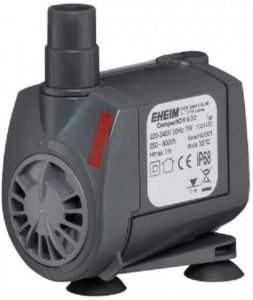
The Eheim Compact 600 is an aquarium-specific pump from an established filtration manufacturer. It is a sensible choice for aquarists who value a recognized model and parts guidance over the highest flow-per-dollar figure.
The “600” is a metric model designation, not 600 GPH. Confirm the current liters-per-hour rating, voltage and outlet fittings for the US version. Older Compact models and newer CompactON products can be confused in search results, so match the exact listing.
Pros: aquarium-focused design; established manufacturer; compact body.
Cons: model naming is easy to misread; usually costs more than generic utility pumps; availability may fluctuate.
Check the Eheim Compact 600 on Amazon
5. Uniclife 80 GPH Pump — Best for a Small Feature

The old Uniclife link now redirects to a current 80 GPH, four-watt model with a listed 2.4-foot maximum lift. That makes it more appropriate for a small aquarium feature, tabletop fountain or gentle circulation than for a sump return.
At meaningful lift, output will be well below 80 GPH. This is the wrong choice for a high-turnover filter but a better match where the larger pumps would create excessive current or heat.
Pros: low power; compact; gentle scale; current successor listing.
Cons: very limited head height; not suitable for most sump returns; intake still requires livestock protection.
Check the Uniclife 80 GPH Pump on Amazon
How to Size an Aquarium Water Pump
Define the job
A return pump must overcome the height from the sump waterline to the outlet. A circulation pump inside one aquarium has almost no vertical lift. A transfer pump may need to push through a long hose. These jobs require different equipment even when the tank volume is identical.
Calculate total head
Measure vertical lift, then allow for resistance from tubing length, diameter, elbows, valves and equipment. Use the manufacturer’s flow curve to find estimated output at that head. Maximum head is not a recommended operating point.
Match flow to livestock and filtration
There is no universal turnover number. Reef systems, planted tanks, bettas and river fish have different needs. Include flow from filters and circulation devices, and provide calm areas where appropriate. A valve or controllable DC pump can make adjustment easier.
Check plumbing and service access
Confirm outlet diameter before buying tubing and unions. The pump should be removable without dismantling the aquarium. Use a prefilter where livestock or debris can enter, but clean it often so restriction does not starve the pump.
Installation and Electrical Safety
- Use a pump only in the submerged or inline configuration specifically approved by its manual.
- Create a drip loop and use GFCI protection where available.
- Never lift or suspend a pump by its electrical cord.
- Unplug it before placing hands in the water, servicing plumbing or exposing a submersible pump to air.
- Keep intakes away from fish, shrimp, snails and loose substrate; fit a suitable guard or sponge.
- Secure hoses so a loose outlet cannot drain or spray outside the system.
- Test the system during a simulated power outage to confirm the sump will not overflow from back-siphoning.
Maintenance and Troubleshooting
Reduced flow often comes from a clogged intake, dirty impeller, mineral deposits, kinked tubing or increased head—not a failed motor. Unplug the pump, follow the manual to remove the impeller cover, clean parts with aquarium-safe methods and inspect for wear. Never use soap on parts returned to the aquarium.
Rattling can result from trapped debris, air, a worn impeller or vibration against hard surfaces. A pump that runs dry may overheat or suffer permanent damage. Stop using equipment with a damaged cord, cracked housing, burning smell, repeated electrical trips or unexplained heat.
Frequently Asked Questions
Is a water pump the same as an aquarium filter?
No. A pump moves water. A filter combines water movement with mechanical and biological media. A pump becomes part of filtration only when connected to an appropriately designed filter system.
Can I reduce a pump’s flow?
Some pumps allow an outlet valve or built-in control; others do not. Never restrict the intake and never use a method the manufacturer prohibits. If substantial throttling is needed, a smaller or controllable pump is often better.
Why is my pump delivering less than its GPH rating?
Headline flow is usually measured at minimal head. Vertical lift, plumbing friction, dirty parts and restrictive fittings all reduce output.
Should a return pump run continuously?
In most sump-filtered aquariums, yes, because it supports filtration, circulation and gas exchange. Use equipment rated for continuous duty and plan safe backup aeration for outages.
Verdict
The KEDSUM 660 GPH model is the strongest all-purpose choice here for higher-flow aquarium and water-feature work. The Simple Deluxe 400 GPH model suits moderate utility use, while the Uniclife 80 GPH pump is the best fit for a small feature. Measure head height, consult the curve and confirm plumbing before choosing—correct delivered flow matters more than the largest number on the box.