5 Best Aquarium Water Pumps: Flow and Head Compared

5 Best Aquarium Water Pumps: Flow and Head Compared

Disclosure: Aquarium Hunter may earn a commission from qualifying Amazon purchases made through links on this page, at no extra cost to you.

The KEDSUM 660 GPH Submersible Pump is our best aquarium water pump for higher-flow return, transfer and water-feature jobs, while the Uniclife 80 GPH Pump is the better fit for a small tabletop aquarium or gentle fountain. These pumps span very different capacities: select by the flow required after vertical lift and plumbing resistance, not by the advertised gallons-per-hour number alone.

A water pump moves aquarium water through tubing, a sump, a fountain or a feature. It is not an air pump and does not connect to an air stone. It also does not replace biological filter media unless it is installed as part of a complete filtration system.

Best Aquarium Water Pumps: Quick Comparison

Pump Listed maximum Best use Amazon
KEDSUM Submersible Pump 660 GPH; 6-ft lift Best overall higher-flow option Check on Amazon
Simple Deluxe Submersible Pump 400 GPH Long-cord utility use Check on Amazon
FREESEA Small Pond Pump Varies by selected model Compact fountain or pond choice Check on Amazon
Eheim Compact 600 Model-specific metric rating Established aquarium-brand option Check on Amazon
Uniclife 80 GPH Pump 80 GPH; 2.4-ft lift Small tank or tabletop feature Check on Amazon

Maximum flow is measured with little or no lift. Actual output declines as water is pumped higher and through elbows, valves, narrow tubing or dirty equipment. Confirm the live Amazon model and the manufacturer’s current performance curve before ordering.

Our Aquarium Water Pump Picks

1. KEDSUM 660 GPH Submersible Pump — Best Overall

KEDSUM 660 GPH submersible aquarium water pump

The current KEDSUM listing specifies 660 GPH, 55 watts and a maximum lift of six feet, with three outlet nozzles. That capacity suits sump returns, water transfers and larger features better than a nano display. The choice of outlets makes adapting tubing easier, but every restriction reduces delivered flow.

Do not assume that 660 GPH will reach the aquarium after a six-foot rise; maximum head is the point where useful flow approaches zero. Estimate the system’s total head and select using the performance curve. Add a valve on the outlet if the maker permits throttling and the return is too strong.

Pros: useful higher-flow capacity; three nozzles; clearly specified lift; multipurpose.
Cons: excessive for small tanks; consumes more power than compact pumps; real flow will be below the headline rating.

Check the KEDSUM 660 GPH Pump on Amazon

2. Simple Deluxe 400 GPH Pump — Best Long-Cord Utility Option

Simple Deluxe 400 GPH submersible water pump

The Simple Deluxe listing specifies 400 GPH, 54 watts and a 15-foot cord. The long cord can be useful for a sump, fountain or water-transfer container where the outlet is not immediately beside the equipment. Its moderate headline flow fits jobs that do not need the KEDSUM’s output.

A long cord is not permission to use an unsafe extension lead or leave a connection where it can get wet. Use a drip loop and a GFCI-protected receptacle, and follow local electrical-safety requirements.

Pros: long cord; moderate flow; useful for several water-moving tasks.
Cons: relatively high wattage for the flow rating; not a precision DC return pump; can be too strong for nano livestock.

Check the Simple Deluxe Pump on Amazon

3. FREESEA Small Pond Pump — Best Compact Fountain Choice

FREESEA compact submersible water pump

FREESEA sells this compact design in multiple variants, so it can suit a small pond feature, aquarium fountain or other submerged circulation job. The compact body is easier to hide than a large utility pump.

Amazon may change the default selected capacity. Treat the listing as a product family and verify the exact GPH, wattage, lift, outlet size and cord before purchase. For livestock aquariums, fit an intake guard or prefilter sponge where small fish or shrimp could reach the intake.

Pros: compact; several model sizes; easy to conceal.
Cons: specifications vary by selection; intake needs protection around small animals; not every variant suits a sump return.

Check the FREESEA Pump on Amazon

4. Eheim Compact 600 — Best Established Aquarium Option
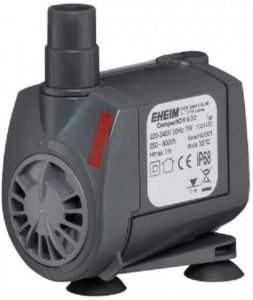
Eheim Compact 600 aquarium water pump

The Eheim Compact 600 is an aquarium-specific pump from an established filtration manufacturer. It is a sensible choice for aquarists who value a recognized model and parts guidance over the highest flow-per-dollar figure.

The “600” is a metric model designation, not 600 GPH. Confirm the current liters-per-hour rating, voltage and outlet fittings for the US version. Older Compact models and newer CompactON products can be confused in search results, so match the exact listing.

Pros: aquarium-focused design; established manufacturer; compact body.
Cons: model naming is easy to misread; usually costs more than generic utility pumps; availability may fluctuate.

Check the Eheim Compact 600 on Amazon

5. Uniclife 80 GPH Pump — Best for a Small Feature

Uniclife 80 GPH compact submersible water pump

The old Uniclife link now redirects to a current 80 GPH, four-watt model with a listed 2.4-foot maximum lift. That makes it more appropriate for a small aquarium feature, tabletop fountain or gentle circulation than for a sump return.

At meaningful lift, output will be well below 80 GPH. This is the wrong choice for a high-turnover filter but a better match where the larger pumps would create excessive current or heat.

Pros: low power; compact; gentle scale; current successor listing.
Cons: very limited head height; not suitable for most sump returns; intake still requires livestock protection.

Check the Uniclife 80 GPH Pump on Amazon

How to Size an Aquarium Water Pump

Define the job

A return pump must overcome the height from the sump waterline to the outlet. A circulation pump inside one aquarium has almost no vertical lift. A transfer pump may need to push through a long hose. These jobs require different equipment even when the tank volume is identical.

Calculate total head

Measure vertical lift, then allow for resistance from tubing length, diameter, elbows, valves and equipment. Use the manufacturer’s flow curve to find estimated output at that head. Maximum head is not a recommended operating point.

Match flow to livestock and filtration

There is no universal turnover number. Reef systems, planted tanks, bettas and river fish have different needs. Include flow from filters and circulation devices, and provide calm areas where appropriate. A valve or controllable DC pump can make adjustment easier.

Check plumbing and service access

Confirm outlet diameter before buying tubing and unions. The pump should be removable without dismantling the aquarium. Use a prefilter where livestock or debris can enter, but clean it often so restriction does not starve the pump.

Installation and Electrical Safety

  • Use a pump only in the submerged or inline configuration specifically approved by its manual.
  • Create a drip loop and use GFCI protection where available.
  • Never lift or suspend a pump by its electrical cord.
  • Unplug it before placing hands in the water, servicing plumbing or exposing a submersible pump to air.
  • Keep intakes away from fish, shrimp, snails and loose substrate; fit a suitable guard or sponge.
  • Secure hoses so a loose outlet cannot drain or spray outside the system.
  • Test the system during a simulated power outage to confirm the sump will not overflow from back-siphoning.

Maintenance and Troubleshooting

Reduced flow often comes from a clogged intake, dirty impeller, mineral deposits, kinked tubing or increased head—not a failed motor. Unplug the pump, follow the manual to remove the impeller cover, clean parts with aquarium-safe methods and inspect for wear. Never use soap on parts returned to the aquarium.

Rattling can result from trapped debris, air, a worn impeller or vibration against hard surfaces. A pump that runs dry may overheat or suffer permanent damage. Stop using equipment with a damaged cord, cracked housing, burning smell, repeated electrical trips or unexplained heat.

Frequently Asked Questions

Is a water pump the same as an aquarium filter?

No. A pump moves water. A filter combines water movement with mechanical and biological media. A pump becomes part of filtration only when connected to an appropriately designed filter system.

Can I reduce a pump’s flow?

Some pumps allow an outlet valve or built-in control; others do not. Never restrict the intake and never use a method the manufacturer prohibits. If substantial throttling is needed, a smaller or controllable pump is often better.

Why is my pump delivering less than its GPH rating?

Headline flow is usually measured at minimal head. Vertical lift, plumbing friction, dirty parts and restrictive fittings all reduce output.

Should a return pump run continuously?

In most sump-filtered aquariums, yes, because it supports filtration, circulation and gas exchange. Use equipment rated for continuous duty and plan safe backup aeration for outages.

Verdict

The KEDSUM 660 GPH model is the strongest all-purpose choice here for higher-flow aquarium and water-feature work. The Simple Deluxe 400 GPH model suits moderate utility use, while the Uniclife 80 GPH pump is the best fit for a small feature. Measure head height, consult the curve and confirm plumbing before choosing—correct delivered flow matters more than the largest number on the box.

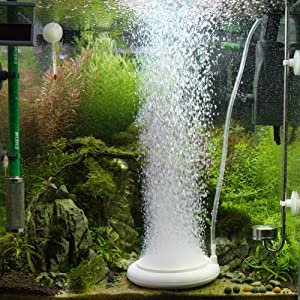
5 Best Aquarium Air Stones for Better Aeration

Best Aquarium Air Stones

Disclosure: Aquarium Hunter may earn a commission from qualifying Amazon purchases made through links on this page, at no extra cost to you.

The Hygger 4-Inch Nano Air Stone Kit is our best aquarium air stone for most medium and large tanks because its broad ceramic disc produces a wide curtain of fine bubbles and the kit includes the fittings needed for a secure installation. For inexpensive aeration in small tanks, quarantine containers or multiple setups, the Pawfly 1.2-Inch Cylinder 10-Pack offers better flexibility.

Air stones do not create oxygen by releasing oxygen into the water. An air pump pushes room air through the porous stone, and the rising bubbles move water toward the surface. That surface agitation improves gas exchange. The right choice therefore depends on the pump, tank depth, desired bubble pattern and how much surface movement the aquarium needs.

Best Aquarium Air Stones: Quick Comparison

Air stone Best for Bubble pattern Amazon
Hygger 4-Inch Nano Air Stone Kit Best overall Wide, fine-bubble disc Check on Amazon
Pawfly 1.2-Inch Cylinder, 10 Pack Best value multipack Compact streams Check on Amazon
Pawfly 2-Inch Bread Air Stone Small aquariums and buckets Short oval plume Check on Amazon
6-Inch Air Stone Bar with Control Valve A horizontal bubble line Linear curtain Check on Amazon
EcoPlus Large Round Air Stone Large reservoirs and high airflow Broad round plume Check on Amazon

Important: An air stone needs a separate air pump, airline tubing and usually a check valve. Confirm the product’s connection size and the pump’s recommended tank depth before ordering.

Our Aquarium Air Stone Picks

1. Hygger 4-Inch Nano Air Stone Kit — Best Overall

Hygger round aquarium air stone kit

This four-inch round diffuser is the most versatile choice in the shortlist for a medium or large display aquarium. Its larger face spreads bubbles across a broader area than a small cylinder, and the current Amazon listing includes the air stone as a kit rather than a bare disc. A weighted base helps it stay in place.

Fine-pore diffusers generally need more air pressure than basic coarse stones. Check that your pump can drive the diffuser at the aquarium’s depth. If output weakens, soak and rinse the stone according to the maker’s directions before assuming the pump has failed.

Pros: broad bubble pattern; tidy round profile; kit format; suitable for display tanks.
Cons: needs adequate pump pressure; larger footprint; fine pores require maintenance.

Check the Hygger 4-Inch Air Stone on Amazon

2. Pawfly 1.2-Inch Cylinder 10-Pack — Best Value

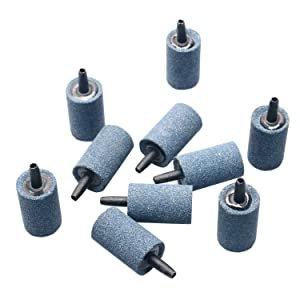
Pawfly small cylinder aquarium air stones

A multipack of small cylinder stones is practical when one elaborate diffuser is unnecessary. Use them in small aquariums, sponge-filter lift tubes, brine-shrimp hatcheries, quarantine containers or separate buckets. Keeping spares also makes it easy to replace a clogged stone without interrupting aeration.

The compact size produces a narrower stream and will not create the same visual curtain as a disc or bar. Each additional stone also divides the pump’s output, so running several at once may require a stronger pump, a gang valve and careful balancing.

Pros: inexpensive per stone; easy to position; useful spares; suitable for multiple small setups.
Cons: narrow bubble stream; small units can move unless secured; several stones increase pump demand.

Check the Pawfly Cylinder 10-Pack on Amazon

3. Pawfly 2-Inch Bread Air Stone — Best for a Small Tank

Pawfly oval bread-style aquarium air stone

This small oval diffuser gives a wider plume than a narrow cylinder without taking up the space of a four-inch disc. It suits a small aquarium, fish-transport bucket or other compact container where moderate surface movement is needed.

Airflow should be adjusted to the livestock. Bettas and other slow-water fish can be stressed by excessive current even though extra gas exchange is useful. A control valve can reduce the output, but never restrict a pump beyond its manufacturer’s guidance.

Pros: compact; broader plume than a tiny cylinder; simple shape; economical.
Cons: not intended to aerate a large tank alone; may need soaking before first use; airflow is not adjustable without a valve.

Check the Pawfly 2-Inch Air Stone on Amazon

4. 6-Inch Air Stone Bar with Control Valve — Best Bubble Line

Six-inch bar-style aquarium air diffuser

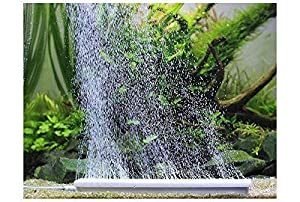
A bar creates a horizontal line of bubbles that can sit along the back wall or beneath hardscape. This listing includes an air-control valve, which makes it easier to tune the appearance and current. It is a good visual choice when a round column of bubbles is not the look you want.

Long bars can release unevenly if the pump lacks pressure or if mineral deposits block part of the diffuser. Position it level, soak it before use if directed, and clean it when one end stops producing bubbles.

Pros: linear bubble curtain; included control valve; easy to conceal along the back of a tank.
Cons: needs even pressure across the bar; may clog unevenly; generic listing offers less brand support.

Check the 6-Inch Air Stone Bar on Amazon

5. EcoPlus Large Round Air Stone — Best for High Airflow

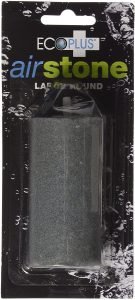
EcoPlus large round air stone

The EcoPlus large round stone is aimed at applications where a broad plume and substantial airflow are more important than a discreet appearance. It can suit a large aquarium, holding container or hydroponic reservoir when paired with a capable pump.

Its size is unnecessary for a nano aquarium, and strong bubbles can create too much current for delicate fish. Because Amazon availability can vary by country and seller, confirm that the displayed listing and connector size match your system before purchase.

Pros: broad output; established simple design; useful for larger water volumes.
Cons: bulky in a display tank; requires stronger airflow; excessive for small or calm-water aquariums.

Check the EcoPlus Large Round Air Stone on Amazon

How to Choose an Aquarium Air Stone

Match the stone to the air pump

A larger or finer-pore diffuser needs more pressure. Tank depth also increases resistance. Pump ratings are estimates, so use the pump maker’s depth and outlet guidance rather than selecting by aquarium gallons alone. If one pump runs several devices, allow for the combined demand.

Choose the bubble pattern

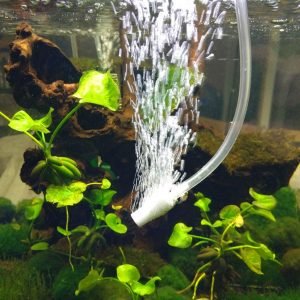
Cylinders create compact columns, discs create broad circular plumes, and bars create a line. Fine bubbles look attractive and provide plenty of moving surface area, but the aquarium gains most of its oxygen through agitation at the water surface. A coarse diffuser that moves enough water can therefore be more useful than a fine diffuser driven by an underpowered pump.

Consider the livestock

Warm water holds less dissolved oxygen than cool water, and heavily stocked tanks, medication, power outages and summer heat can make extra aeration especially valuable. However, fish adapted to calm water should still have quiet areas. Watch behavior and reduce excessive current when fish struggle to swim, hide continuously or cannot feed normally.

Plan for noise and maintenance

Most “air-stone noise” comes from pump vibration or bursting bubbles. Put the pump on a stable vibration-absorbing pad, keep it dry and never cover it in a way that traps heat. Diffusers accumulate algae, biofilm and mineral deposits. Clean or replace them when output drops; do not compensate indefinitely by forcing an undersized pump harder.

Safe Installation

  1. Rinse the new stone and soak it if the manufacturer recommends it.
  2. Connect aquarium-safe airline tubing firmly.
  3. Place the pump above the aquarium’s waterline, or install a correctly oriented check valve to reduce back-siphon risk.
  4. Form a drip loop in every electrical cord and keep the pump away from splashes.
  5. Position the diffuser where bubbles can move water without blasting fish or substrate.
  6. Start the pump and check for secure connections, balanced airflow and normal fish behavior.

An air stone is supplemental equipment, not a replacement for a cycled filter, regular water changes or correcting ammonia and nitrite. It also does not replace a heater where tropical fish require one.

Frequently Asked Questions

Does every aquarium need an air stone?

No. A filter return that produces adequate surface movement may provide sufficient gas exchange. Air stones are useful when circulation is weak, water is warm, oxygen demand is high, a sponge filter needs to be driven, or extra aeration is required during treatment or an emergency.

Where should an air stone go?

Place it low enough that rising bubbles circulate water through much of the tank, but do not bury it unless the product is designed for that use. Keep it away from loose substrate that can be blown around and adjust its position if it creates excessive flow.

How often should an air stone be replaced?

There is no fixed schedule. Replace it when cleaning no longer restores even airflow, the body cracks, or the connection becomes unreliable. Keeping a spare is sensible for quarantine and emergency aeration.

Can an air stone add too much oxygen?

Ordinary aquarium air stones rarely cause oxygen toxicity, but they can create excessive current, noise or salt creep. Powerful pumps can also disturb fish and substrate. Size and adjust the system for the tank rather than maximizing bubbles.

Verdict

Choose the Hygger 4-Inch Nano Air Stone Kit when you want a broad, fine-bubble display and have a pump with enough pressure. Choose the Pawfly 1.2-Inch Cylinder 10-Pack when flexibility, spares and low cost matter more than a dramatic bubble curtain. Whichever style you select, match it to the pump and aquarium depth, install a check valve where needed, and judge performance by surface movement and fish behavior—not by bubble size alone.