Best Nano Reef Light For Coral Growth (2023 Review & Prices)

Best Nano Reef Light For Coral Growth (2023 Review & Prices)

Best Nano Reef Light – For optimal coral growth, you will want a full spectrum of light. With our comprehensive reviews and complete guide, we aim to help you find functional and beautiful lighting for your saltwater aquarium.

The lighting in a reef tank is very important. Not only does it create a beautiful environment, but choosing the right type of light is essential for coral health.

Coral depends on zooxanthellae, algae in coral tissue, to survive. Zooxanthellae depend on light. So the zooxanthellae use coral debris and light to feed themselves. In turn, it produces the oxygen the coral needs to grow.

Without the right kind of light, the coral will not survive. If you’re looking for the Best Nano Reef Light, you’ve come to the right place.

In today’s post, I am going to discuss the best LED aquarium lighting for reef tanks. I’ll outline what these systems are best for, what they’re good for, and what they’re not good for, and offer our recommended options.

The ultimate goal is to provide the necessary information you need to make an informed decision about the Best Nano Reef Light system for you. Let’s start!

Comparison Table

Prices pulled from the Amazon Product Advertising API on:

Top 10 Best Nano Reef Lights For Your Nano Reef Tanks

Best Nano Reef Light

Best Nano Reef  Lights Reviews

1. HIPARGERO LED Aquarium Light For Coral Reef Fish Nano Tank

Best Nano Reef Light

The LEDs in this lamp have been carefully chosen to achieve a perfect balance of blue and white light that mimics the same light as found on the ocean floor. The Cree Royal Blue, White and Blue lights work perfectly together, making your coral color really pop.

It can be dimmed from 100% to 0% using simple touch controls, allowing you to make adjustments based on the type of coral and other aquatic life you have in your tank. There are two fans that work quietly and help disperse the heat to keep this light on for as long as possible.

This lamp comes with a 30-day money-back guarantee and a one-year warranty. They also have excellent customer service and try to answer all questions within 24 hours, so there is no risk in trying this one.

4.3/5 STARS

Benefits

  • High quality LEDs
  • Dimmible
  • Touch controls
  • Super thin body
  • 1 year warranty
  • Sunrise/sunset feature
  • Inexpensive

Cons

  • Can hear the fan
  • Some quality issues
Check Price On Amazon

2. Fluval Sea Marine Nano Bluetooth LED

Best Nano Reef Light

One of the best things about this lamp is its programmable 24-hour light cycle. The light changes automatically during the day and gradually transitions from sunrise to noon to sunset and night.

There are also presets to choose from to create the look and feel of different types of environments, including a deep saw sphere, a burst of color, or a sunny reef. You can also make changes on your own. Everything is controlled with the Fluval app. Just download it to your phone, pair it with the light and you’re good to go.

This lamp is made with an aluminum housing that helps to keep out water and moisture and dissipate heat effectively. That’s not all, it also comes with a 3-year warranty.

4.4/5 STARS

Benefits

  • Programmable (sunrise/sunset) 24 hr cycle
  • Full adjustable positioning
  • Aluminium housing
  • Value for money
  • Blutooth

Cons

  • Mount best suits only rimless tanks
  • Some quality issues
Check Price On Amazon

3. KINGBO LED Aquarium Light Nano

Best Nano Reef Light

Next up is this KINGOBO LED light with six-band full spectrum light, including cool white, blue, red and green. The combination of these lights creates an ideal color spectrum for your reef and all the fish in your tank.

This bulb is designed to fit any standard E26 or E27 fitting, so you can use it with many standard bulbs. It features a 90 degree optical lens to ensure the light is focused enough to maximize growth.

An improved aluminum heat sink has improved heat dissipation that keeps the lamp cool even after extended use, extending lamp life. Overall, the design reduces light loss by 30% and improves light output.

4.5/5 STARS

Benefits

  • Full spectrum lighting
  • Better heat dissipation
  • Easy to use
  • Suits both planted freshwater and reef aquariums
  • 12 month warranty

Cons

  • Bulb wears out quickly
Check Price On Amazon

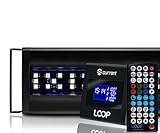
4. MICMOL Smart LED Aquarium Light

Best Nano Reef Light

This lamp from MICMOL has a really cool modern design. It is cut from a single piece of aluminum which is lightweight and super durable. A cool bracket makes it easy to install over the edge of the tank and you can quickly adjust the light to place it exactly where you need it.

The lamp itself has a Full HD spectrum that illuminates your tank perfectly. Contains cool white, royal blue, blue, red, green, warm white and purple to create a variety of lighting effects.

A smart controller with a 78-inch long cable is easy and convenient to use, and there are several settings to play with. The remote itself features a digital clock and is used to adjust brightness and switch between various settings, including manual and automatic modes.

The automatic mode switches between six presets that mimic light all day, from dawn to noon and at night. It goes seamlessly from sunrise to noon to sunset to create a natural-looking environment for your reef.

3.1/5 STARS (only 5 ratings)

Benefits

  • Full spectrum lighting
  • Well designed bracket
  • Easy to set program
  • Affordable
  • Aluminium body

Cons

  • None that we could see
Check Price On Amazon

5. MarineLand Reef LED Strip Light

Best Nano Reef Light

This lamp has a timer to automatically switch from daylight to night light. This creates a natural light cycle for your reef and reproduces the deep sea light that corals need to thrive.

If you are looking for something that is easy to use and very simple and straightforward to use, this is a great option. It comes with a one year warranty and is available in three different sizes.

4.3/5 STARS

Benefits

  • Correct spectrum for reef
  • Energy efficient
  • Control settings to run automatically
  • Up to 10 year life span

Cons

  • May not be best for high light corals
  • Some quality issues
Check Price On Amazon

6. EcoTech Radion G5

Best Nano Reef Light

There’s a reason big coral vendors like World Wide Corals and top reef professionals use EcoTech Radion G5 to light up their reef tanks. Two reasons: full spectrum power and manageability.

EcoTech Radion’s controllability is unmatched in the industry. Radion’s LED lights are powered by a cloud-based command center known as EcoSmart Live that runs in a web browser. The software updates the lighting system automatically and several lighting modes are available for many hobbyists.

The separately available Reeflink allows you to connect your Radions via a smartphone instead of the standard USB functionality that comes with the unit. The spectrum of the lights can be changed, the intensity can be adjusted, the lighting schedule can be changed. It really is unlimited flexibility with these units.

5/5 STARS (only 2 ratings)

Check Price On Amazon

7. Ocean Revive 247-B

Best Nano Reef Light

The Ocean Revive T247-B is a black box in value, but not in appearance. Much cheaper than EcoTech Radions and AI Hydra, this unit can compete with Hydras in strength and what it can grow, as evidenced by the light of choice from Pacific East Aquaculture, a Maryland licensed coral aquaculture facility that has been offering high quality corals to reef keepers since 2000.

Knowing that facilities and even some LFS (to save money but will still try to sell you Radions and Hydras ^ _ ^) use these units says a lot about them. They have the power to breed all kinds of corals, from soft corals and anemones to Acroporas, and the device comes in a sturdy package that doesn’t seem cheap.

4.1/5 STARS

Benefits

  • Full spectrum lighting
  • Dimmable LEDs
  • Built in timer
  • Value for money

Cons

  • Source of power is only battery
  • Poor customer service reported
Check Price On Amazon

8. Viparspectra LEDs

Viparspectra LED Aquarium Light is their traditional “Chinese black box”, but they have a more trusted brand and recognition in the industry. What I like about these lights is that there are many success stories using these lights on mixed reefs and SPS tanks. The main reason they can work in SPS tanks is how powerful they are.

The PAR output of these LED lights is in Radion territory. So you are getting a cheap light with the power behind that with field proven cases where they have grown and corals are harder to maintain. The price of this LED light is hard to beat!

4.5 STARS

Benefits

  • Full spectrum lighting
  • Internal timer
  • Dimmable feature
  • 1 year warranty
  • High speed quiet fans

Cons

  • Some reports that white light aspect is too bright
  • Some quality issues
  • Customer service issues
Check Price On Amazon

9. Current USA Orbit Marine IC Pros

First of all, we have the current US Orbit Marine IC professionals. This light comes with its own controller that can not only power the aquarium LED system itself, but also control the Orbit Marine EFlux Wavemaker and EFlux Return Pump for a fully integrated package. I feel these IC Pros are their best value with their 72″ model as it represents a VERY attractive purchase for those using 6 foot long mixed reef tanks.

The Current USA Orbit Marine controller works with a remote control and is quite easy to use and program. It comes with an up and down ramp function, which is a standard 2 hour up and down ramp. You can adjust the day, sunset and night settings so that your reef tank can adjust the lighting accordingly as the day progresses.

In combination with the Eflux Wavemaker you can adjust the flow and use the spin setting when using 2 wavemakers and even use a flow function that turns off the pumps while feeding. There are other features of the LED aquarium lighting such as a lighting and cloudy weather, but I think they are more for the cool factor than the function.

4.4/5 STARS

Benefits

  • Full spectrum lighting
  • Bright lighting with mix of colors
  • Built in programming for realistic effects (eg shimmer)
  • Built in wave pump controller

Cons

  • Some quality issues
Check Price On Amazon

10. Hipargergo Aqua Knight LED Aquarium Light

If you are building a nano reef or similar with a reef tank under 40 gallons, the Hipargergo Aqua Knight is a good consideration for your light of choice. It’s a very affordable light, being the cheapest unit on this list, but also very powerful and capable of being used in most mixed reef setups.

It is a small aquarium lamp with a small light spread, making it a perfect lamp for nano reef aquariums under 40 gallons. What I really love about this LED bulb is that the manufacturer stands behind their bulbs with a 30-day money-back guarantee and is happy to answer your questions 24/7. You really can’t go wrong with this light if you have a smaller reef tank. Improper Reefer has even used this light in their 10-gallon nano reef construction.

Hiparergo Aqua Knight LED Insufficient refrigerator The biggest disadvantage of this aquarium lamp is its size. This is a very affordable LED light but only works for nano reef tanks. Touch sensitivity can be annoying because they are not always read properly when you touch them. It’s so bad that sometimes you have to pray for the light to read your touches.

Finally, while it comes with a rim mount, the mount itself may be too long for some nano reef setups. Overall, though, this is the pick if you’re building a nano reef and short on offerings from brands like AI Prime HD and Kessil A80.

4.3/5 STARS

Benefits

  • High quality LEDs
  • Professional spectrum
  • 2 dimmable LED channels
  • Touch controls
  • Premium materials
  • Super thin body
  • 1 year warranty
  • Sunrise/sunset settings
  • Value for money

Cons

  • Poor customer support reported
Check Price On Amazon

How to Select Right Nano Reef Lighting Option

When choosing a lamp for a nano reef tank, it is important to note that lighting is more than just making the tank look pretty. Coral depends on the right lighting to grow, so you need to make sure you choose the right one.

It is important to give the coral enough light, but not too much. Although corals need light to survive, too much can damage them. In fact, too much light can kill them in just a few days.

That said, you don’t want to surprise them with drastic light changes either, so turning the lights on and off can also be too much.

Dimmable

By using a dimmable lamp, you have more control. Alternatively, you can choose a lamp with an automatic day and night cycle. This creates a more natural environment and a slow transition from day to night that the coral will love.

Also note how the lamp is installed. We have options that snap to the edge of the tank, a clamp on the table that holds the tank and a light that sits over the tank. Each of these designs has its advantages.

Placing the light on the side of the tank is easy and gives you a fair amount of control over where the light source is placed. Some have goosenecks so you can position the light the same way. With others, you can only move the light up and down or side to side.

The lamps that attach to the table top are some of the most versatile. You can place them anywhere around the table and the gooseneck design allows you to change the angle and place them exactly where you need them.

Strip lights are the least customizable, but they can be very effective depending on your settings. They sit on top of the tank and provide the same lighting from one end to the other.

There really is no right or wrong installation, but some may suit your tank better than others. Choose the one that best suits your setup.

One more thing, making sure to choose a waterproof lamp made of aluminum or other durable and lightweight material is also important. The better the material, the longer the light will last.


Best Nano Reef Tank LED Lights FAQs

How many watts of LED lighting do I need for a reef tank?

The amount of watts of LED lighting you need will depend on the size of your marine aquarium and the type of coral you will be keeping. Most LED systems are actually PAR dominated for many corals. It is mainly about the footprint. The vast majority of systems have a 24 x 24 footprint. Measure your PAR at the tank for best results.

Can you grow coral with LED lighting?

Yes, you can grow coral with LED lighting. Many professional aquaculture producers and suppliers now use LED systems to grow corals. This is due to cost savings through lower energy costs.

Which light spectrum is best for corals?

Blue and violet have been shown to be the best light spectrum for corals. Many of these lights in this roundup have the correct spectrum for growing corals. Ensuring that the manufacturer you select has done proper R&D and that field results are available from another hobbyist will instill confidence in your purchase.

What is the best lighting scheme for a reef tank?

For a reef tank, I would recommend 8-10 hours in your lighting schedule to get started. You can adjust from there as you get a feel for your tank. Systems with acceleration and deceleration functions can be switched on for longer as the intensity will be very intense during the day.


Final Thoughts

When choosing a Best Nano Reef Light, it is important to note that you are looking for something more than just decorative. Coral relies on the right type of light to thrive, so choosing the right one is important.

There are several designs to choose from and the best one is the one that best suits your setup. Some need a more accurate and adjustable light, while others would do well with the same light throughout the tank.

Remember that too much light can be deadly to a reef tank, so it’s also very important to choose one that dims the light or has an automatic day-to-night cycle to create a more natural environment.

…

[Latest 2023] Top 9 Best Aquarium CO2 Regulator For Planted Tank Care

[Latest 2023] Top 9 Best Aquarium CO2 Regulator For Planted Tank Care

If you really want a thriving planted tank, you need to make sure the proper levels of CO2 are maintained. It’s not enough and the plants die. If it’s excessive, you risk killing your fish and promoting algae growth.

Lucky for you, I’ve done a lot of research to find the Best Aquarium CO2 Regulator at affordable prices.

Comparison Table

CustomSiteStripe ImageTitleReviewBuy
Top PerformanceCO2 Aquarium Regulator Mini Dual Gauge Display4.3/5.0Check Price
cheapestMOD Complete MDC99005 CO2 Regulator Aquarium Mini Stainless Steel4.1/5.0Check Price

That is why it is important to buy a quality CO2 regulator for your aquarium. And a great way to ensure you’re delivering the ideal CO2 level without compromising your aquarium. However, you should know that not all regulators are created equal.

In this buyer’s guide, I’ll share with you my tips for choosing the Best Aquarium CO2 Regulator, and finally, I’ll discuss some of them.

Top 9 Best CO2 Regulators for Your Planted Aquarium

Best Aquarium CO2 Regulator Reviews

1. JARDLI Aquarium CO2 Regulator with Solenoid for Planted Tank

Best Aquarium CO2 Regulator

This JARDLI Mini CO2 Regulator is built to last. It has a high quality aluminum housing and stainless steel diaphragm, and it is compatible with a wide variety of CO2 tanks. It includes a CO2 paintball adapter and a CGA 320 threaded connection stem adapter and can also be used with CO2 cartridges.

The precision needle valve and locking mechanism provide fine adjustments and precision from 0 to 70 PSI, making this regulator suitable for tanks from five to 400 gallons. The integrated solenoid valve is designed to operate with low power consumption, it is also super quiet and stays cool to the touch.

One of the best things about this regulator is that it can grow with your aquarium. It has a larger knob to make it easier to adjust and can even work with 360-degree swivel tubes for more versatility.

Check Price On Amazon

2. CO2 Aquarium Regulator Mini Dual Gauge Display

Best Aquarium CO2 Regulator

The wyin CO2 regulator is very easy to set up. It has a knurled knob for fine adjustments that are as precise as a bubble every three seconds. The dual gauge display is very easy to read and tells you the CO2 level in the tank and the outlet pressure.

To ensure that the bubble counter remains constant and accurate, a one-way valve prevents water from flowing back into the cylinder. Performance is very consistent even when the system is connected to a timer.

Unlike other regulators, this one is specifically designed for a planted tank. It has a maximum working pressure of 75 PSI and a durable aluminum alloy construction that is built to last.

You will also receive a key and extra o-rings for initial installation and any necessary maintenance.

Check Price On Amazon

3. MOD Complete MDC99005 CO2 Regulator Aquarium Mini Stainless Steel

Best Aquarium CO2 Regulator

Help the growth cycle of your plants with this aquarium CO2 regulator from PRO. Always inject just the right amount at the right time to keep your plants happy and healthy.

With built-in precision, you can rest assured that you can fine-tune your CO2 reading and adjust it as needed to create an ideal environment for your plant and fish life.

This CO2 system is made of high quality stainless steel and is designed to perform for a long time. The durable steel construction is specially designed to transmit precision measurements of CO2 in weights from 150 to 2000 PSI.

This CO2 system is highly compatible with different brands of high density tubes to inject CO2 into your aquarium easily and quickly. It is also compatible with various brands of CO2 atomizers and diffusers.

The manufacturer of this system has designed it to fit easily into your kit configuration. The smaller dual display makes it easy to read your settings to ensure they are always at the correct level.

Check Price On Amazon

4. DoubleSun Hydroponics Aquarium CO2 Regulator

Best Aquarium CO2 Regulator

This DoubleSun Aquarium CO2 Regulator is made of premium material, designed for durability and long-term reliability.

The strong and tough steel is specially made to transmit accurate CO2 readings in weights from 150 to 2000 PSI. This CO2 system is built with a decompression pressure port making it stable, accurate and easy to adjust.

Adjust the carbon dioxide emissions in your aquarium with the precisely designed flush valve. It can be easily adjusted for the right flow every time, to create an ideal environment for your aquatic inhabitants.

The valve structure is produced by industrial electric solenoid, and the body is made of premium metal.

This CO2 regulator also comes with a pressure gauge and nylon ring. Make sure to connect all the parts together and secure your aquarium’s CO2 regulator firmly in place.

Check Price On Amazon

5. S.T. International Aquarium Professional CO2 Regulator

Best Aquarium CO2 Regulator

With the connector removed, the CO2 system can be used with disposable cartridges. It has a licensed solenoid valve, is energy efficient and highly efficient, operates discreetly and generates no heat and is designed for extended use.

Equipped with all-inclusive voltage (220v and 110v) for worldwide use, this CO2 regulator has received PSE and CE accreditation and international patent approval to ensure safety. You can use the CO2 system with one-off large or small American barrels.

The pressure gauge uses the colors of the rainbow. However, it really depends on personal preference and what makes it readable for you.

Unfortunately the size of the rings is unusual and there is no light to indicate whether it is on or off. You should consider this CO2 aquarium regulator if you have a larger tank with more inventory.

Check Price On Amazon

6. AQUATEK CO2 Regulator Mini

Including most of the kit you’ll need to get started, this mini CO2 regulator is best used with smaller tanks and is compatible with regular diffusers and atomizers.

No adapter is required to connect a standard 24 oz CO2 cylinder.

Its reliability is met with mixed reception. Some people claim it’s hard to pin down your ideal call rate, but once you’ve found it, it stays constant; others claim it is constantly changing.

The overall build quality is not for me; I prefer a solid stainless steel or brass construction. It is made from a mix of plastic and steel, which reduces its overall durability.

The solenoid valve is cheap and made in China, but it uses a light indicator.

Check Price On Amazon

7. Up Aqua CO2 Regulator

Very durable, it is made of strong brass so it is built to last.

The needle valve needs adjustment, but once it’s in place, it delivers a consistent and reliable output.

With an adjustable valve, it is a must if you want to use it for multiple tanks.

The electric solenoid valve is of excellent quality, but has a running-in period of several weeks.

You will need to purchase the bubble counter, check valve and other necessary equipment. But the good news is that it is compatible with most.

A good option if you have a larger tank.

Check Price On Amazon

8. SR Aquaristik Aquarium Dual Stage CO2 Regulator

If you want an affordable two-stage regulator, this might be the one for you.

Highly reliable, the needle valve is not very sensitive, which makes it easy for you to get an accurate bubble count and flow rate.

The solenoid is very good and comes with a nice LED light so you can clearly see when your CO2 system is on and off.

The gauges are clear and easy to read. Because it is two-stage and not single-stage like the others, you get more reliable and consistent CO2 emissions.

Check Price On Amazon

9. Fzone Triple Stage CO2 Regulator

Three stage control provides stable current and output.

This smaller size regulator may be the perfect fit for smaller tank stands.

Some users have complained that the bubble counter needle valve can leak, requiring frequent adjustments to seal.

But overall, the Fzone is praised for its reliability.

It is made of aluminum. So better than plastic drives, but not the optimal steel or brass.

Also, the few meters are small and not the easiest to read. Also, there is no light in the solenoid, I am not crazy about that.

But it can work with 5-pound tanks and it also includes an adapter for use with paintball cylinders.

The setting can be adjusted from 0 to 60 PSI.

Check Price On Amazon

Benefits of Using Best CO2 Regulator in Your Aquarium Fish Tank

1. Healthy Plant Life

It is a well-known fact that plants and fish must coexist in balance. Plants thrive on the carbon dioxide (CO2) that fish exhale.

In return, the fish feed on plant material and also seek shelter under the plants. However, too little or too much CO2 will affect both fish and plants.

Advantages of using a co2 regulator in an aquarium

Side effects of the absence of carbon dioxide include stunted plants or pale stems and leaves.

In this case, the plants will also not be able to provide sufficient supplements to the fish or properly aerate the environment. The best way to avoid these negative conditions is to install a good CO2 system or regulator.

2. Healthy Fish

Carbon dioxide plays an indispensable role in the life of fish and other aquatic life. Too little can harm your fish and possibly lead to their untimely death.

Fish give off carbon dioxide when they breathe. Too high a carbon dioxide level in the water increases toxicity and affects the pH balance.

But unless you have an exceptional ability to detect CO2 levels, you are likely to see dead or sick fish. A CO2 system helps to keep CO2 at a moderate level, reducing its negative impact.

3. Fight Algae Growth

n fact, algae are one of the biggest threats to fish. It affects the life of fish by causing an unhealthy condition that can cause infections in fish and other plants.

Studies show that CO2 contributes to algae growth and an abundance of ammonia, which is dangerous for fish. Installing a CO2 regulator in the aquarium to control the carbon dioxide level will help prevent these unwanted effects.

It may sound simple, but the value of a decent CO2 regulator is clear. It improves water quality, improves plant and fish welfare and controls algae growth.

However, you should know that not all CO2 systems are created equal. That is why you should buy high quality CO2 regulators and systems from reputable distributors.


How to Choose the Best CO2 Regulator for Aquarium?

Below, we’ll show you what we think are the most important features to consider when looking for the best CO2 regulator for your aquarium. Some of the features to consider are discussed below:

1. Usability

In general, installing a CO2 regulator is quite simple. This is usually as simple as plugging in a few tubes and turning a few knobs.

However, you may want to spend some time making adjustments to get the ideal amount of CO2. Good to know that even the best CO2 system needs some adjustments. However, you don’t want to go to extremes with this.

2. Readability

This refers to how easily you can read the gauges. If you know that your vision is not as good as it used to be, we recommend that you look for a CO2 regulator with a reasonably easy-to-read meter.

3. Is the system double stage?

If you are a novice when it comes to CO2 regulators, you should know this factor best. The two-stage CO2 system consists of two regulators in one. The primary stage lowers the pressure to a constant PSI and the second stage makes smaller adjustments.

This prevents variations due to the change of PSI in the aquarium. Both phases will provide a significant level of protection.

The truth is that single stage CO2 regulators are more affordable and often work flawlessly. However, it can be risky and it can be quite difficult to get a consistent and reliable result.

4. Compatibility:

This is solely dependent on your circumstances. If you are going to use your CO2 system for several tanks, you will need to purchase one that is compatible with CO2 cylinders (5 pounds). Otherwise, always replace your regulator.

On the other hand, if you find it difficult to get hold of the CO2 cylinders or if you only need it for a single tank, one option is to look for a regulator that is highly compatible with regular (24 oz) paintball cylinders. . These are also quite easy to obtain.

5. Materials

Premium materials ensure it lasts a long time. And most people prefer not to put resources into equipment that can break easily. Brass and stainless steel are your best options.


Why You Need a CO2 Regulator

If you want to keep aquarium plants healthy, you probably need a CO2 injection, as it plays a crucial role in plant photosynthesis.

I’m not going to go into much detail about photosynthesis because I think you probably already know how it works.

Here’s what you need to know:

In nature, plants will extract their CO2 in large quantities from the natural subsoil (silt, etc.) and degrading plants.

In your closed aquarium, however, CO2 is limited, tap water is converted into CO2 and the degradation of plants is minimal.

That is why you have to make up for this lack of CO2 with an injector. But you have to regulate it.

In addition to wasting your money (you’re injecting more than you need), too much CO2 can lead to algae growth because your plants can’t use the CO2 fast enough to compete with the algae.

Or it could kill your fish, as the high CO2 content displaces oxygen and suffocates your fish.

Now every aquarium setup is different. The amount of CO2 you need depends on a number of factors:

  • Volume of your tank
  • Type and number of plants you own
  • How much light do you give your plants?
  • The amount of fish in your aquarium.
  • Amount of water movement

Determining how much CO2 your tank needs may require some adjustments. The best and fastest way to do this is to use a drop tester.

A drop checker is a simple device made of glass or plastic.

It settles in your tank and with a solution in it, the CO2 will leak from the water in the drop checker and cause a reaction, causing the solution to change color:

  • Blue = not enough CO2
  • Green = CO2 levels are correct
  • Yellow = too much CO2


Conclusion

Finding the right CO2 system or controller is essential to make your fish or plants feel more comfortable in your home. We are happy to show you our roundup of the Best Aquarium CO2 Regulator on the market today.

We consider overall review score and affordability. We know that finding the ideal CO2 regulator for a planted aquarium is no easy task with many brands and we believe our top picks above will narrow your path to making the right choice.

[Latest 2023] Top 10 Best Aquarium Monitoring System Controllers

[Latest 2023] Top 10 Best Aquarium Monitoring System Controllers

Today here we have provided a detailed guide about the Best Aquarium Monitoring System Controllers. Running your aquarium automatically is a dream for many aquarium owners. Everyone wants a device that can automate many of the mandatory maintenance tasks for fish and corals. What if I told you that those devices exist today? In fact, they exist, and many do an excellent job of making your aquarium’s life easier than ever. They are called aquarium controllers and the technology is now over 10 years old and mature in our industry. But what is the best aquarium controller? There are several on the market now and they require a lot of research and development to create a sustainable product.

It is not easy to monitor everything that happens in your aquarium all day long. With regular care and maintenance, you’re likely to notice problems if they arise, but what if you’re late?

Comparison Table

CustomSiteStripe ImageTitleReviewBuy
Top PerformanceGlass CO2 Drop Checker4.6/5.0Check Price
cheapestHydor Smart Wave Circulation Pump Controller4.5/5.0Check Price

What if the pH is dangerously high or low or the temperature has dropped to a level that has caused damage to your coral?

The best way to combat these unexpected problems is to use the Best Aquarium Monitoring System Controllers available. They can detect and often correct problems before they get out of hand.

In today’s posts, I look at the best of the best and tell you which one to buy today. So let’s get started and see what the market has to offer. You’ll be excited to see what these things can do now!

The Best Aquarium Monitoring System Controllers

Aquarium Controller & Monitoring System Reviews

1. AutoAqua Smart ATO Micro Automatic Top Off System

Best Aquarium Monitoring System Controllers

An ATO system replenishes water throughout the day, resulting in extremely stable salinity. This ATO system can be mounted on most clear, stained or painted surfaces.

It is easy to install and has no moving parts to break. It is also one of the smallest units on the market.

Check Price On Amazon

2. Glass CO2 Drop Checker

Best Aquarium Monitoring System Controllers

This Glass CO2 Drop Tester is a simple and effective way to monitor carbon dioxide levels in a planted tank to keep your plants and fish happy and healthy.

It comes with everything you need, including a high-quality drip control, suction cup for containers and a 60 ml bottle of reagent solution.

Reading the results is easy. If the solution turns dark blue, the carbon dioxide content is low. Green to light green is optimal and yellow is too high. An indicator chart is also included.

Check Price On Amazon

3. Hydor Smart Wave Circulation Pump Controller

Best Aquarium Monitoring System Controllers

If you want to create a realistic environment for your fish, this wave circulator is a great place to start.

This controller works with one or more pumps and mimics the natural flow that your fish would find in their natural environment.

There are two different exercise programs, alternating and synchronized. Changeover times range from five seconds to six hours.

Check Price On Amazon

4. Current USA eFlux Wave Pump Kit

Best Aquarium Monitoring System Controllers

This wave pump set is an easy way to make your aquarium feel more natural to the fish that call it home.

Provides adequate circulation and improves water quality so that your coral grows strong and your fish stay healthy.

This kit comes with everything that goes with it: a magnetic swivel mount, foam cover, a pump hub, LED display, remote control, micro USB and IR sensor cables, cable protector, mounting clips and a power transformer.

Check Price On Amazon

5. Salinity Refractometer for Seawater and Marine Fishkeeping Aquarium

Best Aquarium Monitoring System Controllers

This is an excellent salinity meter ideal for saltwater aquariums and marine monitoring.

It gives results on two different scales, specific gravity and parts per thousand. The metal probe is made of chrome which is extremely durable and will not rust.

It measures salinity in a range of 0 to 100 parts per thousand and a specific gravity of 1,000 to 1,070 g/cm3.

Check Price On Amazon

6. Hygger Titanium Aquarium Heater with External IC Thermostat Controller

This is an ideal automatic heater made for aquariums from 5 to 45 gallons.

Long power cables make installation easy and there are even mounting holes for hanging the controller on the wall.

A wide temperature range allows you to choose a setting between 32 and 104 degrees F in one degree increments.

Check Price On Amazon

7. Malida Water Pressure Gauge Stainless For Aquarium Meter

This meter has quick connectors for a ¼†water line and is an excellent choice for use with reverse osmosis and marine systems.

Using a pressure gauge with your setting to maintain proper water pressure can prevent many problems before they occur.

Check Price On Amazon

8. Inkbird Aquarium Dual Stage Temperature Controller + NTC Sensor

This temperature controller from Inkbird supports both Fahrenheit and Celsius temperature settings and the dual-display window lets you see the current temperature and change the settings at the same time. The plug and play design are easy to set up and simple to use.
An audible alarm lets you know when the water temperature is too hot or there are any sensor errors. Low-temperature alarms are available as well. You can set the temperature for a wide range: -58 to 210 F/ -50 to 90 C.

Check Price On Amazon

9. American Marine PINPOINT pH Controller

The Pinpoint pH controller uses a high quality pH probe to continuously monitor the pH in marine and freshwater aquariums.

You select the high and low setpoints. When one of the set points is reached, the corresponding outlet is switched on.

This is ideal for controlling a carbon dioxide system. When the pH is high, the controller turns on the carbon dioxide system.
Turn off the CO2 system when the pH is in the desired range. If the pH is too acidic due to excess CO2, the second output is turned on, usually activating an air pump to expel the carbon dioxide gas.

The Pinpoint pH controller can also be used to control the addition of “Kalkwasser” based on the pH value.

The Pinpoint controller is easy to set up and use. The controller uses high-quality materials for the housing, buttons and sockets.

Check Price On Amazon

10. Milwaukee Instruments MC122 pH Controller

Milwaukee Instruments is known for its industrial quality control and monitoring equipment.

The MC122 pH controller is a robust wall controller.

It has two pH set points. When the pH level drifts to a set point, the controller turns on only one outlet.
When configuring the controller, select whether the power output is activated by the high or low setpoint. The outlet feeds a small metering pump or solenoid valve.

The Milwaukee Instruments MC122 pH controller has a visual LED alarm that indicates when one of the setpoints is exceeded. The calibration process is simple.

Check Price On Amazon


Benefits of Best Aquarium Controller and Monitoring System

Depending on the type of controller you use, its biggest advantage is that it can detect a problem as soon as it boots up. It also helps maintain a more uniform environment and allows you to have a little more interference between cleanings and tests.

One of the best things about these devices is that there are different types of controllers and monitors available.

You can even find products that monitor and control all of the following:

  • To turn on
  • Temperature, both heating and cooling
  • pH
  • Salinity
  • water movement

The first thing to decide is what to check. That usually depends on the type of tank you have.

For example, if you have a small 5-gallon aquarium with a few small fish, you could take advantage of something that turns the light on and off automatically.

Water motion controllers are also great for larger tanks because they are designed to mimic the natural underwater environment and can help keep your aquarium as healthy and natural as possible.

That said, if you have a larger, more delicate reef tank, you might want to consider something that can monitor salinity and pH to maintain a balance between regular cleaning or testing. For heavily planted tanks, it may also be helpful to use a controller that regulates pH and corrects with carbon dioxide.

One thing to be careful of when installing any appliance in your tank is what happens if there is a power outage. While your tank can survive if the lights don’t come on at a preset time, if you’re relying on a controller to adjust pH or salinity, the power issues can be a bit more urgent.

It is also important to note that while these machines can alert you and help you solve some problems, they are not a substitute for proper maintenance. You should always be actively involved with your tank, so you still need to monitor all parameters that these machines don’t have.

Second, there is always the possibility that controllers and monitoring systems are not working properly, so you should regularly check that they are working properly. It is also helpful to use a product with good technical support personnel who can help you solve problems.


Aquarium Controller FAQs

What is an aquarium controller?

An aquarium controller is a computing device that works on your aquarium monitoring equipment. It also automates various maintenance tasks and is highly customizable to your tank configuration and needs. They usually send alerts and text messages to your phone if a problem is detected and can also shut down your computer in an emergency.

What happened to Digital Aquatics?

Digital water sports closed its doors in 2018 and ceased all activities. They were known for creating entry-level aquarium controllers. The new Hydros Control 2 is considered a successor to the Digital Aquatics ReefKeeper as it has a similar price and updated technology.

Do I need an aquarium controller?

You don’t need an aquarium controller to be successful in the hobby. Before the innovation of controller technology, there were and still are many new configurations that are successful without a controller. A controller offers a lot of automation and monitoring, so that you have to do less maintenance on the aquarium. It also gives you peace of mind when you are away from the tank. Considering the price of livestock these days, the investment is worth it if you have thousands invested in your tank.

What does an apex controller do?

An Apex controller can do many things in your aquarium, but it’s best to focus on the core functionality to see what makes them so great. They can turn off your heater if it isn’t working properly, preventing you from having a tank crash. They can detect leaks, monitor the water level, and shut down any equipment or tank before your home is damaged by a tank water flood. You can monitor your tank while on vacation. You can set automatic dosing to keep your aquarium stable for your precious corals.

One of the biggest benefits of being willing to go through an installation is the automated water change. With the right settings, a controller can fully automate the water change function, making your tank work almost automatically.


Conclusion

Using the Best Aquarium Monitoring System Controllers system is a great way to make sure everything is taken care of between cleanings and when you are away from home. Since there are so many options to choose from, you can pick the one that best suits your schedule and setup.

Whether you want a simple timer that can turn your aquarium light on and off or something that can maintain proper pH levels, there’s a system for you. The important thing to note is that these systems are not a substitute for practical maintenance and care.

When these products are used to facilitate tank maintenance, they can save you a lot of time and keep everything in order when you are away.

[Latest 2023] Top 10 Best Sand For Reef Tank

Finding substrate can be complicated: the hobbyist lives off his substrate and everyone claims to be the best.

Using the right Best Sand For Reef Tank is essential for your coral to thrive.

Comparison Table

CustomSiteStripe ImageTitleReviewBuy
Top PerformanceCaribSea Ocean Direct Substrates4.6/5.0Check Price
cheapestCarib Sea Aragonite Aquarium Sand4.5/5.0Check Price

In fact, the best sand for reef aquariums creates an environment that mimics a natural ocean habitat by using sand from the ocean floor, colonized with the right mix of beneficial bacteria.

The best sand does not need to be changed often or at all. Plus, it quickly flushes and balances the water so you don’t have to wait too long to start the installation.

Top 6 Best Sand for Your Reef Tank

Best Sand for Reef Tank Reviews

1. CaribSea Arag-Alive Fiji Pink Sand

Best Sand For Reef Tank

One of the best things about this Fiji Pink sand from CaribSea is that it is packed with millions of good bacteria before you even put it in an aquarium.

There are heterotrophic, autotrophic and chemilithotrophic bacteria that help reduce waste and shorten the cycle time generally required when installing a new tank.

In fact, it is specially designed to avoid all the problems that arise with a new tank and acts as a nitrate filter, ammonia reducer and biological filter in one.

It is beautiful enough to use alone, but you can also use it with another substrate to quickly add beneficial bacteria to the aquarium. A water purifier is included to quickly clean the water when it first enters the tank. It is also specially made to maintain the growth of bacterial colonies.

Ideal for large colonies to attach to, the surface contains a source of calcium, carbonate and trace elements to balance pH without adding additional chemicals.

One more thing, this substrate never needs to be replaced. It works with the natural bacteria in the aquarium to keep your reef happy and healthy.

Check Price On Amazon

2. CaribSea Ocean Direct Substrates

Best Sand For Reef Tank

CaribSea uses a cold preservation process with this Ocean Direct substrate. Each grain of sand is covered in bacteria that came straight from the ocean when it was collected.

It is encased with a thin film of ocean water that remains open to the air so that gas exchange can continue. This allows beneficial bacteria to continue to grow without harmful buildup.

Check Price On Amazon


3. Carib Sea Aragonite Aquarium Sand

Best Sand For Reef Tank

This aragonite sand from the Caribbean Sea is a perfect natural substrate for reef aquariums. Provides a natural balance of bacteria and minerals needed to maintain water balance.

Because it is reef sand, it is specially formulated to create a reef-friendly environment. It comes from real ocean water, not shallow reefs or beaches.

Believe it or not, this sand keeps the pH at 8.2 without constantly adding chemicals to the water.

That’s not all.

For every pound of this sand, there is 10,000 square inches of surface for beneficial bacteria to grow. This provides a natural way to control nitrate, ammonia and other harmful waste.

Check Price On Amazon


4. Nature’s Ocean No.0 Bio-Activ Live Aragonite Live Sand for Aquarium

Best Sand For Reef Tank

Nature’s Ocean produces high-quality sand that is completely natural. It actually comes from the ocean and contains live marine bacteria that have stabilized your tank very quickly. The process they use preserves all bacteria in their natural state so they quickly adapt to your aquarium.

In fact, you can set everything up and put your coral and all the fish in the tank on the same day. The instant cycle quickly restores the natural balance of the tank water, removing ammonia and nitrate quickly and effectively.

This sand contains live aragonite that helps control nitrate levels and maintain a good pH. There are also many natural living beneficial bacteria on this substrate including heterotrophs, autotrophs and chemolithotrophs to give a perfect balance to the water.

The sand also provides a large surface area for colonies of beneficial bacteria to continue to grow and thrive, creating a welcoming environment for your reef.

Check Price On Amazon


5. Carib Sea Arag-Alive Substrate

Best Sand For Reef Tank

Another Caribbean Sea winner, this live black aragonite sand does a great job of highlighting the colorful coral in your tank. Like other branded products, it contains millions of beneficial bacteria to aid in biological filtration, resulting in an ideal environment for tetras, angelfish, cichlids, and even turtles, but it works just as well in a reef tank. The company’s trademarked Arag-Alive substrate also promotes coral growth, which is high in calcium, strontium and carbonate, and helps remove nitrates from the environment. Available in a 20lb bag, the sand contains a biomagnetic clarifier to reduce turbidity when placed in your tank.

Customers write that this sand is about 80% black, with some white and red sand mixed in. In other words, it’s dark enough for your tank’s colors to come out. The consistency is heavier than several other variants, but not like gravel; buyers liken it to the texture of sugar candy, which prevents it from flying off the bottom of the tank. If you’re looking for live sand that makes a strong visual statement, this is a solid option.

Check Price On Amazon


6. TWO LITTLE FISHIES Sand Live Coarse Reef 15lb

Why use coarse sand? For example, the larger grain size reduces the build-up of debris in your tank, and some critters (such as certain crustaceans) will appreciate the ability to dig and build. We recommend the coarse reef sand of Two Little Fishies, which consists of white aragonite, calcified algae flakes and even small coral skeletons. It’s also packed with the company’s BioPronto live microbes, giving you the same kind of biological filtration found in most other live sand products.

Two Little Fishies Live Coarse Reef Sand does not require rinsing and any cloudiness in your tank should clear after a few hours. The granules have an average size of three millimeters, large enough not to be thrown around your tank. It comes with natural seawater and is sold in 15lb bags.

Check Price On Amazon


What is the Best Live Sand for a Reef Tank?

The Best Sand For Reef Tank is Carib Sea Arag-Alive Fiji Pink Sand. It’s packed with good bacteria that will help balance your tank quickly, even if you’re starting from scratch with a new setup.

The bacterial mix includes heterotrophs, autotrophs and chemolithotrophs that work together to reduce waste and shorten tank cycle time.

Also, the pH is balanced without adding chemicals. This substrate looks great and as a bonus it never needs to be replaced.


How Much Sand Do You Need for a Reef Tank?

The depth of your sand bed is an important consideration when setting up a reef tank and you don’t want to get more or less sand than you need. So how do you find out what the right amount is?

How to calculate the amount of sand per gallon?

To know exactly how much sand you need in your tank, you need to know the depth of the sand bed you want to create and the dimensions of the tank bottom.

But there is an easier way to get an approximation by just using the tank volume. The volume of your tank in gallons is approximately equal to the amount of sand in pounds it takes to make a 1 inch bed. So if you have a 10-gallon tank, 10 pounds of dry sand is enough for an inch bed.

shallow vs. Deep sand beds

There is much debate in the aquarist community as to whether a shallow bed, between ¼” and 2″, or a deep bed, between 3 ½” and 6″ or more, is better.

Shallow sand beds remain oxygenated at all times, so to avoid nitrogen buildup that could alter the chemistry of the water in your tank, you should siphon the bed about once a month.

On the other hand, deep beds do not have oxygen at the bottom of the bed, which allows bacteria to facilitate denitrification so that the nitrogen balance in the tank is self-correcting.

Therefore, deep beds require little or no maintenance and can even be damaged by intensive cleaning.

In general, avoid sand beds between 2†and 3 ½â€; Beds at this depth will allow toxic chemicals like hydrogen sulfide to build up and back up into the tank water, which can be quite harmful to your aquarium.


How to Keep Your Sand Clean in a Reef Tank?

Reef sand is very different from most other substrates. You really don’t have to change it often. Instead, it’s ideal to add a few animals to your reef tank to turn over the live sand. These creatures are affectionately called janitors, keepers, or cleaners. Some good options are hermit crabs, shrimp, gobies, or jaw fish.

Be sure to research these creatures before putting them in your tank, as they can’t all live together in peace. If you get the right mix of janitors, you won’t have to clean the sand thoroughly.

That said, it’s still important to maintain a clean surface. Use an aquarium vacuum cleaner or siphon to clean up any food or debris. Make sure you also get everything that is hidden between stones or plants.


Conclusion

A reef tank requires a perfectly balanced tank that can be difficult to get to. That’s why it’s important to use the right sand as a substrate when building your tank environment. We looked at several great options, all natural sand collected from the ocean floor with its colonies of beneficial bacteria intact.

Using the best reef sand will not only make your aquarium look beautiful, it will also be less work for you. By supplying the beneficial bacteria that water needs, sand helps keep the water clean and pH balanced without the use of chemicals. Add some janitors to the tank and they will do the job of removing the sand for you. All you need to do is use an aquarium vacuum or siphon to remove debris from the sand surface if necessary. That is! Without changing or washing the substrate, without rotating water.

Our pick for the best sand for reef tanks is Carib Sea Arag-Alive Pink Fiji Sand. It looks great and it also has all the elements you need to keep your tank water clean, pH balanced and free of contaminants. This substrate never needs to be replaced and no additional chemicals need to be added to the water. It will continue to help your aquarium to thrive throughout life.

Top 10 Best Nano Protein Skimmer (2023 Buyer Guide) For Small Saltwater Tanks

Top 10 Best Nano Protein Skimmer (2023 Buyer Guide) For Small Saltwater Tanks

The best protein skimmers include an advanced filtering technique that you can take advantage of when using them in your aquarium. They are a great way to keep your water quality in the best possible condition.

If you have a nano aquarium, you always need a protein skimmer to clean your aquarium. So what’s the best nano protein skimmer?

Comparison Table

CustomSiteStripe ImageTitleReviewBuy
Top PerformanceComline DOC Protein Skimmer 90014.1/5.0Check Price
cheapestHydor USA SlimSkim Internal Skimmer3.6/5.0Check Price

Most people would have that question in mind by thinking about the best way to make sure their aquariums are always kept clean. Most manufacturers understand what humans need in a nano aquarium protein skimmer.

Designed specifically for these challenges, some owners recognize that having one of the best nano protein skimmer models is a great step in keeping the water clean and your nano aquarium thriving (depending on the type of coral you want to keep ).

With many models available, you may not know which model to choose, but you don’t have to worry about that. We’ve shared some of the best models you can choose for your aquarium today. Check out the models below to make an informed decision about the best nano protein skimmers.

All saltwater aquariums benefit from a protein skimmer and nano tanks are no exception. Just because your tank is small doesn’t mean you can’t enjoy all the benefits of a protein skimmer.


Top 10 Best Nano Protein Skimmers For Small Saltwater Aquariums


Nano Protein Skimmer Reviews


1. Tunze nano doc protein skimmer – 9004

This model opens you up to a different type of skimmer that you have seen on the market before. The model has designed its components for internal function. With such a design you get a model that is very advanced and also ultra functional.

This type of model will eventually clean the water in your tank and still take up less space. The goal is that you can use less space and still get more performance from a skimmer.

The model can be used without any problem for seawater aquariums or soft coral aquariums. The water supply is excellent for keeping the water in your aquarium at the correct level. The presence of the suction function is excellent so that it can remove the bacteria film on top of the water surface.

The skimmer also ensures efficient foam production. It is important that you get the right amount of foam. Too much foam sometimes makes it difficult for the process to be effective.

Pros

  1. Very efficient
  2. Produces fine bubbles
  3. Efficient foam production
  4. Removal of the superficial bacterial film

Cons

  1. Expensive model
Check Price On Amazon

2. Comline DOC Protein Skimmer 9001

It may be a new model on the market, but it often delivers the right performance that people want. It is one of the smallest models that you will see today. The small size does not mean that it would not work properly.

This new model comes as a simple plug-and-play device. This should mean that the model is easy to position and operate. It will work well for the nano aquarium up to a 37 gallon capacity.

Another thing the model does is use a partially closed system. The model is designed to work through the diffusion process. The results are that the model will not remove any important live plankton for your aquarium.

The model has the important surface suction design to remove the film from the surface. It will be easy for you to filter the water in your aquarium leaving it clean all the time.

There is the use of an intermediate chamber that comes with a patented system, which avoids the case of excess foam. The results are that the outgoing water without bubbles returns to the aquarium.

You still get better airflow regulation and an important muffler to keep the operation quiet. You will always love having a silent skimmer in your room. It is also important to use silicone dampers to avoid any transfer of vibrations from the skimmer to the aquarium.

Pros

  • Surface suction for film removal.
  • Outgoing water without bubbles
  • Silicone dampers to prevent the transfer of vibrations.

Cons

  • Some think it’s too big
Check Price On Amazon


3. Hydor USA SlimSkim Internal Skimmer

This model comes in two sizes and we can see the largest model up to 65 gallon capacity. It also works great for nano saltwater tanks up to 35 gallons in capacity. If it may have been difficult to get the best skimmers for the smallest tanks, this one should give you the performance you need.

Based on a number of reviews you can easily see that the product works very well for your nano aquarium. The model is designed to occupy a small space. This means you don’t have to worry about how much space it would take up after installation. Even if you have a small opening, it can always be easy to tighten it in place.

The manufacturer has also made an adjustable collection tray for it. This makes it excellent to adapt the model to work on demand. You still have the rubber o-ring on the cup, which is important for holding it tight and avoiding leakage problems. You also get a valve on the major airline to tune the skimmer’s performance.

Most people would like to learn more about the installation process. Well, this model takes about 10 minutes to unpack and put it in the tank. The instructions are also clear to make it easy for you to get the job done quickly and smoothly.

Benefits

  1. Great capacity
  2. Adjustable foam level
  3. Efficient energy

Cons

  1. Expensive model
Check Price On Amazon


4. Bubble Magus QQ1 Hang On Nano Protein Skimmer

This is one of the best skimmers you can get today when it comes to available nanoprotein skimmers. The model is designed to be robust, so you can use it for years without worrying that it won’t work the next minute. This is different from the other models you will find in the market today.

Using an efficient pump is ideal for a protein skimmer. The Rock SP600 pump is great for making sure you get the best performing skimmer.

Due to its low power, it generates less heat in the aquarium water. You always want to keep the water temperature within a certain range, even if it goes through the skimmer.

As part of reducing the noise level, you get this model with a silent air intake. A sound-absorbing silencer in the air intake has been used. This ensures that you can enjoy a moment of silence around your aquarium without worrying about the noise of a protein skimmer.

The size of the model also ensures that it has a small footprint. With the pump mounted internally, you should be able to save space for a sump. You also get a stylish design with this model. The use of beautiful colors should easily improve the look of the collection compartment.

It is still a reliable model that you can get in the market today. It will continue to provide you with the best performance at all times so that you can enjoy value for money with it. There is the use of the inlet guard to help prevent fish from entering the pump easily.

Pros

  1. Silent air intake
  2. Maximum skimming
  3. Reliable
  4. Efficient pump

Cons

  1. Less capacity for the price
Check Price On Amazon


5. AQUATICLIFE INTERNAL MINI SKIMMER 115

This compact protein skimmer is made for nano aquariums with a capacity of up to 30 liters. The AquaticLife Internal Mini Skimmer 115 has a very strong needle wheel drive that increases the contact of air with water. It is well known that it is easy to install and also maintain. This internal nano skimmer is relatively quiet when installed and working properly. The canister is made of clear plastic, so you can easily tell when it’s time to clean it. Primarily, this is a hanging skimmer, but it can also be used in a collection tray.

Due to its size, the AquaticLife Internal Mini Skimmer 115 is by far the best nanoprotein skimmer for very small saltwater aquariums. The extra suction cups make it more stable in your tank. Known to leak if not installed correctly. The AquaticLife Internal Mini Skimmer 115 is inexpensive and easily manageable for most budgets.

Check Price On Amazon

6. AQUAC NANO REMORA PROTEIN SKIMMER

The AquaC Nano Remora Protein Skimmer is very compact and uses a powerful Maxi jet 900 pump, this is also an excellent choice for nano tanks under 20 liters. It is a very powerful and reliable nanoprotein skimmer. The installation of the AquaC Nano Remora Protein Skimmer is fairly easy. It costs more than other small nano protein skimmers in the comparable category, but the pump of this nano protein skimmer is comparable with higher capacity. Microbubble formation during the running-in period can take up to 2 days. The only drawback is the noise, especially during outages. However, it tends to decrease or disappear significantly when used over a few weeks.

Check Price On Amazon

7. ESHOPPS NANO PROTEIN SKIMMER 10-35

If you are looking for a quality skimmer, chances are you will get it. Many people who have used it agree that it has helped them get their money’s worth with its construction and performance.

Small size is more important to someone looking for a great skimmer than a nanoprotein skimmer. The model is compact in size so you can easily and conveniently add it to your aquarium setup.

The installation part makes most people like it even more. The model is easy to install, so you can get it up and running in no time. The manufacturer has included an easy-to-understand manual with diagrams that you can use to follow the installation procedure.

The pump is designed to provide better energy efficiency. You do not have to worry that the model will eventually use more energy, increasing your energy bill.

The needle wheel drive is also great for making sure you can enjoy the skimmer for longer. You end up with clearer, cleaner water.

Check Price On Amazon

8. Mame Nano Skimmer

When you look at Mame’s nanoprotein skimmer, the small size and design immediately catches your eye. If you want to maximize the space your tank has to offer, this may be the best option for you.

The housing of the Mame nano skimmer is remarkably thin, which means it can be stored out of the way and won’t distract the aquatic life in your tank. We are talking about a 3.9 by 3.9 by 11.4 inch footprint here!

Another thing we like about the Mame nano skimmer is the aesthetics of the entire device. It’s a joy to see and the sleek design means you can put it in any tank and it looks fantastic.

The simple glass case that Mame chose is something we wish other manufacturers would try with their own products. Even the clip you use to mount the nano skimmer on your aquarium is transparent, so it really fits!

When it comes to functionality and cleaning efficiency, this mini protein skimmer doesn’t disappoint either. The Mame nano skimmer creates air bubbles in the glass body that carry foam and unwanted debris to the top of the tube. From there, everything is taken to a separate collection container that is outside your tank.

Despite being so small and fairly quiet, you can expect this nanoprotein skimmer to do a fantastic job of keeping your water quality in top condition. One thing to note is that you will need an air pump if you decide to pick up this skimmer, so try to find a quiet one!

Check Price On Amazon

9. The AquaMaxx Ws-1

It wouldn’t be an aquarium products checklist if we didn’t have AquaMaxx! If you’re looking for a nanoprotein skimmer that impresses and comes from a long-trusted manufacturer, consider the AquaMaxx Ws-1.

This nano skimmer mimics the design of your larger protein skimmers that have performed pretty well for years. Don’t fix what’s not broken, right?

In terms of cleaning efficiency, the Ws-1 is probably as good as it can be when it comes to handling nanotanks. As long as you put it in a tank that holds less than 65 gallons, it will do its job with ease.

Not only that, but this is a nanoprotein skimmer that will last you a long time, too. AquaMaxx is a reliable manufacturer and since your nanotank won’t brave the skimmer, it will likely use it solidly before it needs to be replaced.

The main problem with this nano skimmer is that it has to be housed in a collection bin. This makes this impossible for many nano tank owners. One of the main reasons people get small tanks is primarily because of the convenience and limited space, which is why sinks are not very common.

However, if you have a receptacle with your nanotank and you want something that can easily remove organic materials, then you should definitely consider the Ws-1.

Check Price On Amazon

10. Innovative Marine Skimmate Ghost Protein Skimmer

The Innovative Marine Skimmate is available in three sizes. The super small “desktop” version is designed for tanks of twenty gallons or less, making it one of the smallest nanoprotein skimmers you can find. The slightly more robust “Medium” model is suitable for tanks of 40 liters or less, making it also suitable for many nano tanks.

With a very simple skimmer design, things like installation and cleaning are no problem.

However, having the Skimmate under control gave many customers a headache. These nano skimmers can be extremely sensitive to the creation of a large volume of micro bubbles in your aquarium. The correct settings can minimize this problem, but even when installed correctly, the Skimmate appears to produce a significant amount of micro bubbles compared to other nano protein skimmers.

For those who manage to tame the Skimmate, it can really free up some space in your tank as the desktop version is truly one of the smallest protein skimmers on the market. They also operate extremely quietly, consuming only 6.5 watts of electricity.

Check Price On Amazon

What is the Best Nano Protein Skimmer?

To be one of the best nanoprotein skimmers, you have to look for a model that can offer performance, reliability and a lot more features. For the list mentioned above, the Bubble Magus QQ1 Nanoprotein Skimmer should give you the best performance every time.

It still comes with the best pump that should give the best important bubbles for cleaning the aquarium water. The sleek design should also interest you in the model as it will look better too.


How to Set Up a Nano Protein Skimmer?

The first thing you need to do is check the capacity of the protein skimmer. You need to make sure it is correctly marked for your tank. Always make sure that the capacity is greater than the volume of the aquarium.

With some protein skimmers, most parts would be assembled. You may need to assemble the remaining parts before installing them in the tank. See the assembly process in the manual to get it right.

Configure the skimmer according to the supplied skimmer type. Make sure to connect the hoses correctly to avoid problems with aquarium water leaks. Check the connections and make sure they are correct. Turn on the skimmer and see how it works best.

If you’re stuck with the skimmer mount, you can always watch YouTube and see how other people have connected a similar model.


Conclusion

You will always feel comfortable having a model that can deliver performance and reliability every time you use it. It’s the reason you can always rely on reviews for the best nano protein skimmer models.

Choose the right model and you no longer have to worry about protein skimmers not working when needed. The models we reviewed are among the best in the industry. You shouldn’t have a problem with it.

4 Best HOB Protein Skimmers for Saltwater Aquariums

4 Best HOB Protein Skimmers for Saltwater Aquariums

A hang-on-back protein skimmer is useful when a saltwater aquarium has no sump or cabinet space for an in-sump model. It mixes air and water to create foam that carries dissolved organic compounds into a collection cup before some of that material breaks down. A skimmer supports filtration, but it does not replace water changes, biological filtration or sensible feeding.

Our top pick is the AquaMaxx HOB-1.5 for its narrow profile, current manufacturer support and realistic bioload-based ratings. The Reef Octopus Classic 100-HOB suits aquarists who want a larger external-pump design, while the Coralife Super Skimmer offers flexible hang-on or in-sump installation.

Disclosure: As an Amazon Associate, Aquarium Hunter earns from qualifying purchases.

Quick comparison

Skimmer Best for Important fit detail
AquaMaxx HOB-1.5 Best overall HOB skimmer About 3.5 inches front-to-back; 4 inches needed above the cup
Reef Octopus Classic 100-HOB Larger systems and external pump layout Check rear clearance and the wet pump section
Coralife Super Skimmer 65 Flexible HOB or in-sump use Visible pump and bubble diffuser require tank space
Bubble Magus QQ1 Nano saltwater aquariums Compact capacity; do not size from tank volume alone

Best HOB protein skimmers reviewed

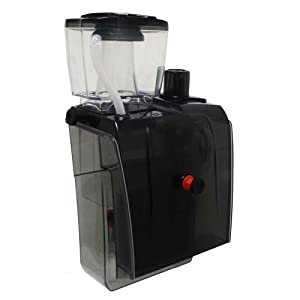
1. AquaMaxx HOB-1.5 — Best overall

AquaMaxx HOB-1.5 hang-on-back protein skimmer

The HOB-1.5 is a slim external skimmer driven by an upgraded Sicce-based AquaMaxx SHARK 1.0 pump. AquaMaxx lists the unit at 7.5 × 3.5 × 17 inches, with 11-watt power consumption. It fits rims up to 3/4 inch thick and needs about 4 inches of clearance above the collection cup for removal.

Most useful is the manufacturer’s split rating: up to 75 gallons with a light bioload or 40 gallons with a heavy bioload. That is more informative than a single maximum-volume claim. A heavily stocked reef, frequent feeding and nutrient-sensitive corals all justify sizing conservatively.

Advantages: narrow body, realistic bioload guidance, replaceable supported pump and responsive cup adjustment.

Limitations: premium price, substantial height and mandatory rear/upper clearance. As with any external skimmer, careful assembly and leak checks are essential.

Check price on Amazon

See manufacturer specifications

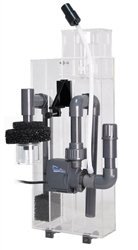
2. Reef Octopus Classic 100-HOB — Best external-pump option

Reef Octopus Classic 100-HOB protein skimmer

The Classic 100-HOB uses an Aquatrance AQ-1000S pinwheel pump and an acrylic skimmer body. Reef Octopus lists 8 to 9 watts depending on mains frequency, about 92 GPH maximum water flow and a broad 13- to 105-gallon tank-volume range.

That upper number should not be treated as a promise for every 105-gallon reef. Actual performance depends on bioload, feeding, air draw, salinity, tuning and maintenance. For a heavily stocked aquarium, leave a generous margin rather than selecting solely by the largest number on the box.

Advantages: current manufacturer documentation, efficient purpose-built pump, external HOB format and accessible replacement information.

Limitations: larger and more visually prominent than nano units; installation still places a wet pump section in the aquarium. Measure the complete footprint before ordering.

Check price on Amazon

See manufacturer specifications

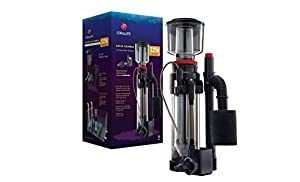
3. Coralife Super Skimmer 65 — Best flexible installation

Coralife Super Skimmer 65 with pump

Coralife’s Super Skimmer can be mounted on the aquarium or used in a sump, which makes it useful if the system may later be upgraded. The current Coralife catalogue lists 65-, 125- and 220-gallon models; this review and Amazon link refer specifically to the 65-gallon version.

The design uses a needle-wheel system, wide collection-cup neck and large air intake. The included pump and bubble diffuser occupy visible space when used as a HOB, so measure inside and behind the aquarium. Treat the 65-gallon label as a nominal model designation and size down for a demanding reef.

Advantages: two mounting options and an established product line.

Limitations: more equipment is visible inside the display than with a fully external body; water level, diffuser position and adjustment affect microbubbles and consistency.

Check price on Amazon

4. Bubble Magus QQ1 — Best for nano tanks

Bubble Magus QQ1 nano HOB protein skimmer

The QQ1 is the compact option in this comparison. Its small body is easier to accommodate on a nano marine aquarium, but small tanks change quickly and leave less room for tuning errors. Confirm the seller’s current dimensions and rating against your rim, lid and water level before ordering.

Advantages: compact HOB format and a lower-capacity choice for systems where larger skimmers will not fit.

Limitations: less headroom for heavy feeding or future stocking, and nano tanks can make fluctuating water levels more obvious. An automatic top-off can improve consistency.

Check price on Amazon

How to choose a HOB protein skimmer

Size for bioload, not just water volume

Manufacturers do not all calculate capacity the same way. A lightly stocked fish-only tank produces a different organic load from a crowded reef fed several times a day. Use the heavy-bioload rating when supplied, or choose below the advertised maximum. Oversizing excessively can also make a skimmer cycle between producing foam and doing very little, so bigger is not automatically better.

Measure the complete installation

Check body height, rear clearance, rim thickness, lid cut-outs and the space needed to lift the cup straight up. Allow room for hoses, the power cord and maintenance access. Make sure the mounting surface is sound and level; a HOB unit full of water is heavier than its dry specification suggests.

Consider water-level stability

Protein skimmers respond to water depth and salinity. Evaporation changes both in a small aquarium. Keep the water level stable, ideally with an automatic top-off, and tune the unit only after salinity and water height are correct.

Noise and microbubbles

Air intake, vibration and splashing all create noise. A silencer helps, but a clean venturi, correctly seated pump and level installation matter too. New skimmers may release microbubbles during break-in. Check assembly, water depth and outlet sponges rather than assuming weeks of bubbles are always normal.

Setup and tuning

  1. Rinse the skimmer components with fresh water. Do not use soap or household cleaners.
  2. Follow the model-specific manual, fit every O-ring and hose correctly, and confirm that the aquarium rim is within the stated limit.
  3. Position a drip loop below the electrical outlet and use a protected aquarium circuit. Keep plugs and connections dry.
  4. Start with the collection cup relatively high so the skimmer produces drier foam and is less likely to overflow.
  5. Watch the system closely after startup, feeding, additives, water changes or placing hands in the tank. These can temporarily collapse or increase foam.
  6. Adjust in small steps and allow time between changes. Darker, drier skimmate usually means a higher cup; paler, wetter skimmate means a lower cup.

A new skimmer often needs a break-in period while manufacturing residues and surface films clear, but there is no universal three-week waiting rule. If it continually overflows, unplug it, check water depth and assembly, clean the cup and air intake, and review the manual.

Maintenance and safety

Empty and rinse the collection cup before waste reaches the air path or drain fitting. Wipe the cup neck regularly because buildup reduces foam rise. Inspect the air line and venturi for salt creep, and clean the pump and impeller on the manufacturer’s schedule.

HOB skimmers carry water outside the aquarium, so leaks deserve immediate attention. Check O-rings, unions, brackets and hoses after every service. Never run a damaged cord or pump. Unplug equipment before putting hands in the water, and arrange cords with drip loops.

A skimmer removes some dissolved organics, but it does not remove every pollutant and cannot replace testing. Continue regular water changes and monitor salinity, temperature, ammonia, nitrate, phosphate and alkalinity as appropriate for the system.

Frequently asked questions

Does every saltwater aquarium need a protein skimmer?

No. Some lightly stocked nano tanks succeed with careful feeding, biological filtration and frequent water changes. A skimmer becomes more valuable as bioload and feeding increase, and it can improve gas exchange and provide a useful margin for reef systems.

Can a protein skimmer be too large?

Yes. A greatly oversized unit may struggle to maintain a stable foam head when there are not enough organics, leading to inconsistent operation. Choose for the real bioload and follow the manufacturer’s light- or heavy-load guidance when available.

Why did my skimmer suddenly overflow?

Common triggers include a changed water level, additives, epoxy, conditioners, oily foods, a blocked air intake or incorrect cup setting. Switch the unit off if overflow threatens the floor or aquarium, identify the cause and restart with the cup raised.

Should I run a protein skimmer all day?

Continuous operation is common and helps maintain aeration. Some aquarists schedule it around feeding or supplements, but frequent on-off cycling can reduce consistency. Follow livestock needs and the instructions for any medication or additive that specifically requires the skimmer to be paused.

Our verdict

The AquaMaxx HOB-1.5 is our best overall recommendation because its current documentation gives clear dimensions, rim clearance and separate light- and heavy-bioload ratings. The Reef Octopus Classic 100-HOB is a strong alternative for a larger external-pump format, while the Coralife Super Skimmer 65 provides flexible mounting. Measure carefully and choose conservatively: fit, maintenance access and actual bioload matter more than the largest advertised gallon number.

4 Best Aquarium Chillers: Sizing, Flow and Cooling Compared

4 Best Aquarium Chillers: Sizing, Flow and Cooling Compared

An aquarium chiller is a specialist cooling system for tanks that must stay below room temperature or cannot shed heat from pumps, lights, and warm weather. The right unit is not chosen by tank volume alone: the temperature drop, room temperature, equipment heat, actual water volume, flow rate, ventilation, and plumbing head all affect performance.

Quick answer: The JBJ Mini Arctica 1/15 HP is our compact pick for modest nano-system loads, the Active Aqua 1/10 HP is a practical value option, the JBJ Arctica 1/10 HP suits buyers prioritising an established aquarium-focused line, and the TECO TK-500 is the premium choice for larger or demanding systems.

Aquarium requiring stable temperature control

Stable temperature matters more than chasing the lowest possible number. Size the chiller for the real heat load and intended temperature drop.

Best Aquarium Chillers at a Glance

Chiller Best for Compressor Published flow guidance
JBJ Mini Arctica 1/15 HP Compact aquarium systems 1/15 HP Confirm current model manual
Active Aqua 1/10 HP Value and flexible use 1/10 HP Match the current AACH10HP manual
JBJ Arctica 1/10 HP Established aquarium-focused option 1/10 HP JBJ lists 240–960 GPH for current DBA-075
TECO TK-500 Premium medium systems 1/6 HP TECO lists 106–211 GPH for the US model

Published maximum tank sizes assume specific ambient temperatures and heat loads. Treat them as comparison points, not guarantees.

How We Chose

We prioritised current manufacturer documentation, titanium heat exchangers, stated flow ranges, established support, plumbing information, and models with a defined aquarium use case. We removed obsolete and generic marketplace chillers whose capacity claims could not be matched to reliable documentation.

We did not rank by retailer star scores or claim that one horsepower rating always suits one tank volume. A properly sized 1/10 HP unit can outperform a larger but poorly ventilated or incorrectly plumbed chiller.

Best Aquarium Chiller Reviews

1. JBJ Mini Arctica 1/15 HP — Best Compact Compressor Chiller

The Mini Arctica is designed for smaller aquarium systems that need compressor-based cooling without the footprint of a larger unit. It is a better fit for meaningful temperature control than tiny fan or thermoelectric devices, but it still needs to be sized against the expected room temperature and pull-down requirement.

JBJ’s current material positions the 1/15 HP model for nano applications. Before ordering, confirm the exact model number, fittings, voltage, recommended flow, and cooling chart because retailer pages often combine several Arctica sizes.

  • Pros: compact established aquarium model; titanium heat exchange; digital control.
  • Consider: limited reserve for hot rooms or large temperature drops; external circulation and hoses required.

Check the JBJ Mini Arctica on Amazon

Check current JBJ Arctica specifications.

2. Active Aqua 1/10 HP — Best Value Compressor Option

The Active Aqua AACH10HP is a 1/10 HP compressor chiller with a titanium evaporator and digital control. It is marketed across aquariums and hydroponics, so aquarium owners should pay particular attention to compatible fittings, saltwater suitability, pump selection, and the current manual rather than relying on a marketplace tank-volume headline.

This model can make sense when price and availability matter, provided the calculated heat load sits comfortably inside its capacity. Leave clear space around the intake and exhaust, and route discharged heat away from the aquarium cabinet.

  • Pros: current widely sold model; titanium evaporator; accessible 1/10 HP format.
  • Consider: published capacity varies with conditions; verify the included fittings and required flow.

Check Active Aqua 1/10 HP on Amazon

3. JBJ Arctica 1/10 HP — Best Established Aquarium-Focused Choice

JBJ’s current DBA-075 Arctica uses a titanium heat exchanger and lists a 240–960 GPH flow range. The wide range gives plumbing flexibility, but the pump must still deliver the required flow after hose length, elbows, vertical lift, filters, and other restrictions are counted.

The Arctica line is aimed directly at aquariums and includes temperature control and an anti-freezing system. It is a sensible shortlist option for reef tanks and temperature-sensitive freshwater systems where manufacturer documentation and aquarium-specific support are priorities.

  • Pros: aquarium-specific design; documented titanium exchanger and flow range; multiple adapters.
  • Consider: higher purchase price; large cabinet footprint; needs substantial airflow around the unit.

Check the JBJ Arctica 1/10 HP on Amazon

Read JBJ’s current aquarium-series specifications.

4. TECO TK-500 — Best Premium Medium-System Chiller

The TECO TK-500 is a 1/6 HP premium chiller with a titanium exchanger. TECO’s US specifications list a 106–211 GPH flow range, 225-watt power consumption, and use for standard systems up to 120 gallons under stated conditions. The manufacturer also publishes a more meaningful cooling example: in an 86°F room with a defined heat load, a 40-gallon system can be pulled down to 77°F.

That performance context is useful because it shows why “up to” capacity is not universal. The TK-500 is best considered where stable control, service information, and efficiency justify the premium cost. Confirm whether optional Wi-Fi or heating hardware is included rather than assumed.

  • Pros: detailed performance data; titanium exchanger; relatively low documented flow range; current support.
  • Consider: premium price; heavy unit; regional voltage and accessories must be checked.

Check the TECO TK-500 on Amazon

Read TECO’s current TK-500 specifications.

How to Size an Aquarium Chiller

1. Measure the real system volume

Subtract displacement from rock, substrate, and equipment, then add sump or external reservoir volume. Advertised aquarium size is only a starting point.

2. Define the maximum temperature drop

Record the warmest realistic room temperature and the highest uncooled water temperature. Compare that with the target. Holding a tank 2°F below ambient is far easier than maintaining an axolotl aquarium 15°F below a hot room.

3. Add the equipment heat load

Submersible pumps, ultraviolet units, lighting, and enclosed cabinets add heat. A pump’s electrical wattage is not a perfect cooling-load calculation, but it helps identify systems needing extra reserve.

4. Use the manufacturer’s performance chart

Horsepower and “up to gallons” are inadequate on their own. Find a chart or calculator that includes room temperature, desired water temperature, and system load. If conditions fall near the limit, choose the next size or reduce the heat load.

5. Check actual operating flow

A pump’s box rating is measured with little or no resistance. Hose length, height, valves, bends, filters, and the chiller reduce actual flow. The installed flow must remain inside the chiller manufacturer’s range.

Installation and Safety

  • Place the chiller upright on a stable surface with the manufacturer’s required intake and exhaust clearance.
  • Never enclose it in an unventilated cabinet; the unit moves aquarium heat into the room.
  • Use the specified hose diameter and secure every connection with suitable clamps.
  • Position plumbing so a leak or siphon cannot drain the aquarium.
  • Create drip loops and use a correctly installed GFCI/RCD-protected outlet.
  • Do not use extension cords unless the manufacturer expressly permits the cord and rating.
  • Keep the temperature probe and return flow where they represent the whole system, not a locally cold pocket.
Important: A chiller does not replace oxygenation. Warm water holds less oxygen, and temperature-sensitive animals may already be stressed. Maintain surface movement and suitable filtration while cooling gradually.

Compressor Chiller vs Fan or Thermoelectric Cooler

Fans cool by evaporation and can be effective for a small temperature reduction in dry air, but they increase top-off demand and may do little in humid conditions. Thermoelectric units suit very small heat loads and modest pull-downs. Compressor chillers cost more and release more heat into the room, but they are the practical choice for larger systems, hot climates, or substantial temperature differences.

Never add ice made from untreated water directly to a livestock tank. It can cause rapid local temperature changes, introduce contaminants, and create unstable daily swings.

Frequently Asked Questions

Do freshwater aquariums need a chiller?

Most ordinary tropical tanks do not. A chiller is useful when the room consistently exceeds the species’ safe range, equipment adds excessive heat, or cold-water animals require temperatures that fans cannot maintain.

Can a chiller be too large?

Yes. Extreme oversizing can cause short cycling, temperature swings, higher cost, and poor efficiency. Choose useful reserve capacity without ignoring the manufacturer’s minimum system and flow guidance.

Can I run a chiller from a canister filter?

Only if the actual flow remains within both manufacturers’ requirements and the added restriction does not compromise filtration. A dedicated pump often makes flow easier to measure and adjust.

How often should a chiller be cleaned?

Follow the manual. Keep air filters and condenser surfaces free of dust, inspect hoses and clamps, and clean the water path using only manufacturer-approved methods. Disconnect power before maintenance.

Our Verdict

For compact systems, start with the JBJ Mini Arctica 1/15 HP and verify its cooling chart. The Active Aqua 1/10 HP offers a practical value route, while the JBJ Arctica 1/10 HP is the stronger aquarium-focused shortlist choice. The TECO TK-500 stands out when detailed performance data, efficiency, and premium support matter. Size any of them for the hottest realistic day—not the average room temperature.

Affiliate disclosure: As an Amazon Associate, Aquarium Hunter earns from qualifying purchases. Availability, specifications, and model revisions can change; confirm the exact model, voltage, fittings, and manual before ordering.

5 Best Aquarium Wavemakers for Reef and Freshwater Tanks

5 Best Aquarium Wavemakers for Reef and Freshwater Tanks

A good aquarium wavemaker does more than make the surface ripple. It prevents low-flow pockets, keeps oxygen moving through the tank and gives corals a changing current instead of one harsh jet. The best choice depends on the tank’s dimensions, livestock and the type of flow you need—not simply the largest gallons-per-hour number.

Our top pick: the EcoTech Marine VorTech MP10 QuietDrive offers broad, highly adjustable flow with the motor outside the aquarium. For smaller tanks, the hygger Mini is a compact, affordable option.

Aquarium wavemaker creating circulation in a reef tank

Best Aquarium Wavemakers: Quick Comparison

Wavemaker Best for Control Flow style
EcoTech VorTech MP10 QuietDrive Premium reef systems App and onboard controller Broad, programmable
AquaIllumination Nero 3 Nano and mid-size reefs App and button Wide, gentle
Tunze Turbelle Nanostream 6040 Flexible positioning Included controller Directional wide flow
IceCap Gyre Long tanks and full-width circulation Controller Cross-flow gyre
hygger Mini 530 GPH Budget nano tanks Fixed output Compact circulation

As an Amazon Associate, Aquarium Hunter earns from qualifying purchases. Prices and availability can change.

Our Aquarium Wavemaker Reviews

1. EcoTech Marine VorTech MP10 QuietDrive — Best Overall

The MP10’s distinctive design keeps the motor and electrical cable outside the aquarium. Only the compact wet side sits in the water, leaving a clean display and removing a submerged cord that could distract from a reef aquascape. It produces broad circulation rather than a narrow blast and includes multiple flow patterns for changing reef conditions.

Built-in Mobius control makes it easy to schedule output, coordinate compatible equipment and use feed modes. The trade-offs are price, a fixed direction perpendicular to the glass and the need to match the dry and wet sides carefully. Check the manufacturer’s glass-thickness limits before buying.

  • Pros: motor outside the tank; broad programmable flow; polished ecosystem.
  • Cons: premium price; direction is not freely aimable.

Check the EcoTech MP10 price on Amazon

Manufacturer specifications

2. AquaIllumination Nero 3 — Best Compact Smart Wavemaker

The Nero 3 is a small controllable pump designed to move a wide mass of water. AquaIllumination rates it up to 2,000 GPH and for aquariums from 5 to 60 gallons, but the correct setting still depends on tank length, rockwork and livestock. Its modes include random, pulse, constant, schedule and feed, controlled through the myAI or Mobius app or the onboard button.

A fish guard is included, which is valuable around small fish and mobile invertebrates. The mount allows limited directional adjustment and supports glass up to 0.5 inches according to the manufacturer. Start at low power in nano tanks and watch for stressed corals or shifting sand.

  • Pros: compact body; broad flow; strong scheduling and feed controls.
  • Cons: app setup adds complexity; powerful for very small tanks.

See current Nero 3 listings on Amazon

Manufacturer specifications

3. Tunze Turbelle Nanostream 6040 — Best for Directional Control

Tunze’s compact 6040 uses a wide-flow outlet that can be aimed in three dimensions. The current HUB edition is rated from about 53 to 1,190 GPH, uses 1.5 to 13 watts and is intended for aquariums from 5.3 to 132 gallons. Those broad tank recommendations reflect adjustable output, not a promise that one pump suits every aquascape.

The controller, quiet magnetic holder and Fish Care function make this a thoughtful choice where careful placement matters. Tunze specifies mounting on glass up to 15 mm. It is especially useful for directing flow behind rockwork or across a problem area without firing a narrow jet straight at coral tissue.

  • Pros: aimable wide flow; low-voltage pump; strong serviceability.
  • Cons: modest maximum output for large, high-energy reefs.

Check Tunze Nanostream options on Amazon

Manufacturer specifications

4. IceCap Gyre Flow Pump — Best for Long Aquariums

A gyre pump moves a horizontal sheet of water across a wide section of the aquarium. The current travels along the surface, down the opposite pane and back across the bottom, helping reduce dead spots in long tanks. This can work better than a conventional powerhead where rocks interrupt a narrow stream.

Gyres need careful placement. Too low or too powerful can move sand; too close to the surface may pull in air. Their long rotors also take more patience to disassemble and clean than a small propeller pump. Select the IceCap model by tank length and controller compatibility rather than assuming the largest version is best.

  • Pros: excellent full-width circulation; useful alternating patterns.
  • Cons: more involved cleaning; placement-sensitive.

Check the IceCap Gyre price on Amazon

5. hygger Mini 530 GPH — Best Budget Nano Pick

This compact magnetic powerhead is intended for small freshwater and saltwater aquariums. Its 530 GPH output is far gentler than many reef pumps, making it useful for modest surface movement and eliminating a quiet corner in a nano tank. It is a simple option without the scheduling features of the premium models above.

Fixed-output pumps require more care with positioning. Aim the flow along the longest dimension or toward a glass pane to diffuse it. If fish struggle to hold position, plants remain flattened or substrate moves, relocate the pump rather than assuming more circulation is always healthier.

  • Pros: affordable; compact; magnetic mount.
  • Cons: no advanced modes; limited for demanding coral tanks.

Check the hygger Mini price on Amazon

How to Choose the Right Wavemaker

Match the Flow Pattern to the Tank

Nominal GPH is only a starting point. A broad-flow pump can move a large volume gently, while a narrow powerhead may create a harsh high-speed jet. Long tanks often benefit from a gyre or pumps placed at opposite ends. Rock-heavy aquascapes may need two smaller pumps so water reaches behind structures.

Consider Livestock, Not Just Tank Volume

Many SPS corals appreciate strong, changing flow, while fleshy LPS corals and soft corals can be damaged by a continuous direct blast. Freshwater fish from fast rivers may enjoy current, but bettas and other slow-water species generally need calmer zones. Every aquarium should offer places where animals can leave the strongest flow.

Choose Useful Controls

Random and pulse modes create changing currents and reduce one-direction growth. Feed mode temporarily slows the pump without unplugging it. Schedules can reduce output overnight, but adequate oxygenation must continue. Two pumps running alternately often produce more complete circulation than one oversized pump.

Check Mounting and Animal Safety

Confirm the magnet supports your glass or acrylic thickness. Use the supplied guard where small fish, snails or anemones could reach the propeller. Keep pumps away from loose sand, unsecured rock and the intake of another device. Inspect cords and mounts during every cleaning.

Placement and Setup

  1. Install the pump with power disconnected and create a drip loop in every cable.
  2. Begin on the lowest practical setting.
  3. Aim flow across the tank or slightly toward the surface, not directly at a coral or fish’s resting place.
  4. Watch fine food or suspended particles to reveal dead spots.
  5. Adjust one variable at a time and observe livestock for at least a day.

A wavemaker supplements circulation; it does not replace filtration, a properly sized return pump or routine water changes. Use a GFCI/RCD-protected outlet where appropriate, keep controllers and power supplies dry, and disconnect power before putting your hands in the aquarium.

Cleaning and Maintenance

Calcium deposits, algae and snail shells reduce output and can make a quiet pump noisy. Disconnect the unit, remove the wet components and follow the manufacturer’s cleaning instructions. Never run a circulation pump dry. After reassembly, make sure guards, rotors and magnetic mounts are secure before restoring full power.

Frequently Asked Questions

How many wavemakers does an aquarium need?

Small, open aquariums may need only one. Long or heavily aquascaped tanks often circulate better with two lower-output pumps positioned to cover different zones.

Can a wavemaker be too powerful?

Yes. Blown substrate, corals that remain retracted and fish constantly fighting the current are warning signs. Reduce output, change direction or add calmer areas.

Where should a wavemaker be placed?

Upper side panels are a useful starting point because the pump can move water along the tank and agitate the surface. The final position should eliminate dead spots without pulling air or disturbing sand.

Final Verdict

The EcoTech Marine VorTech MP10 QuietDrive is our best overall choice for a polished reef setup. The Nero 3 suits aquarists who want compact app-controlled flow, the Tunze 6040 excels when precise aiming matters, the IceCap Gyre fits long tanks, and the hygger Mini is an accessible choice for gentle nano circulation.

5 Best Aquarium Sump Pumps: Return Flow Compared

5 Best Aquarium Sump Pumps: Return Flow Compared

Disclosure: Aquarium Hunter may earn a commission from qualifying Amazon purchases made through links on this page, at no extra cost to you.

The Jebao DCP-6500 is our best aquarium sump pump for systems that need adjustable DC return flow, while the Eheim Universal 600 is the better choice for a modest-flow setup that values a simple, established AC design. A return pump must be sized at the system’s total dynamic head—not by its zero-head maximum—and must never exceed what the overflow and drains can handle safely.

Best Aquarium Sump Pumps: Quick Comparison

Return pump Best for Control Amazon
Jebao DCP-6500 Best adjustable high-flow return DC controller Check on Amazon
Uniclife 1052 GPH DC Pump Best compact controllable option DC controller and feed mode Check on Amazon
Eheim Universal 600 Established lower-flow AC choice Fixed-speed AC Check on Amazon
Aqueon QuietFlow Utility 2300 Midrange submersible utility return Model-specific adjustment Check on Amazon
KEDSUM Inline/Submersible Pump Budget high-head utility option Selected model dependent Check on Amazon

Listings may contain multiple sizes. Confirm the selected model’s flow curve, maximum head, inlet and outlet sizes, voltage, wattage and suitability for submerged or external use.

Our Sump Return Pump Picks

1. Jebao DCP-6500 — Best Adjustable High-Flow Return

Jebao DCP-6500 controllable aquarium return pump

The DCP-6500 is a controllable sine-wave DC pump intended for return circulation. Its controller lets the aquarist tune flow without relying entirely on a valve, which is useful when matching a return to the overflow or reducing nighttime noise. Its capacity is aimed at larger or higher-head systems rather than a small nano sump.

DC control does not remove the need for sizing. Use Jebao’s curve at your measured head, allow for plumbing friction and keep the selected setting comfortably below the drain system’s safe capacity. The controller and power supply must remain dry and ventilated.

Pros: adjustable output; feed function; soft-start DC operation; useful head capacity.
Cons: too large for many small sumps; controller adds components; maintenance and correct installation remain essential.

Check the Jebao DCP-6500 on Amazon

2. Uniclife 1052 GPH DC Return Pump — Best Compact Controller

Uniclife controllable DC aquarium sump return pump

The current Uniclife listing specifies 24-volt DC operation, a controller, feed mode and a maximum zero-head rating of 1052 GPH. It can run submerged or inline according to the listing, making it a flexible choice for a medium system when the actual head-adjusted flow fits.

The controller’s memory and feed mode are convenient, but the return must resume reliably after feeding and a power interruption. Test recovery before leaving the aquarium unattended, and make sure the inline configuration follows every priming and plumbing instruction.

Pros: adjustable; feed mode; compact; submerged or inline listing.
Cons: delivered flow falls with head; controller and power supply need dry placement; verify restart after outages.

Check the Uniclife DC Pump on Amazon

3. Eheim Universal 600 — Best Established AC Design

Eheim Universal 600 aquarium sump pump

The Eheim Universal 600 is a long-established 120-volt AC aquarium pump for lower-flow applications. It lacks an electronic speed controller, but its simple format appeals to aquarists who prioritize a recognized design and do not need a high-output return.

The “600” is not 600 GPH. Check the current US specifications and curve. Use a correctly installed outlet valve only if Eheim allows it; never restrict the intake. Its physical size and fittings must suit the return chamber.

Pros: established aquarium model; straightforward AC design; suitable for modest returns.
Cons: no DC control or feed mode; model number can be misread; less efficient when substantial throttling is required.

Check the Eheim Universal 600 on Amazon

4. Aqueon QuietFlow Utility 2300 — Midrange Submersible Choice

Aqueon QuietFlow submersible utility pump 2300

Aqueon’s QuietFlow Utility Pump 2300 is a conventional submersible option from a familiar aquarium brand. It can serve a moderate sump return when the model’s head-adjusted flow and fittings match the installation.

Do not choose by the “2300” designation alone; confirm whether the specification is expressed in liters per hour, gallons per hour or a series number. Compare the live curve with the return height and plumbing.

Pros: aquarium-focused brand; submersible utility format; practical midrange candidate.
Cons: model designation can confuse; no external DC controller; must remain accessible for cleaning.

Check the Aqueon QuietFlow 2300 on Amazon

5. KEDSUM Inline/Submersible Pump — Budget High-Head Option

KEDSUM inline and submersible aquarium return pump

The KEDSUM listing covers an inline/submersible pump family with multiple nozzles and relatively high listed lift. It can be a budget return or utility option where flexible fittings matter.

The current page title can show different GPH variants simultaneously, so verify the selected version rather than copying the headline. A utility pump may also lack the refined control of a dedicated DC return. Size and test it in the completed plumbing.

Pros: multiple fittings; inline or submerged listing; useful lift; competitive price.
Cons: variation selection needs care; fixed output on some versions; less convenient control than a DC return pump.

Check the KEDSUM Pump on Amazon

How to Size a Sump Return Pump

Measure vertical head

Measure from the operating water level in the return chamber to the highest return outlet. This vertical rise is only the starting point.

Add plumbing resistance

Long or narrow pipe, elbows, tees, valves, reactors and return nozzles add friction. Use the manufacturer’s calculator or curve and allow a margin for biofilm and gradual restriction.

Respect the overflow

The delivered return flow must remain below the overflow and drain system’s reliably tested capacity. More turnover is not automatically better. In-tank circulation pumps can provide display flow without forcing excessive water through a noisy sump.

Plan the return chamber

The pump must remain submerged at the lowest normal level, with space for removal and intake cleaning. An ATO can stabilize the level but should not conceal a leak or undersized chamber.

Sump Pump Safety

  • Use drip loops and GFCI protection where available; keep DC controllers and power supplies dry.
  • Never lift a pump by its cord or use equipment with damaged insulation.
  • Secure plumbing and use unions so the pump can be removed safely.
  • Fit an intake guard where animals or debris could enter.
  • Do not run a wet pump dry unless the manufacturer explicitly permits it.
  • Unplug equipment before putting hands in the sump.
  • Simulate a power outage: the sump must hold every gallon that drains back without overflowing.
  • Prevent a return-line siphon with correct outlet placement and tested plumbing; do not rely on a dirty check valve alone.

Maintenance and Backup Planning

Clean the intake, volute and impeller on a regular schedule using the maker’s instructions. Declining flow, rattling or difficult restarts often indicate deposits or debris. Keep critical spare fittings and, for valuable systems, a compatible backup pump.

A return pump supports circulation, heating distribution and sump filtration but does not guarantee oxygen during an outage. Plan battery or generator-backed aeration appropriate to the livestock. Test every pump after maintenance and power interruption.

Frequently Asked Questions

How many times per hour should water pass through a sump?

There is no universal number. The safe target depends on overflow capacity, filtration design, noise, head loss and livestock. Many systems use moderate sump turnover and separate in-tank circulation.

Is DC better than AC?

DC pumps offer convenient speed control and feed modes. AC pumps are often simpler. Reliability depends on the particular product, installation and maintenance rather than the motor category alone.

Can a return pump be too powerful?

Yes. Excess flow can overwhelm drains, create bubbles and noise, empty the return chamber or stress livestock. Select at operating head and throttle only by an approved method.

Do I need a check valve?

A check valve can reduce drain-back but may fail when fouled. Design the sump to contain the full backflow volume even if the valve does not seal, and keep return outlets positioned to break the siphon safely.

Verdict

The Jebao DCP-6500 is the strongest all-around choice here for an adjustable higher-flow return. The Uniclife 1052 GPH model suits a smaller controllable installation, while the Eheim Universal 600 is a straightforward lower-flow AC alternative. Final selection must be based on the flow curve at total dynamic head and a tested overflow—not the maximum number in a product title.

5 Best Aquarium Auto Top-Off Systems for Safer Refills

5 Best Aquarium Auto Top-Off Systems for Safer Refills

Disclosure: Aquarium Hunter may earn a commission from qualifying Amazon purchases made through links on this page, at no extra cost to you.

The Tunze Osmolator 3155 is our best auto top-off system for a reef tank because it combines an optical operating sensor with an independent backup float, controller safeguards and a matched pump. For a compact all-in-one unit, the XP Aqua Duetto is easier to fit into a small sump or rear chamber.

An automatic top-off (ATO) replaces freshwater lost through evaporation. In a saltwater aquarium this helps limit salinity swings; in freshwater it helps maintain water level and equipment operation. An ATO does not perform water changes, remove nitrate or replace evaporated salt. Top off a marine aquarium with appropriate fresh water—normally purified RO/DI water—not mixed saltwater.

Best Aquarium Auto Top-Off Systems: Quick Comparison

ATO Best for Primary sensing Amazon
Tunze Osmolator 3155 Best overall reef ATO Optical plus backup float Check on Amazon
Tunze Nano Osmolator 3152 Simple nano and small tanks Float switch Check on Amazon
XP Aqua Duetto Compact dual-sensor system Dual optical sensors Check on Amazon
IceCap Dual Optical ATO Optical backup in a compact kit Dual optical sensors Check on Amazon
AutoAqua Smart ATO Minimal sensor footprint Optical sensor Check on Amazon

Before ordering: confirm the current package contents. Some ATO listings include a pump and tubing; controller-only products require a compatible pump. Check maximum lift, sensor mounting thickness and reservoir space.

Our Auto Top-Off Picks

1. Tunze Osmolator 3155 — Best Overall

Tunze Osmolator 3155 aquarium auto top-off system

The Tunze 3155 remains the most complete safety-oriented option in this group. Its optical sensor controls the normal water level, while a separate float switch provides high-level backup. The controller also includes time-based protection and an audible alarm, and the package is sold with a low-voltage metering pump.

That redundancy makes sense for a reef system where a large freshwater addition could sharply lower salinity. It costs more and needs room for two sensor components, but the design is easier to justify on a valuable display than a single unprotected switch.

Pros: independent backup sensor; alarm and controller protection; pump included; established model.
Cons: premium price; more components and cables; sensors still require cleaning and correct placement.

Check the Tunze Osmolator 3155 on Amazon

2. Tunze Nano Osmolator 3152 — Best Simple Nano ATO

Tunze Nano Osmolator 3152 auto top-off system

The 3152 is Tunze’s simpler unit for aquariums under the listing’s stated 55-gallon limit. It uses a float switch and time-based safety shutoff rather than the 3155’s primary optical sensor plus independent high-level float. The included pump makes it a straightforward kit for a small aquarium or sump.

A float can be obstructed by snails, algae or a cable. Use the supplied guard and maintain it. The reservoir should hold only a limited, sensible volume so one failure cannot drastically change salinity or overflow the system.

Pros: complete kit; established brand; simpler and less expensive than the 3155; compact.
Cons: float-based sensing; less redundancy; maximum runtime must be configured for the application.

Check the Tunze Nano Osmolator 3152 on Amazon

3. XP Aqua Duetto — Best Compact Dual-Sensor System

XP Aqua Duetto dual-sensor aquarium ATO

The Duetto places two optical sensors in a compact assembly: one for the operating level and another for high-water protection. It is useful where a large float assembly will not fit, such as an all-in-one aquarium’s rear filtration chamber.

Optical sensors can be affected by algae, salt creep, bubbles or deposits. Mount the unit in a calm chamber whose level actually changes with evaporation, keep the sensor faces clean and test both normal filling and the alarm or shutoff behavior.

Pros: compact; dual optical sensing; pump included in the complete listing; suitable for narrow chambers.
Cons: both sensors share one small assembly; optical surfaces need cleaning; very small chambers can cycle frequently.

Check the XP Aqua Duetto on Amazon

4. IceCap Dual Optical ATO — Compact Optical Alternative

IceCap dual optical aquarium auto top-off controller

IceCap’s system also uses dual optical sensing and targets aquarists who want a small magnetic mount. The second sensor adds a high-water check that a basic single-sensor controller lacks.

Confirm whether the currently selected package includes every pump, tube and holder you need. Do not mix power supplies or pumps unless IceCap specifically approves them. As with every optical ATO, schedule sensor inspection rather than waiting for a failure.

Pros: dual optical design; compact magnetic mounting; clear high-level backup concept.
Cons: package contents can vary; sensor fouling remains possible; less physical separation than two independently mounted devices.

Check the IceCap Dual Optical ATO on Amazon

5. AutoAqua Smart ATO — Best Minimal Footprint

AutoAqua Smart optical auto top-off system

The original AutoAqua Smart ATO remains available as a very compact optical system. It is easy to fit where bulky float brackets are impractical and includes automatic shutoff logic intended to limit abnormal filling.

Its minimal sensor arrangement does not provide the visibly separated optical-and-float redundancy of the Tunze 3155. Use a limited reservoir, secure the outlet above the destination waterline and test the protection features regularly.

Pros: tiny sensor; simple installation; pump included in the standard system; established compact design.
Cons: less sensor separation; optical face must stay clean; careful outlet placement is essential.

Check the AutoAqua Smart ATO on Amazon

How to Choose an ATO

Sensor design and redundancy

Optical sensors are compact and have no moving float, but deposits or bubbles can interfere. Floats are simple but can jam. The safest systems combine independent high-level protection with a maximum pump runtime or alarm. No sensor is maintenance-free.

Pump lift and reservoir distance

Measure the vertical distance from the lowest reservoir level to the outlet. The pump must deliver water at that lift. Keep tubing short and secure, and never assume a pump’s zero-head flow applies to the installed system.

Reservoir capacity

Choose enough volume to cover normal evaporation between refills, but not so much that a complete discharge creates a catastrophe. Mark the reservoir, monitor daily use and investigate any sudden increase instead of repeatedly refilling it.

Safe ATO Installation

  1. Mount the operating sensor in the chamber where evaporation changes water level. In a sump, this is usually the return chamber.
  2. Position any backup sensor at a sensible high-water point.
  3. Keep the top-off outlet above the maximum waterline and separated from the reservoir water to prevent a siphon in either direction.
  4. Secure tubing so it cannot fall out and pump water onto the floor.
  5. Use drip loops and GFCI protection where available; keep controllers and connections dry.
  6. Fill the reservoir with the correct fresh water. Never use saltwater to replace ordinary evaporation.
  7. Test the normal sensor, backup shutoff, alarm and maximum runtime before leaving the system unattended.

Maintenance and Failure Prevention

Inspect the ATO whenever the reservoir is refilled. Clean optical faces and float guards using the manufacturer’s method, remove salt creep, confirm the pump intake is submerged and check tubing for kinks. Manually lift or cover sensors only as directed during a test.

Compare daily top-off consumption with the aquarium’s normal pattern. A sudden drop can mean a failed pump or blocked tube; a sudden rise can indicate a leak, unusual evaporation or sensor problem. Verify salinity with a calibrated refractometer or other reliable instrument in marine systems.

Frequently Asked Questions

Does an ATO replace water changes?

No. Top-off replaces evaporated water but leaves dissolved waste and minerals behind. Regular water changes and maintenance remain necessary.

Should saltwater tanks be topped off with saltwater?

No under normal evaporation. Salt does not evaporate, so replacing evaporation with saltwater raises salinity. Use appropriately purified fresh water unless you are deliberately correcting salinity by a measured plan.

Can an ATO overflow an aquarium?

Yes, if a sensor, tubing arrangement, pump or installation fails. Independent backup sensing, runtime limits, a restricted reservoir and siphon-safe outlet greatly reduce the consequence.

Where should the sensor go in an all-in-one tank?

Use the rear chamber where water level falls with evaporation, usually the return-pump chamber—not a display section whose level remains constant. Follow the aquarium and ATO instructions.

Verdict

The Tunze Osmolator 3155 is the best choice here when independent backup protection matters most. The XP Aqua Duetto is easier to fit into a narrow rear chamber, while the Tunze 3152 is a straightforward small-system option. Whichever ATO you choose, safety depends as much on a limited reservoir, a siphon-proof outlet and regular testing as it does on the controller.