How Long Do Cory Catfish Eggs Take to Hatch?

How Long Does It Take for Cory Catfish Eggs to hatch

Cory catfish eggs usually hatch in about three to six days, but there is no single timetable for every species. Temperature, oxygen, water quality, genetics, and egg age all affect development. Research on peppered Corydoras reported hatching at roughly 5.4 days at 23°C, while observations across several Corydoras species found about 85 to 100 hours under their respective conditions.

Keep conditions stable and watch the embryos rather than raising the temperature simply to make them hatch faster. This guide explains how to recognize viable eggs, limit fungus and predation, and care for fry.

Adult Corydoras catfish prepared for responsible breeding

Cory Egg Hatching Time at a Glance

  • Typical range: about 3–6 days for commonly kept Corydoras.
  • Species matter: egg size and development rate vary.
  • Temperature matters: warmer water generally speeds development, but overheating or sudden changes can kill embryos.
  • After hatching: larvae use their yolk sacs before they need food.

Do not treat 82°F as a minimum. That is too warm for some species, including many peppered cory populations. Match the species-specific range and keep it steady.

What Healthy Cory Eggs Look Like

Corydoras eggs attached to an aquarium surface

Fresh eggs are adhesive and may be placed on glass, plants, spawning mops, filter pipes, or other smooth surfaces. Appearance differs by species, but viable eggs commonly remain translucent, cream, tan, or gray and gradually show a darker embryo. Near hatching, you may see movement.

An opaque white egg with cotton-like growth is often infertile or dead. Color is not a perfect test during the first day, so observe changes over time. Remove clearly fungused eggs with clean forceps or a pipette when this can be done without disturbing healthy eggs.

Why Hatching Times Vary

Species

Cory catfish is a broad hobby name. Bronze, panda, peppered, Sterbai, pygmy, and other corys come from different habitats and do not share one ideal temperature or incubation period. Identify the species before planning a setup.

Temperature

Embryos usually develop faster in warmer water and more slowly in cooler water, within the safe range for that species. Faster is not automatically better. Excess heat lowers dissolved oxygen, while abrupt changes can reduce survival.

Oxygen and water quality

Eggs need clean, oxygenated water. A gentle air stone or mature sponge filter can circulate water without blasting eggs or larvae. Ammonia and nitrite should remain at zero. Match the parents’ established pH, hardness, and temperature when moving eggs.

Should You Move the Eggs?

Cory catfish eggs being monitored in a prepared aquarium

Adult corys and tank mates may eat eggs, so survival is often better in a separate prepared hatching container. Another option is removing the adults if the breeding aquarium is already cycled and safe for fry.

If moving eggs, wait until the coating has firmed, then roll each egg gently from the glass with a clean fingertip or smooth card. Transfer it underwater into closely matched water. Do not scrape with a sharp blade, squeeze the egg, or let it dry.

Safe Incubation Setup

  1. Use a clean, cycled aquarium or carefully maintained hatching container.
  2. Match the parents’ established temperature and chemistry.
  3. Add gentle aeration near, not directly against, the eggs.
  4. Cover filter intakes with fine sponge.
  5. Check twice daily and remove only clearly dead or fungused eggs.
  6. Keep lighting subdued and avoid repeated handling.

Some breeders use methylene blue against fungus, but it is not a substitute for clean water and is not automatically necessary. It can damage biological filtration. Follow the exact label, never combine treatments casually, and seek aquatic veterinary or experienced species-breeder advice when unsure.

Signs Hatching Is Near

The embryo becomes more distinct and may twitch or rotate inside the shell. Siblings can hatch many hours apart. A larva may wriggle free and rest with a visible yolk sac. This is normal and does not mean it needs immediate feeding.

After the Eggs Hatch

Young Corydoras catfish developing after hatching

Wait for yolk absorption

New larvae initially obtain nutrition from their yolk sacs. Begin feeding when they are free-swimming and the sac is mostly absorbed. Feeding too early leaves food to decay and can cause ammonia.

Offer truly small food

Options depend on fry size and can include microworms, vinegar eels, finely powdered fry food, or newly hatched brine shrimp once they can swallow it. Offer tiny amounts several times daily and remove leftovers.

Protect water quality

Make small, frequent changes with conditioned, temperature-matched water. Use narrow airline tubing and siphon into a pale container so accidentally collected fry can be returned. Never replace all mature filter media at once.

Prepare grow-out space

The hatching container is temporary. Move growing fry gradually into a larger cycled aquarium with gentle filtration and enough floor area. Do not move four-week-old fry into a community tank by an arbitrary deadline; wait until they are strong, feeding reliably, and too large for tank mates to eat.

Responsible Corydoras Breeding

Breed only healthy, correctly identified adults and prepare grow-out space and homes before encouraging a spawn. Do not cull healthy fry because their markings are less desirable. Fish with serious defects or suffering require advice from an aquatic veterinarian about humane care. Never release unwanted fish into waterways.

Common Problems

  • Eggs turn white: they may be infertile or dead; confirm progression before removal.
  • Fungus spreads: improve gentle circulation, remove affected eggs, and review hygiene.
  • Eggs disappear: adults, snails, or other fish may have eaten them.
  • Embryos fail to hatch: unstable temperature, low oxygen, poor water quality, or genetic problems may be involved.
  • Fry die: common causes include an uncycled container, food that is too large, overfeeding, strong filtration, or sudden changes.

Frequently Asked Questions

Can Cory eggs take longer than six days?

Yes. Cooler water, species differences, and development conditions can extend incubation. Check for a developing embryo and stable water quality instead of discarding every egg on day six.

Do the eggs need an air stone?

They need good oxygen and gentle water movement. An air stone is one simple option, but it should not tumble the eggs violently.

Do Cory catfish guard their eggs?

Most commonly kept corys do not provide parental care after deposition and may eat eggs. Protect the spawn in a prepared setup.

How many eggs do corys lay?

The number varies enormously by species, age, conditioning, and spawn. Some females deposit small batches during repeated T-position embraces and place many eggs across the aquarium.

Final Answer

Most commonly kept Corydoras eggs hatch in roughly three to six days, with several documented species hatching at about four to five days under moderate temperatures. Identify the species, maintain its safe range, provide clean oxygenated water, and let development determine the schedule.

Continue with our guides to Cory catfish care, cycling an aquarium, and gentle aeration.

Research Sources

15 Unusual Freshwater Aquarium Fish: Care Guide

Exotic and Cool Freshwater Aquarium Fish

Unusual freshwater fish can make a striking aquarium, but “exotic” does not mean easy. Some species below suit a well-planned community tank, while others require specialist water, large groups, territorial management or an aquarium measured in hundreds of gallons.

Before choosing: confirm the fish’s adult size, social needs, water chemistry, diet and legal status—not just its juvenile appearance. Cycle the aquarium first, use a secure lid where required, and never release aquarium animals into the wild.

Selection of unusual freshwater aquarium fish

15 unusual freshwater aquarium fish compared

Fish Key need Experience level
Betta Warm, filtered tank; males normally housed separately Beginner with research
Silver arowana Enormous covered aquarium and specialist planning Expert
Neon tetra Stable mature tank and a proper school Beginner–intermediate
Discus Warm, exceptionally stable water and group management Advanced
Blue lyretail killifish Secure lid and species-aware stocking Intermediate
Zebra pleco Warm, oxygen-rich water and caves Advanced
Dwarf gourami Warm planted tank and careful health selection Intermediate
Elephantnose fish Large dim tank, soft substrate and specialised feeding Expert
Redtail sharkminnow Territory and robust compatible tank mates Intermediate
African rift-lake cichlids Species-specific chemistry and aggression plan Intermediate–advanced
Three-spot gourami Room, cover and temperament monitoring Intermediate
Jewelfish Dedicated territorial setup Advanced
Indian glassfish Group, stable water and undyed specimens Intermediate
Boesemani rainbowfish Long tank and an active school Intermediate
Pearl gourami Long planted tank with gentle companions Intermediate

1. Betta

Betta splendens is familiar, but selectively bred forms remain among the most visually unusual aquarium fish. Adults reach about 6.5 cm (2.6 in). Keep a betta in a heated, filtered aquarium with gentle flow, a secure lid and access to the surface. Male bettas are territorial and should not be placed together. Tank-mate success varies by individual, so always have a separation plan.

2. Silver arowana

Silver arowana freshwater fish

The silver arowana, Osteoglossum bicirrhosum, can reach about 90 cm (35 in). It is a surface-feeding predator and powerful jumper. This is not a normal home-community fish: it needs an exceptionally large, wide aquarium with a strong covered top, heavy filtration and a long-term plan made before purchase. Check local ownership rules and buy only legally sourced fish.

3. Neon tetra

School of neon tetras in a freshwater aquarium

Neon tetras (Paracheirodon innesi) are small schooling fish, reaching roughly 2.5 cm standard length. Keep at least a proper group—preferably more than the bare minimum—in a mature, stable aquarium with peaceful tank mates. Their blue and red stripes look best against plants and darker surroundings. They are a poor match for large predators or boisterous fish.

4. Discus

Colorful discus fish in a freshwater aquarium

Discus are deep-bodied South American cichlids. FishBase records blue discus at 13.7 cm standard length and describes them as group fish outside breeding. They require warm, clean, stable water, a spacious aquarium and careful feeding. Their sensitivity to poor water quality and social stress makes them better for experienced keepers than first-time aquarists.

5. Blue lyretail killifish

Colorful blue lyretail killifish

Fundulopanchax gardneri reaches about 6.5 cm (2.6 in). Unlike annual killifish that survive dry seasons as eggs, this species is non-annual. It still needs a tight-fitting lid because killifish can jump. Use calm tank mates, cover from plants and a feeding plan that includes suitably sized foods.

6. Zebra pleco

Black-and-white zebra pleco on aquarium décor

The zebra pleco (Hypancistrus zebra) reaches around 7 cm (2.8 in) and comes from Brazil’s Xingu system. It needs warm, highly oxygenated, very clean water, strong circulation without unsafe suction, and multiple secure caves. It is not an all-purpose algae cleaner; provide a species-appropriate varied diet. Verify legal, captive-bred sourcing because wild populations are conservation-sensitive.

7. Dwarf gourami

Male dwarf gourami showing blue and red coloration

Dwarf gouramis (Trichogaster lalius) can reach roughly 9.5 cm (3.7 in). They are labyrinth fish that breathe atmospheric air as well as using their gills, so keep the surface accessible. A planted aquarium with gentle flow and visual barriers suits them. Males can be territorial, and poor-quality stock can have health problems; quarantine and careful source selection matter.

8. Elephantnose fish

Elephantnose fish with elongated lower jaw

Gnathonemus petersii can reach 35 cm (14 in). It navigates and communicates using weak electric fields and searches the bottom for worms and insects. Provide a large, dimly lit aquarium, soft substrate, hiding places and careful feeding after lights dim. It can be territorial toward its own kind and is easily outcompeted, making it an expert-level choice.

9. Redtail sharkminnow

Redtail sharkminnow with black body and red tail

The redtail sharkminnow (Epalzeorhynchos bicolor) reaches about 13 cm (5 in). Adults defend bottom territory and may bully similar-shaped fish, so keep one unless you have a genuinely specialist plan. A long aquarium with caves, wood and broken sight lines works better than a small open tank. Aquarium specimens are captive-bred; the wild species is critically endangered.

10. African rift-lake cichlids

Colorful African rift-lake cichlids

“African cichlid” covers many species with very different adult sizes, diets and social systems. Lake Malawi mbuna, peacocks and haps should not be treated as interchangeable, and Tanganyikan species have their own requirements. Identify the exact species before purchase, match water chemistry, provide appropriate rockwork or shells, and plan aggression and sex ratios rather than mixing fish by colour.

11. Three-spot gourami

Blue color form of a three-spot gourami

Blue, gold and opaline gouramis are colour forms of Trichopodus trichopterus. The species can reach 15 cm (6 in), larger than many store juveniles suggest. Provide a roomy, planted tank with surface access and visual barriers. Individuals vary from calm to assertive, so avoid timid or fin-nipping companions and watch for harassment.

12. Jewelfish

Red jewelfish cichlid with iridescent spots

The true jewelfish is now classified as Rubricatochromis bimaculatus and can reach about 12 cm in captivity. Its brilliant breeding colour comes with strong territorial behaviour. FishBase characterises it as aggressive and pair-forming. A dedicated, structured aquarium with a contingency for incompatible partners is safer than adding a pair to a peaceful mixed community.

13. Indian glassfish

Naturally transparent Indian glassfish

Indian glassfish (Parambassis ranga) naturally have translucent bodies and reach about 9.5 cm (3.7 in). Keep a group in stable water with peaceful companions. Avoid artificially dyed “painted” fish: the colour is not natural and the practice raises serious welfare concerns. These fish can occur in fresh or brackish habitats, so match the water to the source and avoid adding salt automatically.

14. Boesemani rainbowfish

School of colorful Boesemani rainbowfish

Melanotaenia boesemani is an active schooling species from Indonesia’s Ajamaru Lakes region. FishBase records males around 9 cm standard length and recommends groups of at least five; a larger balanced group is usually better. Provide a long covered tank, open swimming space, stable warm water and a varied diet. Choose captive-bred stock because the wild species is endangered.

15. Pearl gourami

Pearl gourami showing spotted pattern and dark body stripe

Pearl gouramis (Trichopodus leerii) grow to about 12 cm (4.7 in). They suit a long, planted aquarium with floating cover, gentle circulation and peaceful tank mates. Keep surface access open for their labyrinth organ. Males can become territorial, particularly when breeding, so use plants and wood to create visual separation.

How to choose responsibly

  1. Research the scientific name. Common names can describe several species with different adult sizes.
  2. Plan for the adult fish. Do not buy a juvenile arowana, pleco or cichlid on the assumption that a future upgrade will somehow appear.
  3. Match social needs. Schooling fish need groups, while territorial species may require a single specimen, a compatible pair or a carefully structured colony.
  4. Match water and temperature. A shared “freshwater” label does not make species compatible.
  5. Check legal and conservation status. Buy captive-bred animals from traceable sellers where possible.
  6. Prepare quarantine. A separate cycled quarantine setup reduces the risk of introducing disease.

Setting up before the fish arrives

Complete a fishless nitrogen cycle, confirm 0 ppm ammonia and 0 ppm nitrite, and test the source water’s pH and hardness. Choose filtration for the fish’s waste load and oxygen needs, not merely the tank’s marketing label. Use a secure lid for known jumpers and protect intakes where small fish could be trapped.

Add compatible fish gradually and monitor water quality after every stocking change. Quarantine new arrivals when practical. Feed species-appropriate portions and remove leftovers. If a fish gasps, hides constantly, loses appetite, develops lesions or swims abnormally, test the water immediately and seek qualified aquatic-veterinary advice rather than medicating blindly.

Frequently asked questions

Which unusual freshwater fish is best for a newer keeper?

A responsibly housed betta or a properly sized school of neon tetras is more realistic than an arowana, discus, elephantnose fish or zebra pleco. “Beginner” still requires a cycled aquarium, testing and routine maintenance.

Can all 15 species live together?

No. Their temperatures, water chemistry, adult sizes, diets and temperaments conflict. The list is a menu of possibilities, not a stocking plan.

Are unusual freshwater fish more difficult to keep?

Not always, but rarity and appearance are poor guides to care. Some need only standard good husbandry; others have specialised feeding, group, flow, chemistry or space requirements.

Should I add aquarium salt?

Not routinely. Freshwater species differ in salt tolerance, and Indian glassfish occurring in brackish habitats does not mean every specimen needs salt. Match the conditions used by the breeder or seller and change chemistry only for a clear species-specific reason.

Sources

Black Moor Goldfish Care: Tank, Diet and Health

Black Moor Goldfish

Black Moor goldfish are fancy goldfish with rounded bodies, paired tails and prominent telescope eyes. Their unusual eyes make them slower and more vulnerable than streamlined common or comet goldfish, so they need a spacious, fully cycled aquarium with gentle tank mates and smooth décor.

Care summary: Plan around the fish’s adult size rather than its size in the store. A practical starting point is at least 100 litres (about 26 US gallons) for one adult fancy goldfish, with roughly 50 litres more for each additional adult. Use efficient biological filtration, keep ammonia and nitrite at 0 ppm, and choose a long tank with open swimming space.

Black Moor fancy goldfish with dark coloration and telescope eyes

Black Moor goldfish at a glance

Scientific name Carassius auratus
Type Fancy telescope-eye goldfish
Expected adult size Often 15–20 cm (6–8 in), depending on genetics and care
Temperature 15–23°C (59–73°F) is a useful routine range for fancy goldfish
Water quality 0 ppm ammonia, 0 ppm nitrite; keep nitrate controlled with maintenance
Diet Quality goldfish staple plus suitable plant matter and occasional varied foods
Temperament Peaceful, slow-moving and social
Typical lifespan Many years; good care can support a decade or longer

What makes a Black Moor different?

Black Moors are selectively bred fancy goldfish, not a separate wild species. Their deep body, split tail and protruding eyes distinguish them from streamlined common goldfish. Young fish may be bronze or grey before developing darker pigment, and some adults become lighter or develop orange areas as they age. A colour change alone does not prove disease, but a rapid change accompanied by lethargy, appetite loss, abnormal breathing or damaged skin deserves investigation.

The telescope eyes are delicate and provide less effective vision than ordinary goldfish eyes. Black Moors may take longer to locate food, bump into sharp objects or lose meals to faster fish. Their care should therefore prioritise predictable feeding, gentle companions and an uncluttered layout.

Side view of a Black Moor goldfish showing its rounded body and telescope eyes

Tank size and shape

Choose the largest practical rectangular aquarium. OATA recommends at least 100 litres for one adult fancy goldfish and an additional 50 litres for each extra adult. Treat this as a starting point, not permission to overcrowd: adult size, swimming room, filtration, oxygen, maintenance and test results all affect carrying capacity.

A long, wide tank offers more useful swimming space and gas exchange than a tall tank of the same volume. Bowls and small novelty tanks do not provide adequate room, filtration or environmental stability. Place the aquarium on a purpose-built level stand, away from direct sunlight, draughts and vibration. Remember that a filled aquarium is extremely heavy.

Filtration, cycling and oxygen

Goldfish produce substantial waste, so a filter is essential. Choose a unit with generous mechanical and biological media capacity, then adjust or spread the outlet if the current pushes the fish around. An air stone can improve circulation and surface agitation, but it does not replace filtration or water changes.

Complete a fishless nitrogen cycle before adding fish. Test the water regularly with a reliable kit. Ammonia and nitrite should remain at 0 ppm; rising nitrate signals that waste is accumulating and maintenance may need to increase. Rinse reusable filter media gently in removed aquarium water rather than untreated tap water, which can harm the bacteria the filter depends on.

Water conditions and maintenance

Fancy goldfish can acclimatise to a range of conditions, but stability matters more than chasing a perfect number. OATA lists 15–23°C (59–73°F) as an optimal range, with pH 6.5–8.5 and medium-hard water. Avoid abrupt temperature or chemistry changes.

  • Test ammonia, nitrite, nitrate and pH at least weekly, and more often in a new or troubled aquarium.
  • Change about 25% of the water weekly as a starting routine, adjusting according to test results and stocking.
  • Treat replacement tap water for chlorine or chloramine before it enters the tank.
  • Vacuum exposed areas of substrate to remove trapped waste.
  • Check filter flow, fish behaviour and temperature daily.

If ammonia or nitrite is detectable, treat it as a water-quality problem: stop adding fish, check the filter, reduce feeding temporarily if appropriate, and carry out condition-matched water changes. Persistent or severe problems need experienced aquatic or veterinary help.

Telescope-eye Black Moor goldfish swimming in an aquarium

Safe aquascaping for telescope eyes

Leave a broad central swimming area and inspect every object for sharp points, narrow gaps and abrasive edges. Smooth stones, rounded wood and robust live plants are safer choices. Avoid rigid plastic plants and rough ornaments that can scratch eyes or catch long fins.

Sand or smooth, appropriately sized gravel can work if it is kept clean. Do not use loose pieces small enough to be swallowed or large enough to trap decomposing food. Secure heavy décor so that digging cannot undermine it.

Feeding Black Moor goldfish

Use a quality food formulated for goldfish as the staple. Slow-sinking pellets or granules often make feeding easier for deep-bodied fancy goldfish and reduce frantic surface gulping. Offer a small portion the fish can finish promptly, watching to ensure the Black Moor actually finds its share.

Suitable variety can include daphnia, brine shrimp, bloodworms and modest amounts of soft vegetable matter. These additions should complement—not replace—a nutritionally complete staple. Remove leftovers because decomposing food degrades water quality. Persistent floating, sinking or abnormal posture is not automatically “constipation”; check water quality and consult an aquatic veterinarian when signs continue.

Compatible tank mates

The safest companions are similarly slow fancy goldfish of compatible size and temperament. Black Moors are often outcompeted by fast common, comet and shubunkin goldfish. Avoid fin-nipping tropical fish, aggressive species and very small animals that may be eaten.

Observe feeding closely after adding a companion. More fish also means more waste, so test water frequently and confirm that the aquarium and filter have enough capacity before expanding the group. Quarantine new fish in a separate cycled setup when practical, using separate nets and siphons.

Dark fancy goldfish with rounded body and paired tail

Health warning signs

Check your fish every day. Warning signs include clamped fins, rapid breathing, repeated surface gasping, persistent bottom sitting, erratic swimming, appetite loss, white spots, ulcers, cotton-like growth, swollen tissue or an injured eye.

Test water first whenever behaviour changes because poor water quality is a frequent cause of illness. Do not add random medications “just in case”; different problems require different treatment, and some products can damage the filter or stress the fish. Isolate a bullied or injured fish when necessary and seek advice from an aquatic veterinarian for serious, persistent or unexplained signs. A ruptured, cloudy or markedly swollen eye warrants prompt professional assessment.

Breeding considerations

Sexing goldfish outside the breeding season is unreliable. Mature males may develop small breeding tubercles on the gill covers and leading pectoral-fin rays, while females can appear fuller when carrying eggs. Spawning involves vigorous chasing that can injure a slow or visually impaired fish.

Breeding should be attempted only with a separate, prepared setup and a plan for the resulting fry. Adults commonly eat eggs, and young fish require dedicated food, excellent water quality and substantial grow-out space.

Frequently asked questions

Can a Black Moor live alone?

Yes, one can be kept alone if the aquarium meets its environmental and behavioural needs. Compatible fancy-goldfish company can work well when the tank, filter and maintenance routine can support the additional waste.

Does a Black Moor need a heater?

Not usually in a stable indoor room within an appropriate range. A thermostatically controlled heater may be useful where the room becomes very cold or temperatures swing, but it should be paired with an independent thermometer.

Why is my Black Moor turning orange?

Genetic colour change can occur as the fish matures, and some Black Moors lose part of their dark pigment. Check lighting, diet and water quality, and seek help if the change is rapid or accompanied by skin damage or abnormal behaviour.

Can Black Moors live with common goldfish?

It is generally better not to mix them. Common goldfish are faster, grow larger and may outcompete a Black Moor at feeding time.

Black Moor goldfish in a well-planted aquarium

Final care checklist

  • Provide a long, spacious, fully cycled aquarium rather than a bowl.
  • Keep ammonia and nitrite at 0 ppm and maintain nitrate with regular water changes.
  • Use efficient filtration with a current the fish can comfortably manage.
  • Choose smooth décor and compatible slow-moving tank mates.
  • Feed a complete goldfish staple in controlled portions.
  • Investigate behaviour or eye changes promptly instead of medicating blindly.

Sources

How to Breed Betta Fish Responsibly: Complete Guide

How to Breed Betta Fish Step by Step Guide

Breeding bettas is not an easy beginner project. A single spawn can produce dozens or hundreds of fry, and juvenile males may need separate housing as they mature. Before pairing fish, prepare a heated spawning tank, cycled grow-out space, live first foods, multiple backup containers, time for frequent maintenance, and confirmed homes for the offspring.

This guide applies to domestic Betta splendens, a bubble-nesting species. Do not use it for mouthbrooding bettas or assume that two fish sold as bettas belong to the same species.

Before You Breed: Welfare Checklist

  • You can house the male and female separately before and after spawning.
  • You have a cycled grow-out system large enough for the expected fry.
  • You can separate aggressive juvenile males when fighting begins.
  • You have cultures or reliable supplies of suitably small live food before the eggs hatch.
  • You have a humane plan for every healthy offspring, not just the most colorful fish.
  • You will not pair fish with deformity, chronic disease, severe fin damage, or known hereditary problems.
  • An aquatic veterinarian or experienced breeder is available if either adult is injured.

If any point is unresolved, postpone breeding. Producing fish first and searching for space or buyers later creates a serious welfare problem.

Selecting a Healthy Pair

Healthy male and female betta fish selected for breeding

Choose unrelated, vigorous adults with normal body shape, clear eyes, intact scales, good appetite, and no signs of parasites or infection. Quarantine new fish before bringing them near a breeding system. Appearance alone does not prove genetic quality, and purebred is not automatically healthier.

UF/IFAS describes modern domestic bettas as a product of long selective breeding, with male aggression still present. Never keep the pair together unsupervised outside a controlled spawning attempt. The female must have a safe retreat and the keeper must be ready to separate them immediately.

Prepare the Breeding and Grow-Out Systems

Spawning tank

A bare-bottom 5- to 10-gallon aquarium makes eggs and waste easier to see. Use shallow conditioned water, a reliable adjustable heater, a lid to keep the air above the water warm and humid, and a mature air-driven sponge filter set to very gentle flow. Strong surface disturbance can break the bubble nest.

Shallow heated betta breeding tank with gentle sponge filtration and cover

Add floating cover where the male can anchor a nest. Provide dense soft plants or a smooth cave for the female. Avoid sharp plastic, jagged rock, uncovered intakes, and gaps where a fish can become trapped. Test ammonia, nitrite, nitrate, pH, hardness, and temperature before introducing either adult.

Grow-out space

Do not wait for free-swimming fry to arrange grow-out housing. Prepare cycled tanks, gentle filtration, heaters, lids, siphon tubing protected against sucking up fry, and separate equipment for hygiene. UF/IFAS reports that commercial spawns can contain about 300 eggs; home results vary widely, but even a smaller brood quickly outgrows a spawning tank.

Condition the Adults Separately

Feed each adult a varied, high-quality diet for roughly one to two weeks while they remain in separate heated aquariums. A complete betta pellet can be supplemented with small amounts of reputable frozen or cultured live food. Wild-collected live food can introduce pathogens. Do not overfeed in an attempt to force spawning.

A receptive female may develop a rounded abdomen, visible ovipositor, and vertical breeding bars, although coloration varies and these signs are not guarantees. A male may build a bubble nest without a female present. Both fish must still be active and healthy.

Controlled Introduction

  1. Place the male in the prepared spawning tank and allow him to settle.
  2. Place the female behind a secure transparent divider or in a floating clear container with good water exchange.
  3. Observe both fish. Frantic escape attempts, repeated charging, clamped fins, or exhaustion mean the attempt should stop.
  4. Release the female only when the keeper can supervise continuously and separation equipment is ready.
  5. Remove either fish immediately if aggression becomes sustained or injury occurs.

There is no fixed three-day timetable for nest building or spawning. If the pair is incompatible, separate them and reassess rather than leaving the female exposed.

Spawning and Egg Care

Betta pair spawning beneath a bubble nest

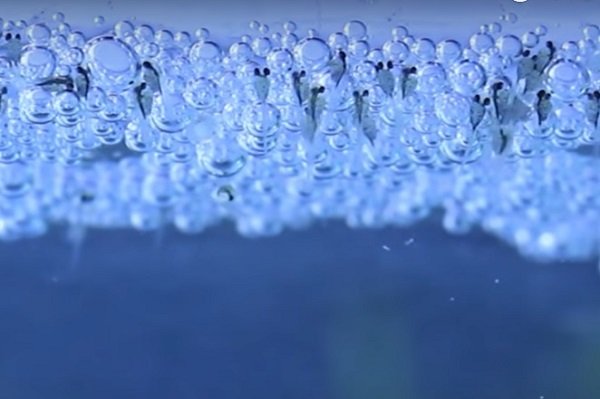
During successful courtship, the pair embraces beneath the nest and the female releases eggs. The male collects fallen eggs and places them into the bubbles. Once spawning is complete, remove the female carefully because the male normally guards the nest and may attack her.

Do not automatically medicate the female. Place her in clean, warm, cycled recovery water and monitor appetite, breathing, wounds, and fins. Seek aquatic veterinary advice for significant injury or infection. Methylene blue and antibiotics are not routine preventive tonics.

The male tends the nest and retrieves fallen eggs. OATA notes that eggs commonly hatch within about one day and young may become free-swimming after another two to three days; temperature and conditions affect timing. Remove the male once the fry are free-swimming and no longer dependent on the nest. Do not try to hand-collect and store eggs unless you have specialized experience.

Feeding Betta Fry

Newly hatched betta fry emerging from a bubble nest

Newly hatched larvae initially use their yolk sacs. Once free-swimming, they need food small enough to swallow. UF/IFAS describes initial live feeds such as infusoria and newly hatched brine shrimp, followed by a transition to suitable commercial flakes or pellets as the fish grow.

Culture first foods before spawning so there is no gap. Feed tiny portions several times daily while preventing uneaten food from fouling the water. A fry that cannot fit a food particle into its mouth cannot benefit from it, regardless of the label.

Water Quality and Growth

Fry need stable warm water, gentle aeration, and zero detectable ammonia and nitrite. Use small, frequent water changes with temperature-matched conditioned water. Siphon through fine airline tubing and check the waste container for fry before discarding water. Do not scrub or replace all mature sponge media.

Increase water depth and space gradually as the fry become stronger. Sort only when necessary to prevent predation, severe size competition, or fighting. UF/IFAS reports that males become distinguishable and require separation at roughly three to four months in commercial culture, but behavior matters more than a calendar. Separate any juvenile that is injuring others.

Health, Biosecurity, and Ethical Rehoming

  • Keep equipment for fry and quarantine systems separate where possible.
  • Do not sell or give away fish that are sick, deformed in a way that compromises welfare, or too young to thrive independently.
  • Do not release unwanted bettas into waterways.
  • Be honest with new keepers about adult care, heating, filtration, aggression, and expected costs.
  • Never kill healthy fry merely because their color or fin shape is commercially undesirable. If population control is necessary, consult an aquatic veterinarian about humane options.

Breeding for profit is unpredictable. Food, power, water, medication, housing, and time usually cost more than beginners expect. Secure prospective homes before spawning and be prepared to keep unsold adults indefinitely.

Common Reasons a Spawn Fails

  • The adults are immature, unhealthy, stressed, or incompatible.
  • Water is unstable or the temperature changes abruptly.
  • Strong flow breaks the bubble nest.
  • The female has no safe retreat or is released too early.
  • First foods are not ready when fry become free-swimming.
  • Overfeeding causes ammonia or bacterial problems.
  • Grow-out space is inadequate and juveniles become crowded.

Frequently Asked Questions

How long do betta eggs take to hatch?

Often about 24 to 48 hours, followed by a short period hanging in the nest before free swimming. Temperature and development vary, so observe rather than relying on an exact deadline.

When should the female be removed?

Remove her after spawning is complete or sooner if aggression is causing injury. The male normally guards the nest.

When should the male be removed?

Remove him when the fry are free-swimming and no longer being returned to the nest. Watch his behavior closely because timing varies.

Can a beginner breed bettas?

A beginner can learn, but should first master cycling, water testing, live-food culture, quarantine, and adult betta care. The project should wait until space and homes for a large brood are secured.

Final Advice

Successful betta breeding begins with responsibility, not pairing the adults. Prepare every tank, food culture, backup container, and rehoming plan first. Supervise introductions, separate the female after spawning, remove the male at the free-swimming stage, and maintain exceptionally stable fry water.

Continue with our guides to betta tank setup, safe betta feeding, and gentle filtration.

How Many GloFish in a 10-Gallon Tank? Safe Stocking

Glofish genetically engineered fluorescent fish

For most GloFish species, a 10-gallon aquarium is too small for a proper adult school. The most defensible long-term stocking choice is one GloFish betta, if available and kept alone. Fast danios and the deeper-bodied tetras need more swimming length; barbs need a larger group and more space; rainbow sharks are completely unsuitable.

GloFish is a brand covering fluorescent versions of several different fish—not one species. Their color does not change their basic care: each should be housed like its non-fluorescent counterpart. Choose the species first, then size the aquarium around its adult body size, activity, social needs, filtration, and compatibility.

Fluorescent GloFish swimming in a planted aquarium

Quick Answer by GloFish Type

GloFish type 10-gallon verdict Better plan
Betta One betta Heated, filtered, covered 5–10+ gallon tank
Danio Not recommended long term School of at least six in a longer 20-gallon tank
Skirt tetra Too small for an adult school Group of at least six in a 20-gallon-long or larger tank
Tiger barb Too small Larger school in 20 gallons minimum; 30+ is more practical
Rainbow shark Completely unsuitable One in a mature 55-gallon or larger aquarium

GloFish lines and availability change, and newer fluorescent species may appear. Always identify the exact base species on the label and research its adult needs before purchase.

Why “One Inch per Gallon” Does Not Work

Different fluorescent GloFish species and colors

An inch of slender danio is not equivalent to an inch of deep-bodied tetra or territorial rainbow shark. The rule ignores adult mass, activity, school size, oxygen demand, waste, aggression, tank footprint, and the area each species uses. Filtration helps process waste but cannot create swimming room or satisfy social behavior.

A 10-gallon aquarium also holds less than ten gallons after substrate, decor, and air space are included. It is less stable than a larger tank, so temperature and toxins can change quickly. Stocking should leave a margin for error rather than using every theoretical inch.

GloFish Danios

Long-finned fluorescent zebra danio

Fluorescent danios are versions of zebra danios. They are small but exceptionally active, social fish that use horizontal swimming space and may jump. A group of at least six is appropriate, but a standard 10-gallon tank is short for their constant movement. A 20-gallon-long aquarium offers a much better footprint.

Use a secure lid, open swimming areas, planted edges, steady filtration, and enough current for oxygen without turning the aquarium into a torrent. Do not keep only two or three to make them “fit”; reducing the group can increase stress and chasing.

GloFish Skirt Tetras

Electric blue fluorescent skirt tetra

GloFish tetras are commonly based on the black or white skirt tetra (Gymnocorymbus ternetzi). Adults are deeper-bodied than danios and should be kept in a social group. FishBase reports a maximum size of 7.5 cm standard length and references groups of five or more with a minimum 60 cm aquarium. A six-fish school is better placed in a 20-gallon-long or larger aquarium than a typical 10-gallon.

Skirt tetras may nip fins when stressed, crowded, or kept in an inadequate group. Avoid pairing them with slow, long-finned fish in cramped quarters.

GloFish Tiger Barbs

Electric green fluorescent tiger barb

Tiger barbs are active schooling fish with a well-known tendency to chase and nip. The GloFish FAQ notes that barbs can become aggressive when kept in groups smaller than five. A 10-gallon tank does not offer enough room for an adequate group. Use at least a 20-gallon tank, with 30 gallons or more preferable for a larger school and better behavior management.

Do not mix tiger barbs with a betta simply because both carry the GloFish name. Their swimming speed and fin-nipping behavior make them poor companions.

GloFish Rainbow Sharks

A rainbow shark is not a true shark. It is a territorial bottom-oriented cyprinid that can reach about six inches and requires substantial floor space, shelters, and carefully chosen tank mates. A 10-gallon aquarium is never appropriate. Plan for one in a mature aquarium of at least 55 gallons, and avoid combining multiple rainbow sharks in ordinary home setups.

GloFish Bettas

Male fluorescent GloFish betta

One betta is the only established GloFish type suited to a 10-gallon species tank. Use a heater, gentle filter, lid, resting places near the surface, and plants or smooth decor. Never house two males together. Female “sororities” are advanced, risk-prone projects and should not be attempted with several fish in a 10-gallon aquarium.

Do not add schooling GloFish merely because a single betta leaves apparent empty space. That space is part of the betta’s territory and the tank may not meet another species’ group requirements.

Setting Up a 10-Gallon GloFish Tank

  1. Cycle before stocking. Establish biological filtration and confirm that it can process an ammonia source to zero ammonia and zero nitrite.
  2. Use a heater appropriate for the chosen species. Verify temperature with a separate thermometer rather than relying only on a preset heater.
  3. Fit a suitable filter. Preserve mature biological media during cleaning and keep flow appropriate for the fish.
  4. Add a secure lid. Danios and bettas can jump.
  5. Provide a normal day and night. Blue light makes fluorescence visible, but it should not remain on all night.
  6. Add fish gradually. Test water frequently after stocking and never use fish as the ammonia source for cycling.

Frequently Asked Questions

Can I put six GloFish tetras in a 10-gallon tank?

We do not recommend it for adult skirt tetras. The group may physically fit as juveniles, but a 20-gallon-long or larger aquarium gives the adult school more swimming room and a safer waste margin.

Can I keep five GloFish danios in ten gallons?

A small group does not solve the footprint problem, and six or more is a better social target. Use a longer 20-gallon aquarium for their activity.

Can different GloFish colors school together?

Color variants of the same base species can usually form one school. Different species do not become compatible or share a school simply because they fluoresce.

Do GloFish need ultraviolet light?

No. Blue lighting can emphasize fluorescence, while ordinary aquarium lighting supports a day/night schedule. Avoid excessive intensity and provide darkness each night.

How many GloFish can go in a 5-gallon tank?

One betta may be suitable with proper heating and filtration. Schooling danios, tetras, barbs, and other active species are not appropriate.

Final Recommendation

Do not choose a number until you identify the species. In a 10-gallon aquarium, keep one betta rather than squeezing in an undersized school. For danios, skirt tetras, or tiger barbs, move up to a longer 20-gallon or larger tank; for a rainbow shark, use at least 55 gallons. Preserve the established URL and continue with our guides to GloFish in five gallons, betta tank setup, and why aquarium fish need filtration.

How Fast Do Koi Grow? Growth Rate and Healthy Development

How Fast do Koi Grow

Koi grow fastest when they are young, but there is no reliable inches-per-month rule. Genetics, age, water temperature, nutrition, stocking density, water quality, health, and the length of the growing season all affect the result. A healthy juvenile may add several inches during a favorable first growing season, while an older koi may grow slowly even in an excellent pond.

The goal should not be to force rapid growth. It should be to provide enough space, clean oxygen-rich water, appropriate food, and steady seasonal care so each koi can reach its natural potential without compromising its health.

Young koi swimming together in a spacious outdoor pond
Young koi can grow quickly when water quality, nutrition, oxygen, and swimming space are appropriate.

How Fast Do Koi Grow?

Koi growth is uneven rather than linear. Juveniles generally devote more energy to body growth, while growth slows as the fish matures. Warm seasons usually bring more feeding and growth; cool seasons bring reduced appetite and activity. Two koi bought at the same size can therefore end a year at very different lengths.

For planning purposes, expect a small koi to become a large, heavy-bodied pond fish. Many well-kept adult koi reach roughly 20–30 inches, although genetics and conditions produce substantial variation. Exceptional common carp records are much larger, but they are not a sensible expectation for the average ornamental koi. FishBase reports a maximum published total length of 120 cm for Cyprinus carpio, the species from which koi were developed.

Life stage Typical growth pattern What matters most
Fry and small juveniles Fastest relative growth, but highly variable Frequent appropriate meals, stable water, oxygen, and protection from competition
Larger juveniles Often strong seasonal growth Pond capacity, filtration, diet, temperature, and genetics
Mature koi Growth usually slows; body condition may continue changing Long-term water quality, balanced nutrition, health, and adequate swimming room

These stages describe a pattern, not a promise. Avoid charts that claim every koi should reach an exact length at a specific age. Breeding line, sex, early nutrition, climate, and prior care can all shift the result.

What Determines a Koi’s Growth Rate?

1. Genetics

Genetics set much of the fish’s potential adult size, body shape, and growth pattern. Good husbandry cannot turn every koi into a jumbo specimen. It can only help the fish express its inherited potential. Butterfly or longfin koi are not reliably miniature koi; their extended fins can make their overall profile look larger.

2. Age

Young koi usually grow faster than mature fish. A slowdown in an older koi can be normal. A sudden halt in a juvenile, especially with weight loss, clamped fins, isolation, sores, or abnormal breathing, deserves closer investigation.

3. Water Temperature and Season

Koi are ectothermic, so water temperature affects metabolism, appetite, digestion, and oxygen demand. Growth commonly increases during a suitable warm season and slows in cold water. Do not heat a pond merely to chase a growth target. Warmer water holds less dissolved oxygen, speeds waste production, and can magnify the consequences of overfeeding or weak filtration.

Match feeding to the actual water temperature, fish behavior, and food manufacturer’s directions. Reduce or stop feeding when the fish are not digesting normally. Avoid abrupt temperature changes.

4. Water Quality and Oxygen

Water quality is more important than any growth supplement. Test ammonia, nitrite, nitrate, pH, and alkalinity, and observe temperature and fish behavior. In an established system, ammonia and nitrite should remain at zero on a hobbyist test kit. Any detectable result requires prompt action: reduce feeding, check filtration and circulation, increase aeration when appropriate, and perform a correctly conditioned water change.

Warm weather, heavy feeding, algae die-offs, medication, crowding, and nighttime plant respiration can all reduce oxygen. Gasping at the surface, gathering near a waterfall, lethargy, or sudden loss of appetite can indicate an urgent water-quality or oxygen problem.

5. Pond Space, Stocking, and Filtration

Koi do not simply “grow to the size of the container.” Inadequate housing can suppress growth through chronic stress, competition, poor water quality, limited swimming room, and disease—not through a harmless built-in size limit.

No single gallons-per-koi rule works for every pond. Usable swimming dimensions, depth, adult fish size, total biomass, filter capacity, turnover, oxygenation, climate, maintenance, and emergency backup all matter. Plan for adult koi from the beginning, not the size displayed at the store. Ordinary home aquariums are temporary housing for juveniles, not an appropriate permanent destination for adult koi. See Can Koi Live in a Fish Tank? for a fuller explanation.

6. Nutrition

Use a reputable food formulated for koi and suitable for the current season and fish size. The diet should be nutritionally complete, fresh, stored dry, and offered in pieces the fish can swallow easily. Several controlled meals may suit growing juveniles during an appropriate warm season, but the total amount must not leave uneaten food or overwhelm filtration.

More food does not automatically mean more healthy growth. Overfeeding increases feces, dissolved waste, oxygen demand, and the risk of poor body condition. Remove uneaten food and adjust the ration when appetite changes.

7. Health, Parasites, and Competition

Disease, parasites, injury, chronic stress, and bullying can all reduce growth. Watch each fish at feeding time. A koi that repeatedly misses meals may be ill, visually impaired, intimidated, or unable to compete. Quarantine new fish before introduction and seek an aquatic veterinarian when disease is suspected rather than treating blindly.

How to Measure Koi Growth Safely

Measure progress over months, not days. Frequent netting and handling can injure fish and create unnecessary stress.

  1. Use photographs when possible. Photograph the koi beside a known reference in a viewing bowl designed for fish.
  2. Wet all equipment. A wet koi sock or soft fish-safe net helps protect the mucus coat.
  3. Support the fish. Never lift a large koi by the fins, mouth, or tail.
  4. Measure total length consistently. Use the same method from the snout to the end of the tail each time.
  5. Record context. Note the date, water temperature, weight if safely available, appetite, and any health issue.

If you are inexperienced with handling large koi, ask a knowledgeable koi keeper or aquatic veterinarian for help. Body condition, behavior, and health are more important than reaching a target number.

Adult koi showing the large body size these pond fish can reach
Plan the pond and filtration for adult koi before purchasing juveniles.

Why Is My Koi Not Growing?

A small adult may simply have modest genetic potential. However, poor growth combined with other changes can signal a problem. Review:

  • ammonia, nitrite, nitrate, pH, alkalinity, temperature, and oxygen;
  • filter maintenance, flow, aeration, and recent power failures;
  • stocking density and whether all fish can reach food;
  • food age, storage, pellet size, and total ration;
  • parasites, ulcers, fin damage, abnormal feces, or weight loss;
  • recent additions and whether they were quarantined;
  • seasonal temperature changes and sudden weather events.

Do not use rapid chemical corrections or unverified medications to solve slow growth. Stabilize water quality first, document the symptoms, and consult an aquatic veterinarian or qualified fish-health professional when the cause is unclear.

Can You Make Koi Grow Faster?

You can remove barriers to healthy growth, but you should not force it. The most useful steps are:

  • provide a spacious, mature pond designed for the adult population;
  • use biological and mechanical filtration sized for the real waste load;
  • maintain strong circulation and aeration, especially during warm weather;
  • test water consistently and respond to trends before they become emergencies;
  • feed a complete koi diet in amounts the system and fish can handle;
  • avoid crowding and ensure shy fish can feed;
  • quarantine new arrivals and act early when illness appears;
  • allow normal seasonal slowing rather than maintaining artificial high growth year-round.

Never restrict space or food to keep koi small. If a pond cannot accommodate the adult fish, arrange responsible rehoming. Do not release koi into natural waterways; ornamental fish can spread disease, disrupt ecosystems, and may be illegal to release.

Frequently Asked Questions

How long does it take a koi to reach full size?

There is no fixed age. Growth is fastest in the early years and then gradually slows, but koi may continue changing in length and body mass for many years. Genetics, climate, diet, water quality, and housing produce wide differences.

Do butterfly koi stay smaller?

No reliable rule says butterfly koi remain small. Longfin koi can become large pond fish, and their extended fins add to their overall dimensions. Plan for an adult koi, not a compact variety.

Will a koi stay small in a small pond?

A small pond may suppress growth through stress and poor conditions, but that is not safe size control. It also increases the risk of ammonia, nitrite, oxygen, temperature, and disease problems.

How big can koi get?

Many adult ornamental koi fall in the 20–30 inch range, with substantial variation. Exceptional carp can be larger. Read Is There a Small Koi Variety? before choosing koi for a limited space.

Does frequent feeding guarantee faster growth?

No. Growth requires an appropriate total diet plus clean water, oxygen, space, health, and suitable temperature. Excess feed can damage water quality and reduce welfare.

Related Koi Guides

References and Further Reading

Can Goldfish Live in Tap Water? Safe Water Guide

Can goldfish live in tap water

Yes, goldfish can live in tap water—but only after it has been made safe for aquarium use. Municipal tap water commonly contains chlorine or chloramine. Both can damage a fish’s gills and skin and can also harm the beneficial bacteria in the aquarium filter.

For most homes, properly conditioned tap water is the simplest and most practical choice. Treat every new batch before it contacts the fish, match its temperature to the aquarium, and test its chemistry rather than assuming all tap water is the same.

Quick method: Fill a clean aquarium-only container, add a conditioner that treats both chlorine and chloramine according to the label and the full volume of new water, bring it close to the tank temperature, then add it during a partial water change.

Goldfish swimming in a clean, filtered aquarium filled with conditioned tap water

Why untreated tap water is unsafe

Water utilities disinfect drinking water to control microorganisms. The concentrations used can be safe for people to drink but harmful to fish because water passes directly across their delicate gills. Chlorine and chloramine can also disrupt the bacterial colony that converts toxic ammonia into nitrite and then nitrate.

Chlorine and chloramine are not interchangeable. Free chlorine may dissipate under some conditions, but chloramine is more persistent and should not be expected to disappear simply because water is left standing. A conditioner labeled for both is the reliable everyday solution.

How to prepare tap water for goldfish

  1. Check your local supply. Your water provider’s quality report may say whether chlorine or chloramine is used. Treatment practices can change, so choose a conditioner that handles both.
  2. Use a clean container. Keep buckets and hoses for aquarium use only. Never use equipment that has held soap, detergent, pesticides, or household cleaners.
  3. Measure the conditioner accurately. Follow the manufacturer’s label. Dose for the amount of tap water being treated unless the product specifically instructs otherwise.
  4. Match the temperature. Bring replacement water close to the aquarium’s temperature before adding it. Avoid a sudden temperature swing.
  5. Add water gradually. During routine care, replace only part of the aquarium water. Pour or pump it in without disturbing the fish or substrate excessively.
  6. Test regularly. In the aquarium, ammonia and nitrite should both remain at 0 ppm. Monitor nitrate, pH, temperature, and, when relevant, hardness and alkalinity.

A suitable aquarium water conditioner works quickly when correctly dosed. More is not automatically better, so do not exceed the label unless the manufacturer explicitly provides an emergency dose for a specific use.

What if untreated tap water was added by mistake?

Act promptly, but stay calm:

  • Add an appropriate chlorine-and-chloramine conditioner according to its emergency or aquarium-volume directions.
  • Increase aeration and surface movement because gill irritation can make breathing difficult.
  • Test free and total chlorine if suitable tests are available, and test ammonia and nitrite because the biofilter may have been affected.
  • Watch for rapid breathing, gasping, lethargy, erratic swimming, excess mucus, cloudy eyes, or red and irritated gills.
  • Contact an aquatic veterinarian if breathing distress is severe or symptoms persist after the water has been made safe.

Do not respond by repeatedly adding untreated replacement water. If a water change is needed, condition the new water first. Avoid adding salt, antibiotics, or other medications unless a specific problem has been diagnosed; none of them neutralizes chlorine or chloramine.

Tap water chemistry still matters

Removing disinfectants is essential, but it is not the whole job. Tap water varies in pH, general hardness (GH), carbonate hardness or alkalinity (KH), nitrate, and dissolved minerals. Goldfish generally cope with a reasonable range better than many delicate species, but they do best when conditions are stable.

Test both the source water and the aquarium. If the pH, hardness, or nitrate level is unusual, investigate before making large changes. A sudden attempt to chase a “perfect” number can be more stressful than a stable, suitable value. If you need to adjust hardness, use a measured method and read our guide to softening aquarium water safely.

Do you need to age tap water?

No, not when you use an effective conditioner as directed. Historically, aquarists left water standing so free chlorine could dissipate. That approach is unreliable for chloramine, which is designed to remain in the water distribution system longer.

Aging water can still help it reach room temperature or release trapped gas, but it should not replace dechlorination. Boiling is also impractical and does not reliably solve chloramine treatment for aquarium volumes.

Is bottled water better for goldfish?

Usually not. Bottled-water chemistry varies by brand and source, and “purified” water may contain very few minerals while spring water may be quite hard. It is expensive for the large, frequent water changes goldfish require, and a label designed for human consumption does not guarantee ideal aquarium chemistry.

If bottled water is used temporarily, test its pH and mineral content and avoid sudden changes from the aquarium’s established chemistry. Properly conditioned tap water is generally more consistent and economical.

Can goldfish live in distilled or reverse-osmosis water?

Not safely as an unmodified long-term water source. Distillation and reverse osmosis remove most dissolved minerals and buffering capacity. Pure water can have unstable chemistry and does not provide the mineral profile expected in a freshwater aquarium.

Reverse-osmosis water can be useful when source water has a specific, confirmed problem, but it should be remineralized or blended under measured conditions. Do not use it merely because it sounds cleaner. Test GH, KH, and pH and make changes gradually.

Can well water be used?

Possibly, but it must be tested. Well water normally lacks municipal chlorine or chloramine, yet it can contain unsuitable levels of iron, copper, nitrate, salts, agricultural contaminants, or dissolved gases. Its pH and hardness may also differ greatly between locations and seasons.

Use a certified laboratory when contamination is possible. Aerate a sample before comparing its pH with the aquarium because dissolved carbon dioxide can make freshly drawn well water read differently. Never assume that water safe for human use is automatically suitable for fish.

What about rainwater?

Rainwater is not automatically clean aquarium water. It may collect air pollution, roofing residues, metals, bird droppings, pesticides, and other contaminants. It is also often low in minerals and buffering, which can make pH unstable. Unless its collection and chemistry are carefully controlled and tested, conditioned tap water is the safer choice for most goldfish keepers.

Goldfish need more than safe source water

Conditioning tap water does not cycle an aquarium or remove the waste goldfish produce. Goldfish are active, heavy-bodied fish with a substantial biological load. They need a spacious enclosure, a mature filter sized for that load, strong gas exchange, and regular partial water changes guided by test results.

Keep ammonia and nitrite at zero, control nitrate with maintenance, and preserve the filter’s bacterial media. Rinse mature media gently in removed aquarium water rather than chlorinated tap water, and never replace all of it at once. For equipment choices, see our guide to aquarium filter media.

A bowl or unfiltered container is not made safe simply by adding conditioner. Without adequate water volume and biological filtration, toxic waste can accumulate quickly.

Frequently asked questions

Can I put a goldfish straight into conditioned tap water?

Conditioning removes disinfectants, but a new aquarium must also complete the nitrogen cycle before fish are added whenever possible. Confirm 0 ppm ammonia and 0 ppm nitrite with a test kit. Match temperature and acclimate the fish carefully.

Should I condition the whole tank or only the new water?

Follow the product label. When water is treated in a separate container, the dose is generally based on that new-water volume. When untreated water is added directly while refilling, some products instruct dosing for the full aquarium volume. The manufacturer’s directions take priority.

Does a household drinking-water filter make tap water safe?

Not necessarily. Different cartridges remove different substances, and performance declines as media is exhausted. Unless the system is validated for the disinfectant in your supply and you can verify the output, use aquarium conditioner and test the water.

What water is best for goldfish?

For most keepers, the best option is stable, tested tap water treated for chlorine and chloramine. The aquarium should be fully cycled, filtered, well oxygenated, and maintained with regular partial water changes.

Key takeaway

Goldfish can thrive in tap water when it is properly conditioned and its chemistry is suitable. Neutralize both chlorine and chloramine, match temperature, test the source and aquarium, and protect the biological filter. Do not rely on standing water, bottled-water marketing, or visual clarity as proof that the water is safe.

This article provides general aquarium-care information. If a fish has severe breathing difficulty, loss of balance, extensive skin or gill damage, or persistent symptoms, consult a veterinarian experienced with aquatic animals.

Baby Snapping Turtle Care: Safety, Housing and Diet

Baby Snapping Turtle

A baby snapping turtle is a wild animal or specialist reptile—not a beginner aquarium pet. The hatchling may be small, but it can grow into a large, powerful, long-lived turtle that requires extensive aquatic housing, heavy-duty filtration, safe handling procedures, and access to a reptile veterinarian.

If you found a healthy baby snapping turtle outdoors, the best response is usually to leave it where it is and keep people and pets away. Do not take it home. If it is visibly injured or in immediate danger, contact a licensed wildlife rehabilitator or local wildlife authority for instructions.

Before considering captive care: identify the species, check local possession and transport laws, confirm that the animal is captive-bred and legally documented, locate an experienced reptile veterinarian, and plan the adult enclosure—not just the hatchling tank.

Young North American snapping turtle resting at the water surface

Identifying a baby snapping turtle

North American snapping turtles (Chelydra serpentina) have a large head, a long flexible neck, strong legs, webbed feet, a relatively small plastron underneath, and a long tail with a saw-toothed upper ridge. Hatchling shells are more strongly ridged than those of older adults.

Alligator snapping turtles belong to the genus Macrochelys. They have a more heavily sculptured shell with three prominent ridges and a worm-like lure on the tongue. Identification matters because adult size, distribution, conservation status, legal protection, and husbandry differ. Use a wildlife agency or qualified reptile professional rather than an image-search guess.

Should you keep a wild hatchling?

No. A wild hatchling belongs in its ecosystem. Taking it can be illegal, removes an animal from the breeding population, exposes the household to parasites and Salmonella, and creates a care commitment that may last for decades.

Do not move a healthy turtle to a pond that seems better, and never release a captive turtle. Relocation can spread disease, place the animal outside its home range, or introduce it where it is not native. If a hatchling is crossing a road and it is safe for you to help, seek local wildlife guidance and move it only in the direction it was already traveling.

Adult size changes everything

A tiny juvenile soon outgrows ordinary aquariums. Wildlife sources commonly report adult North American snapping-turtle carapaces around 8–16 inches, with powerful bodies and long necks adding substantially to the working space required. Alligator snapping turtles can become much larger.

There is no responsible universal “gallons per inch” formula for this animal. The enclosure must allow normal swimming, turning, surfacing, resting, and thermoregulation, while leaving safe clearance from heaters, plumbing, lids, and hands. Large custom tubs, indoor ponds, or legally compliant secure outdoor systems are often more realistic than glass tanks.

Housing priorities

Water depth and access to air

A young turtle must be able to reach the surface easily and rest near it without continuous swimming. Depth should be increased with the animal’s strength and ability, with stable structures that cannot trap or crush it. The enclosure must prevent escape: snapping turtles climb surprisingly well.

Filtration and water quality

Snapping turtles are messy feeders and produce a heavy waste load. Use robust mechanical and biological filtration with protected intakes. Keep ammonia and nitrite at 0 ppm, control nitrate with maintenance, remove uneaten food promptly, and condition tap water for chlorine and chloramine.

Size the system for adult waste production and real flow after media and plumbing losses. A filter advertised for a similarly sized fish aquarium may be inadequate for a large turtle.

Temperature, heat, and UVB

Do not rely on a single generic temperature range. Requirements depend on species, age, health, and origin. Ask a reptile veterinarian for a suitable water and basking-temperature plan and measure both with reliable instruments.

Provide an accessible, stable basking area and species-appropriate UVB when advised. Follow the lamp maker’s distance and replacement directions; ordinary glass and plastic can block UVB. Protect lamps and heaters from water, impact, and the turtle, and use electrical safety devices and drip loops.

Substrate and furnishings

A bare, easy-to-clean bottom may be safest in temporary juvenile housing. If substrate is used, avoid pieces the turtle can swallow and structures that can collapse. Smooth, stable hides and visual cover can reduce stress, but open swimming and turning space must remain.

What baby snapping turtles eat

Snapping turtles are omnivores. Wild juveniles eat small aquatic invertebrates, amphibian larvae, other suitable animal matter, and plant material. In captivity, a quality formulated aquatic-turtle diet can provide a consistent foundation, supplemented with suitable whole foods under veterinary guidance.

Do not feed only meat, fish fillets, dried shrimp, or live feeder fish. Muscle meat alone has an unsuitable calcium-to-phosphorus balance, and wild-caught or feeder animals can introduce parasites and disease. Bread, dairy, processed meat, and seasoned human food are inappropriate.

Food must be appropriately sized. Remove leftovers and monitor growth and body condition rather than feeding every time the turtle begs. See our evidence-based guide to wild and captive snapping-turtle diets.

Feeding frequency and supplements

Young turtles generally eat more frequently than adults, but a rigid schedule is unsafe without considering the species, size, body condition, diet, and water temperature. Follow the formulated food label as an initial guide and have a reptile veterinarian review growth.

Do not add calcium or vitamin supplements by guesswork. Deficiency is harmful, but excessive vitamin A, vitamin D, and minerals can also cause serious disease. UVB, dietary calcium, and temperature work together; one product cannot compensate for poor husbandry.

Can baby snapping turtles live together?

They should generally be housed separately. Competition, biting, food guarding, size differences, and unnoticed injuries make shared housing risky. Fish and other tank mates may be eaten, injured, or introduce disease. Adding fast fish does not make a safe community aquarium.

Safe handling

Handle only when necessary. Even a small turtle can bite, and an adult’s neck reaches much farther than many people expect. Never lift a snapping turtle by the tail because this can injure the spine and soft tissues. Do not use routine handling to try to “tame” it.

Ask a reptile veterinarian or trained wildlife professional to demonstrate a safe method for the identified species and size. Keep hands away from the head and front half of the shell, and never allow children to handle the animal.

Health monitoring

Record weight, appetite, activity, shell condition, water-test results, and measured temperatures. Arrange veterinary care for:

  • open-mouth breathing, nasal discharge, wheezing, or abnormal buoyancy;
  • swollen or closed eyes, mouth lesions, or inability to eat;
  • shell softness, ulcers, wounds, discharge, or foul odor;
  • persistent lethargy, weakness, swelling, or weight loss;
  • suspected ingestion of substrate, fishing tackle, or another foreign object.

Do not force-feed or medicate a hatchling without veterinary direction. If appetite declines, use our guide on responding when a turtle stops eating.

Hygiene and household safety

Turtles can carry Salmonella while appearing healthy. Wash hands with soap and running water after contact with the turtle, its food, water, or equipment. Keep the enclosure and cleaning equipment away from kitchens and food-preparation areas.

Reptiles are a poor fit for households with very young children, older adults, or people with weakened immune systems. Discuss household risk with a healthcare professional and reptile veterinarian.

Long-term planning

Before acquisition, budget for the adult enclosure, high-capacity filtration, water use, drainage, heating, UVB equipment, electricity, structural floor load, veterinary care, and emergency power. Confirm who will care for the turtle during travel and what will happen if the owner moves or can no longer manage it.

If rehoming becomes necessary, contact a licensed reptile rescue, zoo, wildlife agency, or veterinarian. Never release the animal or advertise it without checking local transfer rules.

Frequently asked questions

Can a baby snapping turtle live in a 10-gallon tank?

A very small hatchling may physically fit for brief, closely managed care, but a 10-gallon aquarium is not a responsible long-term plan. Water quality and temperature change quickly in small volumes, and the turtle will outgrow it. Plan the adult system before acquisition.

Do baby snapping turtles need land?

They are highly aquatic but should have an easy, stable route to a dry resting or basking area when the care plan calls for it. The design must prevent trapping and escape.

Are baby snapping turtles aggressive?

Snapping is defensive behavior, especially on land where the turtle cannot retreat easily. A calm juvenile can still bite suddenly. Treat every individual as capable of injury.

Where should I buy one?

First decide whether this specialist animal is appropriate and legal. If so, obtain only a legally documented, captive-bred animal from a transparent source—never a wild turtle. Verify the scientific name and adult requirements before paying.

Key takeaway

A baby snapping turtle is not a miniature version of an easy pet. Its adult size, bite risk, waste production, lifespan, legal status, and enclosure needs demand expert preparation. Leave healthy wild hatchlings where they belong; for legal captive-bred animals, build care around accurate identification, adult-scale planning, measured water quality, balanced nutrition, minimal handling, and reptile-veterinary support.

This article provides general information and does not replace advice from a reptile veterinarian or local wildlife authority.

Ammonia Poisoning in Bettas: Signs, First Aid and Prevention

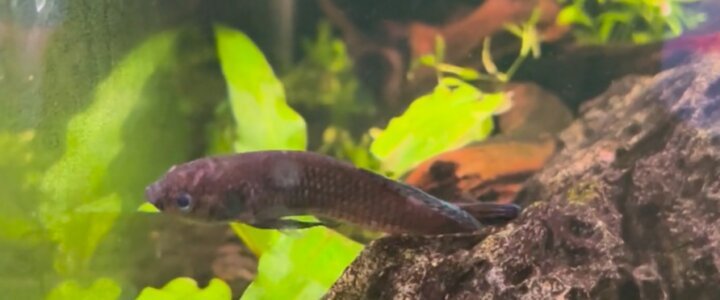
Dark betta fish resting near driftwood in a planted aquarium

Ammonia poisoning in bettas is a water-quality emergency. If a test shows any detectable ammonia, act promptly: change part of the water with conditioned, temperature-matched water, improve aeration, check that the filter is running, and keep testing. Ammonia can injure the gills and skin, but the same symptoms can also occur with nitrite exposure, low oxygen, parasites, or other gill disease.

This guide explains what to do now, how to recognize the warning signs, and how to correct the underlying problem without adding unnecessary medication.

Quick answer: In a healthy, fully cycled betta aquarium, both ammonia and nitrite should test at 0 ppm. Do not wait for cloudy water or visible burns—ammonia is colorless, so a reliable water test is the only way to confirm it.

What to do immediately

  1. Test the water. Check ammonia, nitrite, nitrate, pH, and temperature. Write the results down so you can see whether conditions are improving.
  2. Make a partial water change. Replace some aquarium water with dechlorinated water that is close to the tank’s temperature. If ammonia or nitrite remains detectable, repeat testing and make further partial changes as needed. Avoid sudden, extreme shifts in temperature or pH.
  3. Increase oxygen and circulation. Make sure the filter is operating and the surface is moving. Bettas breathe atmospheric air with their labyrinth organ, but their gills still need safe, oxygenated water.
  4. Remove the source. Siphon out uneaten food, decaying leaves, dead livestock, and obvious waste. Check that no fish or snail is hidden behind decorations.
  5. Pause or reduce feeding briefly. A sick adult betta can usually tolerate a short fast, and less food means less new waste while the biofilter recovers.
  6. Seek veterinary help for severe distress. Contact a veterinarian experienced with fish if the betta is gasping continuously, cannot remain upright, has significant bleeding or tissue damage, or does not improve after the water is made safe.

An ammonia-binding conditioner may temporarily reduce risk when used exactly as its label directs, but it does not remove waste or establish a biological filter. Some total-ammonia tests may continue to register ammonia after a binder is used, so follow the conditioner and test-kit instructions carefully.

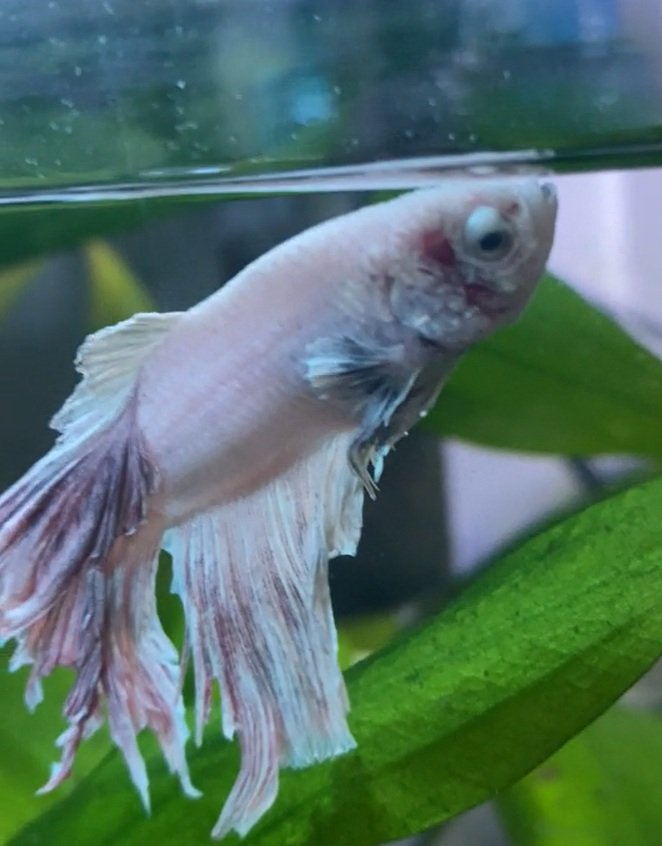
White betta fish with a visibly red and inflamed-looking gill area
Red or inflamed-looking gills can occur with ammonia exposure, but appearance alone cannot confirm the cause.

Signs of ammonia poisoning in a betta

Possible signs include:

  • rapid gill movement, gasping, or spending unusual amounts of time at the surface;
  • red, inflamed, pale, or swollen-looking gills;
  • lethargy, weakness, hiding, or lying on the substrate;
  • clamped fins and reduced appetite;
  • darting, rubbing, or other signs of irritation;
  • excess mucus, dull color, red streaks, or damaged skin in advanced cases.
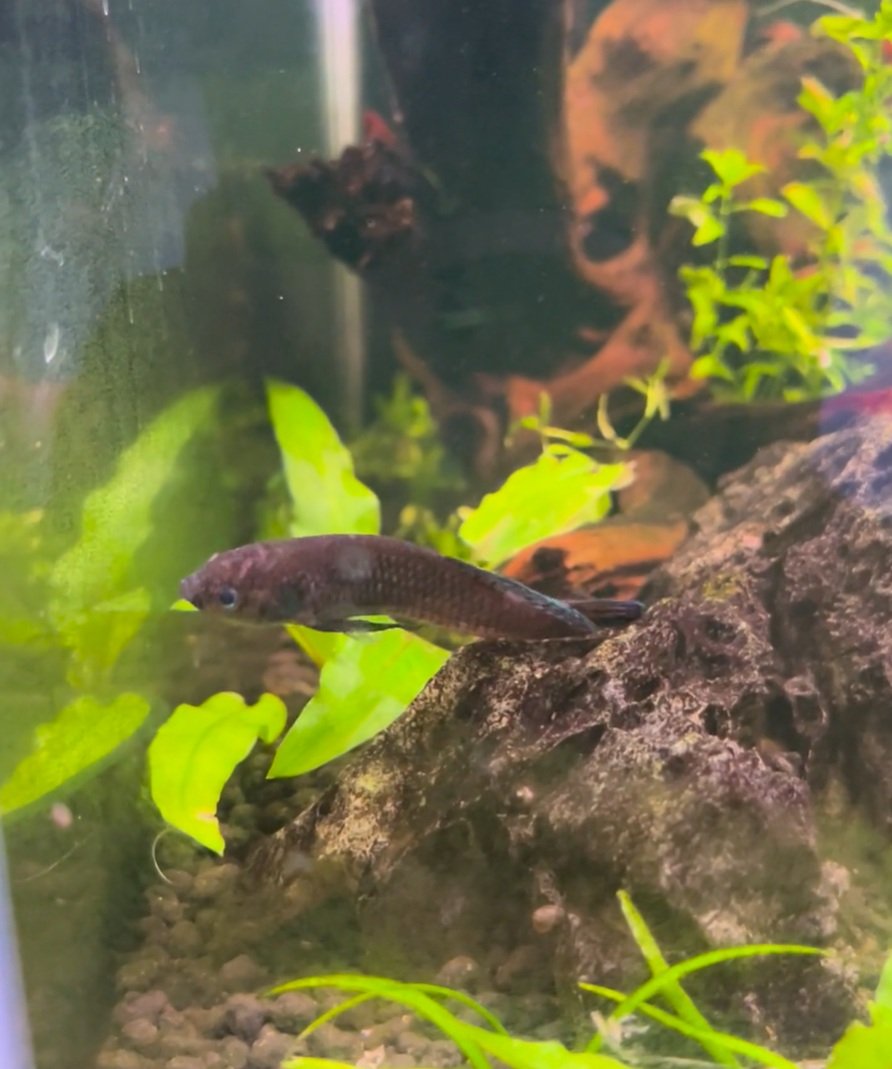
Dark betta fish resting near driftwood in a planted aquarium
Lethargy or unusual resting can accompany poor water quality, but it is not specific to ammonia poisoning.

These signs are not specific to ammonia. Low dissolved oxygen, nitrite, chlorine or chloramine exposure, temperature stress, and gill infections can look similar. Test the water first and do not assume that a visible mark proves ammonia poisoning.

What ammonia does to fish

Fish release nitrogenous waste, and decomposing food and plant matter add more. In a mature aquarium, beneficial bacteria in the filter convert ammonia into nitrite and then nitrate. A new, damaged, undersized, or overloaded biofilter cannot process waste quickly enough, allowing ammonia to accumulate.

Aquarium tests generally report total ammonia, which includes ionized ammonium (NH4+) and un-ionized ammonia (NH3). The NH3 form is particularly toxic. Its proportion rises as pH and temperature rise, which is why the same total-ammonia reading can pose different risks in different tanks. During an incident, do not raise pH abruptly.

Ammonia irritates and damages gill tissue, making normal oxygen exchange more difficult. Prolonged or severe exposure can also harm skin and internal organs and may leave the fish vulnerable to secondary infection.

Common causes

An uncycled or newly established tank

“New tank syndrome” occurs before enough nitrifying bacteria have colonized the filter. A new aquarium should ideally be cycled without fish, with test results confirming zero ammonia and zero nitrite before a betta is introduced.

A disrupted biological filter

Replacing all filter media, rinsing it under chlorinated tap water, allowing it to dry out, or leaving the filter switched off can destroy much of the bacterial colony. Preserve established media and rinse it gently in removed aquarium water when maintenance is needed.

Too much waste

Overfeeding, overcrowding, decaying plants, and missed maintenance can exceed the filter’s capacity. Feed a measured amount of suitable betta food and remove leftovers rather than adding more because the fish appears interested.

Untreated tap water

Chlorine and chloramine can injure fish and damage beneficial bacteria. Always use an appropriate water conditioner for the full volume of new tap water, following the label.

A dead fish, snail, or large amount of decaying material

Decomposition can create a sudden spike even in an established tank. Remove the material, test immediately, and inspect hidden areas of the aquarium.

Helping a betta recover

Clean, stable water is the foundation of recovery. Keep ammonia and nitrite at zero, maintain a steady betta-appropriate temperature, and provide gentle filtration and good surface movement. Dim lighting and minimize handling while the fish is stressed.

Do not add antibiotics, aquarium salt, antiseptics, or “healing” oils automatically. They do not correct ammonia, and unnecessary treatments can add stress or affect the biofilter. Medication is appropriate only when a specific secondary disease has been identified and the product is suitable for that diagnosis. If injuries are serious or symptoms persist after water quality is corrected, consult an aquatic veterinarian.

A separate hospital container is not always safer: an uncycled container can rapidly accumulate more ammonia. Move the fish only when isolation is genuinely needed and you can provide heated, conditioned, closely monitored water.

If the betta is already in an uncycled tank

Do not simply wait for the cycle to finish while the fish remains in toxic water. Test ammonia and nitrite at least daily, change conditioned water whenever either is detectable, feed sparingly, and keep the filter running around the clock. Seeded filter media from a known healthy aquarium can help establish bacteria, but it does not replace testing.

Continue this careful “fish-in” management until repeated tests show zero ammonia and zero nitrite and nitrate is being produced. Read our guide to betta filtration and safe flow for help choosing a gentle setup.

How to prevent another ammonia spike

  • Fully cycle the aquarium before adding fish whenever possible.
  • Use an adequately sized filter and run it continuously.
  • Test ammonia, nitrite, nitrate, pH, and temperature regularly—not only when the fish looks ill.
  • Make routine partial water changes and remove debris from the substrate.
  • Condition all new tap water before it enters the aquarium.
  • Avoid overfeeding and remove uneaten food.
  • Never replace all biological filter media at once.
  • Test after power outages, filter failures, medication courses, a death in the tank, or a major cleaning.

Frequently asked questions

What ammonia level is safe for a betta?

The practical target is 0 ppm ammonia and 0 ppm nitrite. Any detectable result means the aquarium needs attention. The immediate risk also depends on pH and temperature, so do not rely on a single generic “safe” threshold.

Can a betta recover from ammonia poisoning?

Many fish can recover when exposure is recognized early and clean, stable water is restored. Prognosis is poorer after severe or prolonged gill and tissue damage. Improvement may take time even after the test result returns to zero.

Does cloudy water prove there is ammonia?

No. A bacterial bloom can make water cloudy, but dangerous ammonia may also be present in water that looks perfectly clear. Test it.

Should I replace all the water?

A substantial water change may be necessary in a serious incident, but matching temperature, conditioning the replacement water, and avoiding a sudden pH shift are important. Partial, repeated changes guided by test results are often easier to control.

Will ammonia detoxifier cycle the tank?

No. A conditioner can be a useful temporary aid if its label covers ammonia, but a stable nitrogen cycle still requires a functioning biological filter and time for bacteria to establish.

Key takeaway

Suspected ammonia poisoning calls for a water test and immediate correction of the environment. Restore zero ammonia and nitrite with conditioned water changes, working filtration, aeration, and waste removal; then solve the reason the biofilter failed. Treat persistent or severe symptoms as a veterinary problem rather than adding multiple products to the aquarium.

This article provides general aquarium-care information and is not a substitute for diagnosis or treatment by a qualified aquatic veterinarian.

What Do Snapping Turtles Eat? Wild and Captive Diet

What Do Snapping Turtles Eat

Snapping turtles are opportunistic omnivores. In the wild they eat aquatic plants, insects, crayfish, worms, mollusks, fish, amphibians, carrion, and occasional reptiles, birds, or small mammals. Plant material can form a meaningful part of the diet, so describing them as animals that need an all-meat menu is inaccurate.

A captive snapping turtle needs a measured, varied diet appropriate to its exact species, age, size, and health. It should not be fed wild-caught prey, processed meat, bread, or an unbalanced diet of muscle meat. Because these turtles become large, powerful, long-lived animals, captive care requires specialist planning and may be restricted by local law.

Wild turtle? Observe it from a safe distance and do not feed, capture, or relocate it. A snapping turtle on land may simply be moving between wetlands or a female may be seeking a nest site. Contact a wildlife authority or licensed rehabilitator only when the animal is injured or in immediate danger.

Close view of a North American snapping turtle in the water

What snapping turtles eat in the wild

North American snapping turtles (Chelydra serpentina) are both predators and scavengers. Government species accounts describe a broad diet that includes aquatic invertebrates, crayfish, fish, frogs, other reptiles, occasional birds and mammals, carrion, and vegetation. They take advantage of foods available in their habitat rather than relying on a single prey type.

Older turtles often wait motionless in cover and lunge at nearby prey, while juveniles may forage more actively for small invertebrates and amphibian larvae. Despite their reputation, research summarized by wildlife agencies indicates that predation on healthy waterfowl is often exaggerated.

Common versus alligator snapping turtles

The term “snapping turtle” may refer to different species. The North American snapping turtle belongs to the genus Chelydra. Alligator snapping turtles belong to Macrochelys, have a more heavily ridged shell and use a worm-like appendage on the tongue to lure prey.

These species differ in adult size, natural range, legal protection, housing, and feeding needs. Confirm the identification before applying captive-care advice. Never obtain a wild turtle or move one across regions; possession, transport, and sale rules vary.

What to feed a captive snapping turtle

A reptile veterinarian should help design the diet. A reputable, nutritionally complete pellet formulated for aquatic turtles can provide a consistent foundation. Appropriate variety may include species-suitable whole invertebrates and other foods that provide more than muscle meat alone, together with suitable plant material.

Suitable foundations

  • a quality formulated aquatic-turtle diet in an appropriate pellet size;
  • properly sourced whole invertebrates such as earthworms or selected aquatic invertebrates;
  • safe leafy greens and aquatic plants appropriate to the species and age;
  • other whole-food items recommended by a reptile veterinarian.

Use foods from reputable captive sources. Wild-caught fish, amphibians, insects, and other prey can carry parasites, pathogens, pesticides, fishing tackle, or environmental contaminants.

Foods to avoid

  • bread, crackers, cereal, and other processed human foods;
  • hot dogs, lunch meat, seasoned meat, and fatty scraps;
  • a routine diet of raw supermarket meat or boneless fillets;
  • cat or dog food as the staple diet;
  • wild-caught prey or live vertebrate prey;
  • moldy food, unidentified plants, or anything exposed to pesticides;
  • large pieces that could be difficult to swallow safely.

Read our guide explaining why turtles should not eat bread for safer alternatives.

How much and how often?

There is no dependable universal portion or schedule. Hatchlings and juveniles generally eat more frequently than adults, but their rapid growth also makes dietary balance particularly important. Adults need controlled portions that maintain healthy body condition without creating obesity or excessive waste.

Follow the formulated diet’s directions as a starting point, weigh the turtle regularly, and have a reptile veterinarian assess growth and body condition. Remove leftovers promptly. Do not feed heavily simply because a turtle continues to beg or strike at food.

Feeding baby snapping turtles

Young snapping turtles eat small animal foods and some plant material in nature. In captivity, food must be correctly sized and nutritionally complete. A pellet formulated for growing aquatic turtles, supplemented only with suitable foods under experienced guidance, is safer than trying to recreate a diet with random live prey.

Prevent excessively rapid growth. Poor calcium balance, incorrect UVB exposure, unsuitable temperature, and overfeeding can contribute to abnormal development. A hatchling that refuses food needs prompt husbandry checks and early veterinary advice; do not force-feed it.

Water, filtration, heat, and UVB matter

Diet cannot be separated from the enclosure. Snapping turtles produce substantial waste and require a very large, secure aquatic system with powerful mechanical and biological filtration. Keep ammonia and nitrite at zero, control nitrate with maintenance, and provide appropriate water depth, temperature, and structure for the turtle’s size and abilities.

Captive turtles also need a safe basking option and species-appropriate heat and UVB arrangements. UVB output and basking temperature must be measured and maintained according to veterinary and equipment guidance. A small aquarium that suits a hatchling will not remain suitable as the turtle grows.

Can snapping turtles eat fish?

Wild snapping turtles do eat fish, especially slow, small, injured, or dead fish, but fish are only one part of a broad omnivorous diet. A captive diet based heavily on fish can become nutritionally unbalanced, and some fish contain thiaminase, which can contribute to vitamin B1 deficiency when fed excessively.

Do not release feeder fish into the enclosure. They may introduce disease, injure or stress other animals, escape into waterways, or remain uneaten and add waste. Ask a reptile veterinarian whether any fish is appropriate for the individual animal.

Should you feed a wild snapping turtle?

No. Feeding wildlife can alter natural behavior, draw animals toward people and roads, concentrate them in polluted areas, and increase conflict. It can also expose the turtle to unsuitable food and expose the person to a severe bite.

Never hand-feed a snapping turtle. Its long neck can reach farther than many people expect, and its bite can cause serious injury. The safest interaction is distance.

Handling and relocation safety

Do not pick a snapping turtle up by the tail; this can injure its spine and soft tissues. Do not place hands near the head or front half of the shell. If a turtle must be moved from immediate road danger, contact a trained wildlife professional for local guidance. Keep it moving in the direction it was already traveling and never relocate it to a distant pond.

A pet snapping turtle should be handled only when necessary, using a method taught by an experienced reptile veterinarian or qualified keeper. Early handling does not make a large adult reliably tame.

A lifelong specialist commitment

Before acquiring any snapping turtle, investigate adult enclosure size, structural floor loading, water and drainage needs, electricity and heating safety, veterinary access, lifespan, local laws, and a responsible long-term care plan. Never release a captive animal into the wild.

If a captive turtle is no longer manageable, contact a licensed reptile rescue, wildlife agency, or veterinarian. Do not advertise it casually or transfer it without checking possession and transport rules.

Frequently asked questions

Do snapping turtles eat plants?

Yes. They are omnivores, and aquatic vegetation and other plant material can be a substantial part of the wild diet.

Do snapping turtles eat ducks?

They can take birds opportunistically, but wildlife authorities note that their reputation for heavy duckling predation is exaggerated. Fish, invertebrates, carrion, and plant material are also important foods.

Can snapping turtles eat fruit?

Fruit is not an essential staple for snapping turtles and is high in sugar. Do not add it routinely without species-specific veterinary guidance.

Can snapping turtles eat chicken?

Boneless chicken meat is not a balanced staple because it lacks the nutrient profile of a complete diet. Use an appropriate formulated food and veterinarian-approved variety instead.

What if a snapping turtle stops eating?

Check water and basking temperatures, UVB, water quality, stress, and the diet immediately. Appetite loss with breathing changes, swelling, abnormal buoyancy, wounds, eye or mouth problems, or weight loss needs prompt reptile-veterinary assessment. See our guide to turtle appetite loss and safe response.

Key takeaway

Wild snapping turtles eat a varied omnivorous diet and should be left to forage naturally. Captive animals need a measured, nutritionally complete diet supported by specialist housing, filtration, heat, UVB, and veterinary care. Avoid unbalanced meat-only feeding, wild-caught prey, processed food, and all hand-feeding of wild turtles.

This article provides general information and does not replace advice from a veterinarian experienced with reptiles or your local wildlife authority.