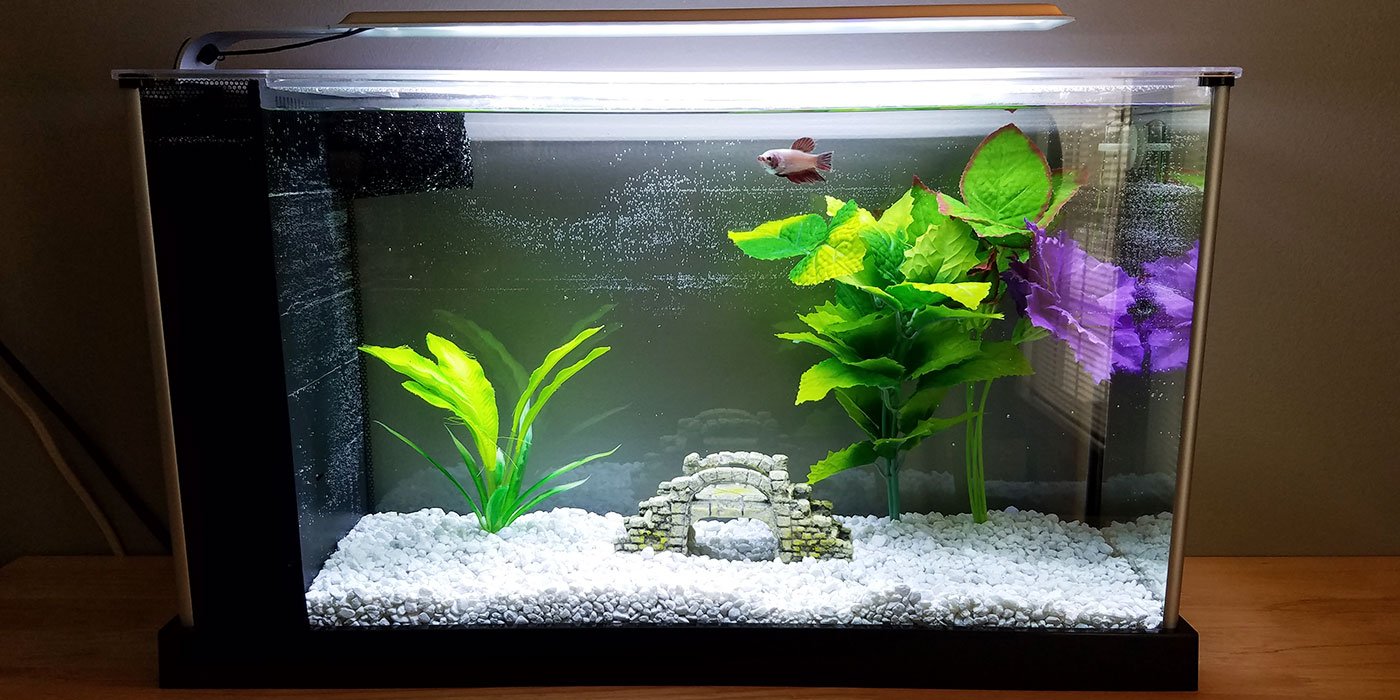
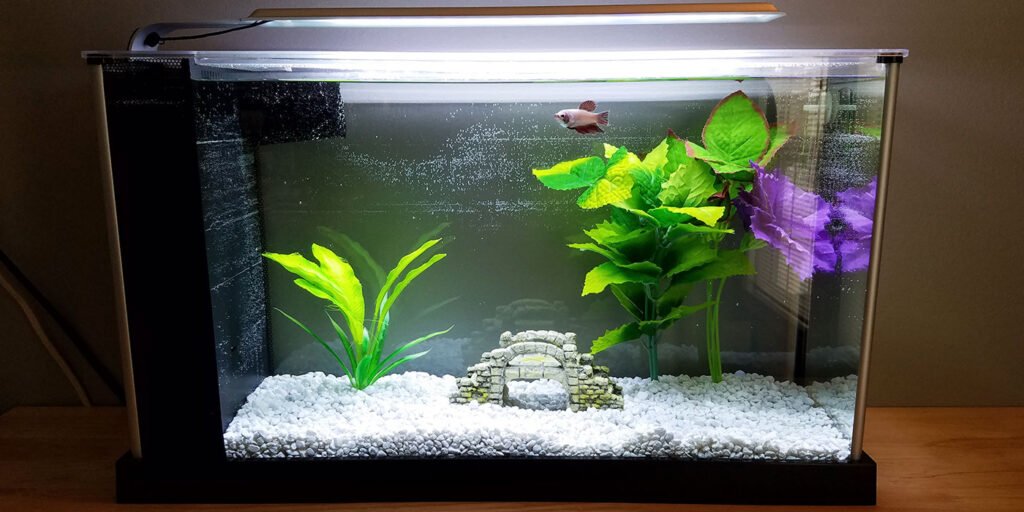
A small, unfiltered fish bowl is not a suitable permanent home for pet fish. If you already have a fish in one, focus on water quality now and arrange an aquarium that meets the needs of its species. You do not need to find a tougher fish or add a cleanup crew.
This guide explains how to reduce immediate risks, clean without making conditions worse, and plan the move. It is a research-based care guide, not a claim that we have tested bowl keeping.
Why a small fish bowl is difficult to maintain
Small bowls leave little room for swimming, filtration and temperature control. Their limited water volume makes mistakes harder to manage. RSPCA Victoria advises keeping fish in properly equipped aquariums rather than small bowls, highlighting oxygen exchange and water-quality problems.
A larger vessel with suitable equipment still needs to meet the fish’s adult size, swimming and social needs. The word “bowl” on the packaging tells you very little about whether a setup is adequate. Choose the habitat for the fish, rather than choosing a fish to fit a decorative container.
If your fish is already in a bowl
- Identify the species. Use its actual care requirements to choose the replacement aquarium. Start with our fish care guides.
- Check the water. Measure ammonia, nitrite and temperature. Clear water does not establish that conditions are safe. Aim for no detectable ammonia or nitrite.
- Address contamination promptly. Use partial water changes with properly conditioned, temperature-matched water if waste compounds are detectable. Retest afterward; a single change does not solve an ongoing waste problem.
- Do not add more animals. Extra fish, snails or shrimp add to the demands on the setup.
- Arrange a suitable aquarium promptly. Ask an experienced aquatic retailer or fish veterinarian for help if you cannot safely stabilize the current housing.
OATA’s freshwater setup guidance explains cycling, testing and maintenance. A newly purchased filter is not an established biological filter. Do not assume a new tank is ready simply because the water has stood overnight.
How to clean without adding new risks
Use an aquarium-only bucket and siphon to remove uneaten food and waste. Never use soap, detergent or household cleaning spray on occupied aquarium equipment. For routine cleaning, avoid repeatedly catching the fish and stripping everything down.
Treat replacement tap water for chlorine and chloramine according to the conditioner label, and match the temperature before adding it. If an established filter needs cleaning, gently rinse its media in removed aquarium water rather than disinfecting it. These precautions are covered in the RSPCA’s aquarium maintenance advice.
How often should you change bowl water?
There is no reliable once-a-week schedule for every bowl. The fish, feeding, volume and filtration all matter. Test at least daily while managing temporary unfiltered housing, and act on the results. Weekly maintenance advice for an established aquarium should not be treated as a guarantee for an unfiltered bowl.
Keep a short record of test results and water changes. If ammonia or nitrite keeps returning, seek help and improve the housing rather than repeatedly accepting unsafe readings.
Can a betta live in a bowl?
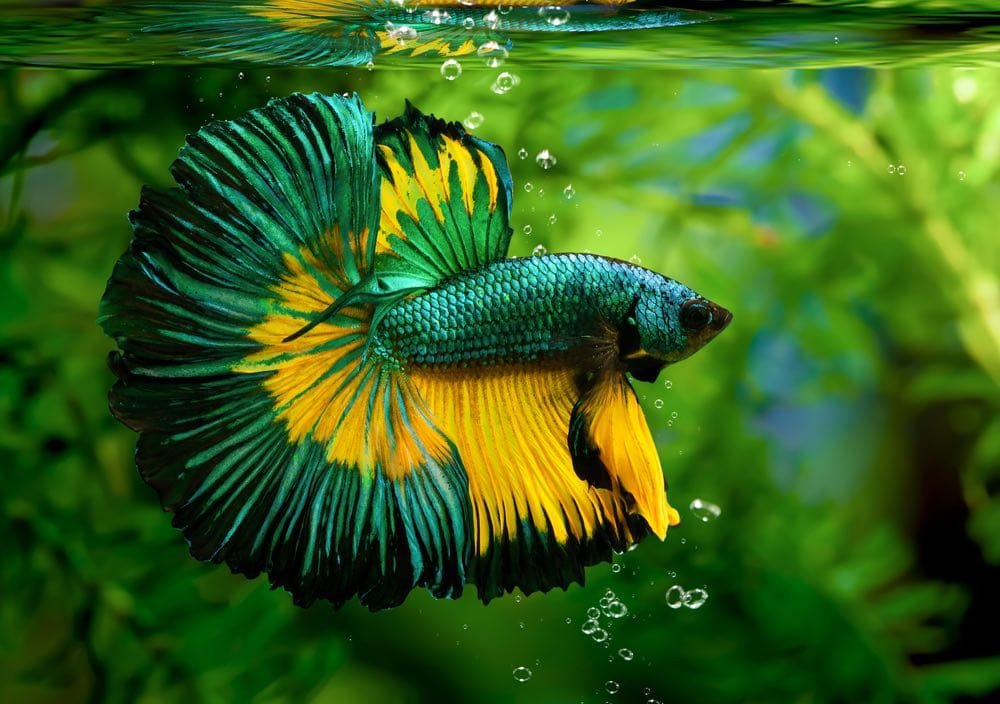
A betta’s ability to take air at the surface does not remove its need for clean water, space and stable warmth. The RSPCA recommends an aquarium of about 5.3 US gallons (20 liters) or more where possible, with appropriate filtration and heating. Its advised temperature range is about 75–79°F (24–26°C). A secure lid should leave access to air above the water.
For a beginner, an equipped aquarium of this size or larger is a better starting point than a tiny ornamental bowl. Read our female and male betta guide before planning companions.
What about goldfish, guppies or schooling fish?
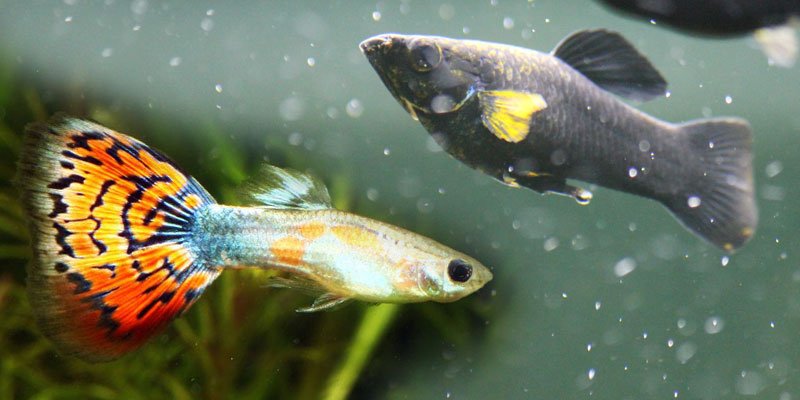
This guide does not recommend any of them for a small bowl. Choose housing using the exact species’ adult requirements. A tiny juvenile’s current length is not a stocking plan, and a schooling species needs both appropriate companions and room for the group. Review the species before buying additional fish.
When a fish needs urgent help
Persistent gasping, loss of balance, unusual inactivity or rapidly moving gills deserve immediate attention. Check water quality and temperature, and ensure suitable aeration. Occasional surface breathing is normal for a betta; a sudden change in breathing or behavior is different.
The RSPCA fish-health guide recommends checking water first and contacting a specialist fish veterinarian for diagnosis and treatment. Do not assume every struggling fish needs medication.
Plan the replacement before buying extras
Prioritize a suitable aquarium, filter, test kit, conditioner and species-appropriate temperature control. Decorations come after those essentials. Our aquarium basics hub can help you plan the setup. If you cannot provide suitable housing, seek responsible rehoming advice from an aquatic retailer or rescue.