Do Betta Fish Need Filters? Safe Flow and Setup Guide

Do Betta Fish Need Filters

Yes—bettas should have a filter. Their labyrinth organ lets them breathe air at the surface, but it does not protect them from ammonia, nitrite, debris or unstable water. A gentle filter provides biological filtration, circulation and mechanical waste capture. The goal is low stress and steady water quality, not a powerful current.
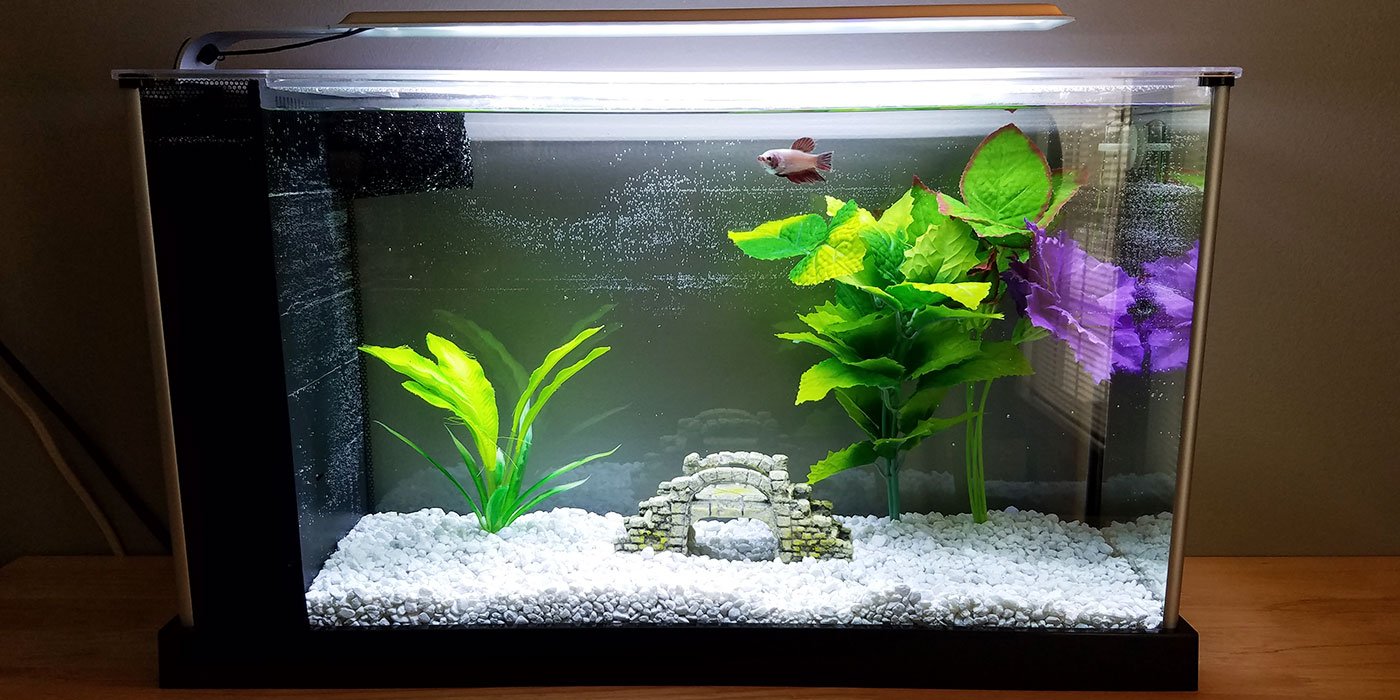
Betta fish in a heated, filtered planted aquarium
A properly cycled filter and gentle flow help keep a betta aquarium stable.

What a filter does for a betta

  • Biological filtration: media provides surface area for bacteria that convert toxic ammonia to nitrite and then nitrate.
  • Mechanical filtration: sponge or pads capture suspended debris so it can be removed during maintenance.
  • Circulation and gas exchange: gentle movement distributes heat and oxygen without exhausting the fish.
  • Optional chemical filtration: carbon or specialty media can remove specific dissolved compounds, but is not required continuously in every aquarium.

A filter does not eliminate water changes, testing, substrate cleaning or careful feeding.

Why surface breathing does not replace filtration

Betta fish swimming near the water surface
Bettas can breathe atmospheric air, but their gills and bodies still require safe water chemistry.

Bettas naturally visit the surface to breathe. That adaptation helps in warm, oxygen-variable habitats; it does not make polluted water harmless. Ammonia and nitrite damage fish even when surface air is available.

The nitrogen cycle in plain language

Fish waste and decaying food produce ammonia. Beneficial bacteria convert ammonia to nitrite, then another group converts nitrite to less-toxic nitrate. These bacteria live mainly on filter media, substrate and other wet surfaces—not floating freely in the water.

Cycle the aquarium before adding a betta whenever possible. Confirm that the system can process its ammonia source to zero ammonia and zero nitrite, with nitrate appearing and remaining manageable. A bottled-bacteria dose or a few days of running the filter is not proof that cycling is complete.

Best filter types for bettas

Air-driven sponge filter

A mature sponge filter is gentle, reusable and safe for long fins. It needs an air pump, airline, check valve and correctly sized sponge. Adjust the airflow so the fish can swim and rest normally.

Hang-on-back filter

A small adjustable HOB filter can work when the intake is protected with a sponge and the return is baffled if necessary. Keep the water level high to reduce the waterfall effect. Never block the outlet completely.

Small internal filter

An internal unit can be suitable when it has adjustable flow and a guarded intake. Position it so the aquarium contains calm resting areas and easy surface access.

How much flow is too much?

The fish should be able to hold position, reach food, rest on broad leaves and visit the surface without being pushed sideways. Long-finned bettas usually tire sooner than short-finned forms. Warning signs include constant hiding behind equipment, fins held close, difficulty feeding, frantic swimming or being pinned against the intake.

Reduce an adjustable setting, add a safe intake sponge, direct the return toward glass or use a purpose-made baffle. Check that reducing flow does not cause the filter to overheat or bypass media.

Filter setup checklist

  1. Choose a unit rated for the aquarium and capable of genuinely gentle flow.
  2. Protect intakes so fins, shrimp and snails cannot be trapped.
  3. Install a drip loop and use a GFCI/RCD-protected outlet.
  4. Seed and cycle the filter, testing ammonia, nitrite and nitrate.
  5. Keep open access to the surface and create calm resting zones.
  6. Verify that the filter restarts after cleaning and every power interruption.

Maintaining beneficial bacteria
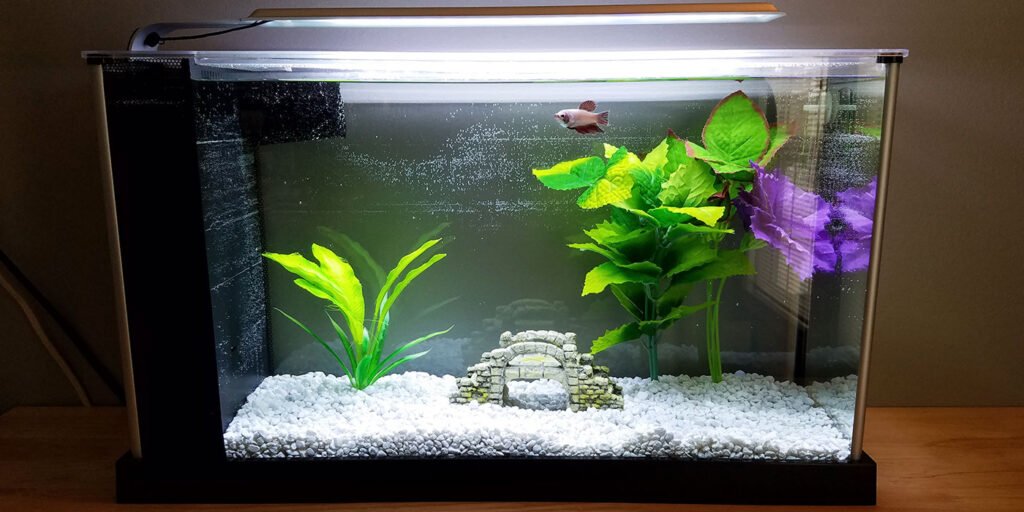
Planted betta aquarium with filtration and hiding areas
Clean the aquarium in sections so mature biological surfaces are not stripped all at once.

Rinse reusable sponge and biological media gently in removed aquarium water or conditioned water. Do not replace every piece of media on the same day. Disposable cartridges often contain useful bacteria; replace only what is exhausted or damaged, and preserve other mature media during the change.

Clean the impeller and intake when flow declines. Never use soap or household cleaner on aquarium equipment.

Can a betta live without a filter?

An unfiltered container demands frequent testing and water replacement and offers little protection from sudden ammonia or temperature changes. Survival in an emergency container is not a suitable long-term standard. If the filter fails, add aeration if available, test water, feed lightly and perform conditioned, temperature-matched water changes as results require.

Do live plants replace a filter?

No. Healthy plants can consume some nitrogen and provide cover, but growth varies and dead leaves add waste. Plants complement biological filtration; they do not guarantee zero ammonia or nitrite.

Tank size, heat and filtration work together

A five-gallon or larger aquarium is easier to heat and keep stable than a bowl. Bettas also need a secure lid, a controlled heater where room temperature is insufficient, a thermometer, conditioned water and smooth cover. A filter cannot compensate for an undersized, cold or uncycled enclosure.

Frequently asked questions

Should the filter run all night?

Yes. Biological media needs continuous oxygenated water flow. Switching a filter off nightly can damage the biofilter and destabilize water quality.

Can I turn the filter off while feeding?

A brief pause may be acceptable if the manual permits it, but remember to restart it immediately. It is safer to adjust flow or feed in a calm area.

How often should filter media be replaced?

There is no universal calendar. Rinse mechanical media when dirty, preserve biological media while it remains intact and replace specialty chemical media according to its purpose and manufacturer directions.

Why is my betta resting near the filter?

It may be using a calm ledge, hiding from excessive flow elsewhere or showing illness. Observe breathing and appetite, check temperature and test ammonia, nitrite and nitrate before assuming the behavior is normal.

References and related guides

Final answer

Give a betta a cycled filter with gentle, protected flow. An air-driven sponge filter is often the simplest choice; an adjustable HOB or internal filter can also work. Surface breathing, plants and frequent cleaning do not replace stable biological filtration.

Best HOB Filters: Selection, Setup and Maintenance

Best HOB Filters: Selection, Setup and Maintenance

Short answer: the best hang-on-back (HOB) filter is one that provides enough real flow, reusable biological media and safe intake/output conditions for your livestock. Our three current reference choices are AquaClear 110 for flexible media, Marineland Penguin 350 for cartridge convenience and Fluval C4 for staged media access.

Hang-on-back aquarium filter installed on a fish tank
A HOB filter should be sized for the aquarium’s livestock, head height and maintenance routine—not only the gallon number on the box.

Three current HOB filter designs compared

Product Best for Media design Where to buy
AquaClear 110 Large freshwater aquariums and custom media Open reusable basket; adjustable flow Check on Amazon
Marineland Penguin 350 Straightforward cartridge-based maintenance Cartridges plus rotating Bio-Wheels Check on Amazon
Fluval C4 Separated mechanical and biological stages Multi-stage baskets and biological chamber Check on Amazon

Verify the model and voltage on the retailer page. As an Amazon Associate, Aquarium Hunter earns from qualifying purchases.

How this guide differs from our power-filter roundup

This page focuses specifically on HOB design, installation, media arrangement and troubleshooting. For a shorter product-first comparison across current power filters, see our best aquarium power filters guide.

Current recommendations

1. AquaClear 110 — best for customizable media

The AquaClear’s open basket lets you choose reusable foam and biological media instead of relying only on disposable cartridges. Its flow control is useful for feeding or calmer livestock, though even reduced flow may be too strong for a small aquarium. The 110 is a large model; choose an appropriate AquaClear size rather than assuming bigger is always safer.

Check AquaClear 110 on Amazon · Manufacturer specifications

2. Marineland Penguin 350 — best for cartridge simplicity

The Penguin 350 uses replaceable cartridges and rotating Bio-Wheels. It is easy to understand, but replacing all media at once can discard useful bacteria. Keep the Bio-Wheels wet during maintenance, never scrub them under chlorinated tap water and change only the media that actually needs replacing.

Check Marineland Penguin 350 on Amazon

3. Fluval C4 — best staged-media design

The C4 separates coarse and fine mechanical filtration from chemical and biological stages, making it easier to service one section without disturbing everything. It still needs enough clearance behind the aquarium and sufficient water depth to restart reliably after maintenance or a power interruption.

Check Fluval C4 on Amazon

How to size a HOB filter

Manufacturer gallon ratings are screening tools, not guarantees. Stocking level, fish size, feeding, plants, prefilters and maintenance all affect the required capacity. Published gallons-per-hour figures are commonly measured under favorable conditions; lift height, dirty media and restricted intakes reduce real flow.

  • Choose for the aquarium’s adult livestock and waste production.
  • Provide gentle areas for bettas, long-finned fish, fry and shrimp.
  • Use an intake sponge where small animals could be drawn in.
  • For heavily stocked or critical systems, use two independent filters or another form of redundancy.
  • Confirm that the aquarium rim, lid and wall clearance accept the filter.

Media order and maintenance

Water should generally meet coarse mechanical media before finer pads and biological media, although the filter’s manual takes priority. Carbon is optional for routine freshwater use; it is most useful for specific dissolved contaminants or removing medication when the medication instructions call for it.

  1. Unplug the filter before placing hands in the water or removing the motor.
  2. Rinse reusable sponges and biological media gently in removed aquarium water or conditioned water.
  3. Do not replace every biological surface on the same day.
  4. Clean the impeller and intake when flow declines.
  5. Refill or prime the chamber exactly as the manual directs before restarting.
  6. Test ammonia and nitrite after major maintenance, medication or a prolonged outage.

Setup and outage safety

Keep the aquarium water level high enough to reduce splashing and restart problems. Form a drip loop below a GFCI/RCD-protected outlet, keep plugs dry and never run a HOB filter without water. After a power cut, verify that the filter has restarted rather than assuming the motor recovered.

If media remained stagnant during a long outage, smell and inspect it before returning the water to the tank. When in doubt, discard foul water, rinse media in conditioned water, restore aeration and monitor ammonia and nitrite closely.

Common HOB filter problems

The filter is noisy

Top up the water, clean the impeller well, remove trapped air and confirm that the unit sits level. A rattling impeller may be worn or obstructed.

Flow has fallen

Check the intake sponge, tube, impeller and mechanical media. Do not compensate by discarding all biological media.

The current is too strong

Use the model’s flow control, raise the water level or fit a safe output baffle. Never block the outlet completely.

Water is clear but tests are unsafe

Clarity is not proof of biological filtration. Test ammonia, nitrite and nitrate and correct the underlying cycle, stocking or maintenance problem.

Frequently asked questions

Can a HOB filter be the only filter?

Yes, when correctly sized and maintained for the aquarium. High-waste livestock or systems needing redundancy may benefit from a second filter.

Should I replace cartridges every month?

Follow the manufacturer, but do not automatically discard useful biological media. Mechanical pads can often be rinsed until damaged; carbon has a limited service life when used for a specific chemical-filtration job.

Is more turnover always better?

No. Enough circulation and filtration are essential, but excessive current can exhaust weak swimmers and disturb plants or substrate. Match both filtration capacity and flow pattern to the inhabitants.

Verdict

Choose AquaClear when reusable, customizable media is the priority; Penguin for a simple cartridge-and-Bio-Wheel layout; or Fluval C4 for clearly separated stages. Whichever design you use, mature biological media and consistent maintenance matter more than disposable-cartridge marketing.