3 Best Aquarium-Safe Silicone Sealants for Repairs

Disclosure: Aquarium Hunter may earn a commission from qualifying purchases made through links on this page, at no extra cost to you.

Aquarium silicone has one unusually important job: it must hold a watertight bond without introducing ingredients that could harm aquatic life. For that reason, this guide now recommends only sealants whose manufacturers specifically describe them for aquarium use—not general-purpose bathroom, automotive or marine products.

Short answer: ASI 509 is our best overall choice for substantial glass-aquarium work; Aqueon is the easiest small-tube option for minor repairs; Marineland is a practical alternative for ornaments and small glass repairs. Always follow the label, allow a full cure, and water-test before returning livestock.

Quick comparison

Product Best for Color/format
ASI 509 Aquarium Sealant Larger glass repairs and builds Clear or black; cartridge
Aqueon Silicone Aquarium Sealant Small repairs and first-time users Clear or black; tube/cartridge
Marineland Silicone Sealant Small leaks and ornaments Clear; squeeze tube

The best aquarium-safe silicone sealants

1. ASI 509 Aquarium Sealant — Best overall
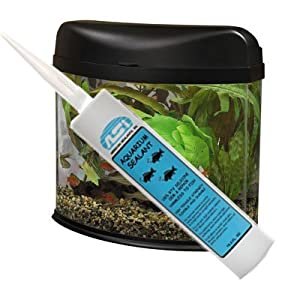
ASI 509 clear aquarium silicone sealant

ASI 509 is the strongest all-round recommendation here because it is made specifically for aquarium manufacture and repair. The manufacturer describes it as a one-part RTV silicone suitable for fresh- and saltwater aquariums, with strong adhesion to glass and a non-slump consistency that helps on vertical seams.

It is available in clear and black. Clear is less visually prominent on an existing tank, while black can suit aquariums already built with black seams. ASI says the material typically skins and cures progressively, but recommends allowing a full seven days before strength testing. That conservative wait is sensible for an aquarium: “dry to the touch” is not the same as fully cured through the bead.

  • Pros: aquarium-specific formulation; suitable for fresh or salt water; clear and black options; useful cartridge size.
  • Cons: longer wait before testing; a caulking gun and careful technique are helpful; not a remedy for cracked glass or uncertain structural damage.

Check price on Amazon


2. Aqueon Silicone Aquarium Sealant — Best for small repairs
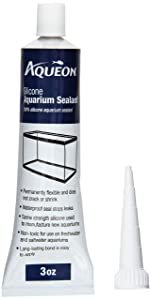
Aqueon silicone aquarium sealant

Aqueon’s sealant is a convenient choice when you need a smaller amount. Aqueon states that it is 100% silicone, waterproof, permanently flexible and non-toxic to freshwater and saltwater fish after proper curing. It is sold in clear and black and in several sizes, so you can match the format to the job.

The squeeze tubes are easier to manage for a short interior bead or an ornament repair than a full cartridge. For a long seam, however, a cartridge provides better flow control. Check the current package instructions for surface preparation and cure time; do not rely on an old online estimate.

  • Pros: aquarium-labelled; accessible tube sizes; clear and black options; permanently flexible.
  • Cons: small tubes are inefficient for long seams; opened tubes may be difficult to store; structural repairs still require expert judgment.

Check price on Amazon


3. Marineland Silicone Sealant — Best compact alternative

Marineland clear silicone aquarium sealant

Marineland describes this as a 100% clear silicone rubber sealant for repairing leaking aquariums and broken ornaments. Its compact squeeze-tube format is useful for modest jobs where buying a large cartridge would create waste.

Because it is a small tube, it is not our first choice for rebuilding a long seam. It is best reserved for repairs that are genuinely minor and non-structural. As with every sealant here, the aquarium must be empty, clean and completely dry before application, then left for the label’s full cure period.

  • Pros: explicitly intended for aquarium repair; compact and convenient; clear finish.
  • Cons: limited quantity; harder to produce a consistent long bead; not a safe fix for damaged glass.

Check price on Amazon

What makes silicone aquarium-safe?

“100% silicone” is not enough by itself. Look for a current manufacturer statement that the exact product is intended for aquariums or safe for aquatic life after curing. Avoid kitchen-and-bath caulks marketed for mold or mildew resistance, products containing biocides, automotive gasket makers, thread lockers, and polyurethane marine adhesives such as 3M 5200 unless the aquarium manufacturer explicitly specifies them.

Product names and formulas can change. Read the exact label and technical data for the tube you receive; do not assume that a similarly named variant has the same suitability.

Can you safely reseal the aquarium yourself?

A cosmetic interior bead and a structural seam are not the same thing. Silicone between the glass panes carries the load. If a bottom seam leaks, glass is chipped or cracked, panes have shifted, or you do not know why the seal failed, move the fish to a safe temporary setup and consult an aquarium professional—or replace the tank. Smearing new silicone over an old or wet bead is not a dependable structural repair.

Safer preparation, curing and leak testing

  1. Relocate livestock. Move fish, invertebrates, plants and filter media to a heated, aerated temporary container as appropriate.
  2. Drain, clean and dry. The repair area must be completely dry. Work with good ventilation and follow the product label.
  3. Remove only the failed interior bead. Use a fresh razor carefully on glass and avoid cutting into the structural silicone between panes. Wear cut-resistant gloves and eye protection.
  4. Remove residue. Follow the sealant manufacturer’s cleaning instructions. Do not sand aquarium glass or use a heat gun on a tank.
  5. Apply one continuous bead. Tool it as directed while fresh, without touching it with bare skin.
  6. Allow the full cure. Cure time changes with bead thickness, humidity and temperature. Use the longest applicable manufacturer instruction; ASI 509 recommends seven days before testing.
  7. Water-test safely. Fill the aquarium in a garage, outdoors or another area where a leak will not cause damage. Leave it full for at least 24 hours while inspecting every seam.
  8. Re-establish the system. Confirm temperature and water parameters before returning livestock. If the filter was offline, protect beneficial bacteria and check the aquarium nitrogen cycle.

Frequently asked questions

Can aquarium silicone cure underwater?

No. These products need clean, dry surfaces and adequate air exposure to cure. Never attempt an underwater emergency patch.

Is silicone safe as soon as it feels dry?

No. A surface skin can form well before the centre of the bead has cured. Wait for the full label-specified cure period before water testing.

Can silicone repair cracked aquarium glass?

Silicone does not restore the strength of cracked glass. Empty the tank and seek professional advice or replace the aquarium.

Will new silicone stick to old silicone?

Not reliably enough for a leak repair. New silicone bonds best to properly prepared glass, not to cured silicone residue.

Verdict

ASI 509 is the best overall choice when you need an aquarium-specific cartridge and can allow a conservative cure. Aqueon is the most convenient for small jobs, while Marineland is a useful compact alternative. Whichever you choose, correct diagnosis and preparation matter more than brand: never gamble with a compromised structural seam.

4 Best HOB Protein Skimmers for Saltwater Aquariums

4 Best HOB Protein Skimmers for Saltwater Aquariums

A hang-on-back protein skimmer is useful when a saltwater aquarium has no sump or cabinet space for an in-sump model. It mixes air and water to create foam that carries dissolved organic compounds into a collection cup before some of that material breaks down. A skimmer supports filtration, but it does not replace water changes, biological filtration or sensible feeding.

Our top pick is the AquaMaxx HOB-1.5 for its narrow profile, current manufacturer support and realistic bioload-based ratings. The Reef Octopus Classic 100-HOB suits aquarists who want a larger external-pump design, while the Coralife Super Skimmer offers flexible hang-on or in-sump installation.

Disclosure: As an Amazon Associate, Aquarium Hunter earns from qualifying purchases.

Quick comparison

Skimmer Best for Important fit detail
AquaMaxx HOB-1.5 Best overall HOB skimmer About 3.5 inches front-to-back; 4 inches needed above the cup
Reef Octopus Classic 100-HOB Larger systems and external pump layout Check rear clearance and the wet pump section
Coralife Super Skimmer 65 Flexible HOB or in-sump use Visible pump and bubble diffuser require tank space
Bubble Magus QQ1 Nano saltwater aquariums Compact capacity; do not size from tank volume alone

Best HOB protein skimmers reviewed

1. AquaMaxx HOB-1.5 — Best overall

AquaMaxx HOB-1.5 hang-on-back protein skimmer

The HOB-1.5 is a slim external skimmer driven by an upgraded Sicce-based AquaMaxx SHARK 1.0 pump. AquaMaxx lists the unit at 7.5 × 3.5 × 17 inches, with 11-watt power consumption. It fits rims up to 3/4 inch thick and needs about 4 inches of clearance above the collection cup for removal.

Most useful is the manufacturer’s split rating: up to 75 gallons with a light bioload or 40 gallons with a heavy bioload. That is more informative than a single maximum-volume claim. A heavily stocked reef, frequent feeding and nutrient-sensitive corals all justify sizing conservatively.

Advantages: narrow body, realistic bioload guidance, replaceable supported pump and responsive cup adjustment.

Limitations: premium price, substantial height and mandatory rear/upper clearance. As with any external skimmer, careful assembly and leak checks are essential.

Check price on Amazon

See manufacturer specifications

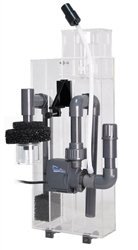
2. Reef Octopus Classic 100-HOB — Best external-pump option

Reef Octopus Classic 100-HOB protein skimmer

The Classic 100-HOB uses an Aquatrance AQ-1000S pinwheel pump and an acrylic skimmer body. Reef Octopus lists 8 to 9 watts depending on mains frequency, about 92 GPH maximum water flow and a broad 13- to 105-gallon tank-volume range.

That upper number should not be treated as a promise for every 105-gallon reef. Actual performance depends on bioload, feeding, air draw, salinity, tuning and maintenance. For a heavily stocked aquarium, leave a generous margin rather than selecting solely by the largest number on the box.

Advantages: current manufacturer documentation, efficient purpose-built pump, external HOB format and accessible replacement information.

Limitations: larger and more visually prominent than nano units; installation still places a wet pump section in the aquarium. Measure the complete footprint before ordering.

Check price on Amazon

See manufacturer specifications

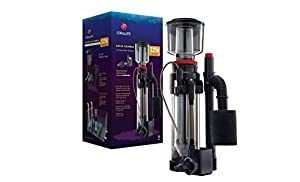
3. Coralife Super Skimmer 65 — Best flexible installation

Coralife Super Skimmer 65 with pump

Coralife’s Super Skimmer can be mounted on the aquarium or used in a sump, which makes it useful if the system may later be upgraded. The current Coralife catalogue lists 65-, 125- and 220-gallon models; this review and Amazon link refer specifically to the 65-gallon version.

The design uses a needle-wheel system, wide collection-cup neck and large air intake. The included pump and bubble diffuser occupy visible space when used as a HOB, so measure inside and behind the aquarium. Treat the 65-gallon label as a nominal model designation and size down for a demanding reef.

Advantages: two mounting options and an established product line.

Limitations: more equipment is visible inside the display than with a fully external body; water level, diffuser position and adjustment affect microbubbles and consistency.

Check price on Amazon

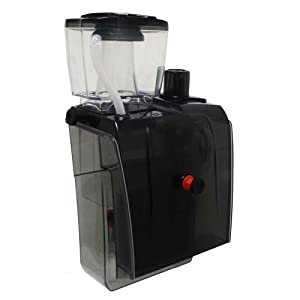
4. Bubble Magus QQ1 — Best for nano tanks

Bubble Magus QQ1 nano HOB protein skimmer

The QQ1 is the compact option in this comparison. Its small body is easier to accommodate on a nano marine aquarium, but small tanks change quickly and leave less room for tuning errors. Confirm the seller’s current dimensions and rating against your rim, lid and water level before ordering.

Advantages: compact HOB format and a lower-capacity choice for systems where larger skimmers will not fit.

Limitations: less headroom for heavy feeding or future stocking, and nano tanks can make fluctuating water levels more obvious. An automatic top-off can improve consistency.

Check price on Amazon

How to choose a HOB protein skimmer

Size for bioload, not just water volume

Manufacturers do not all calculate capacity the same way. A lightly stocked fish-only tank produces a different organic load from a crowded reef fed several times a day. Use the heavy-bioload rating when supplied, or choose below the advertised maximum. Oversizing excessively can also make a skimmer cycle between producing foam and doing very little, so bigger is not automatically better.

Measure the complete installation

Check body height, rear clearance, rim thickness, lid cut-outs and the space needed to lift the cup straight up. Allow room for hoses, the power cord and maintenance access. Make sure the mounting surface is sound and level; a HOB unit full of water is heavier than its dry specification suggests.

Consider water-level stability

Protein skimmers respond to water depth and salinity. Evaporation changes both in a small aquarium. Keep the water level stable, ideally with an automatic top-off, and tune the unit only after salinity and water height are correct.

Noise and microbubbles

Air intake, vibration and splashing all create noise. A silencer helps, but a clean venturi, correctly seated pump and level installation matter too. New skimmers may release microbubbles during break-in. Check assembly, water depth and outlet sponges rather than assuming weeks of bubbles are always normal.

Setup and tuning

  1. Rinse the skimmer components with fresh water. Do not use soap or household cleaners.
  2. Follow the model-specific manual, fit every O-ring and hose correctly, and confirm that the aquarium rim is within the stated limit.
  3. Position a drip loop below the electrical outlet and use a protected aquarium circuit. Keep plugs and connections dry.
  4. Start with the collection cup relatively high so the skimmer produces drier foam and is less likely to overflow.
  5. Watch the system closely after startup, feeding, additives, water changes or placing hands in the tank. These can temporarily collapse or increase foam.
  6. Adjust in small steps and allow time between changes. Darker, drier skimmate usually means a higher cup; paler, wetter skimmate means a lower cup.

A new skimmer often needs a break-in period while manufacturing residues and surface films clear, but there is no universal three-week waiting rule. If it continually overflows, unplug it, check water depth and assembly, clean the cup and air intake, and review the manual.

Maintenance and safety

Empty and rinse the collection cup before waste reaches the air path or drain fitting. Wipe the cup neck regularly because buildup reduces foam rise. Inspect the air line and venturi for salt creep, and clean the pump and impeller on the manufacturer’s schedule.

HOB skimmers carry water outside the aquarium, so leaks deserve immediate attention. Check O-rings, unions, brackets and hoses after every service. Never run a damaged cord or pump. Unplug equipment before putting hands in the water, and arrange cords with drip loops.

A skimmer removes some dissolved organics, but it does not remove every pollutant and cannot replace testing. Continue regular water changes and monitor salinity, temperature, ammonia, nitrate, phosphate and alkalinity as appropriate for the system.

Frequently asked questions

Does every saltwater aquarium need a protein skimmer?

No. Some lightly stocked nano tanks succeed with careful feeding, biological filtration and frequent water changes. A skimmer becomes more valuable as bioload and feeding increase, and it can improve gas exchange and provide a useful margin for reef systems.

Can a protein skimmer be too large?

Yes. A greatly oversized unit may struggle to maintain a stable foam head when there are not enough organics, leading to inconsistent operation. Choose for the real bioload and follow the manufacturer’s light- or heavy-load guidance when available.

Why did my skimmer suddenly overflow?

Common triggers include a changed water level, additives, epoxy, conditioners, oily foods, a blocked air intake or incorrect cup setting. Switch the unit off if overflow threatens the floor or aquarium, identify the cause and restart with the cup raised.

Should I run a protein skimmer all day?

Continuous operation is common and helps maintain aeration. Some aquarists schedule it around feeding or supplements, but frequent on-off cycling can reduce consistency. Follow livestock needs and the instructions for any medication or additive that specifically requires the skimmer to be paused.

Our verdict

The AquaMaxx HOB-1.5 is our best overall recommendation because its current documentation gives clear dimensions, rim clearance and separate light- and heavy-bioload ratings. The Reef Octopus Classic 100-HOB is a strong alternative for a larger external-pump format, while the Coralife Super Skimmer 65 provides flexible mounting. Measure carefully and choose conservatively: fit, maintenance access and actual bioload matter more than the largest advertised gallon number.

5 Best Guppy Foods for Color, Growth and Healthy Fish

5 Best Guppy Foods for Color, Growth and Healthy Fish

Guppies are energetic omnivores with tiny mouths, so the best food combines animal and plant ingredients in a size they can eat easily. A complete staple should do most of the work, while a little variety can support good condition and natural colour. Food cannot compensate for poor water quality or genetics, and overfeeding is a much greater risk than offering too little.

Our top pick is Hikari Fancy Guppy. Its very small, slowly sinking granules are made specifically for guppies and other livebearers. Omega One Super Color Flakes are an excellent flake alternative, while NorthFin Community is our preferred micro pellet.

Disclosure: As an Amazon Associate, Aquarium Hunter earns from qualifying purchases.

Quick comparison

Food Best for Format
Hikari Fancy Guppy Best overall Very small, slow-sinking granule
Omega One Super Color Flakes Best flakes for colour Flake
NorthFin Community 0.5 mm Best micro pellet Slow-sinking pellet
Zoo Med Spirulina 20 Best plant-rich rotation food Flake
New Life Spectrum Optimum Flakes Best for community tanks Flake

Best guppy foods reviewed

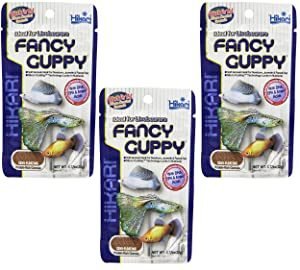
1. Hikari Fancy Guppy — Best overall

Hikari Fancy Guppy fish food

Hikari designed this food for guppies and other livebearers. The semi-floating granules absorb water and soften without quickly disintegrating, giving surface-feeding guppies time to find them. The tiny particle size also reduces the need to crush the food for adults.

The official analysis lists 50% crude protein and 8% crude fat. The formula includes colour-enhancing ingredients, seaweed as an iodine source and stabilised vitamin C. That makes it a strong everyday staple, although we still recommend occasional variety rather than relying on any single food forever.

Best for: owners who want a purpose-made guppy staple with a very small particle size.

Check price on Amazon

See manufacturer specifications

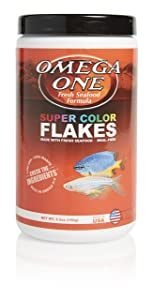
2. Omega One Super Color Flakes — Best flakes for colour

Omega One Super Color Flakes

Omega One Super Color Flakes use salmon and whole herring, with salmon skins supplying naturally occurring pigments. Flakes are convenient for guppies because they remain near the surface and can be rubbed between clean fingers for smaller fish.

The manufacturer lists 42% crude protein and 12% crude fat. This is a rich food, so use a small pinch rather than a cloud of flakes. It is a particularly good choice when you keep different sizes of guppies and want a food that is easy to crumble.

Best for: easy portioning and supporting natural colour through a quality flake diet.

Check price on Amazon

See manufacturer specifications

3. NorthFin Community Formula 0.5 mm — Best micro pellet

NorthFin Community Formula micro pellets

NorthFin Community combines krill, herring and sardine with kelp, spirulina and garlic. Its 0.5 mm version is much more suitable for adult guppies than standard-sized pellets, and the slow-sinking format lets fish feed through the upper water column.

The official analysis lists 40% crude protein and 5% crude fat. Add only a few pellets at a time: even small pellets can reach the bottom if too much is dropped in at once.

Best for: aquarists who prefer a measured micro pellet for a mixed freshwater community.

Check price on Amazon

See manufacturer specifications

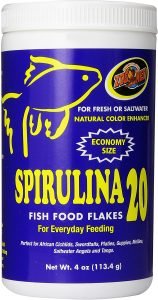
4. Zoo Med Spirulina 20 Flakes — Best plant-rich rotation food

Zoo Med Spirulina 20 fish food flakes

This flake contains 20% spirulina alongside salmon meal and is labelled for daily use with freshwater and marine fish, including guppies. The plant-rich recipe makes it a useful way to add variety to an omnivorous guppy’s diet.

Its guaranteed analysis lists 45% crude protein and 4% crude fat. Crush the flakes to an appropriate size, and rotate them with a balanced guppy or community staple.

Best for: adding spirulina and variety without preparing fresh vegetables.

Check price on Amazon

See manufacturer specifications

5. New Life Spectrum Optimum Flakes — Best for community tanks

New Life Spectrum Optimum fish food flakes

New Life Spectrum Optimum Flakes are a practical general tropical food when guppies share their aquarium with other small community fish. The flakes can be crushed for tiny mouths and spread across the surface so less assertive fish get a chance to feed.

This is our broad community option rather than a guppy-specific formula. Watch how every species responds, offer only a small amount, and supplement thoughtfully if a tank mate has specialised dietary needs.

Best for: convenient feeding in a peaceful mixed tropical aquarium.

Check price on Amazon

How to choose food for guppies

Use a complete staple

Choose a food intended as a complete diet for small tropical omnivores. A sensible ingredient list includes recognisable aquatic proteins plus plant material such as spirulina or kelp. Marketing words such as “premium” matter less than an appropriate particle size, a balanced formula and food your fish actually eat.

Match the particle size

Guppies have small, upturned mouths. Fine flakes and roughly 0.5 mm granules are easier to manage than large pellets. Crush flakes or pellets when needed, especially for juveniles. If fish repeatedly spit food out, the pieces may be too large or hard.

Colour food has limits

Ingredients containing natural pigments can support normal colour, but no food can rewrite genetics. Strong colour also depends on low stress, stable water conditions and overall health. Be wary of dramatic promises or treating colour enhancement as more important than balanced nutrition.

How much and how often should guppies eat?

Feed adult guppies one or two small meals per day. Offer only what the group can finish quickly, ideally within about a minute, then remove obvious leftovers. Manufacturer directions can be broader, but the right amount depends on fish size, temperature, stocking and how much natural grazing is available.

Uneaten food breaks down and can contribute to ammonia and nitrate. If food regularly reaches the substrate, reduce the portion. Monitor body condition rather than responding to begging; healthy guppies are enthusiastic feeders even when they do not need more.

Fry need much smaller food and more frequent tiny meals because they are growing rapidly. A powdered fry food or finely crushed quality flake can work. Keep portions controlled and maintain excellent water quality, because frequent feeding also creates more waste.

Should guppies have treats?

Small amounts of frozen or cultured foods such as brine shrimp or daphnia can add enrichment and variety. Thaw frozen food in a separate container and add only a little. Avoid wild-collected live foods because they may introduce parasites or pollutants. Freeze-dried foods should be a supplement, not the whole diet.

Do not feed bread, seasoned human food or fatty mammal meat. These are not appropriate substitutes for a formulated tropical fish diet.

Storage and freshness

Buy a container your fish will finish while it is fresh. Keep the lid tightly closed and store food in a cool, dry place away from aquarium humidity and direct sun. Discard food that smells rancid, has become damp or shows mould. Using a small daily container can prevent repeatedly exposing the main supply to moisture.

Frequently asked questions

Are flakes or pellets better for guppies?

Both can work. Flakes are easy to crush and remain available at the surface; micro pellets make portions easier to measure. The best choice is a complete formula in a size your guppies swallow comfortably.

Can guppies eat betta food?

An occasional small amount is unlikely to be a problem, but betta foods are designed for more carnivorous fish. Guppies do better with a balanced omnivore staple containing both aquatic protein and plant ingredients.

Why is my guppy spitting food out?

The particle may be too large or hard, or the food may be unfamiliar. Crush it smaller and watch the fish closely. Persistent refusal to eat, especially with hiding, weight loss or abnormal swimming, can indicate stress or illness rather than a food preference.

Our verdict

Hikari Fancy Guppy is our best overall choice because its tiny, slowly sinking granules suit guppy feeding behaviour and its formula is designed for livebearers. Choose Omega One Super Color Flakes if you prefer an easily crushed flake, or NorthFin Community 0.5 mm for a measured micro pellet. Whichever food you choose, small portions, sensible variety and clean water will make the biggest difference.

5 Best Artificial Aquarium Plants: Safe, Lifelike Picks

5 Best Artificial Aquarium Plants: Safe, Lifelike Picks

Artificial aquarium plants add cover and color without lighting, fertilizer or pruning. The best choices have smooth leaves, stable bases and proportions that suit the tank. They should never have sharp seams, exposed wire, loose paint or small pieces that livestock can pull off.

Our top pick: the Marina Naturals silk foreground plant is soft enough for delicate fins and works well in small community and betta tanks. For a taller background, the Fluval Anubias offers a convincing broad-leaf shape.

Best Artificial Aquarium Plants: Quick Comparison

Plant Best for Material/style Placement
Marina Naturals Foreground Silk Plant Bettas and delicate fins Soft silk-style leaves Foreground
biOrb Easy Plant Set Coordinated display Mixed artificial set Midground/background
MyLifeUNIT Seaweed 10-Pack Budget coverage Flexible plastic fronds Background
Fluval Anubias 12-Inch Lifelike broad leaves Artificial Anubias Background
SunGrow Plastic Leaf Plant Extra hiding cover Broad plastic leaves Midground

As an Amazon Associate, Aquarium Hunter earns from qualifying purchases. Prices and availability can change.

Artificial Aquarium Plant Reviews

1. Marina Naturals Foreground Silk Plant — Best Overall

Marina Naturals silk artificial aquarium plant

This compact silk-style plant adds low cover without filling the swimming area. Its softer leaves are a better starting point for bettas, fancy goldfish and other fish with easily torn fins than stiff, pointed plastic foliage. The muted shape also looks more natural than neon decorations.

Because it is a foreground plant, one piece will not hide equipment or fill a tall aquarium. Check the base and every leaf edge before use, then position it where fish can rest beside it without becoming trapped.

  • Pros: soft leaves; compact footprint; natural appearance.
  • Cons: limited height and coverage.

Check the Marina Naturals price on Amazon

2. biOrb Easy Plant Set — Best Coordinated Set

biOrb Easy artificial aquarium plant set

The biOrb Easy Plant Set pairs plants of different heights so a display gains depth without buying pieces separately. It is a neat match for rounded biOrb aquariums, but the plants can also be used in other tanks when their bases sit securely.

The stylized design is more decorative than botanical. Measure the available height and leave clear space around the filter intake. Fish should be able to pass around the leaves without being funneled into a narrow gap.

  • Pros: coordinated sizes; quick aquascape; reusable.
  • Cons: distinctive style will not suit every natural layout.

Check the biOrb plant set price on Amazon

Manufacturer details

3. MyLifeUNIT Artificial Seaweed 10-Pack — Best Value

MyLifeUNIT artificial seaweed aquarium plants

This multipack is useful for creating a continuous background or distributing cover through a larger aquarium. Each flexible frond has its own base, so spacing can be adjusted around rocks, heaters and open swimming lanes. The green color is less intrusive than brightly colored plastic.

Inspect every piece before adding it. Budget multipacks can vary in finish, and any rough flashing, loose strands or unstable base should be removed from service. Use fewer plants in small tanks so debris cannot collect in dense clumps.

  • Pros: ten pieces; flexible layout; strong coverage for the cost.
  • Cons: requires careful inspection; dense groups can trap waste.

Check the MyLifeUNIT set price on Amazon

4. Fluval Anubias 12-Inch — Best Lifelike Background Plant

Fluval Anubias artificial aquarium plant

Fluval’s artificial Anubias uses broad leaves and restrained green shades to imitate a familiar aquarium plant. At roughly 12 inches tall, it can soften a heater or back corner while leaving useful open water in front.

The broad leaves provide visual shelter, but artificial foliage does not absorb nitrate or produce oxygen like a healthy live plant. Keep the plant away from an intake and check that large fish cannot uproot the base.

  • Pros: convincing shape; useful height; established aquarium brand.
  • Cons: one plant provides less coverage than a multipack.

Check the Fluval Anubias price on Amazon

5. SunGrow Plastic Leaf Plant — Best for Added Cover

SunGrow broad-leaf artificial aquarium plant

This broad-leaf design creates a sheltered midground area and can break the line of sight between territorial fish. It is most useful as one part of an aquascape, with clear swimming routes around it and open access for cleaning.

Plastic plants are firmer than silk. Run a finger and a piece of fine fabric across the edges before installation; if the fabric catches, the plant is not suitable for long-finned fish. Recheck it whenever it is removed for cleaning.

  • Pros: broad visual cover; easy to reposition; no special lighting.
  • Cons: firmer leaves require extra fin-safety checks.

Check the SunGrow plant price on Amazon

Silk vs Plastic Aquarium Plants

Silk-style plants are usually the safer choice for bettas and other long-finned fish because they flex when brushed. Plastic plants hold their shape better and are easier to arrange as upright backgrounds, but stiff points and molding seams need close inspection. The base material matters too: it should be inert, smooth and heavy enough to remain stable.

How to Choose Safe Artificial Plants

  • Inspect every edge: discard anything sharp, cracked or exposing wire.
  • Match the scale: tall plants belong at the back; low plants preserve open swimming room.
  • Check stability: bury the base according to its design without creating a trapping gap.
  • Protect equipment: keep leaves clear of filter intakes, heaters and wavemakers.
  • Consider the species: digging cichlids, grazing plecos and turtles can dislodge lightweight decor.

Cleaning Artificial Aquarium Plants

  1. Remove one group at a time so fish retain cover.
  2. Rinse with aquarium-safe water and use a dedicated soft brush.
  3. Do not use household soap, fragrance or surface cleaner.
  4. For stubborn algae, follow the manufacturer’s cleaning guidance, rinse completely and use dechlorinator where appropriate.
  5. Replace plants that remain brittle, faded, cracked or rough.

Artificial plants reduce gardening work, but they still collect detritus. Vacuum around their bases during water changes and avoid packing so many together that waste becomes inaccessible.

Frequently Asked Questions

Are artificial plants safe for betta fish?

Soft silk-style plants with smooth bases are generally the safest artificial option. Test every edge before use and remove any decoration that snags fine fabric.

Do artificial aquarium plants help water quality?

No. They provide cover and visual structure, but they do not consume nutrients or support the tank in the same way as living plants. Filtration, maintenance and suitable stocking are still essential.

Can artificial plants go in saltwater tanks?

Only when the manufacturer identifies the material as suitable. Marine tanks can expose metal parts or poor coatings quickly, so avoid unknown wire cores and inspect decorations often.

Final Verdict

The Marina Naturals silk plant is our best overall choice for soft, fish-friendly foreground cover. The Fluval Anubias is a stronger background feature, while the MyLifeUNIT multipack offers the most flexible coverage for the money.

3 Best Goldfish Tanks: Spacious, Safer Choices

3 Best Goldfish Tanks: Spacious, Safer Choices

Disclosure: Aquarium Hunter may earn a commission from qualifying purchases made through links on this page, at no extra cost to you.

Goldfish need substantially more swimming room, filtration and oxygen than bowls and small “goldfish kits” provide. The best tank is a wide, rectangular aquarium sized for the fish’s adult body length and waste load—not merely the number printed on a product box.

Short answer: For fancy goldfish, the Aqueon 40 Breeder offers the most useful footprint and freedom to choose oversized filtration. The Tetra 55-gallon kit provides more water volume and length for a pair of compatible fancy goldfish, although its filter may need supplementing. The Fluval Flex 32.5 is the most compact option here and is best considered for one fancy goldfish with conservative stocking and disciplined maintenance. Long-bodied common, comet and shubunkin goldfish usually outgrow these choices and are better planned for a much larger system or suitable pond.

Quick comparison

Tank Best use Important limitation
Aqueon 40 Breeder Best overall footprint for fancy goldfish Tank only; equipment and lid are separate
Tetra 55-Gallon Kit More length and water volume Narrower front-to-back; filter may need help
Fluval Flex 32.5 Compact all-in-one for one fancy goldfish Smallest option; rear filter reduces swim space

Best goldfish tanks reviewed

1. Aqueon 40 Breeder — Best overall footprint

Aqueon 40 Breeder glass aquarium for fancy goldfish

The Aqueon 40 Breeder is our best overall choice because its approximately 36-by-18-inch footprint provides more turning room and surface area than a tall tank of similar volume. That matters for bulky fancy goldfish and for oxygen exchange. Aqueon lists high-quality glass construction, clean silicone edges and black trim.

This is a bare tank, which is an advantage if you want to choose a filter with generous reusable mechanical and biological media. It also means you must budget for a properly fitted lid, light, stand, filter, thermometer, air supply if required, water conditioner and liquid test kit. Aqueon says a filled and decorated aquarium weighs roughly 10 pounds per gallon, so use a purpose-built, level stand and include drip loops on every electrical cord.

  • Pros: wide footprint; easy equipment customization; good surface area; standard shape makes accessories easier to source.
  • Cons: not a complete kit; only three feet long; unsuitable as a permanent home for adult common, comet or shubunkin goldfish.

Check price on Amazon


2. Tetra 55-Gallon Aquarium Kit — Best larger starter kit

Tetra 55-gallon aquarium kit suitable for fancy goldfish

Tetra’s current 55-gallon kit measures about 48 by 13 by 20 inches and includes two LED hoods, a Whisper PF60 filter, thermometer, 200-watt heater, net and starter samples. The four-foot length is useful for swimming, and the greater water volume gives more dilution and stability than the smaller tanks here.

The included heater is not automatically needed for goldfish; temperature requirements depend on variety, room conditions and stability. The supplied filter is a starting point, not permission to overstock. Goldfish produce substantial solid waste, so monitor ammonia, nitrite and nitrate and be prepared to add a second mature filter or replace the included unit with one offering more reusable media. Never replace all biological media at once.

  • Pros: four-foot swimming length; larger water volume; lids and basic equipment included.
  • Cons: only about 13 inches front-to-back; bundled filter may be limiting for a heavy goldfish bioload; heater may be unnecessary.

Check price on Amazon


3. Fluval Flex 32.5 — Best compact all-in-one

Fluval Flex 32.5 freshwater aquarium kit

The Fluval Flex 32.5 is a compact all-in-one with app-controlled lighting, two independent three-stage media chambers and twin adjustable output nozzles. Fluval lists dimensions of about 32.5 by 15.35 by 15.75 inches and pump output of 214 gallons per hour.

Its filtration compartments provide useful media space, but they also reduce the display volume. This is the minimum and most restrictive option in our comparison, so we would reserve it for one fancy goldfish rather than treating the label volume as a stocking target. Angle the outlets to avoid forcing a slow-swimming fancy fish to fight a strong current, add prefilter protection if necessary, and test water frequently.

  • Pros: integrated multi-stage filtration; adjustable outlets; covered, tidy layout; programmable light.
  • Cons: least swimming space here; curved front and rear chamber complicate cleaning; unsuitable for long-bodied goldfish.

Check price on Amazon

How large should a goldfish tank be?

There is no responsible one-number rule for every goldfish. Adult body length, body shape, activity, number of fish, filtration, oxygen, maintenance and actual water quality all matter. The RSPCA advises at least 50 litres as a baseline and a tank at least four times the adult body length long and twice the body length wide, with more space for additional fish. Its UK guidance also notes that goldfish may need at least 60 litres each. Treat those figures as minimum starting points, not targets to crowd.

Fancy goldfish are shorter-bodied and slower than common, comet and shubunkin varieties, but they still need a large footprint. Long-bodied varieties can reach substantial sizes and are active swimmers; FishBase records a maximum length of 48 cm for Carassius auratus. Plan a much larger aquarium or suitable filtered pond from the start rather than relying on a temporary small tank.

Why footprint matters more than a tall shape

Goldfish swim horizontally and benefit from turning room. A wide rectangular tank also exposes more water surface for gas exchange. Bowls, jars and novelty tanks have little usable volume, limited filtration space and unstable temperature and water chemistry. They are not suitable goldfish homes.

Filtration and cycling

Goldfish excrete ammonia and produce abundant solid waste. Choose a filter with accessible mechanical media for debris and substantial biological media for nitrifying bacteria. Manufacturer tank ratings are broad marketing guides; the real test is whether the aquarium consistently maintains 0 ppm ammonia and 0 ppm nitrite with nitrate controlled by maintenance.

Cycle the aquarium without fish before stocking. A mature nitrogen cycle converts ammonia to nitrite and then nitrate. Use a liquid test kit and do not add fish simply because the filter has been running for a fixed number of days. Read our aquarium nitrogen cycle guide and goldfish filter comparison for more detail.

Stand, floor and electrical safety

  • Use a stand designed for the exact aquarium footprint and filled weight.
  • Place it on a level, stable floor; never allow a rimmed tank to overhang.
  • Keep outlets and power boards away from splash zones and form a drip loop in every cord.
  • Do not move an aquarium containing water, substrate or fish.
  • Check the tank and seams for damage before setup, then leak-test it in a safe area.

Setting up a goldfish tank

  1. Rinse the empty tank with water only; never use household soap.
  2. Install the stand, tank, filter, lid, thermometer and any air equipment.
  3. Choose smooth substrate or a bare bottom that can be cleaned thoroughly. Avoid gravel small enough to enter a goldfish’s mouth but large enough to lodge.
  4. Use smooth, stable decor and leave an open swimming lane.
  5. Fill with temperature-matched, properly conditioned water.
  6. Complete a test-confirmed fishless cycle before adding goldfish.
  7. Introduce compatible fish conservatively and quarantine newcomers when possible.
  8. Test water and perform regular partial water changes with substrate cleaning.

Frequently asked questions

Can goldfish live in a bowl?

No. Bowls do not provide adequate swimming room, stable water quality, filtration or oxygen exchange for long-term goldfish welfare.

Do goldfish need a heater?

Not always. Many goldfish do well at stable room temperatures, but some fancy varieties and cold rooms may require controlled heating. Avoid abrupt temperature changes and use a separate thermometer.

Can two goldfish live in a 20-gallon tank?

A 20-gallon tank is not a responsible permanent plan for two adult goldfish. It offers limited swimming space and little margin for their waste load. Choose a larger footprint based on adult size and verify capacity through water testing.

How often should the water be changed?

Use test results to set the schedule. Many goldfish systems need weekly partial changes and gravel cleaning, but stocking and filtration can require more. Any ammonia or nitrite reading calls for prompt corrective water changes and investigation.

Verdict

The Aqueon 40 Breeder is our strongest all-round starting point for fancy goldfish because of its useful width and customizable filtration. The Tetra 55 kit adds length and water volume for keepers who want a more complete package. The Fluval Flex 32.5 is a polished compact option for one fancy goldfish, but it provides the least margin and demands conservative stocking. For common, comet or shubunkin goldfish, plan substantially larger from the outset.

Best Aquarium Gravel: 5 Current Options Compared

Best Aquarium Gravel: 5 Current Options Compared

The best aquarium gravel is smooth, chemically suitable for the fish, easy to clean and correctly sized for the animals that live on or sift through it. Decorative gravel works well in many community tanks, while planted aquariums may benefit from a porous mineral substrate. Fish with delicate barbels, active substrate sifters and animals that can swallow small stones often do better with an appropriate smooth sand instead.

Freshwater aquarium arranged with natural gravel and aquatic plants
Choose aquarium gravel for the livestock, water chemistry and maintenance routine—not color alone.

Affiliate disclosure: Aquarium Hunter may earn a commission from qualifying Amazon purchases, at no extra cost to you. Products are included for suitability and current availability rather than commission.

Quick comparison

Gravel Best use Key point Buying option
Spectrastone Shallow Creek Natural-looking freshwater displays Decorative gravel; rinse before use Check on Amazon
Imagitarium Blue Jean Colored freshwater or marine displays Coated decorative gravel; several bag sizes Check on Amazon
CaribSea Eco-Planted Black Freshwater planted tanks Porous basaltic substrate; formerly Eco-Complete Planted Check on Amazon
CaribSea Gemstone Creek Uncoated natural-color community tanks Natural 3–5 mm gravel Check on Amazon
Seachem Flourite Black Long-term planted aquariums Stable porous clay; inert and reusable Check on Amazon

How to choose aquarium gravel

Start with the animals

Research the species before selecting a substrate. Corydoras, loaches and other bottom-dwellers need smooth material that will not damage sensitive mouths or barbels. Many cichlids and geophagine fish sift sand as part of normal feeding behavior. Goldfish can pick up stones while foraging, so gravel small enough to enter the mouth can become a hazard. Shrimp need accessible surfaces but can disappear visually against very coarse beds.

Check water chemistry

Most decorative quartz, stone and stable clay gravels are intended to be inert. Calcium-carbonate materials such as aragonite or crushed coral can raise alkalinity and influence pH, which is useful only for fish that require harder, more alkaline water. Test uncertain rock with appropriate methods or choose a substrate with clear manufacturer documentation.

Match plants and maintenance

Ordinary decorative gravel anchors plants but does not supply complete nutrition. Root feeders may require root tabs, while other plants take nutrients mainly from the water column. Porous mineral substrates can support roots and microbial colonization, but they still do not replace balanced fertilization, suitable light or a properly cycled filter.

Five current gravel options

Spectrastone Shallow Creek Regular

Best for: a natural-looking decorative bed in a freshwater community aquarium.

The current five-pound product uses mixed creek-like colors and is a straightforward choice when the aquarium does not need a nutrient-rich or water-buffering substrate. Its modest bag size also makes it practical for a small tank or for blending with an existing compatible gravel.

Tradeoffs: it is decorative gravel rather than a complete planted substrate. Check the grain against the livestock, rinse it thoroughly, and vacuum between the particles during water changes.

Check Spectrastone Shallow Creek on Amazon

Imagitarium Blue Jean Aquarium Gravel

Best for: an intentionally blue decorative display in freshwater or marine use.

Petco describes this as natural gravel treated with a non-toxic, colorfast coating. It is sold in multiple weights, which makes coverage planning easier than buying many tiny accent bags.

Tradeoffs: coated gravel is mainly an aesthetic choice. Do not scrub the stones together or use soap, bleach or detergent. Inspect the substrate during maintenance and replace damaged pieces. For a natural biotope or a fish that mouths substrate frequently, an uncoated smooth alternative may be preferable.

Check Imagitarium Blue Jean Gravel on Amazon | Current product information

CaribSea Eco-Planted Black

Best for: freshwater planted aquariums needing a dark, porous substrate.

CaribSea renamed Eco-Complete Planted as Eco-Planted. The Black version uses a basaltic volcanic base containing several mineral elements and no artificial dyes, paints or chemical coatings. The current Amazon listing may still use the former Eco-Complete name, so confirm the bag size and black planted variant.

Tradeoffs: the broad particle-size range is not ideal for every bottom-dwelling species. A bacteria-containing substrate also does not instantly cycle an aquarium: test until ammonia and nitrite are both zero before stocking.

Check CaribSea Eco-Planted/Eco-Complete Black on Amazon | Manufacturer specifications

CaribSea Super Naturals Gemstone Creek

Best for: a multicolored, natural-stone look without paints or coatings.

CaribSea lists Gemstone Creek as a 3–5 mm gravel with five-, twenty- and forty-pound product sizes. The verified Amazon listing is the large bag, which is more useful for full-tank coverage than small decorative packets.

Tradeoffs: particles of this size can trap food and waste, so gravel-vacuum sections of the bed regularly. Use finer smooth material for animals likely to swallow or sift 3–5 mm stones.

Check CaribSea Gemstone Creek on Amazon | Manufacturer specifications

Seachem Flourite Black

Best for: a durable mineral gravel for planted freshwater aquariums.

Seachem identifies Flourite Black as a stable, porous clay gravel that is not chemically coated, does not alter pH and does not need routine replacement. It can be used alone or mixed with another compatible gravel.

Tradeoffs: shipping can create dust even though the product is pre-washed. Rinse as directed, fill slowly over a bowl or plate, and expect mechanical filter floss to catch residual particles. Root or water-column fertilizer may still be helpful depending on plant demand.

Check Seachem Flourite Black on Amazon | Manufacturer specifications

How much gravel do you need?

Calculate from the tank footprint and desired bed depth, not gallons alone. A shallow decorative bed may be about one inch; many rooted layouts use roughly two inches or a designed slope. Different products have different densities, so use the manufacturer calculator or coverage guidance where available. Buy the same batch when color matching matters.

Safe installation

  1. Confirm the gravel is suitable for the fish and desired water chemistry.
  2. Rinse dry gravel in small batches until loose dust is greatly reduced, unless the manufacturer specifically instructs otherwise.
  3. Never use soap, detergent or household bleach on substrate.
  4. Place heavy rocks on stable supports before adding loose gravel around them.
  5. Fill slowly onto a plate to avoid disturbing the bed.
  6. Cycle the filter and confirm zero ammonia and zero nitrite before adding animals.

Cleaning aquarium gravel

During routine water changes, press a gravel vacuum into an open section and let the tumbling stones release trapped debris. Clean a portion at a time in planted or heavily decorated tanks. Avoid replacing the entire established bed simply because it looks dirty; substrate surfaces support microbes, and a complete replacement can destabilize the aquarium.

Frequently asked questions

Is aquarium gravel better than sand?

Neither is universally better. Gravel is easy to anchor and vacuum but traps debris between grains. Sand suits many diggers and sifters and keeps waste visible on top, but very fine material can move in strong flow. Choose for the species.

Can plants grow in ordinary gravel?

Yes, if the grain size anchors the roots and the plants receive nutrients in an appropriate form. Decorative gravel itself should not be assumed to provide complete nutrition.

How often should aquarium gravel be replaced?

Stable aquarium gravel generally does not need scheduled replacement. Remove it only for a specific reason, such as deterioration, contamination or a planned change in habitat. Clean it in sections instead.

Can landscaping gravel be used in an aquarium?

Only when its exact material and safety are known. Unknown rock can alter water chemistry or contain contaminants and sharp fragments. Aquarium products with published specifications are easier to assess.

Bottom line

Spectrastone and Gemstone Creek suit natural-looking decorative beds; Imagitarium provides an intentional colored option; Eco-Planted and Flourite Black are stronger candidates for planted layouts. Before buying, check the grain against the animals, confirm whether the material changes water chemistry, calculate coverage by footprint and choose a substrate you can maintain safely.

4 Best Aquarium Chillers: Sizing, Flow and Cooling Compared

4 Best Aquarium Chillers: Sizing, Flow and Cooling Compared

An aquarium chiller is a specialist cooling system for tanks that must stay below room temperature or cannot shed heat from pumps, lights, and warm weather. The right unit is not chosen by tank volume alone: the temperature drop, room temperature, equipment heat, actual water volume, flow rate, ventilation, and plumbing head all affect performance.

Quick answer: The JBJ Mini Arctica 1/15 HP is our compact pick for modest nano-system loads, the Active Aqua 1/10 HP is a practical value option, the JBJ Arctica 1/10 HP suits buyers prioritising an established aquarium-focused line, and the TECO TK-500 is the premium choice for larger or demanding systems.

Aquarium requiring stable temperature control

Stable temperature matters more than chasing the lowest possible number. Size the chiller for the real heat load and intended temperature drop.

Best Aquarium Chillers at a Glance

Chiller Best for Compressor Published flow guidance
JBJ Mini Arctica 1/15 HP Compact aquarium systems 1/15 HP Confirm current model manual
Active Aqua 1/10 HP Value and flexible use 1/10 HP Match the current AACH10HP manual
JBJ Arctica 1/10 HP Established aquarium-focused option 1/10 HP JBJ lists 240–960 GPH for current DBA-075
TECO TK-500 Premium medium systems 1/6 HP TECO lists 106–211 GPH for the US model

Published maximum tank sizes assume specific ambient temperatures and heat loads. Treat them as comparison points, not guarantees.

How We Chose

We prioritised current manufacturer documentation, titanium heat exchangers, stated flow ranges, established support, plumbing information, and models with a defined aquarium use case. We removed obsolete and generic marketplace chillers whose capacity claims could not be matched to reliable documentation.

We did not rank by retailer star scores or claim that one horsepower rating always suits one tank volume. A properly sized 1/10 HP unit can outperform a larger but poorly ventilated or incorrectly plumbed chiller.

Best Aquarium Chiller Reviews

1. JBJ Mini Arctica 1/15 HP — Best Compact Compressor Chiller

The Mini Arctica is designed for smaller aquarium systems that need compressor-based cooling without the footprint of a larger unit. It is a better fit for meaningful temperature control than tiny fan or thermoelectric devices, but it still needs to be sized against the expected room temperature and pull-down requirement.

JBJ’s current material positions the 1/15 HP model for nano applications. Before ordering, confirm the exact model number, fittings, voltage, recommended flow, and cooling chart because retailer pages often combine several Arctica sizes.

  • Pros: compact established aquarium model; titanium heat exchange; digital control.
  • Consider: limited reserve for hot rooms or large temperature drops; external circulation and hoses required.

Check the JBJ Mini Arctica on Amazon

Check current JBJ Arctica specifications.

2. Active Aqua 1/10 HP — Best Value Compressor Option

The Active Aqua AACH10HP is a 1/10 HP compressor chiller with a titanium evaporator and digital control. It is marketed across aquariums and hydroponics, so aquarium owners should pay particular attention to compatible fittings, saltwater suitability, pump selection, and the current manual rather than relying on a marketplace tank-volume headline.

This model can make sense when price and availability matter, provided the calculated heat load sits comfortably inside its capacity. Leave clear space around the intake and exhaust, and route discharged heat away from the aquarium cabinet.

  • Pros: current widely sold model; titanium evaporator; accessible 1/10 HP format.
  • Consider: published capacity varies with conditions; verify the included fittings and required flow.

Check Active Aqua 1/10 HP on Amazon

3. JBJ Arctica 1/10 HP — Best Established Aquarium-Focused Choice

JBJ’s current DBA-075 Arctica uses a titanium heat exchanger and lists a 240–960 GPH flow range. The wide range gives plumbing flexibility, but the pump must still deliver the required flow after hose length, elbows, vertical lift, filters, and other restrictions are counted.

The Arctica line is aimed directly at aquariums and includes temperature control and an anti-freezing system. It is a sensible shortlist option for reef tanks and temperature-sensitive freshwater systems where manufacturer documentation and aquarium-specific support are priorities.

  • Pros: aquarium-specific design; documented titanium exchanger and flow range; multiple adapters.
  • Consider: higher purchase price; large cabinet footprint; needs substantial airflow around the unit.

Check the JBJ Arctica 1/10 HP on Amazon

Read JBJ’s current aquarium-series specifications.

4. TECO TK-500 — Best Premium Medium-System Chiller

The TECO TK-500 is a 1/6 HP premium chiller with a titanium exchanger. TECO’s US specifications list a 106–211 GPH flow range, 225-watt power consumption, and use for standard systems up to 120 gallons under stated conditions. The manufacturer also publishes a more meaningful cooling example: in an 86°F room with a defined heat load, a 40-gallon system can be pulled down to 77°F.

That performance context is useful because it shows why “up to” capacity is not universal. The TK-500 is best considered where stable control, service information, and efficiency justify the premium cost. Confirm whether optional Wi-Fi or heating hardware is included rather than assumed.

  • Pros: detailed performance data; titanium exchanger; relatively low documented flow range; current support.
  • Consider: premium price; heavy unit; regional voltage and accessories must be checked.

Check the TECO TK-500 on Amazon

Read TECO’s current TK-500 specifications.

How to Size an Aquarium Chiller

1. Measure the real system volume

Subtract displacement from rock, substrate, and equipment, then add sump or external reservoir volume. Advertised aquarium size is only a starting point.

2. Define the maximum temperature drop

Record the warmest realistic room temperature and the highest uncooled water temperature. Compare that with the target. Holding a tank 2°F below ambient is far easier than maintaining an axolotl aquarium 15°F below a hot room.

3. Add the equipment heat load

Submersible pumps, ultraviolet units, lighting, and enclosed cabinets add heat. A pump’s electrical wattage is not a perfect cooling-load calculation, but it helps identify systems needing extra reserve.

4. Use the manufacturer’s performance chart

Horsepower and “up to gallons” are inadequate on their own. Find a chart or calculator that includes room temperature, desired water temperature, and system load. If conditions fall near the limit, choose the next size or reduce the heat load.

5. Check actual operating flow

A pump’s box rating is measured with little or no resistance. Hose length, height, valves, bends, filters, and the chiller reduce actual flow. The installed flow must remain inside the chiller manufacturer’s range.

Installation and Safety

  • Place the chiller upright on a stable surface with the manufacturer’s required intake and exhaust clearance.
  • Never enclose it in an unventilated cabinet; the unit moves aquarium heat into the room.
  • Use the specified hose diameter and secure every connection with suitable clamps.
  • Position plumbing so a leak or siphon cannot drain the aquarium.
  • Create drip loops and use a correctly installed GFCI/RCD-protected outlet.
  • Do not use extension cords unless the manufacturer expressly permits the cord and rating.
  • Keep the temperature probe and return flow where they represent the whole system, not a locally cold pocket.
Important: A chiller does not replace oxygenation. Warm water holds less oxygen, and temperature-sensitive animals may already be stressed. Maintain surface movement and suitable filtration while cooling gradually.

Compressor Chiller vs Fan or Thermoelectric Cooler

Fans cool by evaporation and can be effective for a small temperature reduction in dry air, but they increase top-off demand and may do little in humid conditions. Thermoelectric units suit very small heat loads and modest pull-downs. Compressor chillers cost more and release more heat into the room, but they are the practical choice for larger systems, hot climates, or substantial temperature differences.

Never add ice made from untreated water directly to a livestock tank. It can cause rapid local temperature changes, introduce contaminants, and create unstable daily swings.

Frequently Asked Questions

Do freshwater aquariums need a chiller?

Most ordinary tropical tanks do not. A chiller is useful when the room consistently exceeds the species’ safe range, equipment adds excessive heat, or cold-water animals require temperatures that fans cannot maintain.

Can a chiller be too large?

Yes. Extreme oversizing can cause short cycling, temperature swings, higher cost, and poor efficiency. Choose useful reserve capacity without ignoring the manufacturer’s minimum system and flow guidance.

Can I run a chiller from a canister filter?

Only if the actual flow remains within both manufacturers’ requirements and the added restriction does not compromise filtration. A dedicated pump often makes flow easier to measure and adjust.

How often should a chiller be cleaned?

Follow the manual. Keep air filters and condenser surfaces free of dust, inspect hoses and clamps, and clean the water path using only manufacturer-approved methods. Disconnect power before maintenance.

Our Verdict

For compact systems, start with the JBJ Mini Arctica 1/15 HP and verify its cooling chart. The Active Aqua 1/10 HP offers a practical value route, while the JBJ Arctica 1/10 HP is the stronger aquarium-focused shortlist choice. The TECO TK-500 stands out when detailed performance data, efficiency, and premium support matter. Size any of them for the hottest realistic day—not the average room temperature.

Affiliate disclosure: As an Amazon Associate, Aquarium Hunter earns from qualifying purchases. Availability, specifications, and model revisions can change; confirm the exact model, voltage, fittings, and manual before ordering.

5 Best Aquarium Wavemakers for Reef and Freshwater Tanks

5 Best Aquarium Wavemakers for Reef and Freshwater Tanks

A good aquarium wavemaker does more than make the surface ripple. It prevents low-flow pockets, keeps oxygen moving through the tank and gives corals a changing current instead of one harsh jet. The best choice depends on the tank’s dimensions, livestock and the type of flow you need—not simply the largest gallons-per-hour number.

Our top pick: the EcoTech Marine VorTech MP10 QuietDrive offers broad, highly adjustable flow with the motor outside the aquarium. For smaller tanks, the hygger Mini is a compact, affordable option.

Aquarium wavemaker creating circulation in a reef tank

Best Aquarium Wavemakers: Quick Comparison

Wavemaker Best for Control Flow style
EcoTech VorTech MP10 QuietDrive Premium reef systems App and onboard controller Broad, programmable
AquaIllumination Nero 3 Nano and mid-size reefs App and button Wide, gentle
Tunze Turbelle Nanostream 6040 Flexible positioning Included controller Directional wide flow
IceCap Gyre Long tanks and full-width circulation Controller Cross-flow gyre
hygger Mini 530 GPH Budget nano tanks Fixed output Compact circulation

As an Amazon Associate, Aquarium Hunter earns from qualifying purchases. Prices and availability can change.

Our Aquarium Wavemaker Reviews

1. EcoTech Marine VorTech MP10 QuietDrive — Best Overall

The MP10’s distinctive design keeps the motor and electrical cable outside the aquarium. Only the compact wet side sits in the water, leaving a clean display and removing a submerged cord that could distract from a reef aquascape. It produces broad circulation rather than a narrow blast and includes multiple flow patterns for changing reef conditions.

Built-in Mobius control makes it easy to schedule output, coordinate compatible equipment and use feed modes. The trade-offs are price, a fixed direction perpendicular to the glass and the need to match the dry and wet sides carefully. Check the manufacturer’s glass-thickness limits before buying.

  • Pros: motor outside the tank; broad programmable flow; polished ecosystem.
  • Cons: premium price; direction is not freely aimable.

Check the EcoTech MP10 price on Amazon

Manufacturer specifications

2. AquaIllumination Nero 3 — Best Compact Smart Wavemaker

The Nero 3 is a small controllable pump designed to move a wide mass of water. AquaIllumination rates it up to 2,000 GPH and for aquariums from 5 to 60 gallons, but the correct setting still depends on tank length, rockwork and livestock. Its modes include random, pulse, constant, schedule and feed, controlled through the myAI or Mobius app or the onboard button.

A fish guard is included, which is valuable around small fish and mobile invertebrates. The mount allows limited directional adjustment and supports glass up to 0.5 inches according to the manufacturer. Start at low power in nano tanks and watch for stressed corals or shifting sand.

  • Pros: compact body; broad flow; strong scheduling and feed controls.
  • Cons: app setup adds complexity; powerful for very small tanks.

See current Nero 3 listings on Amazon

Manufacturer specifications

3. Tunze Turbelle Nanostream 6040 — Best for Directional Control

Tunze’s compact 6040 uses a wide-flow outlet that can be aimed in three dimensions. The current HUB edition is rated from about 53 to 1,190 GPH, uses 1.5 to 13 watts and is intended for aquariums from 5.3 to 132 gallons. Those broad tank recommendations reflect adjustable output, not a promise that one pump suits every aquascape.

The controller, quiet magnetic holder and Fish Care function make this a thoughtful choice where careful placement matters. Tunze specifies mounting on glass up to 15 mm. It is especially useful for directing flow behind rockwork or across a problem area without firing a narrow jet straight at coral tissue.

  • Pros: aimable wide flow; low-voltage pump; strong serviceability.
  • Cons: modest maximum output for large, high-energy reefs.

Check Tunze Nanostream options on Amazon

Manufacturer specifications

4. IceCap Gyre Flow Pump — Best for Long Aquariums

A gyre pump moves a horizontal sheet of water across a wide section of the aquarium. The current travels along the surface, down the opposite pane and back across the bottom, helping reduce dead spots in long tanks. This can work better than a conventional powerhead where rocks interrupt a narrow stream.

Gyres need careful placement. Too low or too powerful can move sand; too close to the surface may pull in air. Their long rotors also take more patience to disassemble and clean than a small propeller pump. Select the IceCap model by tank length and controller compatibility rather than assuming the largest version is best.

  • Pros: excellent full-width circulation; useful alternating patterns.
  • Cons: more involved cleaning; placement-sensitive.

Check the IceCap Gyre price on Amazon

5. hygger Mini 530 GPH — Best Budget Nano Pick

This compact magnetic powerhead is intended for small freshwater and saltwater aquariums. Its 530 GPH output is far gentler than many reef pumps, making it useful for modest surface movement and eliminating a quiet corner in a nano tank. It is a simple option without the scheduling features of the premium models above.

Fixed-output pumps require more care with positioning. Aim the flow along the longest dimension or toward a glass pane to diffuse it. If fish struggle to hold position, plants remain flattened or substrate moves, relocate the pump rather than assuming more circulation is always healthier.

  • Pros: affordable; compact; magnetic mount.
  • Cons: no advanced modes; limited for demanding coral tanks.

Check the hygger Mini price on Amazon

How to Choose the Right Wavemaker

Match the Flow Pattern to the Tank

Nominal GPH is only a starting point. A broad-flow pump can move a large volume gently, while a narrow powerhead may create a harsh high-speed jet. Long tanks often benefit from a gyre or pumps placed at opposite ends. Rock-heavy aquascapes may need two smaller pumps so water reaches behind structures.

Consider Livestock, Not Just Tank Volume

Many SPS corals appreciate strong, changing flow, while fleshy LPS corals and soft corals can be damaged by a continuous direct blast. Freshwater fish from fast rivers may enjoy current, but bettas and other slow-water species generally need calmer zones. Every aquarium should offer places where animals can leave the strongest flow.

Choose Useful Controls

Random and pulse modes create changing currents and reduce one-direction growth. Feed mode temporarily slows the pump without unplugging it. Schedules can reduce output overnight, but adequate oxygenation must continue. Two pumps running alternately often produce more complete circulation than one oversized pump.

Check Mounting and Animal Safety

Confirm the magnet supports your glass or acrylic thickness. Use the supplied guard where small fish, snails or anemones could reach the propeller. Keep pumps away from loose sand, unsecured rock and the intake of another device. Inspect cords and mounts during every cleaning.

Placement and Setup

  1. Install the pump with power disconnected and create a drip loop in every cable.
  2. Begin on the lowest practical setting.
  3. Aim flow across the tank or slightly toward the surface, not directly at a coral or fish’s resting place.
  4. Watch fine food or suspended particles to reveal dead spots.
  5. Adjust one variable at a time and observe livestock for at least a day.

A wavemaker supplements circulation; it does not replace filtration, a properly sized return pump or routine water changes. Use a GFCI/RCD-protected outlet where appropriate, keep controllers and power supplies dry, and disconnect power before putting your hands in the aquarium.

Cleaning and Maintenance

Calcium deposits, algae and snail shells reduce output and can make a quiet pump noisy. Disconnect the unit, remove the wet components and follow the manufacturer’s cleaning instructions. Never run a circulation pump dry. After reassembly, make sure guards, rotors and magnetic mounts are secure before restoring full power.

Frequently Asked Questions

How many wavemakers does an aquarium need?

Small, open aquariums may need only one. Long or heavily aquascaped tanks often circulate better with two lower-output pumps positioned to cover different zones.

Can a wavemaker be too powerful?

Yes. Blown substrate, corals that remain retracted and fish constantly fighting the current are warning signs. Reduce output, change direction or add calmer areas.

Where should a wavemaker be placed?

Upper side panels are a useful starting point because the pump can move water along the tank and agitate the surface. The final position should eliminate dead spots without pulling air or disturbing sand.

Final Verdict

The EcoTech Marine VorTech MP10 QuietDrive is our best overall choice for a polished reef setup. The Nero 3 suits aquarists who want compact app-controlled flow, the Tunze 6040 excels when precise aiming matters, the IceCap Gyre fits long tanks, and the hygger Mini is an accessible choice for gentle nano circulation.

Best Plants for Betta Fish Tanks: 6 Safe Choices

10-The-Best-Live-Plants-for-Betta-Fish

Disclosure: As an Amazon Associate, Aquarium Hunter earns from qualifying purchases.

Betta fish do best in a warm, filtered aquarium with cover near the surface. The best plants for betta fish have smooth leaves, tolerate gentle flow, and leave enough open water for swimming and feeding. Live plants are usually the best choice, but soft silk plants can work well when you want a low-maintenance setup.

Planted betta fish aquarium

Best Plants for Betta Fish: Quick Comparison

Plant Best for Light Shop
Anubias nana Best overall Low View on Amazon
Java fern Easy low-tech tanks Low View on Amazon
Java moss Cover and texture Low–medium View on Amazon
Amazon sword Larger betta tanks Medium View on Amazon
Water sprite Surface shade Medium View on Amazon
Silk aquarium plant Lowest maintenance None View on Amazon

Live-plant stock changes quickly. The Amazon links above show current matching options so you can check seller, condition, delivery date, and reviews before ordering.

Live or Artificial Plants for a Betta?

Live plants create a natural look, use nutrients from fish waste, and provide broad leaves and shaded areas where a betta can rest. They are not a replacement for a filter or water changes, but healthy growth can support a more stable aquarium. Beginners should start with hardy species rather than demanding carpeting plants.

Artificial plants do not need light or fertilizer. Choose soft silk or very flexible material, inspect every edge and seam, and avoid rigid, sharp plastic. A useful test is to drag a piece of nylon stocking over the plant: if it snags, it may also damage a betta’s delicate fins.

1. Anubias Nana — Best Overall

Anubias aquarium plant for betta fish

Anubias nana is our best all-around choice because its sturdy, broad leaves make convenient resting platforms and it tolerates low light. Attach the rhizome to driftwood or rock with thread or aquarium-safe glue. Do not bury the thick horizontal rhizome, or it may rot. Growth is slow, so older leaves can collect algae if the light is too strong.

Best for: beginners, nano tanks, and low-light setups. Watch for: buried rhizomes and algae on slow-growing leaves.

Check current Anubias options on Amazon


2. Java Fern — Best Low-Maintenance Choice

Java fern for a betta aquarium

Java fern is forgiving, handles low to moderate light, and does not require nutrient-rich substrate. Like Anubias, it is a rhizome plant: secure it above the substrate instead of burying it. Mature leaves give a betta visual cover without filling every inch of swimming space.

Best for: low-tech tanks and aquarists who do not want CO₂ injection. Watch for: slow initial growth; small plantlets on old leaves are normal propagation, not disease.

Check current Java fern options on Amazon


3. Java Moss — Best for Dense Cover

Java moss live aquarium plant

Java moss can be tied to wood, spread over a rock, or allowed to form a loose clump. It creates useful cover, but it traps debris easily. Keep it away from the filter intake, trim it regularly, and siphon around it gently during maintenance. It does not need stagnant water; clean, gently moving water is healthier for both the plant and the fish.

Best for: adding soft texture and cover. Watch for: trapped food and unchecked growth.

Check current Java moss options on Amazon


4. Amazon Sword — Best for Larger Tanks

Amazon sword style aquarium plant

A live Amazon sword gives a betta large leaves and an impressive background, but it can outgrow a small aquarium. It is a root feeder, so use a nutritious substrate or aquarium root tabs and provide moderate light. Place it toward the rear or side so the center remains open for swimming.

Best for: established tanks of about 10 gallons or more. Watch for: eventual size and depleted substrate.

Check current Amazon sword options on Amazon


5. Water Sprite — Best Floating Plant

Water sprite can be rooted or floated. Floating growth softens bright light and creates the surface cover bettas often appreciate, while its fine roots offer enrichment. Thin it regularly so the fish can reach the surface easily and light can still reach plants below. Avoid letting floating plants cover the entire top, because bettas breathe atmospheric air with their labyrinth organ.

Best for: creating gentle shade and surface cover. Watch for: rapid growth and blocked feeding areas.

Check current water sprite options on Amazon


6. Soft Silk Plants — Best Artificial Option

Soft silk aquarium plant for betta fish

Silk plants are the safest artificial style for most long-finned bettas. Select broad, flexible leaves, a stable base, and colors that do not flake. Rinse new decorations in plain water before use—never soap—and check them each time you clean the tank. Replace any plant that develops rough edges or exposed wire.

Best for: quarantine tanks, low-light rooms, and keepers who want minimal plant care. Watch for: hard stems, sharp seams, and unstable bases.

Check current silk aquarium plants on Amazon

Plants We Would Avoid

  • Sharp plastic plants: stiff points and seams can catch long fins.
  • Unknown terrestrial plants sold as aquatic: they may rot when fully submerged.
  • Marimo moss balls from an uncertain source: zebra mussels have previously been found in imported moss-ball products. Follow current local biosecurity advice before buying or moving them.
  • Fast-spreading floaters without a plan: some species are restricted or invasive in certain regions.

How to Plant a Betta Tank Safely

  1. Use a cycled, heated, filtered aquarium; plants do not make a bowl suitable.
  2. Quarantine and inspect live plants for snails, eggs, algae, or damaged tissue.
  3. Rinse plants with dechlorinated water and follow the seller’s acclimation guidance.
  4. Keep broad leaves or a resting perch within easy reach of the surface.
  5. Leave open swimming space and an unobstructed route to the water surface.
  6. Use an appropriate planted-tank light on a timer, usually starting around six to eight hours daily.

Frequently Asked Questions

Do bettas need live plants?

No. Bettas can thrive with safe silk plants, but live plants often provide better cover and a more natural environment. Water quality, heat, filtration, tank size, and routine maintenance matter more than whether the plants are live.

Can bettas sleep on plant leaves?

Yes. Bettas commonly rest on broad leaves, especially near the surface. Anubias and Java fern are useful choices because their leaves are sturdy enough to support a resting fish.

Do live plants replace a filter?

No. Plants can consume some nitrogen compounds, but they do not replace biological filtration, testing, partial water changes, or removal of waste.

Can lucky bamboo live underwater?

Its roots can grow in aquarium water, but the stalk and leaves should remain above the surface. Fully submerging lucky bamboo commonly causes it to rot.

Final Verdict

Anubias nana is the best plant for most betta tanks because it is hardy, low-light tolerant, and provides broad resting leaves. Java fern is a close second, while water sprite is excellent when you want surface shade. If live plants are not practical, choose smooth silk plants and test every edge before placing them in the aquarium.

For the rest of the setup, see our betta tank setup guide, best betta tanks, and betta filtration guide.

5 Best Aquarium Sump Pumps: Return Flow Compared

5 Best Aquarium Sump Pumps: Return Flow Compared

Disclosure: Aquarium Hunter may earn a commission from qualifying Amazon purchases made through links on this page, at no extra cost to you.

The Jebao DCP-6500 is our best aquarium sump pump for systems that need adjustable DC return flow, while the Eheim Universal 600 is the better choice for a modest-flow setup that values a simple, established AC design. A return pump must be sized at the system’s total dynamic head—not by its zero-head maximum—and must never exceed what the overflow and drains can handle safely.

Best Aquarium Sump Pumps: Quick Comparison

Return pump Best for Control Amazon
Jebao DCP-6500 Best adjustable high-flow return DC controller Check on Amazon
Uniclife 1052 GPH DC Pump Best compact controllable option DC controller and feed mode Check on Amazon
Eheim Universal 600 Established lower-flow AC choice Fixed-speed AC Check on Amazon
Aqueon QuietFlow Utility 2300 Midrange submersible utility return Model-specific adjustment Check on Amazon
KEDSUM Inline/Submersible Pump Budget high-head utility option Selected model dependent Check on Amazon

Listings may contain multiple sizes. Confirm the selected model’s flow curve, maximum head, inlet and outlet sizes, voltage, wattage and suitability for submerged or external use.

Our Sump Return Pump Picks

1. Jebao DCP-6500 — Best Adjustable High-Flow Return

Jebao DCP-6500 controllable aquarium return pump

The DCP-6500 is a controllable sine-wave DC pump intended for return circulation. Its controller lets the aquarist tune flow without relying entirely on a valve, which is useful when matching a return to the overflow or reducing nighttime noise. Its capacity is aimed at larger or higher-head systems rather than a small nano sump.

DC control does not remove the need for sizing. Use Jebao’s curve at your measured head, allow for plumbing friction and keep the selected setting comfortably below the drain system’s safe capacity. The controller and power supply must remain dry and ventilated.

Pros: adjustable output; feed function; soft-start DC operation; useful head capacity.
Cons: too large for many small sumps; controller adds components; maintenance and correct installation remain essential.

Check the Jebao DCP-6500 on Amazon

2. Uniclife 1052 GPH DC Return Pump — Best Compact Controller

Uniclife controllable DC aquarium sump return pump

The current Uniclife listing specifies 24-volt DC operation, a controller, feed mode and a maximum zero-head rating of 1052 GPH. It can run submerged or inline according to the listing, making it a flexible choice for a medium system when the actual head-adjusted flow fits.

The controller’s memory and feed mode are convenient, but the return must resume reliably after feeding and a power interruption. Test recovery before leaving the aquarium unattended, and make sure the inline configuration follows every priming and plumbing instruction.

Pros: adjustable; feed mode; compact; submerged or inline listing.
Cons: delivered flow falls with head; controller and power supply need dry placement; verify restart after outages.

Check the Uniclife DC Pump on Amazon

3. Eheim Universal 600 — Best Established AC Design

Eheim Universal 600 aquarium sump pump

The Eheim Universal 600 is a long-established 120-volt AC aquarium pump for lower-flow applications. It lacks an electronic speed controller, but its simple format appeals to aquarists who prioritize a recognized design and do not need a high-output return.

The “600” is not 600 GPH. Check the current US specifications and curve. Use a correctly installed outlet valve only if Eheim allows it; never restrict the intake. Its physical size and fittings must suit the return chamber.

Pros: established aquarium model; straightforward AC design; suitable for modest returns.
Cons: no DC control or feed mode; model number can be misread; less efficient when substantial throttling is required.

Check the Eheim Universal 600 on Amazon

4. Aqueon QuietFlow Utility 2300 — Midrange Submersible Choice

Aqueon QuietFlow submersible utility pump 2300

Aqueon’s QuietFlow Utility Pump 2300 is a conventional submersible option from a familiar aquarium brand. It can serve a moderate sump return when the model’s head-adjusted flow and fittings match the installation.

Do not choose by the “2300” designation alone; confirm whether the specification is expressed in liters per hour, gallons per hour or a series number. Compare the live curve with the return height and plumbing.

Pros: aquarium-focused brand; submersible utility format; practical midrange candidate.
Cons: model designation can confuse; no external DC controller; must remain accessible for cleaning.

Check the Aqueon QuietFlow 2300 on Amazon

5. KEDSUM Inline/Submersible Pump — Budget High-Head Option

KEDSUM inline and submersible aquarium return pump

The KEDSUM listing covers an inline/submersible pump family with multiple nozzles and relatively high listed lift. It can be a budget return or utility option where flexible fittings matter.

The current page title can show different GPH variants simultaneously, so verify the selected version rather than copying the headline. A utility pump may also lack the refined control of a dedicated DC return. Size and test it in the completed plumbing.

Pros: multiple fittings; inline or submerged listing; useful lift; competitive price.
Cons: variation selection needs care; fixed output on some versions; less convenient control than a DC return pump.

Check the KEDSUM Pump on Amazon

How to Size a Sump Return Pump

Measure vertical head

Measure from the operating water level in the return chamber to the highest return outlet. This vertical rise is only the starting point.

Add plumbing resistance

Long or narrow pipe, elbows, tees, valves, reactors and return nozzles add friction. Use the manufacturer’s calculator or curve and allow a margin for biofilm and gradual restriction.

Respect the overflow

The delivered return flow must remain below the overflow and drain system’s reliably tested capacity. More turnover is not automatically better. In-tank circulation pumps can provide display flow without forcing excessive water through a noisy sump.

Plan the return chamber

The pump must remain submerged at the lowest normal level, with space for removal and intake cleaning. An ATO can stabilize the level but should not conceal a leak or undersized chamber.

Sump Pump Safety

  • Use drip loops and GFCI protection where available; keep DC controllers and power supplies dry.
  • Never lift a pump by its cord or use equipment with damaged insulation.
  • Secure plumbing and use unions so the pump can be removed safely.
  • Fit an intake guard where animals or debris could enter.
  • Do not run a wet pump dry unless the manufacturer explicitly permits it.
  • Unplug equipment before putting hands in the sump.
  • Simulate a power outage: the sump must hold every gallon that drains back without overflowing.
  • Prevent a return-line siphon with correct outlet placement and tested plumbing; do not rely on a dirty check valve alone.

Maintenance and Backup Planning

Clean the intake, volute and impeller on a regular schedule using the maker’s instructions. Declining flow, rattling or difficult restarts often indicate deposits or debris. Keep critical spare fittings and, for valuable systems, a compatible backup pump.

A return pump supports circulation, heating distribution and sump filtration but does not guarantee oxygen during an outage. Plan battery or generator-backed aeration appropriate to the livestock. Test every pump after maintenance and power interruption.

Frequently Asked Questions

How many times per hour should water pass through a sump?

There is no universal number. The safe target depends on overflow capacity, filtration design, noise, head loss and livestock. Many systems use moderate sump turnover and separate in-tank circulation.

Is DC better than AC?

DC pumps offer convenient speed control and feed modes. AC pumps are often simpler. Reliability depends on the particular product, installation and maintenance rather than the motor category alone.

Can a return pump be too powerful?

Yes. Excess flow can overwhelm drains, create bubbles and noise, empty the return chamber or stress livestock. Select at operating head and throttle only by an approved method.

Do I need a check valve?

A check valve can reduce drain-back but may fail when fouled. Design the sump to contain the full backflow volume even if the valve does not seal, and keep return outlets positioned to break the siphon safely.

Verdict

The Jebao DCP-6500 is the strongest all-around choice here for an adjustable higher-flow return. The Uniclife 1052 GPH model suits a smaller controllable installation, while the Eheim Universal 600 is a straightforward lower-flow AC alternative. Final selection must be based on the flow curve at total dynamic head and a tested overflow—not the maximum number in a product title.