Top 20 Best Saltwater Aquarium Fish for Beginners

Best Saltwater Aquarium Fish for Beginners: You have probably heard that saltwater fish are much more difficult to maintain than freshwater fish.

It is true that keeping the tank clean and the correct water balance requires a lot of work and commitment.

You can make it a little easier by filling it up with the best beginner saltwater aquarium fish.

Colonizing your first saltwater aquarium can be challenging. You don’t want to buy a fish that is too difficult to care for, and you probably don’t want a boring fish that’s not fun to watch. To help you populate your new tank with beautiful beginner fish that will make your new hobby an instant success, we’ve highlighted a few easy-care fish you can be proud of when you have them in your aquarium.

A compatibility chart for saltwater aquarium fish gives you an idea of ​​which fish may have a better chance of living together in a small space. In many cases, the table shows which one will coexist with some caution. Nothing is guaranteed. There will always be exceptions to a generalization, but the table gives you a starting point if you want to find out what species of fish work in your aquarium.

Saltwater aquariums are one of the most unique, beautiful, and attractive objects in your home.

The bright colors of the fish, the corals, the plants are so fascinating and enchanting that we are drawn to them.

They can help relieve stress, improve mood, and more. Plus, they’re fun!

However, if you haven’t kept one yet, it can be a little difficult to know what kind of fish to store in your new saltwater aquarium or reef tank.

The best reef aquarium fish and the best saltwater fish for beginners are one and the same, but definitely not. Some fish are more difficult to maintain than others, that’s just a fact.

To help you choose the coolest saltwater fish everyone should care for, I’ve compiled this list of saltwater aquarium fish along with their basic info and stats.


20 Best Saltwater Aquarium Fish for Beginners

1. Tangs

One of the things that makes Tangs a great choice for beginners is that they are tough and tough, and extremely beautiful. There are also many different varieties, including bright yellow and light blue.

Remember that spikes are generally not aggressive to other fish, but they tend to fight each other.

You need a tank of at least 100 gallons and it’s a colorful addition to any saltwater community.


2. Ocellaris Clownfish (False Percula Clownfish)

The Ocellaris Clownfish, also known as the False Clownfish Percula or the Ordinary Clownfish, is one of the most popular marine fish and probably one of the easiest to find in an aquarium.

A special feature of this clownfish is that even in a large aquarium, once it has established its territory, it rarely deviates from this area. If you are home in one corner of a four foot wide tank, you rarely see it on the other end of the tank.

Tank-bred (highly recommended) specimens of this type are fairly easy to find, and when a young couple is purchased, they easily become a couple without much of the ritual abuse of other species of clownfish. As they are raised in the tank, they are also used to eating hand-fed food and acclimatizing very well.


3. Watchman Goby
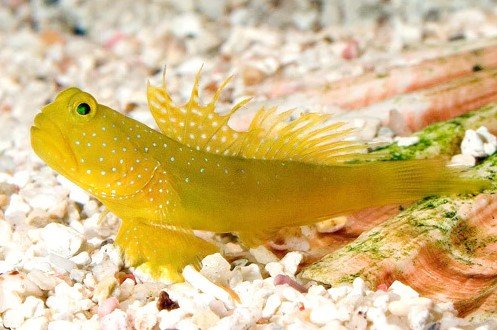
The security guard is one of the best choices for beginners. For one, they are not picky about nutrition and eat things that are available at the pet store. You will even eat table shrimp.

Gobies are very popular, so they are not hard to find and can generally be found at any pet store.

They are peaceful and get along well with other fish species, but they don’t get along very well with other gobies. So if you have more than one make sure to keep them separate.


4. Coral Beauty Angelfish (Two-Spined Angelfish)

The colorful coral fish angelfish, also known as the two-spine angelfish, is a popular dwarf angelfish that easily becomes accustomed to aquarium life. Due to its bright colors, robustness, low price and easy availability, it is a popular species for aquariums. This fish is generally not as aggressive as many other angelfish, but some individual specimens can be territorial in smaller aquariums, especially if they have been in the tank for a while.


5. Chalk Bass

A great saltwater fish for newbies is the chalk bass. These fish are long-lived, disease resistant and can thrive even in less than optimal water conditions.

If you’re just starting out, a tolerant fish like a chalk bass makes learning the strings a little easier.

These fish are white with reddish stripes along the back and are great for starting a tank.

While several may live in the same aquarium, it is important to introduce them all at the same time to avoid territorial struggles within the species.


6. Flame Angelfish (Japanese Pygmy Angelfish)

The flame angelfish, also known as the Japanese dwarf angelfish, is considered one of the best options for aquariums because it is generally well suited to captivity. It is best to keep it alone or in pairs with other less aggressive fish.

Although it is touted as a pretty good reef-proof fish, it can suffocate in large polypsized hard corals, zoanthids, tridacnid shells, and even some soft coral polyps. Therefore, this fish cannot be fully trusted if these invertebrates are present.


7. Damselfish
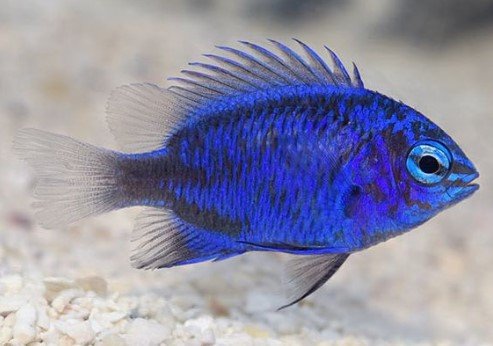
Many of these fish require large tanks of 100 gallons or more, which can be a bit overwhelming for someone just starting out. That is why Damsel is a good option. You only need 30 gallons!

Damselfish can be a little aggressive, but as long as you give them lots of hiding places, they tend to be left alone.

There are also many colorful varieties to choose from and most of them are impressive.


8. Lawnmower Blenny (Jeweled Rockskipper)

The blenny mower is also known as blenny algae, jewel rock skipper blenny, sailfin blenny, and rock blenny. This blenny is a great algae eater that benefits any saltwater aquarium. New tanks tend to grow a lot of algae when the nitrate level increases. The Blenny Lawn Mower helps keep algae, especially green-haired algae, at bay as the tank matures.


9. Dottyback

Another good option for a small 30 gallon tank is the dotty back. They can be aggressive, but with the correct tank size, plenty of hiding places, and a satisfying diet, they are generally quite happy and not confrontational.

These fish are a great way to add bright little touches of color to your aquarium. There are also a few different varieties to choose from.

They are available in different colors, including blue, purple, and yellow, and two-tone colors that are half yellow and half purple.


10. True Percula Clownfish (Clown Anemonefish)

The true percula clownfish is one of the most popular marine fish and probably one of the easiest to keep in an aquarium. The black and white Darwin variant of the Percula clownfish occurs in the wild only in the waters near Darwin, Australia.

The ocellaris clownfish is often mistaken for the percula clownfish. If you are not familiar with both fish, they are difficult to tell apart. The true percula is very light orange in color, while the ocellaris are quite dry in color. The percula clownfish also has a thicker black outline of its white body stripes. Their beautiful colors and personable personalities make them a wonderful addition to reef aquariums.


11. Clownfish

You may remember that Nemo was a clown fish and if you expect to put one in your saltwater tank, you’re in luck. The clown fish, especially the False Percula species, is easy to care for.

Since it is one of the most popular saltwater fish, dry granules and frozen foods are easy to find.

These colorful fish are active and don’t like to hide like some of their tankmates. Therefore, they are an interesting addition to a starting saltwater community.

12. Blue Green Reef Chromis (Blue Green Damselfish)

Although the blue-green reef chrome belongs to the damselfish family, unlike its damsel cousins, it seems to get along with almost all non-aggressive fish. Nor does it disturb corals or other invertebrates. The greenish blue Chromis feeds easily from the tank and adapts very well to the life of the tank.


13. Firefish
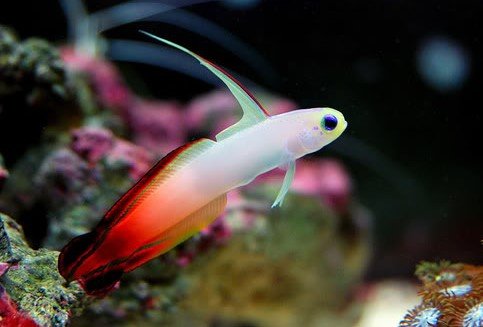
Another great option is the lionfish. These long, slender fish generally have a white or light body and a bright red, orange, and / or magenta tail, which gives them their name.

The lionfish has a great temperament for community tanks. They are calm, non-confrontational, and will do almost anything. They are also fun to watch because they move so fast and like to hide.


14. Yellowtail Damselfish (Yellowtail Demoiselle)
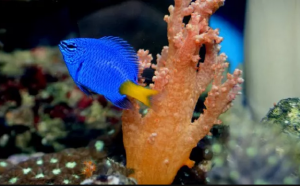
The yellow-tailed damselfish seems to get along well with most non-aggressive fish. The yellow devil rocking horse is one of aquarium hobbyists’ favorites because it is extremely robust and beautifully colored. Unlike other damsels, corals or other invertebrates generally remain alone. The yellow-tailed damsel easily eats food fed from the tank and adapts very well to the life of the tank.


15. Coral Beauties
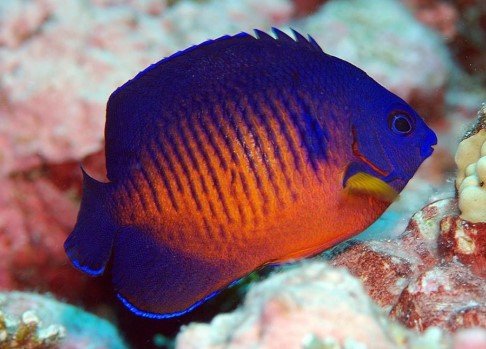
If you are planning a larger tank with a capacity of 70 gallons or more, a Coral Beauty is a great addition.

This handsome fish generally has a blue body and bright orange stripes. You can do it alone or in small schools.

Coral beauties don’t need corals in the tank, but they like to hide. So give them enough stones and plants. They prefer a mixture of high quality meaty algae and angelfish.


16. Firefish Goby (Fire Dartfish)
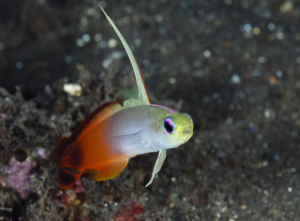
The lionfish is a very docile fish. It must be kept individually unless the aquarium is very large or added to the tank as part of a pair. This fish is very shy and will not come out of hiding if it does not feel safe. Lionfish have also been known to jump out of a tank when scared. Therefore, a covered tank is best.


17. Talbot’s Damsel
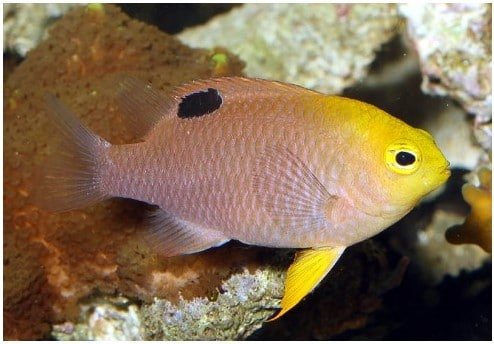
Talbot damselfish are bright, lively fish that are easy to maintain. They help fight algae in the tank and also eat meaty food. They are tolerant of their surroundings and are available almost everywhere.

These fish are hunted in the wild and are best suited for less aggressive tankmates.

They like to dig under rocks and prefer sandy soil on a pebble substrate. As long as they have enough hiding places, they will do well in a community tank.


18. Orange-Spotted Goby (Spotted Prawn Goby)
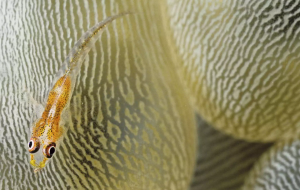
The orange-stained goby spends its time gobbling up sand, spitting it out the gills, and sifting the food. This is a great sand filter that will keep your substrate free of unconsumed food and other debris. The diet should be complemented by a variety of live and frozen prawns, mysis prawns, live black worms, and prepared food for carnivores.


19. Wrasses

These brightly colored fish prefer a sandy bottom to bury and lots of rocks to hide.

They are not confrontational and are left alone as long as they have many hiding places.

Most varieties of this type work very well for tanks, but are a bit messy, so larger tanks are preferred.

Some of the best types for a community aquarium are the intermittent fish, the fairy fish, and the six-line fish.


20. Sleeper-Banded Goby (Bullet Goby)
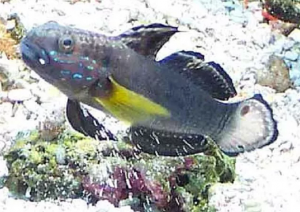
The goby with the sleeping tape uses shallow caves in the substrate as a refuge to provide the substrate with good oxygen. It is rarely aggressive towards other fish. However, it is territorial and will fight with others of the same type unless they are a couple. Like most gobies, this fish is known to jump out of discovered aquariums.


How to choose fish for saltwater aquariums?

The best way to choose fish for a saltwater aquarium is to approach it like any other pet.

She probably wouldn’t bring home a dog of a breed she didn’t know much about. Fish should be approached in the same way.

What should you do first?

Investigation. Make a list of the fish you like, and then do some research. Here are some key points to keep in mind.

  • Aquarium Size Some saltwater fish can live comfortably in a 20-gallon tank, but if you want to grow your community and make your fish happy, it’s best to start with 55 gallons. Keep in mind that some fish need at least 70 gallons, which is even bigger. As you can see, it is a good idea to stop buying a tank until you know what type of fish you want to get.
  • Habitat requirements. Different fish have different needs when it comes to their environment. Some need a sandy substrate to bury, while others need many live rocks with hiding places. When building a community, be sure to choose fish that like the same habitat.
  • Temperament. This is very important because you do not want to harbor soft fish with aggressive strains that hunt them down or, worse, chase them. Different temperaments can live together in the right environment, but you must know how to implement them.
  • Compatibility. You should not only consider the compatibility between different species of fish, but also keep in mind that some fish prefer to live alone without their own aquarium partners.


conclusion

Saltwater tanks require more maintenance than freshwater, but choosing the right fish can greatly facilitate the process. Check out our tips on the best beginner saltwater fish to build a thriving community.
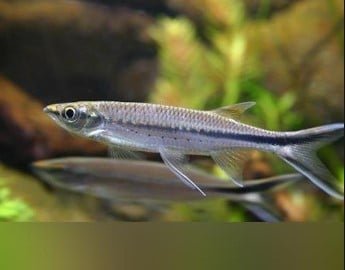
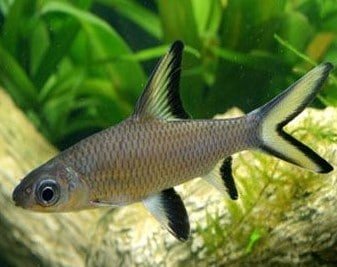
10 Best Freshwater Aquarium Sharks – Types of, Setup & Care Guide

10 Best Freshwater Aquarium Sharks – Types of, Setup & Care Guide

Best Freshwater Aquarium Sharks: If you are interested in sharks, you have probably wondered if you want one as a pet.

While keeping a real shark as a pet is nearly impossible, there are plenty of freshwater aquarium sharks that thrive in a home aquarium.

Technically speaking, these fish are not true sharks.

They are large, shark-like fish that normally belong to the catfish or carp family.

I mean, they look and often behave like sharks, and that’s how they earned their name.

Interest in freshwater aquarium sharks has increased rapidly in recent years. People can’t have enough!

It is great to have a shark no matter what type it is. These iconic fish have been an integral part of our relationship with water for hundreds of years.

If you see a freshwater shark swimming in your aquarium, it will never age.

So we did the following:

We have compiled a complete list of the best freshwater sharks you can keep in your aquarium. Some are big, some small, but all are amazing!

10 Types of Best Freshwater Aquarium Sharks

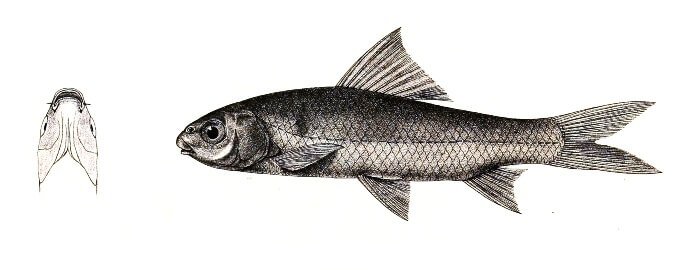
1. Bala Shark

Young Bala sharks are only about 5 cm long, but don’t be fooled by their small size. On average, they become about a foot long in adulthood, although they can reach up to 20 inches.

Balas need an aquarium that is at least 75 gallons in length and at least 4 feet in length so that they have enough space to stretch their fins. Balas, like most freshwater sharks, thrive in a large pool. So it’s a good idea to buy the biggest one you can afford.

Taking care of them is pretty easy. They are not picky eaters, but they are omnivores and like a variety of foods.

A good thought about bala sharks is that they are not particularly aggressive, so you don’t have to be too careful when choosing tank mates.

Just make sure that everything you choose is too big to fit in a Bala’s mouth and not too aggressive.


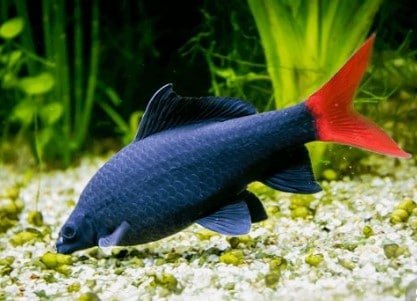
2. Red Tail Shark

Red-tailed sharks look very characteristic. The slender black body and the bright red tail are particularly noticeable in a planted tank.

In fact, their preferred environment is an environment with lots of hiding places between plants, rocks, and driftwood, so a planted tank is the perfect place for them.

One thing to keep in mind is that these sharks don’t like each other, so you can only have one in your aquarium.

Avoid other sharks and catfish, as well as fish with long fins. Red-tailed sharks are very territorial and can be very aggressive.

These sharks are not fussy about food, but like a variety of meat and plant foods. A flake-based pellet is fine, but if you add prawns a couple of times a week, your red tail stays very happy.


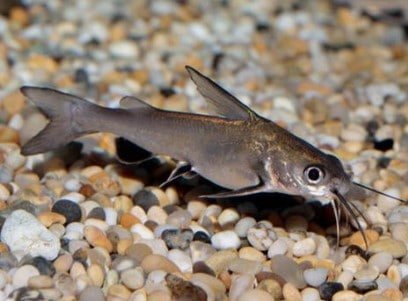
3. Columbian Shark

The Colombian shark is actually a big catfish and has the characteristic tall fins and long whiskers you expect.

You need an aquarium that is at least 75 gallons in size, and it must be configured to resemble your natural environment with lots of plants and stones.

Colombian sharks are not the easiest to hold and may not be ideal for beginners. They prefer brackish water and should switch to salty water in adulthood. Teenagers are approximately 3 inches long, but can reach 20 inches or more.

These fish are predators and eat anything in the tank that is small enough to fit in their mouths. They actually have toxic dorsal fins, so be very careful when servicing the tank.


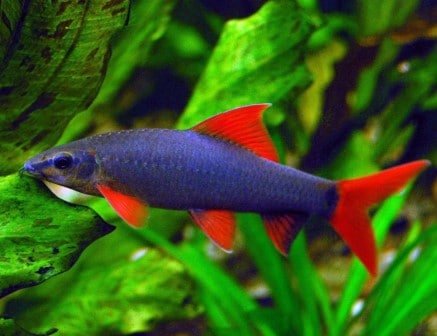
4. Rainbow Shark

These creatures are sometimes called ruby ​​sharks or red fin sharks and give each freshwater tank a nice pop of color. Like the red-tailed shark, rainbow sharks also have a fiery red tail that stands out against a natural background. However, these fish also have bright red fins.

The fins are semi-transparent so you can see the sensitive rays. Each individual fin is red. Combine this color with the dark black tone of your body and you will have a very intimidating fish.

Rainbow sharks are generally not recommended for beginners. The reason for this is aggression. These are very territorial fish that are known to attack other creatures in the tank. It is an interesting behavioral trait that is not normally found in nature.

Despite their aggressive behavior, rainbow sharks can keep up with other fish. They are bottom dwellers, so you can support them with fish species that cling to the top of the water column. Assault is still possible, so you should always be careful.


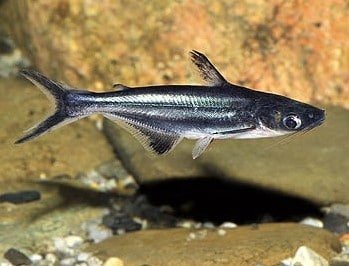
5. Iridescent Shark

If you are looking for a giant shark, the ravishing shark is about 3 inches long as a cub, but can grow up to 50 inches.

To maintain a stunning shark, you need an aquarium with a capacity of at least 300 gallons.

In the right conditions, stunning sharks live with proper care for up to 20 years. It may be tempting to keep them in a smaller tank, but it is not a good idea. This pet is definitely an investment and not for everyone.

Although dazzling sharks are technically catfish, they are not bottom eaters. They are very active and need a lot of space to swim in the tank at different levels.

Iridescent sharks are very squishy, but they eat whatever fish are left in their mouths, and since they get so big, they can finally eat almost anything. If you really want tankmates, try spikes or tin foil spikes.


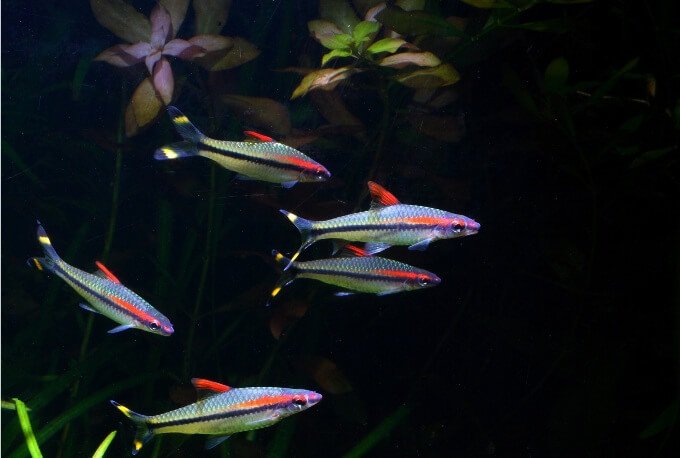
6. Silver Apollo Shark

Silver Apollos are actually school fish that are quite passive and grow up to 6 inches in length.

Because they like company, they are best kept in groups of 5 or more people. They are fast swimmers and can even jump out of the tank. So make sure it’s covered.

Although silver apollos are easy to feed and peaceful, keeping them can be difficult because they are very sensitive to changes in pH and even to the least amount of ammonia and nitrites in the water. They require a strong filter and 25% water changes every week.

These freshwater sharks are easy enough to live as long as their tankmates are not small enough to be eaten.

Although they are not aggressive, they are fast and live close to the surface, competing for food, and possibly preventing slower fish from eating enough.


7. Violet Blushing Shark

Unlike other freshwater aquarium sharks, the Violet Blushing Shark is quite passive. It does not show a territorial behavior as you would see it with other species. As a result, they do well in community tanks.

Still, you should avoid keeping these fish with smaller creatures that may consider them food. They are best suited for medium-sized fish.

Violet Blushing Sharks takes its name from its unique appearance. The fish are silvery white in color. You can see some glitter on their bodies, but only when they’re under some strong lights.

The bodies are transparent so you can see the individual organs. The most striking feature of the shark body is the gills. The gills are visible through the body and make it look like the fish is turning red!

It is important that these fish have a well-maintained tank. You need stable temperatures between 68 and 78 degrees to stay healthy. Thats not all. The purple blush shark should also have plenty of room to swim.

The biggest mistake new aquarists make with this species is filling the tank with too many decorations. Plants, driftwood, and rocks are important for making fish comfortable. But that’s a lot of open space for swimming! You must find the right balance to keep the purple blush shark in good shape.


8. Columbian Shark

Here’s a species that can be challenging to maintain. The Colombian shark has some strict maintenance requirements. Unfortunately, there is a lot of misinformation out there.

Contrary to popular belief, these sharks are not freshwater sharks. As teens, they need brackish water to stay healthy. When setting up the aquarium, you need to add a little sea salt to make sure the specific gravity is between 1,005 and 1,010.

Colombian sharks also tend to be troublesome when kept with other fish. These are predatory creatures that hunt smaller species of fish. Therefore, you should avoid smaller passive fish.

Another way to prevent predatory behavior is to feed the fish well. The Colombian shark lives on a diet rich in protein with live and frozen food. They are also suitable for commercially available dry food and pellets. However, they prefer live food that they can hunt.


9. Black Shark

The black shark is a large species of fish with a semi-aggressive nature. Originally found throughout Malaysia, these fish are very popular due to their forbidden appearance.

The black shark is all black and has the familiar profile that many freshwater sharks share. This includes a massive dorsal fin. When the fish is swimming, the dorsal fin is usually relatively flat against its rounded body. However, it will also be high from time to time when the fish brags.

The black shark can become very aggressive and predatory. They should not be kept with small fish species. Most aquarists will host them along with other aggressive species that can handle the intimidating nature of the black shark. This includes some types of cichlids.

Interestingly, these fish do not need a diet based on pure protein. Some proteins are good, but they are omnivorous that eat almost everything. They have a penchant for plant-based foods. In fact, these fish are known to eat plants.

Therefore, the black shark is recommended for tanks that are scarce in the factory department. It is best to do this with plenty of open space for swimming. Many caves are also recommended so you can rest.


10. Roseline Shark

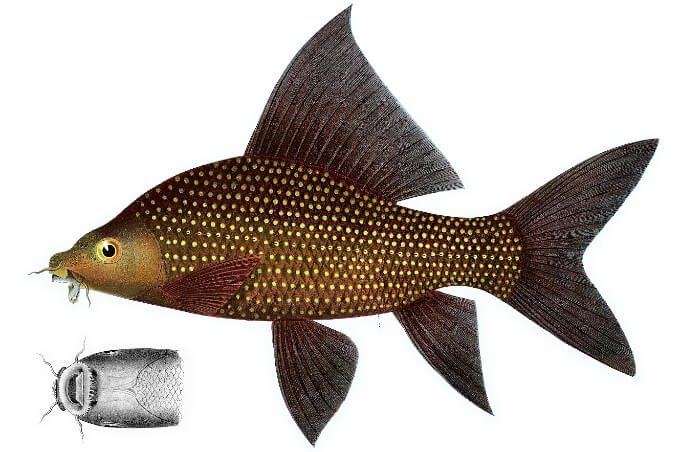
These eye-catching fish are absolutely stunning! The Roseline Shark comes in various bright colors that look great in a natural setting. You will see red, black and gold stripes. Green and yellow spots are also quite common.

Like all freshwater sharks, these fish have a pronounced dorsal fin. At Roseline Sharks, the dorsal fin is accented with a bright and fiery red stripe.

Roseline sharks belong to the beard family and are among the smallest freshwater aquarium sharks you can get. However, this can be a good thing when it comes to temperament.

For the most part, these sharks will not be a problem with aggression. They are quite peaceful and do not pay attention to other fish in the community. In groups of four to six people, the fish fair improves even more and shows a playful behavior.
 

Conclusion

With their large size and physical characteristics, freshwater sharks are an interesting pet for any aquarium enthusiast who wants to beat them.

Taking care of a freshwater shark isn’t particularly difficult, but that doesn’t mean it’s right for everyone. These fish grow very large, 6 to 50 inches when fully grown.

They need large tanks that will give them the space they need to grow to their fullest potential.

Still, with the right tank and careful planning, you can create a beautiful home for your freshwater shark and a few tank mates that everyone will be talking about

7 Best Freshwater Aquarium Crabs – Types of & Freshwater Crab Care

7 Best Freshwater Aquarium Crabs – Types of & Freshwater Crab Care

Best Freshwater Aquarium Crabs: Freshwater aquarium crabs are a great addition to any aquarium.

These freshwater crabs are usually small and are available in different colors.

In addition to their beauty, freshwater crayfish also play an important role in the tank.

They are working to remove fish food debris and remove debris from daily aquarium use.

Freshwater aquarium crabs give your aquarium a lot of beauty and cleanliness. They are also very affordable and easy to maintain!

Without a doubt, freshwater crabs are some of the coolest species you can have in your home aquarium.

When most of us think of crabs, we imagine saltwater environments. However, there are different types of brackish and freshwater crayfish that can thrive in your freshwater tank.

These aquarium crabs are generally quite small, so you can commonly refer to them as “mini crabs”.

Crabs are scavengers and it’s fun to watch them move around in the tank and collect the goodies they see floating. It’s not just fun, either. Crabs can really help keep your tank clean.


7 Types of Best Freshwater Aquarium Crabs


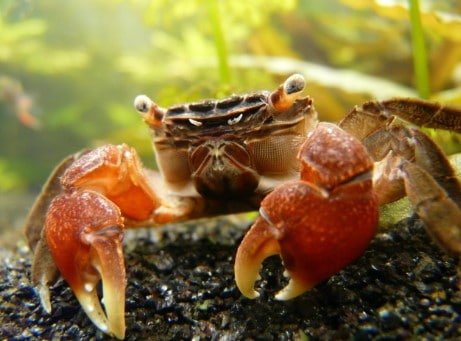
1. Red Claw Crabs

Red clawed crabs are one of the most popular freshwater aquarium crabs you can get. These crabs are great as a snack because they do not require extensive maintenance.

Red crabs can grow up to 2.5 inches tall and easily live up to five years. All you have to do is feed them properly and make sure they have a clean space.

Like many freshwater crabs, claw crabs are omnivores. You can eat granules, flakes, or a combination of both to get nutrients. You can also eat other crabs and fish, so be sure to find compatible friends.

Red crabs also need a place in their tank where they are not submerged in water. Crabs like to come to the country for a while. Therefore, make sure that your aquarium contains a dry area where it can appear.


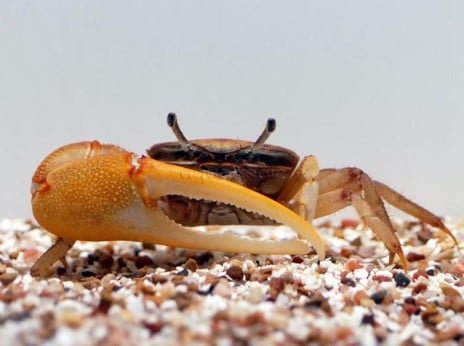
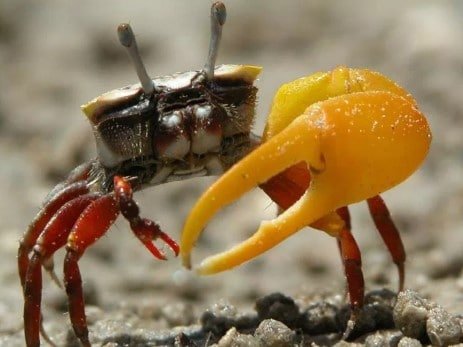
2. Fiddler Crab

Violinists are quite small and generally do not grow more than 5 cm. They are incredibly eye-catching. A claw is proportional to the body of the crab, small and delicate. However, the other claw stands out and is dramatically larger than the other. This oversized claw also has bright colors, often light yellow or gold in color.

Violin crabs are generally not very aggressive. He likes to travel in pairs or in small groups, so buy at least two of them at the same time. Like most crabs, these little animals love to hide. Because they are so small, you may have to look behind rocks and aquarium decorations to find them sometimes.

Violinists live in nature for a relatively long time, but generally only have a few years in captivity.
 

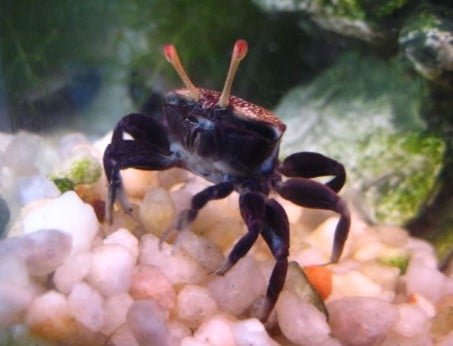
3. Thai Devil Crabs

Third on the list are Thai Devil Crabs. Don’t be fooled by the name! These crabs are very soft and would make a great pet.

Thai Devil Crabs are two to three inches tall. They come in many different colors, including bright purple.

Thai Devil crabs are very active members of the tank. Leave enough room to eat on the floor.

For a diet, these crabs like to eat plants and animals. You can eat small fish and salty insects. For plants, they enjoy dried seaweed and fresh or dried fruits and vegetables.

Thai devil crabs also need an area in their tank where they can rest on land. Be sure to include a sandy area with plenty of hiding places and burial places for them. They always like to appear underwater, so it is definitely a necessity for them.


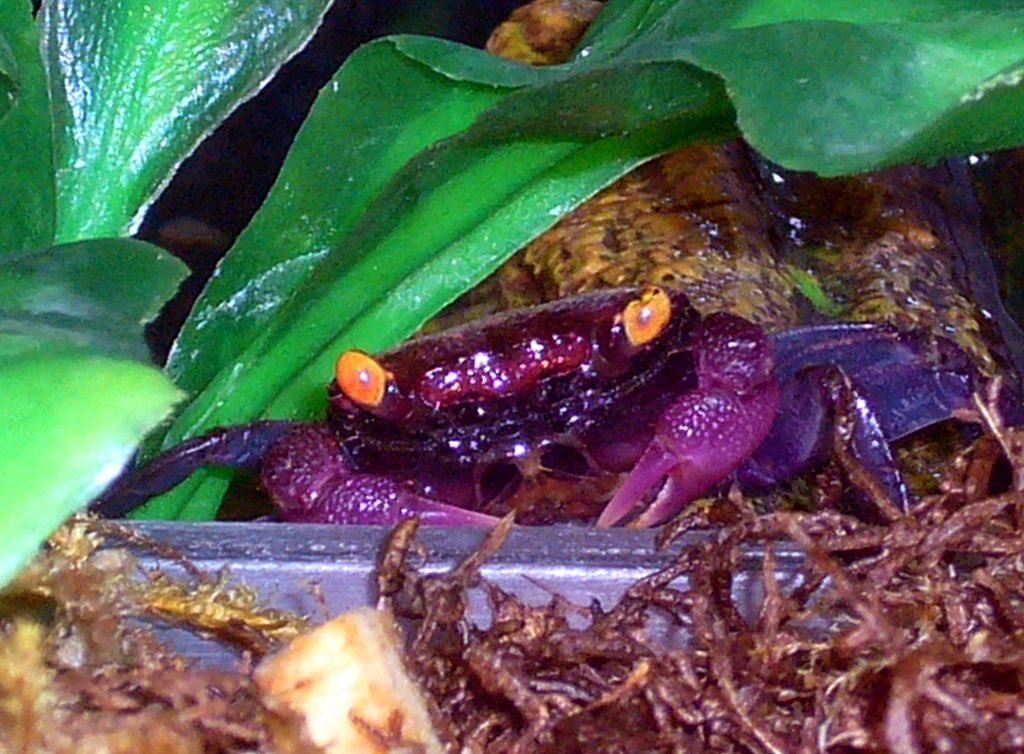
4. Vampire Crabs

Vampire crabs are a very fun way to keep. They are also quite rare and probably more difficult to find than other types of freshwater crabs. They are available in a variety of colors, usually in rich shades of orange, purple, or red.
The terrifying-sounding name comes from the fact that they have unique yellow eyes, sometimes called “bright”. If you were expecting a bloodsucking crustacean, sorry for the disappointment.

Vampire crabs are small and about an inch wide. They usually live up to 3 years if they are lovingly cared for.

If you are interested in vampire crabs, keep in mind that they must provide a very specific habitat. This species is not completely aquatic. In fact, they need more dry land in their tank than water.

Like most crabs, vampire crabs eat a lot, so be sure to offer them a varied diet with plant-based substances and animal protein.


5. Gold Claw Crabs

Golden claw crabs are some of the most unique crabs you can add to your aquarium.

These crabs are so named because they have a very large “golden” claw. It’s not exactly a golden color, but it’s pretty close.

Golden clawed crabs like to eat at the bottom of the tank. They also like to dig in the sand and occasionally dig in it. These crabs definitely need a sanded area in the aquarium.

It is also important to understand that these crabs, like most crabs, can escape very well from tanks. They can scale almost anything, including hoses and pipes, and are known to sneak frequently. Be sure to secure your lid every time you open it for feeding or cleaning.


6. Thai Micro Crab

The Thai micro crab is sometimes known as a fake spider crab. These names are apt because this species is incredibly small. They are about 1 centimeter in diameter (less than half an inch!).
They are usually brown or gray in color with long spindle-shaped legs, similar to a real spider. They are also covered in very small hair, which helps them collect food that floats in the water.

Thai micro crabs are very sensitive to changes in water conditions.

Because they are so small and fragile, they cannot cope much with a predatory neighbor. That is why it is important to keep them in tanks with the most docile companions.

Small invertebrates can often live peacefully with Thai micro crabs. Some types of small fish can also live well with them.

Micro crabs are not very sociable and can spend much of the day in hiding.

Aquarium crabs are known to escape from enclosures. If they are so small, the risk is even greater.

Take extra precautions to make sure there are no small openings in your tank that can serve as an escape route for a stubborn crab.


7. Panther Crabs

Finally, we have the panther crab. Panther crabs are a popular choice due to their beautiful markings. They are bright orange with black spots, hence the name.

Panther crabs are generally very friendly crabs, but they become aggressive if not properly fed. It is important that your panther crab (and really every pet) is fed on time and in the correct amount. If not, these crabs will surely attack and eat slower fish.

Panther crabs can also escape very well. You should make sure your tank has a tight fitting cap to reduce the chances of leakage.

While giving them a good place to rest from the water is important, you don’t want them to walk around your house.


How do I care for crabs in an aquarium?

Many new aquarium enthusiasts avoid getting crabs for their tanks. They are concerned that they are too difficult to maintain.

Caring for freshwater aquarium crabs is no more difficult than caring for a fish.

Tank maintenance

As with any pet, you must provide the basic needs for it to thrive. This includes a good environment in which they can grow and live their whole lives.

Freshwater aquarium crabs are no different. First, buy a high-quality tank with a capacity of at least 5 gallons. Each smaller one is too small for your grumpy friends.

You want to imitate your real habitat in the wild as much as possible, so make your tank more cozy. Keep it at a constant temperature; Usually 72-82 degrees Fahrenheit is comfortable for them.

Add decorations like sticks, rocks, and moss so your crabs can go up and down. It’s also a good idea to set up a shielded network so that your friends don’t accidentally escape.

Fill the aquarium, but leave an area where your crabs can sit out of the water. This is good for them to rest, dig and dig.


Food

Most of the crabs are omnivores. Therefore, feed your crabs in a balanced way with plants and animals. It is a good idea to keep your diet fresh for them.

When you first get your crab, it can take a while to learn what it likes to eat and what it doesn’t touch. You should try swapping some ingredients or swapping foods you don’t like.

Best Freshwater aquarium crabs can eat protein-based granules or algae. They also enjoy meat like flies, bloodworms, and small salty fish. Include vegetables with steamed vegetables in smaller pieces in your diet.

It is also important to eliminate uneaten food after three days. Their crabs don’t know the difference between food and rotten food. So help them out there.


conclusion

Once you’ve put a crab in your tank, you can’t imagine life without it! These little creatures give your tank a nice touch and keep things interesting.

With proper care and nutrition, aquarium crabs will keep their tank busy for years to come.


You can also read:

Your Guide to the Best Silk Aquarium Plants [2023]

artificial plants for an aquarium

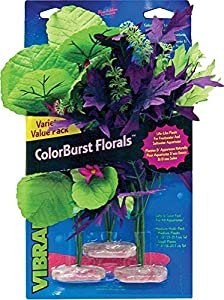
To help hobbyists create a vibrant underwater world, we present a curated selection of the best silk aquarium plants, carefully chosen to enhance the look of your underwater garden.

The joys of having fish in an aquarium are plentiful. You can see them swimming and enjoying their beauty. Owning an aquarium means taking care of the items inside, including the plants.

Despite being a fan of live plants, I still think there are a lot of great uses for silk aquarium plants. Everyone knows that live plants provide oxygen and they help reduce fish waste, while fake plants do not. It looks like you’re giving up a good thing, isn’t it? What do best silk aquarium plants offer?

Many fish owners prefer to use silk plants because they look realistic. They are also easier to maintain.

Planted tanks are great, but not everyone has a green thumb. Or the time it takes to check the water level and properly maintain a planted tank. For those who fall into that category, there are some great alternatives. So keep reading, we’ll explore the artificial option and show you some of the best silk plants available.

It is important to understand the differences between plastic and silk plants. You can learn about each option to make an informed decision. This way your fish are safely stored and the aquarium looks decorated.

Comparison table- best silk aquarium plants

Prices pulled from the Amazon Product Advertising API on:

The 15 Best silk aquarium plants reviewed

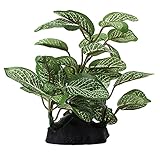
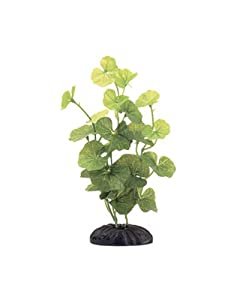
1. Marina Ecoscaper Hydrocotyle Silk Plant

Best silk aquarium plants

The first is the 8-inch Marina Ecoscaper silk plant. The translucent colors of the plant do not fade. It also provides easy and secure placement.
The plant has many stems at the base with leaves projecting past them. It allows for a more complete plant function and does not take up much space. The colors also change from dark green to light green.

The silk plant undulates with the currents of the aquarium. It is realistic without living, so it is easy to maintain.
One problem with this plant is that it is not strong. There is no stated weight for the product and it seems very light. Many customers have complained that the base does not have enough weight to hold it in the water.

Check Price On Amazon


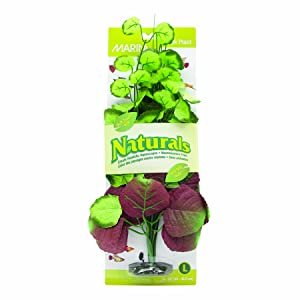
2. Marina Naturals Pennywort Silk Plant

Marina Naturals Pennywort artificial plant for the aquarium

Marina Naturals Pennywort’s oversized silk plant is suitable for larger tanks. It stands up to 14 inches tall and has vibrant colors.
The Pennywort decoration is designed for aquariums. It has a natural looking translucent color that does not fade in water. It is easy to place in the tank and provides a safe location.

The silk material used allows it to ripple with the flow and move freely.
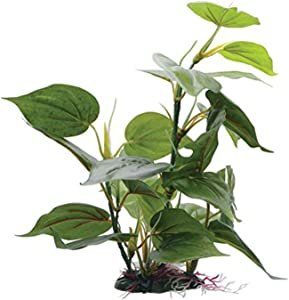
The only problem with this product is that the base is quite small compared to the plant, which is tall and wide. That’s why you need to anchor it in the water by adding some pebbles over the base to keep it safe.
The product comforts aquatic animals, including fish. It is safe for any aquarium and fish.

Check Price On Amazon Primeeligible


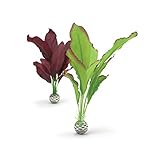
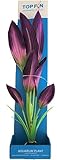
3. BiOrb Easy Plant Sets

Best silk aquarium plants

The biOrb Easy plant sets are beautiful and add a touch of dimension to aquariums. They are ideal for delicate fish such as Betta fish and goldfish. These fish have elongated or flowing fins that cannot get stuck in the leaves.

You can use this plant set for saltwater, freshwater and tropical aquariums.

Three sizes are available including large, medium and small. You can also buy a four-piece basket containing four different plants. If you choose a set, you will get a purple and a green plant.

The design is exciting and unique. The plant stands on a bulbous base, which allows the plant to move and straighten easily. The silk sheets also move and change with the current.


Check Price On Amazon

4. Blue Ribbon Vibran-Sea Flowering Cluster Assortment

Best silk aquarium plants

The Blue Ribbon Vibran-Sea Flower Cluster Assortment has three plants in each set. There are five games available:
African
Amazon broadleaf
so american
wide blade
Amazon
The African version has differently shaped leaves and single flowers. It is all one color (light green).
The Amazon version includes green and blue leaves in different shapes. The broadleaf Amazon has purple and light green leaves that are similar in shape.

The Broad Leaf variety includes several shades of green. It also has dark blue flowers and multi-shaped leaves.
The So American version has light and dark green/blue leaves. It also has flowers and leaves of multiple shapes.
Whichever group you choose, you will get three different plants. The leaves are soft and silky, which is perfect for swinging in the current. Resin bases are heavy and have no metal stems.
Some plant sets are smaller and some contain larger varieties. You can choose the one that best suits your needs.

Check Price On Amazon

5. Marina Ecoscaper Lobelia Silk Plant

Best silk aquarium plants

The silk plant Marina Ecoscaper Lobelia is 20 cm high and has a sturdy base. The base resembles a rock and gives the aquarium a natural flair.

At the base you get three stems with a variety of green leaves of different heights. The product is lush and full in the middle. Fish can easily swim through the leaves, hide or rest.

The silk plant decoration has a natural look. Color does not fade with time or cleaning. Silk plants move and ripple with currents of water, giving it a natural look.

The base, although wide, is not weighted. You may need to bury the base in the pebbles at the bottom of your tank for safety. Many customers claim that it floats to the bottom and does not fall over.

Check Price On Amazon Primeeligible


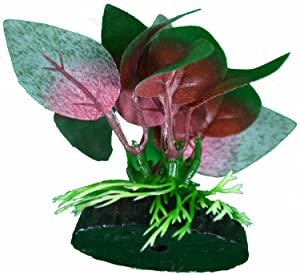
6. Red Anubias Leaf Betta Plant

Best silk aquarium plants

Anubias Red Leaf Betta Plant can help you create a beautiful aquarium. It is suitable for any tank or bowl and it is safe for Betta fish and other delicate fish.

This plant contains a weighted rock and resin base so it will stay in place no matter how fast the fish swim. You can place it in a variety of ways to create a shelter for your pet or let it explore.

Your Betta can explore the entire plant for your enjoyment. This product works well with the Blue Spotted Amazon Sword plant and other Betta plants.

A small disadvantage of the plant is that it is only two centimeters tall. However, it works well with other plants to create a habitat for your Betta.

Check Price On Amazon

7. Amazon Sword Blue Spotted Betta Plant, Great for Betta Fish

Best silk aquarium plants

The blue-spotted Betta plant, Amazon Sword, is suitable for any bowl and tank. The resin weighted base looks like a rock and will stay firmly in place in your tank. It has broad stems from the base that reach large, broad green leaves.

Bettas can easily swim through leaves, hide or rest on leaves. Silk sheets are suitable for Bettas because there are no sharp edges to scratch a delicate fish.

This product works well with Blue Spotted Betta Log and many other Betta fish products.

Although the base of the product is plastic, it contains no sharp parts or metal. The leaves are made of silk fabric and will not harm the Betta. Because the sheets are made of fabric, they wrinkle in the water, giving them a realistic look.

Check Price On Amazon


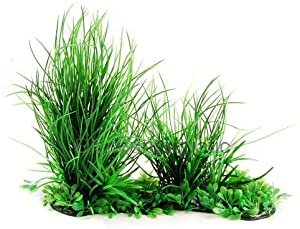
8. Ecoscaper Lobelia Silk Plant

Ecoscaper Lobelia artificial fish tank plant

This artificial Lobelia has all the good points for an artificial aquarium plant. It’s relatively cheap, has a good foundation and looks a lot like real business. As a bonus, it has a touch more color than many other realistic fakes.

In aquatic landscaping, it can be used as an alternative to plants such as Cryptocroyne sp. to create a relatively dense foliage. The stems tend to be a little droopy, but using hot water seems to reset the thermoplastic used in their construction to counteract this. Just heat, dip and straighten.

There are some complaints about quality control on all Marina artificial plants. However, the vast majority of plants seem to look great in the tank.

Check Price On Amazon Primeeligible


9. MyLifeUNIT Artificial Seaweed Water Plants

Best silk aquarium plants

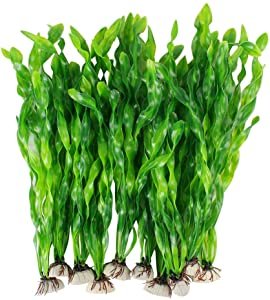
Realistic plants are not limited to silk versions. These soft PVC artificial seaweed plants are a great addition to most tanks. You can use the whole set to densely plant part of your tank, similar to plants of the genus Vallisneria.

They look cheerful and cheerful if you buy them in green, but there are also a few other color variations if you want to go psychedelic. The fish can move between the leaves, so don’t deny them use of any part of the tank.

Like all plastic plants, the shipping climate is important. A quick dip in hot water will help dissolve warping that occurs during hot weather shipping.

Check Price On Amazon Primeeligible


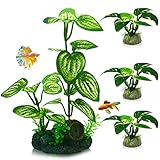
10. Smarlin Aquarium Plants Decoration, Artificial Plants for Fish Tank

Best silk aquarium plants

Smarlin makes solid and relatively inexpensive artificial plants for aquariums. Of these, my favorite is this one, which vaguely resembles an Anubias spear and comes with “grass” around the base. Even better? Those stems are movable.

These plants are mainly sold as a “base” for smaller Betta tanks. The top sheets provide them with some shelter, similar to the acclaimed “Betta beds” you may find for sale.

Overall, it’s a solid plant, but there seem to have been some weird issues with the sharp point. Feel the grass under the largest leaves before placing it in your tank.

Check Price On Amazon Primeeligible


11. Smarlin Artificial Aquarium Plants

Best silk aquarium plants

Another one from Smarlin, this brush-like artificial plant is a great addition for filling the back of your tank’s overall exhaust. Despite their sturdy appearance, the leaves spread in a semi-translucent fan when placed in water.

When placed with peaceful fish, this is a great way to give them extra cover. They also come in a pack of three, making it relatively easy to fill the back of the tank without spending too much money.

Here’s a caveat: They’re too picky for a cichlid tank. When “playing with” large, aggressive fish, there have been reports of leaves falling off and being drawn into the fan of HOB filters. That’s a huge pain, and if left unchecked, it can also cause the pump to fail.

Check Price On Amazon Primeeligible


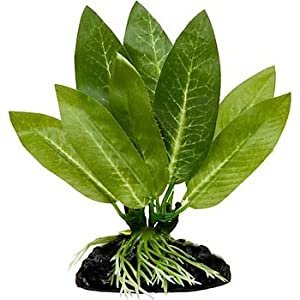
12. Fluval Anubias Plant

Fluval Anubias artificial plant

Fluval is best known for its aquarium equipment. The good thing is that they also make some of the most realistic artificial plants you can find anywhere.

The Anubias variety is excellent, it closely resembles an undefined Anubias species. It’s also a great move because even real Anubias can look like plastic when completely clean.

Some people disagree that the plant rating looks real, but it is real in the eyes of the beholder. The truth is that if you look too closely at an artificial plant, you will discover that it is not quite real.

Check Price On Amazon Primeeligible


13. CNZ Aquarium Aquascape Artificial Plastic Plant

Best silk aquarium plants

I quite like artificial plants with a water landscape look. Whether it’s the fake plant attached to a stick or just a small formation like this…it’s a good way to go.

This one has a grassy appearance on the taller plants, with something similar to Glosso on the bottom. It is a winning look and is ideal for creating a diverse water landscape in combination with the right decorations.

My only complaint is that it doesn’t have the ability to actually “flow” into the water. The grass area in particular is a bit stiff, despite the look.

Check Price On Amazon


14. SunGrow Plastic Leaf Plant for Freshwater

plastic leaf plant for the aquarium

This fake plant from SunGrow embodies the largest centerpieces you can find. It stands a whopping 10 high, making it too big for small aquariums, but perfect for those with a larger tank.

It doesn’t look like any plant. Instead, it looks like a compound of many of the plants available for use in aquariums. It also stands on its own. That makes it a good choice for nurseries.

The downside is… well, it’s large and doesn’t seem to closely replicate any of the existing plants.

Check Price On Amazon Primeeligible


15. OrgMemory Artificial Aquarium Plants

artificial aquarium plants

You are not limited to finding plants of the right color if you want to go for a cheap set. This has no less than 29 pieces, so you can decorate a whole box with plants for a lower price.

The beauty of this one is in the package. It will not compete with more expensive plants in terms of realism or quality. However, they are still fine for most people’s tanks.

Low? They are cheap thermoplastics. You may need to reset them if they arrive distorted with hot water and are not as durable as some options.

Check Price On Amazon Primeeligible


Silk Aquarium Plants vs. Plastic: Which Is Better?

Although it is a personal preference, Best silk aquarium plants have advantages over plastic. Plastic plants can harm fish if fish swim directly over them. If the fish rubs against the plastic, it can be scratched or cut.

A good way to determine if the plant is dangerous is to put a cheap pair of tights over it. Check the tights to see if they are torn or jammed. If so, you should not put that plant in the aquarium.

Silk plants can also look nicer than plastic ones. The lightweight material allows the plant to move in the water. This is like a living plant.

Plastic plants are hard and cannot be bent. They can’t move with water, making them look out of place. Also, they don’t look natural in the aquarium environment.

Silk plants look more natural. They are still artificial, but create the illusion of living plants.

Both plastic and silk plants cannot produce food for fish. Fish can nibble on it, but they don’t get food. Plastic plants can harm fish if they try to pinch the plant.

Both plastic and silk plants do not produce debris and waste that pollutes the water. They do not require any care or trimming as they do not grow. So you don’t have to work on the aquarium after installation.


Why Are My Silk Aquarium Plants Turning Brown?

If you notice that the plants in your silk tank are turning brown, it is because of the algae. Nitrates are too high in the water. So you have organic matter somewhere in the tank that is breaking down.

The first step is to make sure you filter your aquarium properly. You also need to make sure that you don’t have too many fish for the size of the aquarium.

If you do everything right, the nitrates can come from natural elements in your tank. You may also have a colony of beneficial bacteria that is not suitable for the number of fish.

To remove algae, vacuum the gravel weekly and change the filter monthly. This can prevent the formation of algae or make them green to make them more attractive.


How to Clean Silk Aquarium Plants?

Once you have the Best silk aquarium plants you like, you need to know how to clean them. The first step is to remove them from the aquarium and rinse with hot water to remove the algae.

Pour 1/2 cup of the non-iodized salt into a small bowl. Make a paste by adding lemon juice. Use a toothbrush with some paste and scrub the plants to remove dirt and algae.

Rinse your silk plants one more time with hot water. Remove excess water and pat dry if you prefer. You can also put them back in the tank. If you have an excessive buildup of algae, consider adding a new Plecostomus at this stage.


Artificial and Silk Aquarium Plant FAQs

Are silk plants different from artificial plants?

A little. You see, all silk plants are artificial, but not all artificial plants are considered silk plants. Silk plants are plants that move with the flow of a tank, unlike standard artificial plants that tend to stick to water. They are usually made of plastic or silicone cloth.

Are silk aquarium plants made of silk?

Not in most cases. All kinds of artificial plants were originally made of silk. In the modern world it is much cheaper and easier to use plastic. As long as the plastic is well woven, there is no difference in the properties of the plant. Construction is often a proprietary secret, but you can see how artificial flowers are made to learn more.

Can I combine artificial and real plants?

Absolutely. It is usually done by those who want a tank to look “off” when they first place their flora in the tank. Combining them can also be done long term, allowing the hobbyist to focus on easy plants like Echinodorous sp. while still creating a lush waterscape.

Can I put silk plants with aggressive fish?

This is also one of the most common uses for them. Cichlids, for example, are smart, easily bored and powerful, making them plant killers. Well-crafted plants can withstand punishment, allowing you to maintain the illusion of an aquarium planted with highly aggressive fish.

What should I do if my fish keep moving my artificial plants?

It happens from time to time. You may want to stick to hard items for these fish. Those like African cichlids don’t really need plants. On the other hand, you can use hardwood elements to snap the base into place. Just make sure to use rock instead of driftwood, most fish are surprisingly strong.

Can I use silk plants in a sea or salt water tank?

The plastic used to make artificial plants is relatively inert and should be fine in most systems. If you’re careful… don’t risk it. I haven’t heard of any harm other than accidental (or intentional) ingestion of plants. Hypothetically, you could be taking a costly risk by putting fake plants in a saltwater tank.


Final Thoughts – Best silk aquarium plants

Using best silk aquarium plants is the best way to keep your aquarium looking vibrant and exciting. They can also protect your fish from cuts and scrapes.

You can reduce the risk of killing live plants or being eaten by your fish. It can also add color, depth and excitement to the aquarium. Fish also have something to play with.

With the many types of fake plants out there, you have many options. You can choose plastic plants, but they can be dangerous for some delicate fish. Silk plants work well because they look more natural.

[Latest 2023] Top 10 Best Aquarium Plant Fertilizer for Plant Growth & Safe for Fish

[Latest 2023] Top 10 Best Aquarium Plant Fertilizer for Plant Growth & Safe for Fish

Are you planning to place a planted aquarium? Is it the first and are you a little nervous? Many people become anxious because they are told to use fertilizers to keep plants happy and healthy. Here we have provided 10 Best Aquarium Plant Fertilizer to solve your problem.

Using an aquarium that doesn’t have low light or technology can be quite intimidating. Not sure where to start. To make it easier, we will talk extensively about fertilizers.

Comparison Table

CustomSiteStripe ImageTitleReviewBuy
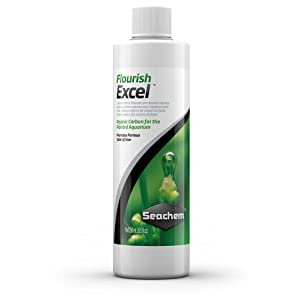
Top PerformanceSeachem Flourish Excel Bioavailable Carbon4.7/5.0Check Price
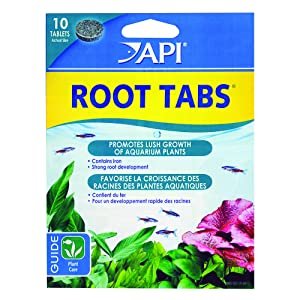
cheapestAPI ROOT TABS Freshwater Aquarium Plant Fertilizer4.3/5.0Check Price

Many beginners will ignore the last piece of the puzzle because the world of fertilizers seems like a complicated mess. Everyone on the internet is pushing for dry fertilizers because they are profitable and highly adaptable, but they fail to mention the extremely steep learning curve and how easily chemical balances can get out of hand if you don’t know what you are. doing.

You can learn if you need them and how to make them yourself. We also talk about 10 products and tell you which one we think is the Best Aquarium Plant Fertilizer.


Do Really Planted Aquariums Need Fertilizers?

We are not going to lie and tell you that every planted aquarium always needs fertilizer. Many aquatic plants have few requirements. This means that they only need natural fertilizers created by fish and other inhabitants.

However, the truth is that if you don’t use fertilizer in the planted tank, the plants may not be the same. If you want to successfully grow aquatic plants, you need to know why fertilizers are used.

There are three factors that affect the growth of your plants. These include CO2, light and fertilizers.

Plants need light to grow and photosynthesize. It is true that some aquarium plants do not need much light. However, others require special lighting systems to thrive.

Do not rush to buy expensive LED lamps just yet. You need adequate lighting, but you also need CO2. This is an essential nutrient.

Plants cannot do much with all that light and without CO2. Instead, the algae in the tank will likely take over. This can result in a huge bloom.

The CO2 that is released naturally will not be enough for many advanced plants. So you must have a system to replenish it. A combination of good lighting and a source of CO2 ensures better plant growth.

Yet you won’t see that if you don’t use fertilizer. Plants need many things to grow as they should. This is reflected in the plant food you give them.

Without this Best Aquarium Plant Fertilizer, your plants will not grow properly. They probably produce slender, thin stems with pale, brittle leaves. Eventually they will probably die if you only give them light and CO2.

The 10 Best Fertilizers for Your Aquarium Plants

Best Aquarium Plant Fertilizer Reviews

1. Seachem Flourish Freshwater Plant Supplement

Best Aquarium Plant Fertilizer

Choosing a fertilizer for your best aquarium plants can be a challenge. However, the Seachem brand contains everything you need.

The advanced formula contains many things your plant needs. These include minerals, nutrients and phytohormones.

The roots and shoots are stimulated to grow strongly. Phytohormones are essential in many ways to regulate plant growth.

It works for cell division, leaf senescence and the formation of shoot meristems. In addition, it can help improve stress response, root growth and seed germination.

You must use this product regularly. Doing so can improve your plant’s ability to resist various diseases.

It can also improve the absorption of suitable minerals. This will make your plant stronger.

The first application takes two weeks to work. During this time, it can help stimulate root growth below the surface. Then you will notice that the stems and leaves of your plants also grow better.

Flourish Advance is designed to be safe for all plants in the aquarium. It is also not harmful to aquatic organisms such as fish. It is also not completely toxic to water.

Check Price On Amazon


2. Seachem Flourish Excel Bioavailable Carbon

Best Aquarium Plant Fertilizer

The Flourish brand is quite popular and there are multiple products with the name. The bioavailable carbon version of Excel provides all the carbon your plants need. It is also organic carbon.

You will also notice that the Excel option includes iron-reducing properties. Therefore, iron is ferrous instead of ferric. Your plants can better use ferrous iron easily.

Plants must produce longer carbon chain compounds, which are called photosynthetic intermediates. When you use Flourish Excel, you avoid the need for those string coals. It introduces compounds that are similar in structure and already complete.

Before first use and each time you change 40 percent or more of the water, use one capful of the product for every 10 gallons of water. After that (and as long as you don’t make a significant change to the water you should use one cap for every 50 gallons every day or two. The threads on the cap are about one ml each.

This product is also safe for your fish. However, if your aquarium houses Anacharis, you should probably use the product every other day rather than every day.

Check Price On Amazon


3. API ROOT TABS Freshwater Aquarium Plant Fertilizer

Best Aquarium Plant Fertilizer

Did you know that the plants in your tank can turn yellow, drop their leaves and eventually die without the right fertilizer? They need the right essential nutrients to make them more vibrant and stronger. API ROOT tabs are one of the best products available.

It contains the nutrients your plants need, such as potassium and iron. This can give your new aquatic plants a good start and keep your established plants growing and thriving. Of course, nutrients are consumed over time, so they need to be replenished periodically.

This product is safe for use with tropical fish and others. It comes in tablet form, which makes it easy to use. Simply place the tablets in the gravel at appropriate intervals.

Although you can use it around tropical fish and plants, it is designed for use in freshwater aquariums. You will find the manual for correct dosing on the back of the packaging.

You should add one tablet for every 30 square inches of the gravel surface. Push them half way into the gravel bed. Therefore, a 10-gallon aquarium needs six tablets.

It is ideal to add new tablets to the aquarium every month. This is to ensure that your plants continue to grow exuberantly.

Check Price On Amazon


4. NilocG Aquatics Aquarium Fertilizer Shrimp Specific

Best Aquarium Plant Fertilizer

If you have a lot of shrimp in your tank, you may want to use the NilocG brand fertilizer. It is designed to keep your plants healthy, but it is also ideal for shrimp tanks. That way, everything in the tank gets what it needs to survive and thrive.

It can make the planted shrimp tank look great. But you’re also giving plants the macronutrients and micronutrients they need.

This product has been specially developed for shrimp tanks. In addition, one bottle can treat up to 2,500 gallons. It also comes with a pump cap, which can make it easier to put into the aquarium.

While it may take a few days to see results, it’s worth the wait. If you have Anubias Nana, Java Ferns, Water Wisteria or Java Moss, they will quickly look stronger and healthier.

When you have developed a root system, you should use three doses of the product every week. After that, you’ll need two pumps a week for 10 gallons of water. There is no need to use fertilizer with every water change.

Check Price On Amazon

5. NilocG Aquatics Aquarium Liquid Fertilizer

Best Aquarium Plant Fertilizer

Sometimes a product system is needed to provide the plants in your aquarium with the right nutrients. This is what you get with NilocG macro and micro fertilizers.

The macro version contains potassium, phosphate, nitrogen and much more. It is best to use one pump for every 10 gallons of water. For best results, use plenty of light three times a week with low or medium light once or twice.

You should dose the macro product every other day than the micro. It’s also a good idea to do weekly water changes, changing about 50 percent of the water. Then add the macros.

You will discover that the micro-product contains iron, magnesium, manganese, zinc and vitamin B among other things. This product uses the same instructions as the others. Therefore, you should only remember to use them on other days.

It is important to note that you may need a GH boost. If you have hard water and are unsure of magnesium and calcium levels, you should use the GH booster, which is available separately.

Check Price On Amazon

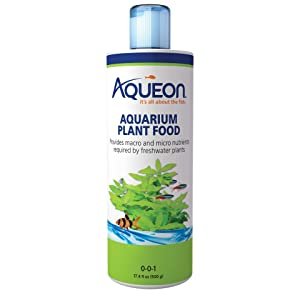
6. Aqueon Aquarium Plant Food

Best Aquarium Plant Fertilizer

Those who have freshwater plants need to make sure they get the nutrients they need. You do this effectively by using the Aqueon plant food brand.

Contains seaweed extract. This is important to encourage better root development. The roots of your plants are where it all starts, so it’s important that they are strong.

This means that your plant’s leaves and stems will also become stronger and more vibrant. Of course you also have to make sure that the plants get the right amount of light.

You will find that this product contains a variety of ingredients. Things like calcium, potassium, magnesium and sulfur are essential for your aquatic plants. It also contains iron, manganese, boron, zinc and molybdenum.

This is of course a plant food, so it is designed to help your plants. Still, it will not harm any fish that is also in the aquarium.

There is a 4, 8 and 16 ounce version of this plant food. It is designed to be used once a week. Just fill the cap and add it to the water.

Check Price On Amazon


7. API Leaf Zone

Best Aquarium Plant Fertilizer

It is a good option for a typical aquarium with little plant growth in low light and no additional CO2. It is suitable for an aquarium with a lot of nitrates and phosphates in the water, but little K and micronutrients. On the other hand, if you plan to grow more demanding plants with it, a lack of Mn and other non-Fe micronutrients makes diagnosing deficiency difficult.

API also recommends using Leaf Zone in conjunction with API Root Tabs. According to the material safety data sheet, these consist of clay, carbon and “additives” which are unspecified trade secret ingredients. That said, since API advertises them for use in conjunction with their fertilizer, we can guess a little. The additions will likely make up for the lack of N and P in the liquid fertilizer and may also contain the full set of micro. The clay can be there to hold everything together and add some cation exchange capacity, while the carbon can take up different substances to keep additives from leaching too quickly.

Check Price On Amazon


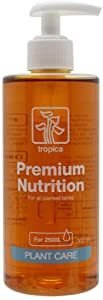
8. Tropica Premium Nutrition

Best Aquarium Plant Fertilizer

Finally, it says “suitable for aquariums with few plants or slow growing and lots of fish”. This is the most complex explanation, but it makes sense and true when we take a closer look at the analysis: The fertilizer contains a range of micronutrients, as well as some potassium and magnesium. Potassium and microbes make sense again because if they are not fertilized, the only sources are water changes and traces in food. The addition of magnesium may not be so necessary, but it will help those few who have unusually low magnesium tap water.

Check Price On Amazon


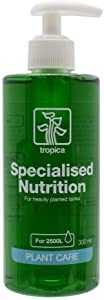
9. Tropica Specialized Nutrition

Best Aquarium Plant Fertilizer

We only get the percentage of phosphorus and nitrogen, so for our ratio we need to convert it to phosphate, which is a multiplication factor of 3.06 (the quotient between the molecular weight of phosphate and phosphorus). The phosphate percentage would therefore be 0.306%. We assume that all nitrogen is supplied as nitrate (a reasonable assumption as ammonia would be toxic and urea very unusual). We multiply by 4.42, which is the molecular weight quotient of nitrate and nitrogen. This gives us a percentage of 5.93%. Therefore, the ratio is 5.93:0.306:0.069 or 100:5.16:1.16.

With these full calculations, we see that this fertilizer is somewhat poor in phosphate and micros (compared to an unrestricted approach). Limiting P is a good way to emphasize reds in plants that are under stress due to nutrient restriction. Moving away from absolute numbers, if we do the math, we also find that the recommended dosage for most tanks is pretty lean, especially if you don’t want to stress over the reddest red. Note that the Tropica aquascapes example uses relatively little red; When we look at the dosage, we regularly see them taking an overdose by a factor of two to five above their own recommendation. This also shows how lean the recommended dose is.
They may have feared that a high recommended dose would lead to nitrate and micronutrient accumulation and health problems in the fish. Such a result would be possible if a customer wanted to use this fertilizer in a lush tank, but without additional carbon dioxide, a situation that could lead to less absorption. Therefore, the recommended dosage may be a compromise between high and low nutrient demand tanks.

Check Price On Amazon

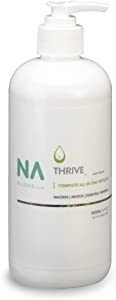
10. NilocG Thrive

Best Aquarium Plant Fertilizer

The NilocG Thrive website tells us exactly what we need to know: “1 pump (2 ml) per 10 g adds 6 ppm NO3, 1.11 ppm PO4, 4.3 ppm K and 0.23 ppm Fe.” This is almost the exact 100:20:4 ratio needed for a limitless approximation of the Estimation Index (IE), and this is indeed an IE based fertilizer. It also adds extra magnesium. That is why it is a perfect fertilizer for a limitless fertilization approach. But of course it should be mentioned that this approach means keeping up with the water changes as nutrients can build up very easily.

However, there are hidden assumptions in this product: non-limiting means that it exceeds the maximum possible plant intake, which in turn assumes you have a lush tank full of more or less average plants under lots of light and extra carbon dioxide. . For example, if you want to grow a tank full of K-hungry Hygrophila under plenty of light and with extra carbon dioxide, this fertilizer may yield less than the recommended dose of K needed to not be restrictive.

A handy rule of thumb: If you want unlimited fertilization in a tank with no additional carbon dioxide, a quarter to a third of the corresponding dose for tanks with CO2 is enough so as not to be restrictive.

Check Price On Amazon


How to Fertilize Aquarium Plants Naturally?

If you are looking for a natural way to fertilize your aquarium plants, consider what kind of soil you are using. You can find a special dirt that is ideal for aquarium plants. However, you can use regular potting soil with a lot of NPK or use pond plant compost.

Soil is a great way to give plants a nutritional boost. They get everything they need and it’s already in.

Still, dirt is a bit outdated. Many aquarists think it’s hard when you get upset. Moreover, you do unnecessary work if you have ready-made products for sale.

It is also possible to make a natural fertilizer using the ecology already present in the aquarium. A biologically active filter is the heart of any planted aquarium. If the filter is properly designed, it should contain colonies of good bacteria and activated carbon.

These things work with fish and plants to help purify the water. If you have biologically active filtration systems, the fertilizer will develop naturally. Also, living invertebrates and fish will fertilize plants through their waste and respiration.


Is the Aquarium Plant Fertilizer Safe for Fish?

Many people are rightly concerned about whether plant fertilizers are safe for the fish in the aquarium. Of course, most planted aquariums have fish inhabitants. Therefore, it is essential that you choose a fertilizer that will not harm other living things.

Fortunately, most fertilizers are designed for a wide variety of fish and invertebrates. So you don’t have to worry about your fish.

However, you must read the container as manufacturers must state whether the fertilizer is not safe for fish and what type. Still, it’s not common to find commercially available fertilizers that aren’t safe.


Conclusion

We believe that these 10 products are suitable for your planted aquarium. Still, some of them were designed for specific things, like Marimo or shrimp. It is ideal to read the product description before making a final decision.

When it comes to the Best Aquarium Plant Fertilizer, we think the Seachem brand is for you. Since we liked the Flourish and Flourish tabs, we get a tie winner. These products are essentially the same, although one is in liquid form and the other is a tablet.

[Latest 2023] 10 Best Pond Liners For Koi Ponds, Water Gardens & Fountains

Best Pond Liners

To create the perfect outdoor pond, it is essential to use the best pond liner. The pond liner serves as the basis for your pond; the better it is, the more likely it is to thrive.

Let’s take a look at everything you need to know about Top Rated pond liner selection and some of the best products out there to get your pond going.

Comparison Table

CustomSiteStripe ImageTitleReviewBuy
Top PerformanceFirestone W56PL451015 Pond Liner4.7/5.0Check Price
cheapestFirestone PondGard Pond Liner4.4/5.0Check Price

An essential part of your pond setup, a liner does much more than prevent water from flowing into the ground beneath your pond; it is also responsible for providing a base for plants to take root and fish to explore.

There are many things to consider when choosing the Bestest pond liner, especially if you are starting a pond from scratch.

Today we’ll take a look at everything you need to consider when choosing the best pond liner for your outdoor water landscape and review our top 10 list of the best pond liners for every type of fish, climate, and pond size.


What is a Pond Liner?

A pond liner in a waterproof, impenetrable membrane that used for covers the bottom of a pond. Pond liner also prevents pond water from being absorbed into the ground and keeps unwanted contaminants from seeping in.


Top 10 Best Quality Pond Liners to Use For Your Ponds


Best Pond Liner Reviews

1. TotalPond pond skins Pond Liner

Best Pond Liners

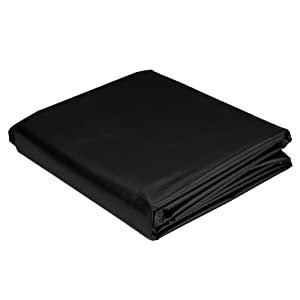
This TotalPon liner measures approximately 13 x 20 feet, although smaller sizes are also available. It is a good size for a large pond measuring approximately 9 x 16 x 1.5 feet or approximately 1200 gallons of water and the black color will naturally blend into your pond environment.

Something really cool about this liner is the textured surface. It is an easy way to promote beneficial bacterial growth and thus help maintain a healthy pond environment.

PVC material is lightweight, flexible and easy to handle, making installation simple. It is also very durable. It’s puncture resistant and won’t break down under the sun’s UV rays, so it should last for years without any problems.

What makes it so strong? Between the PVC layers it is reinforced with tightly woven polyester that provides more durability without adding extra weight. It is specially designed to weigh less than comparable coatings.

Check Price on Amazon

2. Firestone W56PL451015 EPDM Rubber Pond Liner

Best Pond Liners

This Firestone liner is also made from EPDM rubber that is resistant to UV, light and heat, and has a reputation for long-lasting durability. Measuring 10 x 4.5 meters, this pre-cut liner is flexible and easy to install in the contours of your pond.

One of the best things about this coating is that the material remains flexible even in cold weather, making it less likely to crack and wear during the winter. It is puncture resistant and safe for all plants and fish in your pond.

Because this pond liner is resistant to the overgrowth of harmful microbes and algae, it helps protect water chemistry and provides a healthy environment for your fish and plants. The black color blends into the background and gives the illusion that your pond is deeper than it is.

Check Price on Amazon

3. Firestone PondGard PL45-1010 Rubber Pond Liner

Best Pond Liners

If the name “Firestone” sounds familiar to you, you should. It is one of the world’s leading tire manufacturers. But did you also know that they make pond liners? Well they do. And they are just as strong and reliable as your tires.

This liner measures 10 x 3 meters and is made of thin, flexible EPDM rubber. It is ideal for ponds and for creating waterfalls and other water sources.

Installation is simple and reliably adapts to the shape and curves of your pond, without the need for special tools. EPDM is UV resistant and can withstand extreme weather conditions, making it perfect for a pond environment.

Homeowners and professionals rely on this liner to create beautiful ponds that require minimal maintenance and remain beautiful. It comes with a 20-year warranty, provided you install it with a suitable underlay.

Check Price on Amazon

4. USA Pond Products Pond Liner

Best Pond Liners

If you have a smaller pond, this 4×6 foot liner is a great option. It is safe for fish and plants and made of PVC, making installation easy no matter how many intricate contours, steps and curves you have.

Black is great for adding depth to your pond, but also for blending in with the environment so that it does not differ from the rest of the landscape. The company suggests keeping the material out of direct sunlight so that it lasts as long as possible.

Keep in mind that this liner is quite small, so provide enough overlap and depth to determine if it is right for your pond. This product is made in the USA and is recyclable, so if you ever replace it, please dispose of it responsibly.

Check Price on Amazon

5. Beckett Corporation Preformed Pond

Best Pond Liners

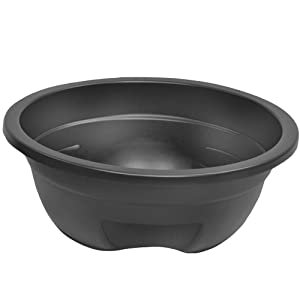
Many people like flexible liners because you can shape them any way they want, but for many people a preformed liner is a good choice. This Beckett Corporation product is made of high quality flexible plastic. The round shape creates a 35 gallon pond.

One of the great things about this liner is the flat bottom that makes it easy to place plants and pumps without worrying about anything falling or adding extra supports. The black color serves as an excellent base and background for the plants and fish you add to your pond.

This pond is perfect for installation on the ground, but can also be used above ground. The material is UV resistant and therefore lasts a long time in the sun. It’s made in the USA and backed by a 10-year limited manufacturer’s warranty.

Check Price on Amazon

6. Algreen 91901 Avonlea Rigid Preformed Pond Liner

Best Pond Liners

Another great option if you want contoured eyeliner is this one from Algreen. What we really like about it is that it is made from recycled plastic. The rigid construction holds 33 liters of water and is safe for plants and fish.

The flat bottom gives you a good foundation for planting and pump placement and has built-in planting shelves for easy installation.

In terms of material, it is durable and will not chip, crack or fade. It’s UV stable, so exposure to the sun won’t harm plastic either. This is also a good option for people who live in areas with cold winters. It is weather resistant and backed by a five-year limited warranty.

Check Price on Amazon

7. Greenseal Pond Liner

Best Pond Liners

This EPDM pond liner is an ideal choice for a wide variety of ponds. It is elastic enough to fit custom designs and is relatively inexpensive if you want to create a larger pond.

However, keep in mind that you’ll want to wear a base layer with this liner to avoid stretching and punctures.

The coating can withstand almost all weather conditions, including freezing temperatures, and lasts up to 30 years.

In support of this, the manufacturer offers a 15-year warranty against leaks due to manufacturing defects.

The siding comes in a unique, slightly odd size: 13 feet, 1 inch by 9 feet, 9 inches. However, it is easy to make the liner smaller or to tape several sheets together with liner tape.

Note that this plate, like all EPDM liners, is almost 2 millimeters thick.

Check Price on Amazon

8. Algreen 91914 Avonlea Pond Kit

Best Pond Liners

This complete pond set from Algreen contains a preformed plastic pond liner, a pond pump of 200 liters per hour with supplied flow control, two fountain heads and a lamp with exchangeable color filters.

The liner itself is large enough to hold 33 liters of water, enough for small fish and turtles, but too small to use as a koi pond.

While plastic is strong enough to be used as an above-ground pond with no supportive backfill, plastic will crack in extreme cold or long exposure to UV light.

Keep in mind that Algreen makes no warranty on the pond liner or pump, which is also prone to clogging.

Check Price on Amazon

9. HDPE Pond Liner

Best Pond Liners

Due to its durability and light weight, this HDPE pond liner is designed for use in almost any pond. Like EPDM liners, this liner can withstand extreme cold and direct UV light.

Plus, it’s more puncture resistant than EPDM liners, so there’s no need to use a base coat with this liner. However, keep in mind that this liner has no manufacturer’s warranty.

Siding is available in a variety of sizes, including 13 x 11 feet, 16 x 11 feet, 16 x 15 feet, and 36 x 30 feet.

If you have a very unique custom pond design, you can weld multiple plates together. All sizes are 0.12mm thick, making this liner significantly thinner than any EPDM or PVC liner.

Due to its durability and light weight, this HDPE pond liner is designed for use in almost any pond. Like EPDM liners, this liner can withstand extreme cold and direct UV light.

Plus, it’s more puncture resistant than EPDM liners, so there’s no need to use a base coat with this liner. However, keep in mind that this liner has no manufacturer’s warranty.

Siding is available in a variety of sizes, including 13 x 11 feet, 16 x 11 feet, 16 x 15 feet, and 36 x 30 feet.

If you have a very unique custom pond design, you can weld multiple plates together. All sizes are 0.12mm thick, making this liner significantly thinner than any EPDM or PVC liner.

Check Price on Amazon

10. Aquascape EPDM 45 Mil Rubber Liner


Best Pond Liners

Aquascape Designs is a supplier of pond supplies including pond water pumps, fountains, treatments and liners.

They offer EPDM liners in a variety of pre-cut sizes from 8 ‘x 10’ to 20 ‘x 25’.

The rubber is 45 mils thick and very puncture resistant.

The coating can also be used to coat streams and waterfalls. The material is easy to cut and seal if you want to add a slot box or bottom drain.

Aquascape Designs offers a 20 year warranty on its EPDM liners.

Check Price on Amazon

Benefits of Using Liner For Your Pond

The main function of a pond liner is to prevent water from seeping out of your pond. The dripping water removes important nutrients such as calcium, magnesium and selenium from the pond.

To maintain a pond with a natural soil, you must constantly add water to it. While this may not be a major problem with a small pond, the water loss can be quite significant with large ponds, and topping up the water several times a week can be a burden.

A liner not only protects against water leaving the pond, it also acts as a barrier to prevent contaminants from entering. Because the water does not mix with the surrounding soil, you have more control over the water values ​​and you keep your pond clean.

Another bonus is that you don’t have to worry about fertilizers, bug sprays, or other chemicals seeping through the soil and into your pond. Having this control over the purity of your water can help maintain a healthier environment for your plants and fish.

Pond liners also prevent erosion around your pond. If you use natural soil, rain and varying temperatures can wear down the pond’s edges, which over time can significantly change the shape and size of the pond.


How to Determine the Size of Your Pond Liner

There are many calculators available online to help you determine how much plant cover you need. That said, it helps to know how to figure it out for yourself to better understand the size and shape of your pond.

This calculation is not as easy as you may think. You must consider the depth of all bends at the bottom of the pond, as well as along the banks, and you must leave enough overlap to install the liner correctly.

When calculating the dimensions of your pond, it is very important where you get your measurements from. Make sure you get the width at the widest point, the length at the longest point, and the depth at the deepest point.

This will likely give you a measurement that is slightly larger than the actual dimensions of your pond, unless you have one that is perfectly square, rectangular, or perfectly round, which is a good thing. If your sizes were smaller, the liner wouldn’t fit.

Once you have the dimensions of your pond, you will need to perform two simple calculations to determine the size of the liner you need:

To know the length:

Pond length at the longest point + double depth + 2 for overlap

To calculate the width:

Pond width at widest point + double depth + 2 for overlap

Here are some examples.

If your pond is 11 feet long x 8 feet wide x 2.5 feet deep, this is what you would do to determine the size of the liner:

Width: 8 (width) + 5 (double depth) + 2 = 15

Length: 11 (length) + 5 (twice the depth) + 2 = 18

So, in this example, you’ll need 15 x 18-foot siding. For ponds that are not a standard size, order one that is larger but closer to the actual size. For example, a 10×20 liner would be too small, but a 15×20 liner would be perfect.

Here’s another example. Let’s say your pond is 2 meters long, 1 meter wide and 2 meters deep. In this case, your calculations are as follows:

Width: 4 (width) + 4 (double depth) + 2 = 10

Length: 7 (length) + 4 (twice the depth) + 2 = 13

For this pond you need a liner of at least 10 x 4 meters. A 10×12 eyeliner would be a bit too small so you should use a 12×15.


How to Install a Pond Liner in a Large Pond?

The first thing to do before you can install a pond liner is dig the hole for your pond. Some people prefer to lay a garden hose to plan the shape so that you have a better idea of ​​where to dig.

When digging the hole, keep the bottom as flat as possible. If you want one end to be deeper than the other, it is better to create a gradual slope than a big step down.

After digging the hole, measure it according to the instructions above to make sure you get the correct size liner.

It is a good idea to install an underlayment under the cladding. This is a thicker layer of material that insulates the bottom of the pond from rocks or sharp roots trying to pierce the surface. Once this is done you are ready to install the siding.

1. Spread the liner over the top of the hole. Then push it into the hole by walking to the center. Cover the bottom of the pond first, working your way to the edges, making sure to leave an even overhang around the edge of the pond.

2. Once the bottom is covered, move around the edges, fold the siding if necessary and use large stones, bricks or stones to hold it in place.

3. When you are satisfied with the appearance of the liner, add about two inches of water to cover the bottom of the pond. The liner will likely move if the weight of the water pushes it down. If necessary, remove anchors from the sides to allow the siding to cure naturally.

4. Trim a liner that extends more than a foot or more from the stone ring that holds it in place. This will remove the mass to keep the pond looking tidier. Depending on the size of your pond, it may require quite a bit of pruning. (Save the pieces you cut to use as patches later if needed.)

5. Complete the landscape around the pond by adding more rocks and stones to the edge to add more security to the liner.

6. Add plants and the pump to the pond and then fill it.

Obviously, the installation process for a preformed siding is a bit different. The main difference is that you should not start digging your pond hole until you have the liner.

1. Place the preformed liner where you want the pond. Spray around the perimeter with line marker spray. You can also use sand to create an outline.

2. Dig a hole 4 to 5 inches larger than the pond’s perimeter. Start by digging only to the depth of the plant shelf.

Once you’ve dug about a foot, place the pond in the hole and press the center. This marks in the dirt where you need to keep digging to reach the correct depth.

4. Continue digging until the pond fits in the hole. Make sure the bottom is level as much as possible. Once the pond is in place, fill it halfway with water.

5. Now is not the time to fill in the area around the pond. Fill this in with topsoil, rocks, stones or sand. You can also pour cement around the edge so that you can seal the pond after the concrete has dried.

Put plants in your pond. Ideally, about one to two thirds of the area should be covered with plants.

7. Connect and prime the pump.


Which Pond Liner is Best?

Ultimately, the best pond liners for your pond depends on the aesthetics you want to achieve, your pond design, and the weather conditions around your home.

Greenseal and Firestone EPDM liners, as well as HDPE pond liner, are versatile solutions for almost any pond, although you should use an underlay if you choose EPDM liners.

For pond builders with a limited budget, Beckett PVC liner is an economical option; Keep in mind that this is the least durable of the coatings we reviewed.

Finally, the Algreen Pond Kit is a good solution for people who just want a small preformed pond without the hassle of designing and building a pond from scratch.


Conclusion

Using high-quality best pond liners is the best way to lay a solid foundation for your pond. There are many options to choose from.

Whether you have a large or small pond or prefer a flexible or preformed liner, we offer many options to find the right one for you.

[Latest 2023] Top 10 Best Aquarium Water Conditioner Review

[Latest 2023] Top 10 Best Aquarium Water Conditioner Review

The water conditioner is a staple in my aquarium kits. The easiest way to ensure your water is aquarium safe.

But not all are of equal quality when it comes to how much you get for your money.

Comparison Table

CustomSiteStripe ImageTitleReviewBuy
Top PerformanceAPI Tap Water Conditioner4.7/5.0Check Price
cheapestNatural Rapport Aquarium Water Conditioner4.5/5.0Check Price

When it comes to owning the aquarium, there are many things that go into the maintenance section. One thing you should never forget is aquarium water maintenance.

As part of water maintenance, you should use an aquarium water conditioner. This is because sometimes people even add tap water to the aquarium before treating it.

That process involves changing some of the water, but tap water contains chemicals, minerals, and heavy metals that keep the water safe for us to drink, but make it deadly for fishing. Fortunately, you can solve that problem by using a tap water conditioner.

But how long does it take for the water conditioner to work? And what is the best aquarium water conditioner? In this guide, we’ll tell you everything you need to know about tap water conditioning products, including detailed water conditioner reviews and our personal recommendations.

So what is the best aquarium water conditioner? We can answer that question below with a list of quality water conditioners for your aquarium.

The 10 Best Water Conditioners For Your Aquariums

Best Aquarium Water Conditioner Reviews

1. Seachem Safe

Best Aquarium Water Conditioner

When it comes to a potent treatment for your aquarium, the Seachem brand does not disappoint. It is a concentrated and complete conditioner. It also works for salt and fresh water tanks to remove chloramine and chlorine.

The product permanently and immediately removes chloramine and chlorine from the water. In this way, your biofilter can remove nitrates, nitrites and ammonia. Plus, everything detoxes after a short 48 hours.

Seachem Prime works hard to detoxify heavy metals, ammonia and nitrites in ordinary tap water. While these are typical and safe levels, they are not suitable for fishing. Therefore, your tetra, beta and other fish have a safe environment to live in.

You can use this in case of emergency. Use a 5 times higher dose of the product for nitrite and ammonia in the water. Only use a half dose if the water temperature is above 86 degrees Fahrenheit.

Use one product cap for 50 gallons of new or replacement water. Add it to fresh water for your fish first. If you have large amounts of chloramine, consider a double dose.

Check Price On Amazon


2. API Tap Water Conditioner

Best Aquarium Water Conditioner

It is difficult to condition tap water to house fish in an aquarium. The API brand presents a conditioning product. This can immediately neutralize chloramines, chlorine and other chemicals.

Therefore, tap water is safe for fish. In a sense, chemicals in tap water do a lot of damage to fish. They can cause tissue irritation, gill destruction, and death.

The product is a highly concentrated formula. So you don’t need a lot every time. It is better to use it when you change or add water.

You should also use this product when adding new fish. It can be used in freshwater and saltwater aquariums.

Dosage instructions are to add 1 ml per 20 gallons of water. This can detoxify heavy metals and remove chlorine. To get rid of chloramines, you need 5 ml per 30 gallons of water.

In addition, you should feed your fish twice a day. You can use API fish food, which is designed to work with other API products. This keeps your fish healthy and active.

Check Price On Amazon

3. Natural Rapport Aquarium Water Conditioner

Best Aquarium Water Conditioner

Sometimes you want a professional quality water conditioner. The Natural Rapport brand is essential. It works for both freshwater and saltwater aquariums.

You don’t need separate accessories, chemical kits or supplies to deal with slime layers and stress layers. This chlorine remover does it all for you in one simple step.

It is advisable to use a treatment during each water change to help goldfish, bettas and other fish thrive. The product adds electrolytes, balances the pH and adds a layer of sludge to your fish. It is also safe for saltwater plants, marine invertebrates and crustaceans.

When you use the product, it works quickly to kill harmful bacteria. These include nitrates, ammonia, chloramine, chlorine and heavy metals.

It also instantly makes tap water safe by detoxifying and removing chemicals from the water. Therefore, it is safe, effective and recommended for living reefs. The product works for exotic fish and betta, among others.

This conditioner contains 11 active ingredients. You can work with water to add protective layers of sludge and electrolytes. However, it also takes all the bad stuff out of the water.

Check Price On Amazon

4. Fluval Water Conditioner for Aquariums

Best Aquarium Water Conditioner

You will definitely be impressed by the Fluval brand water conditioner. It is designed to make tap water safe for fish.

Of course it does this by neutralizing chloramines, chlorine and heavy metals. In addition, it also protects the mucous membranes of the fish. These areas are often quite sensitive and need a little extra help.

Fluval has patented their formula, which is designed to reduce stress on your fish. In addition, it can be used in fresh and salt water applications. The purpose of the product is also to protect the fins and scales of your fish.

This way the fish do not get inflammation or other disorders. In the aquarium, abrasions, broken fins and abrasions can occur. Now fish can heal faster if you use this product.

Be sure to use this conditioner when adding new water to the tank. It is also suitable for water changes and when installing a new tank.

If your goal is to remove chlorine, you should use 5 ml for every 10 gallons. Those who want to protect the fins and scales of their fish and remove chloramine should use 10 ml in 10 gallons of water.

Check Price On Amazon

5. KordonNovAqua+ Plus Water Conditioner

Best Aquarium Water Conditioner

Whether you have a freshwater or saltwater aquarium, you can use Kordon’s NovAqua+. It is designed to remove heavy metals commonly found in tap water. It can also detoxify chloramine and chlorine.

As if that weren’t enough, you can also provide your fish with vitamins and immunizers. These are important for your fish to stay healthy. The product also adds a protective layer to the skin of the fish.

This protects you from the dangers in the tank. You may not realize it, but your fish can get cuts and scrapes. This slime guard reduces the chance of your fish getting cut, but it can heal faster.

You will be happy to know that this product is also safe for your aquarium plants. Eliminate chlorine and chloramine so that all living things are protected and safe.

When it comes to using the right amount of conditioner, the instructions are on the back of the bottle. It is quite easy to read and understand. Just add a teaspoon of the product for every 10 gallons of water in the tank.

Check Price On Amazon

6. TankFirst Complete Aquarium Water Conditioner

Best Aquarium Water Conditioner

Many people think that water conditioners smell terribly. The TankFirst brand recognized this problem and stopped it. It has a natural additive that does not produce the noxious odor while being effective.

While your fish probably won’t mind the smell, you will. Now you don’t have to worry.

The formulation is designed to be groundbreaking. It can make tap water safe right away because it removes many contaminants. These include chlorine, chloramine, nitrites, ammonia and heavy metals. This conditioner is complete and can be used in reef, marine and freshwater aquariums.

A bottle of conditioner weighs 16.9 ounces and can treat up to 1,000 gallons of water. You only need one lid, which is one teaspoon, for every 10 gallons.

This product appears to be used in freshwater and saltwater species. These can be live corals, snails and shrimp. Even sensitive fish are safe when using this product.

You must use this conditioner when adding water due to evaporation. Also consider using it for water changes and also when you can measure nitrite and ammonia levels.

Check Price On Amazon

7. MicroBacter7 – Bacteria & Water Conditioner

Best Aquarium Water Conditioner

People with aquariums need a complete bioculture and water treatment. It’s hard to find the right one, but the MicroBacter7 brand can be helpful. It can help you set up a biological filtration system for your new aquarium.

If you already have one set up, you can still use this product. It allows you to reduce nitrates, nitrogen, nitrites, ammonia, phosphates and organic carbon. In addition, it works in marine and freshwater aquariums.

The product contains enzymes and microbes that are essential and effective for your fish. It has also been tested by a veterinary pathologist and is recommended nationwide.

Of course, that’s not all the product does. It can stimulate the growth of photosynthetic organisms. In addition, it can increase oxygen concentration and reduce hydrogen sulfide production.

You will also find that it can provide you with a healthier substrate in the aquarium. This means you have to clean less and change less water. The product also improves water quality so you can watch your beautiful fish swim and play all day long.

Check Price On Amazon

8. Hagen Fluval Water Conditioner

Best Aquarium Water Conditioner

Look at the price of the 16.9 ounce container, it seems reasonable.

However, you will use it faster because you need 10 ml for 10 gallons.

Check Price On Amazon

9. Tetra AquaSafe PLUS

Best Aquarium Water Conditioner

This is another cheaper alternative to Prime in terms of volume, especially for a 1-liter (33.8-ounce) container.

However, it is expensive in terms of how many gallons it can actually handle. That’s because you need 5 ml for 10 gallons or 7 drops per gallon. So we do the math, and 1 liter can only treat 2,000 gallons.

Check Price On Amazon

10. Aqueon Tap Water Conditioner

Best Aquarium Water Conditioner

Aqueon is a very popular brand of tap water conditioner that immediately neutralizes chlorine and chloramines, in addition to detoxifying ammonia, heavy metals and fish waste. As an added benefit, Aqueon Tap Water Conditioner helps restore the fish’s natural sludge layer that can be lost when fish are transported or fished. This water conditioner also helps reduce stress on fish, making it a great option for new setups.

The correct dosage of water conditioner is easy to measure using the calibrated dosing cap.

This is one of the cheapest water conditioning products we’ve seen, but it pretty much does what all the other brands do at a slightly lower price.

Check Price On Amazon

Why Use Water Conditioner in Aquarium?

Water conditioners are helpful when it comes to treating tap water to make it safe for fish.

Conditioners remove chlorine commonly found in tap water. Chlorine as a chemical is good at keeping bacteria and other microorganisms away so you can use the water for human consumption.

The same level of chemical chlorine that is safe for humans can easily be toxic and kill the fish in the aquarium. You must use the water conditioner to remove any chlorine and chloramine in the water.

It’s not just about removing chemical chlorine, water conditioner is also good at removing heavy metals from water. Such heavy metals are often found in tap water.

It should also be great when it comes to removing ammonia, nitrites and nitrates from water. As you can see, you always end up with clean water.

Depending on the water conditioner, it can also help to create an important layer of sludge to protect the fish. In general, you should have a safe environment for aquatic life.


What is the Best Aquarium Water Conditioner?

When it comes to choosing the best aquarium water conditioner, it’s all about a model that can always deliver performance. You don’t want to pick one with too many additives that won’t even perform.

For the list above, you can always settle for Seachem Safe as it is one of the best of the many available in the industry. The model offers exemplary performance to easily clean the water. The impressive concentrated solution also reduces nitrites and nitrates that you can find in aquarium water.


How Does the Aquarium Water Conditioner Work?

The water conditioner is important when it comes to cleaning the water and making it safe for fish. So how does the water conditioner really work? It’s pretty easy once you understand the chemistry behind it.

The conditioner starts by neutralizing the chlorine in the water. This is done by the formation of ionic bonds and will thus turn the chlorine in the water into harmless components. Once this happens, the water must be safe for aquatic life.

The same chemical process will take place when it comes to removing other components such as chloramine and heavy metals.


Which Water Conditioner is Best?

After reading this article, guess which one I decided I preferred.

Yes, Seachem Prime.

And no, Seachem doesn’t pay me a lot of money to promote their products.

Although, if they wanted to give me a big check, I wouldn’t worry about it either.

I promised myself that I would keep an open mind while writing this article. I knew I preferred Prime, but everyone should always be open to new information, including myself.

But I have to admit that after looking at the numbers for all these different products, I came to the conclusion that Prime is the best water conditioner.

I don’t really believe the aquatic experts’ claim that Prime’s odor bothers aquarium fish. I’ve added Prime to my tanks literally hundreds of times now.

The fish don’t try to escape the new water or swim away if I fill the tank right away.

So it all boils down to this: I want a water conditioner that removes chlorine/chloramines, detoxifies nitrites and nitrates, and is reasonably priced. Prime is the clear winner.


Conclusion

There is no doubt that you now know that this could be the reason why your fish has been dying all the time. You can’t just add tap water to the aquarium and hope the fish will survive.

Now that you know more about Best Aquarium Water Conditioner, you should be able to have one of the best products for your aquarium today. Each of the models discussed above will give you the performance you deserve when it comes to treating your water. You can choose according to your preferences.

Top 11 Best Aquarium Silicone – Reviews and Guide 2023

 Aquarium silicone is a sealant designed to repair small leaks, cracks and fish tank construction. Choosing the Best Aquarium Silicone is vital for your fish health and tank strength.

We’ve reviewed 11 different silicone sealants below to help you find the safest and most effective option for your aquarium needs. 


Comparison Table

Prices pulled from the Amazon Product Advertising API on:


The 11 Best Aquarium Silicone Products Reviewed

ASI’s clear silicone sealant has been specifically formulated for aquariums, forming an airtight seal unaffected by being submerged in fresh or salt water. 

This sealant creates a bond strong enough that it doesn’t need a primer. This material will not break or shrink and provides a long-lasting seal. It can also be used vertically without worrying about flowing or sagging while it cures.

It takes between 7 to 14 days to fully cure, after which it’s non-toxic to fish. And heals clear so as not to detract from the appearance of the tank.

Since this product is 100% silicone, it is resistant to chemicals in the air and UV radiation, so it can really provide a long lasting effect. 

4.6/5 STARS

Benefits

  • Non-toxic
  • Non-slump
  • Formulated for fresh or salt water tanks
  • Value for money

Cons

  • Not for acrylic tanks
  • Leaves residue on hands
  • Takes 7 days to cure (dries in 24 hours)
Check Price On Amazon

2. Aqueon Silicone Sealant

The Aqueon Silicone Sealant is a 100% non-toxic silicone option. Application is simple and easy, and it creates a high resistance, permanent seal.

This sealant is formulated for both fresh and saltwater tanks, and is durable enough that there’s little risk of cracking or shrinking over time.

The product cures clear and is a discreet option for fixing leaks or damages. However, it’s also available in the color black for a different aquarium aesthetic. 

It is strong, permanently flexible and will last a long time. It’s recommended to wait 24 to 48 hours between application and use.

4.6/5 STARS

Benefits

  • No cracking or shrinking
  • Easy to apply
  • 100% non-toxic
  • Formulated for fresh or salt water tanks
  • Clear (also available in black)

Cons

  • Doesn’t keep well
  • Strong smell until dry
Check Price On Amazon

The MOMENTIVE RTV Silicone is a high quality adhesive product specifically formulated to combat extreme temperatures. It’s also suitable for various portable applications and caulking guns.

The sealant is non-toxic, not involving any poisonous dyes or content, and provides a solid bond with the glass in your tank, along with supporting the use of old silicones left in the aquarium. 

It’s a clear sealer that’s able to be used on verticals and overhead. Application is easy, quick and can be used anywhere on or in the tank.

This adhesive silicone sealant meets military standards and is USDA certified. 

4.6/5 STARS

Benefits

  • Good for vertical & overhead
  • Glues a range of materials
  • USDA certified
  • Value for money
  • Strong adhesion

Cons

  • Not specific for aquariums
Check Price On Amazon

4. Loctite Clear Silicone Waterproof Sealant

This Loctite Clear Silicone Waterproof Sealant can be applied on various surfaces, such as glass, ceramic, toys, appliances and aquariums. 

This product is made of transparent silicone, creating a waterproof and protective seal. It is safe for use with saltwater or freshwater aquariums and will not crack, peel, or shrink over time.

It’s simple to apply and only takes 24 hours for the silicone to cure before your aquarium can be used again. 

4.5/5 STARS

Benefits

  • Aquarium safe
  • Glues various materials
  • No cracking or shrinking
  • 100% silicone
  • Quick to cure

Cons

  • Some reviews say bottom of tube splits if squeezed hard
Check Price On Amazon

The ASI Aquarium Sealant is a relatively cheap black silicone option to help repair your aquarium. We find black silicone can hide algae much better than clear sealants can, helping maintain a clean and aesthetic tank.

ASI is a durable, fish safe choice for your aquarium. It withstands both saltwater and freshwater and won’t slump or split as it cures.

This product only takes 24 hours to dry, however around 7 days to fully cure before you can use your tank again. 

4.6/5 STARS

Benefits

  • Non-toxic
  • Non-slump
  • Formulated for fresh and saltwater tanks
  • Value for money
  • Black

Cons

  • Not for acrylic tanks
  • Leaves residue on hands
  • Takes 7 days to cure (24 hours to dry)


Check Price On Amazon

This fish safe MarineLanf Silicone Squeeze Tube works exceptionally well compared to other clear silicones on the market. It provides a solid adhesion that dries immediately with an impressive grip, similar to rubber. 

However, it’s worth noting that this silicone is not easy to apply and requires a bit of patience and practice to make it work the way you want it too. But with the right application, this product can provide one of the most effective seals.

We believe it’s good value for the price. This silicone can be be used outside of aquarium repairs, on various materials. It’s free of toxic substances and is safe for your fish and plant life. 

4.5/5 STARS

Benefits

  • 100% clear silicone
  • Non-toxic to fish
  • Strong seal

Cons

  • Doesn’t seal plastics
  • Strong smell until cured
  • Application takes practice
Check Price On Amazon

The Gorilla Clear 100 Percent Silicone Sealant Caulk is another of the best options on the market due to its ensured long-lasting performance. It’s mold and mildew resistant and is also available in a large 10oz size, for various and multiple applications. 

This sealant is versatile enough to be used for applications such as bathrooms, kitchens, doors, and windows. It dries translucent clear to prevent discoloration or distracting repairs. 

It’s 100% silicone and 100% waterproof. There’s also no risk of seals breaking, shrinking or turning yellow, regardless of whether it’s applied inside or outside. 

This product is not aquarium specific.

4.5/6 STARS

Benefits

  • 100% silicone
  • Clear or white options
  • 30 minutes water ready
  • Won’t yellow, shrink or crack

Cons

  • Not aquarium specific
  • Poor packaging of product (parts damaged)
Check Price On Amazon

8. 3M Marine Adhesive Sealant 5200 Black

This 3M Marine Adhesive 5200 Sealant is a high strength formula versatile for a wide range of applications, including boats, kitchens and many surfaces. 

It’s recommended as the best option for permanent sealing of gel coat, fiberglass or wood. Once hardened and cured, it provides a waterproof and elastic bond in and out of the water. 

It is a strong and flexible polyurethane polymer that can form a robust unit. One that is capable of retaining joints and seals during swelling, vibration, shock or contraction.

This product is not aquarium specific.

4.6/5 STARS

Benefits

  • Won’t crack or peel
  • Flexible
  • Easy application
  • Black
  • Value for money

Cons

  • Takes 5-7 days to cure
  • Not aquarium specific
  • Poor packaging (damaged parts)
  • Some reviews say it doesn’t cure properly
Check Price On Amazon

9. Dap 00688 All-Purpose Adhesive Sealant


This Dap 00688 All-Purpose Adhesive Sealant is 100% clear silicone and is used for both building and repairing aquariums. Once applied, it takes 24 hours to completely cure.

Because it’s aquarium specific, it contains toxic-free materials and is safe for your fresh and saltwater fish and plants once cured. It is completely waterproof, remains flexible and does not break or peel.

Like a lot of silicone products, the Dap sealant has strong fumes during application that should dissipate once it’s dried and cured. 

4.6/5 STARS

Benefits

  • 100% clear silicone
  • Stays flexible
  • Won’t crack or shrink
  • Non-toxic to fish when cured
  • Good adhesion

Cons

  • Only one nozzel with product
  • Strong fumes during application
  • Not able to reseal glue after use
Check Price On Amazon

This aquarium grade GE 1200 Series Construction Silicone Sealant suits all types of tanks, including larger style aquariums of a hundred liters or more. 

The adhesive product is an affordable option, and cures quite quickly compared to other silicone sealants. The seal it provides is extra strong and efficient, and is specific to various aquatic environments. 

Similar to other sealants available today, this product has an unpleasant odor during application and comes with a sticky paste that could hold your hands together tightly, so wearing gloves when working is recommended to prevent this from happening. Once cured however, all fumes and stickiness are no longer an issue. 

4.6/5 STARS

Benefits

  • Quick curing
  • Aquarium grade
  • Very strong adhesion

Cons

  • Strong fumes during application
Check Price On Amazon

11. Permatex 80050 Clear RTV Silicone Adhesive Sealant

Permatex 80050 Clear RTV Silicone Adhesive Sealant is well-known for being flexible, durable and lending a long lasting seal. It’s weather resistant and able to be used indoors and outdoors.

The silicone adhesive sealant is one of the most versatile choices in circulation because it can be used to repair and seal metal, plastic, vinyl and glass fabrics. It can also be used for vinyl tops and paint stripping. So whilst it can be used on aquariums, it’s a worthwhile investment for door frames, roofs and trimmings as well.

4.6/5 STARS

Benefits

  • General purpose sealant
  • Bonds many materials
  • Flexible

Cons

  • No aquarium specific
Check Price On Amazon

How to Use Aquarium Silicone Sealant?

Best Aquarium Silicone

It’s always a good idea to refer to each silicone aquarium sealant’s specific instructions before attempting to apply it. Although it’s true that they’re all used in basically the same way, it’s important to understand how long each sealant will take to fully cure. 

Don’t use the aquarium before it is ready and cured otherwise the water may be adversely affected. These products are non-toxic and safe for your fish, but only after they have dried and had the right amount of setting time.

Silicone adhesive should be applied as soon as you recognise leaks or damages in your aquariums, to prevent any danger to your aquatic life. It can also be used to glue various decorations for tanks, plants and stones on the aquarium glass. 

A General Step-By-Step Method on How to Seal a Corner Leak with Silicone.

1. Completely empty the aquarium.

2. Use a razor blade to remove as much old silicone as you can. When applying the new silicone, you want it to come into contact with only the glass, so the bond can be stronger and more effective.

3. Clean the surface and brush with fine-grit sandpaper. This slightly stiffens the surface and forms a stronger grip.

4. Make sure everything is completely dry before continuing.

5. Use a silicone gun to apply a new layer of silicone inside the edges. Use duct tape or clamps to hold everything in place while it heals.

6. Smooth the silicone along the seams with your finger to remove any excess.

7. Allow the silicone to harden for the period of time recommended by the manufacturer.

This general method can be adapted for some different situations.

For example, if you notice that there is a chip causing a leak, it is not necessary to replace the entire seam. Drain the aquarium a few inches below the chip. Clean broken glass with gloved fingers, then use fine sandpaper. Insert the silicone into the chip with a small piece of glass of similar size. Cover with wax paper and use masking tape to hold it in place until the silicone hardens. Fill the tank back up and it’s ready to go again.

Regardless of how you’re using the silicone sealant however, remember to let it harden completely before putting it in the water.


How to Remove Aquarium Silicone from Glass?

The first and easiest method to remove silicone from the glass is to use a razor blade and simply scrape it. 

If you need to remove silicone from a larger area or if you are trying to remove it from the corner seam, we recommend using a heat gun or hairdryer to blow hot air along the seam. Hairdryers will work but might take slightly longer. 

Once the silicone is heated and more flexible, use a razor blade to scrape it. It is important not to heat it to the point it starts to melt. You just want it to be a little more flexible, so it’s easier to remove. You can use a utility knife to split the corner if you’re taking everything apart. After removing as much as you can, use a rough sponge to get rid of any excess silicone.


Frequently Asked Question About Best Aquarium Silicone

What is the use of silicone sealant?

  • Silicones are an excellent sealant that can be used to repair cracks or leaks in your aquarium glass. They are waterproof, non-toxic, flexible and durable. You can also use them to repair other household items.


What kind of silicone is safe for aquariums?

  • 100% silicone is completely safe for aquariums as long as there are no sneaky additives; if it’s marked as pure silicone, it is safe. 


How to use silicone sealant on your aquarium?

  • Make sure you’ve read the instructional guidelines on the tube. It will help you know how long it will take for the silicone to set. Empty your aquarium completely. If you apply silicone sealant to broken glass, make sure it is clean. It should only come into contact with the crystal and nothing else. Don’t rush it and give it plenty of time to dry and cure.


Video Guide About How to Choose Best Aquarium Silicone


Final Comments

Silicone is arguably the most effective and safest adhesive to use in an aquarium, due to its durability and lack of toxic substances that could harm your fish and plant life. We’ve reviewed the Best Aquarium Silicone options that’ll create long-lasting seals to offset any damages and leakages in your tanks.

.


[Latest 2023] Top 7 Best HOB Protein Skimmer For Saltwater Marine, Reef Tanks

[Latest 2023] Top 7 Best HOB Protein Skimmer For Saltwater Marine, Reef Tanks

Reef tanks and marine aquariums are some of the most fascinating microsections on Earth where we can observe these tiny fish and corals and other creatures at any time of the day or night.

Dirty your aquarium is nothing new, but you must take measures to ensure that the aquarium water is cleaned perfectly.

Comparison Table

CustomSiteStripe ImageTitleReviewBuy
Top PerformanceReef Octopus Classic 100 HOB Protein Skimmer4.5/5.0Check Price
cheapestCoralife Super Skimmer With Pump3.9/5.0Check Price

Anyone who owns a reef aquarium knows that a protein skimmer is important for maintaining good water quality. No serious reef keeper would be without a protein skimmer.

But what if you don’t have a container or space under your tank for a protein skimmer? The good news is that there are Hang On Back (HOB) protein skimmers that are easy to install and don’t require a collection tray or can be placed underneath the aquarium.

Due to the dissolving of organic compounds in the water, it is difficult to clean the aquarium water. If it stays dirty for too long, it will be more of a problem for the inhabitants of your aquarium.

It is the reason why you should now buy the best HOB protein skimmer to remove organic matter. These machines use air bubbles to ensure that you get cleaner aquarium water every time.

The bright colors, fascinating shapes and unique creatures that make up our saltwater fish tanks are unlike any other type of aquarium.

And in order for our seawater aquariums to thrive, we need special equipment.

Familiar things like filters and water pumps are needed, but some lesser known things like protein skimmers are also necessary for a truly healthy and happy marine aquarium.


Top 7 Best Hang On Back Protein Skimmers For Aquariums

Today there are many hanging protein skimmers, but not all of them will help you get rid of dissolved organic compounds. It’s the reason why you need to find the best HOB protein skimmer for your aquarium.

Think about things like the type of aquarium you own, the capacity of the skimmer, the settings, the brand and the maintenance process. Consider choosing a model that will keep you having fun by keeping the aquarium water clean. There is no need to have a model that offers long-term performance.


Best HOB Protein Skimmer Reviews

1. AquaMaxx HOB-1.5 Hang On Back Protein Skimmer

Best HOB Protein Skimmer

This model is often considered a superior model due to its powerful submersible pump and sensitive collection cup. These are two important features that you may always want to consider when you want to have the best protein skimmer.

For this model, it comes with a 90 gallon capacity, making it ideal for a variety of aquariums that humans may have. It is also designed to be thin and light so you can easily fit it into a small aquarium without worrying about it being too heavy.

The model is precisely designed by the computer so that it can deliver the performance in terms of performance. You will always enjoy the kind of performance you get from such a model. It ensures that the quality of the water always remains at its best.

There is also the maintenance problem for most people who own protein skimmers. That shouldn’t be a problem if you have this model as it is made to be easy to clean.

The compact design is another great feature you will love. The manufacturer designed this model from the beginning for aquarium enthusiasts. They are always looking for a model that works really well to their advantage and that’s it. Even if it can take up less space, it is also designed to reduce noise and make the model run as efficiently as possible.

The ease of use would make you want to use it even more. The installation process is simple for your protein skimmer. In a few minutes you should be easily done with the model and it will run successfully.

Benefits

  • It’s easy to use
  • Has a compact design
  • Has great performance
  • It is easy to manipulate

Cons

  • Tends to drip more often
Check Price On Amazon

2. Reef Octopus Classic 100 HOB Protein Skimmer

This is another popular type of rear-end protein skimmer you can get in the market today. If you go through multiple reviews of the same model, you will easily realize that the model has received positive reviews all over. This is because the model is efficient when it comes to a protein skimmer.

Starting with the design, the manufacturer has saved it space. This is due to the cylindrical shape that comes with the model. Keeping the design to a minimum should make it easier to use in many cases.

It only takes a few minutes to assemble this model. You shouldn’t have a problem with the installation process as it is very simple. The model is designed to filter many aquariums up to a capacity of 105 liters. You should find a model ideal for various home aquariums that most people own today.

The Aquatrance 1000 pump is impressive when it comes to performance. It will continue to work very well so that you can enjoy the model for longer.

Benefits

  • High filter capacity
  • Unique design
  • Save space
  • Excellent work for the pump

Cons

  • It has a cheap craft.
Check Price On Amazon

3. Coralife Super Skimmer with Pump

Walk into a house with a reef or saltwater aquarium and you will likely find a skimmer in the house. Most people like that they have the best performance when it comes to removing organic compounds in aquarium water. It is the same that you will enjoy using this model.

The model comes with a high-quality foam fractionator. This is important to ensure that you don’t have to worry about the production of bubbles that are important to the operation of the filtration process. The pump is also designed to conserve energy so you don’t have to worry about increasing your energy bill.

The best part should be the filter capacity. It is designed to be available for different aquariums, in terms of capacity ranging from 65 liters to 220 liters. The model allows you to mount it on the crankcase or hang it on the mounting bracket.

Benefits

  • Strong needle wheel drive
  • Great bubble production
  • Simple installation
  • Impressive capacity

Cons

  • Slow customer service
Check Price On Amazon

4. Bubble Magus QQ1 Hang On Nano Protein Skimmer

The model may be small, but it will always deliver the right amount of power you need to meet the filtering needs of your aquarium. The small size is great when it comes to hanging it on your nano tank easily and conveniently. Many people would feel comfortable having this model in their home to aid in the filtration process.

The model can skim tanks up to a capacity of 25 gallons. Since it is made for nano tanks, it should be enough to handle such work.

The pump is ideal for providing the correct amount of water filtration you need for your aquarium. In addition, it is a quiet model that you can get today.

You should be aware that the model will be easy in terms of the installation part as you simply hang it on the back of the aquarium.

Benefits

  • It is easy to install
  • Powerful for its size
  • It is an affordable model
  • Faster operation

Cons

  • Low capacity when it comes to filtration.
Check Price On Amazon

5. Macro aqua m-50 hang-on external protein skimmer

For the smallest protein skimmer worth investing in, look for the Macro Aqua M-50 plate.

This tiny suction cup is designed for use in aquariums up to 60 gallons in size, with a water flow of 238 GPH, making it a pretty powerful option for your small saltwater tank.

Here’s the breakdown:

  • Dimensions: 12.6 x 5.5 x 5 inches
  • Tank size: up to 60 liters
  • Additional Features: Works as a COOKING PLATE or a protein skimmer for added versatility

If you’re ready to use your protein skimmer right away, this no-prep protein skimmer is a great Macro Aqua option. You will find it effectively removes unsightly organic waste from fish and overfeeding, with an easy-to-remove catch pan for easy cleaning and maintenance.

This HOB protein skimmer is super small and fairly quiet so non-intrusive and ideal for use in smaller, tight spaces where big, noisy things can be a big hassle. It uses a needle-to-wheel impeller to drive the air-water contact and is made of very high quality material so it won’t break easily.

It’s actually quite small and incredibly easy to set up and use. Just snap it in and plug it in and let it do all the work.

Check Price On Amazon

6. Coralvue technology bh-1000 octopus with external 1000 pump for aquarium filter

For the quietest and smallest HOB protein skimmer, look no further than the Coral Vue Technology BH-1000 Octopus.

It has excellent performance ratings from professionals and hobbyists alike, and it comes in a fairly small size that won’t affect your aquarium’s internal aesthetics.

Here’s the breakdown:

  • Dimensions: 19.3 x 10.6 x 9.4 inches
  • Tank size: up to 100 liters
  • Additional features: comes with external pump for filtration system

The Coral Vue Octopus is very easy to install, clean and generally maintain, making it ideal for long-time professionals and beginners alike. It doesn’t add heat to the aquarium, unlike many other models, and it just works well at a steady pace over the long run.

It is easily adjustable to meet your power needs and runs quietly in the background while providing excellent cleaning performance. It really is an obvious choice for anyone looking for a high quality two-in-one skimmer and filter pump system.

Check Price On Amazon

7. Instant ocean seaclone protein skimmer

Instant Ocean SeaClone Protein Skimmer is our top recommendation for an inexpensive model that anyone can use in their aquariums up to 150 liters.

It is simple to install, easy to use and clean, and powerful enough to keep your medium sized aquarium clean and healthy.

Here’s the breakdown:

  • Dimensions: 18.5 x 6.2 x 4.5 inches (smallest model)
  • Tank size: 100 or 150 liters
  • Additional features: works in crankcase or COOKING PLATE skimmer

Instant Ocean SeaClone is an efficient machine that removes organic compounds from the aquarium quickly and efficiently. It uses a Turbo-Venturi injector system designed exclusively for the company.

The system mixes filtered water and air in the pump impeller chamber to create a swirling micro-bubble foam in the vortex reaction chamber.

The tornado effect provides the powerful skimming action that cleans and keeps your aquarium that way. This effect also provides increased gas exchange for the health of your aquarium life.

It works as a HOB protein skimmer or in the sump, which is great for versatility and is small enough not to alter the aesthetics of your aquarium.

Check Price On Amazon

What is the Best HOB Protein Skimmer?

The CaralVue Technology BH-1000 Octopus appears to be a superior model from the above list. The model is impressive in so many features that would please anyone with a tank.

The top pump is important to ensure that the model continues to deliver the best performance time after time. Moreover, it is made of the important high quality acrylic material to keep your model looking strong and working longer.


How to Set Up a HOB Protein Skimmer?

The first thing to always do is familiarize yourself with the components of the included HOB protein skimmer. Usually, the manufacturer will send you all the accessories you need for the installation of the protein skimmer.

You will also receive a manual with the instructions and sometimes the schematics for assembling and installing that particular model of skimmer.

When assembly is complete, you can proceed to hang the model from the back of the tank using the mounting bracket. Make sure gaskets are tight so there is no water leakage.


How to Tune a HOB Protein Skimmer?

Most skimmers would be different in operation and would require different types of settings to work effectively. It’s about adjusting the protein skimmer.

You can also try modifying your model according to the manufacturer’s instructions. You usually have to wait up to 3 weeks before you can adjust the dials to find the optimal setting for your skimmer.


Conclusion

There are multiple models when it comes to the best HOB protein skimmers. This is common in every product category, but not all of them would be great. That’s why we’ve highlighted some of the best models available on the market right now.

Choosing between these models gives you the assurance that you are getting the best models of all time. You need to get the right model that always performs and keeps the aquarium water clean at all times.

Top 10 Best Guppy Food For Color, Growth & Immune Support

Top 10 Best Guppy Food For Color, Growth & Immune Support

Guppies need a varied diet to ensure they get all the necessary nutrients. Here is the information you need to know so that you can get the best food and diet for your guppie.

When it comes to feeding guppies, we’re in luck because they’ll eat just about anything you feed them. However, if you want to grow beautiful and healthy guppies, you need to feed them high quality fish food. I always like to choose the best flake food from renowned brands.

Comparison Table

CustomSiteStripe ImageTitleReviewBuy
Top Performance Omega One Super Color Flakes4.7/5.0Check Price
cheapestAPI Fish Food Pellets4.7/5.0Check Price

Guppies are active schooling fish that need the right kind of food to grow and maintain a healthy immune system. They also need a lot of protein to fuel their energy!

That’s why the Best Guppy Food growth contains a blend of real proteins and ingredients to help improve color. Texture is also important. Since guppies have their mouths up, they feed on the surface. Ideal guppy food for them will float, sink slowly, and be soft and easily digestible.


Top 10 Best Food for Your Guppy Fish Growth & Colors

There are many great options when it comes to guppy foods, but there are some differences between one formula and another. See the table below to see.


Best Food for Guppy Fish Review

1. Hikari USA Tropical Fancy Guppy for Pet Health

Best Guppy Food

This Hikari guppy food is the result of extensive research on guppy habits. Among other things, eating habits, growth rates, coloring and the health of the immune system were investigated.

The result is one of the smallest granules available, containing unique ingredients that give guppies everything they need to thrive.

One of the best things about this food is the texture. It acts almost like a sponge in water, absorbs water and softens without dissolving.

This is very important because it keeps food together so that important nutrients are not lost. It sinks slowly, giving the fish plenty of time to eat before reaching the bottom of the tank. Don’t worry, what isn’t eaten will not fog the water.

This formula contains everything guppies need for their health, including linolenic acid to promote growth and stabilized vitamin C to support a healthy immune system. In addition, to improve overall conditioning, they included iodine from seaweed.

Check Price On Amazon

2. Omega One Super Color Flakes

Best Guppy Food

For a guppy food with significant color boost, these Omega One flakes will do the trick.

They contain salmon skins with a high content of beta-carotene, which gives guppies a deep, intense color. Beta carotene is one of the most effective ways to promote these vibrant colors.

This formula does not contain fish meal or pre-processed proteins.

What’s in it?

Whole salmon, halibut and fresh seaweed provide guppies with real, natural fat. This food is rich in proteins, low in starch and does not cloud the water.

Check Price On Amazon

3. API Fish Food Pellets

Best Guppy Food

Another great guppy food option comes from API. These granules are rich in protein to promote healthy growth and also keep your water cleaner and clearer.

If some of the fish food is not eaten, there is a concern that it will sink to the bottom and decompose, releasing harmful ammonia into the water.

However, this meal is less likely. It is formulated to sink slowly and easily digest, leaving less waste in the water.

This formula contains algae, shrimp, worms and more.

One of the best things about this is that it not only keeps guppies healthy and strong, but it also helps improve their color.

Check Price On Amazon

4. Northfin Community Formula 0.5 Millimeter Pellets


Best Guppy Food

Main Ingredients: Whole Antarctic Krill Meal, High Omega 3 DHA Herring Meal, Whole Sardine Meal

Description: I am very impressed with this community formula from Northfin. The first three ingredients are very high quality protein sources.

They also have seaweed and spirulina to a good degree. This is another food that would make an excellent staple food for community fish such as guppies.

You may have to crush these kernels to get small guppies. It’s firmer than flakes, so you’ll probably need something like a mortar and pestle.

One thing about this: they sink very quickly. I would recommend feeding only a small pinch at a time. Make sure your guppies have time to come in and eat that portion and then add some more.

Check Price On Amazon

5. Cobalt Aquatics Guppy Ultra Pellets

Best Guppy Food

Main Ingredients: Shrimp, Dried Spirulina Seaweed, Giant Squid Meal, Whole Anchovies, Whole Sardines

Description: This is another well-balanced food that would make an excellent staple food. I love that the main ingredients are a blend of high quality protein sources and spirulina algae.

I also like that there are a wide variety of food sources used for this food. This will help feed your fish a varied diet, all in one convenient package.

This is a very small pellet that should be good even for guppy fry.

It should be a floating pill, but some users have noticed that it sinks quickly.

I recommend feeding this only a pinch at a time and adding more when eaten. If you throw out a lot of food at once, the food will likely sink before your guppies have a chance to eat it.

Check Price On Amazon

6. Omega One Color Mini Pellets

Best Guppy Food

Main Ingredients: Salmon, Halibut, Whole Herring, Cod, Shrimp

Description: This is another fantastic food from Omega 1. The main ingredients are top class.

These granules are said to be an excellent staple food, rich in aquatic proteins that fish can digest easily.

There is algae in this formulation, but you may want to supplement with some foods higher in spirulina and / or algae.

This is characterized as a slow sinking pellet, but in my experience “slow sinking” pellets still sink fairly quickly.

You may have to grind these kernels so that they are small enough to be eaten by the guppies.

Check Price On Amazon

7. Zoo Med Spirulina 20 Flakes

Best Guppy Food

Main ingredients: salmon flour, spirulina flour, soy flour

Description: Spirulina 20 flakes are an excellent supplementary food that is rich in proteins, vitamins and minerals.

I would use this more as a treat than a staple food. It’s rich in nutrients thanks to spirulina, but it only has one protein source.

However, I recommend feeding it along with other foods several times a week as spirulina is a great color enhancer, especially for blue and green fish.

This is especially good to add to your fish’s diet if your main ingredient is low in spirulina or kelp flour.

You will need to crush the flakes so that they are small enough for the guppies to eat. They are easy to press with your fingers and in my experience they float quite well.

Check Price On Amazon

8. New Life Spectrum Optimum Flakes

Best Guppy Food

NLF Optimium flakes are specially designed to promote the health and color of tropical fish. In my opinion, this is the best flake food for guppies. At least I use it daily and have very good results with your products.

This food contains krill, herring, squid, natural ingredients that help stimulate colors and develop a strong immune system.

It is rich in protein and contains all the necessary nutrients and vitamins that guppies need. It also contains garlic, which is a natural antibiotic that is really beneficial for fish health. Garlic can prevent or treat many diseases in both humans and guppies. Garlic has antioxidant, anti-cancer and antihypertensive properties.

New Life Spectrum Optimum Flakes is my first choice when it comes to guppy food, in addition to my home-grown live food.

I highly recommend this food, especially for guppy breeders.

Check Price On Amazon

9. Aquacarium Tropical Flakes

Best Guppy Food

Aquacarium Tropical flakes are designed for all types of tropical fish, including guppies. It’s a great option for community tanks, as well as guppy-only tanks.

This food contains salmon, shrimp, seaweed, krill and spirulina, making it a complete diet for guppies. It contains no fillers or natural dyes, unlike most other flake foods. It is also rich in vitamins (A, D3, B1, B12, C).

While this brand may not be that popular, it produces very delicious food. What I really like about these foods is that they don’t use additives or dyes to make your food “beautiful”.

Because this food contains only natural ingredients, it is easier for the fish to digest and get more nutrients. That is nice, because they produce less waste and the water is polluted less quickly.

Its high protein content (45%) also makes it an ideal food for guppy fry.

Check Price On Amazon

10. Aqueon Tropical Flakes

Best Guppy Food

Aqueon Tropical Flakes provides a balanced diet for guppies and other tropical fish. It contains natural ingredients, trace elements, minerals and vitamins that help in the development of a healthy immune system.

This food contains a higher concentration of spirulina, calendula powder and chili powder, which makes the colors of the guppies stand out well.

These flakes float to the surface longer, making it easier for guppies to consume them. Food that falls to the bottom is known to be ignored by guppy fish.

The food contains herring, wheat flour, soybeans, shrimp, gluten, dead yeast, squid, corn, garlic, spirulina, fish oil and many minerals (manganese sulphate, copper sulphate, ferrous sulphate, calcium) and vitamins (C, A, D3, B12, B6) .

Aqueon Tropical food is designed for better and faster digestion, resulting in less waste and cleaner water.

Check Price On Amazon

What is the Best Guppy Food?

Our pick for best guppy food is Hikari USA Tropical Fancy Guppy for Pet Health. Because the built the formula based on extensive scientific research about growth, coloring, and immune system health, it has everything it needs to help guppies thrive.

The texture is ideal, smooth and slow sinking so the fish can digest it easily and have plenty of time to get to it before sinking to the bottom of the tank. Not to mention, it also prevents anything you don’t eat from clouding the water.


What Are High Quality Fish Food Ingredients?

Whole fish

Whole fish is pretty much the gold standard when it comes to fish food. It gives you the most useful proteins and contains all the oils that are so important to fish health.

It’s also great to see lists of things like whole shrimp or krill. It means that the whole animal was used instead of just the leftover shells and heads obtained from the shrimp meal.

Shrimp and krill also have the added benefit of enhancing color. The red pigment that makes most shrimp and krill pink can help make red, yellow and orange fish more vibrant.

Spirulina

Spirulina is a freshwater cyanobacterium (also called blue-green algae) that is an excellent source of vitamins and minerals. It even has some protein.

And it is easy to digest, allowing the fish to absorb more nutrients.

It also has color enhancing properties that can help make your fish more vibrant.

Kelp

Kelp is a marine macro-algae that reaches enormous size. Like spirulina, seaweed is an excellent source of vitamins and minerals in a form that is easily digestible for fish.

This is a good substitute for any algae that guppies normally graze in the wild.


How Often to Feed Guppy Fish?

Adult guppies need to be fed two to three times a day. You can give them a little in the morning and a little in the evening to keep it evenly distributed.

It is important to note that guppies reproduce quickly and are carriers of life. That means that instead of laying eggs, they actually produce small swimming fish.

If you don’t separate them from the adults, the babies will quickly become a meal. Make sure your adult guppies are properly fed, especially if there are juveniles in the tank.

Another thing to consider is that baby guppies need to eat more often because they grow so quickly. They should actually eat four to eight times a day.

The best way to make sure they get the nutrition they need and to protect them from bigger, hungry adults is to separate them. This also prevents adults from getting extra food while feeding babies frequently.

If you’re worried about leaving your guppies on vacation, don’t be! Guppies can go without food for up to two weeks.

That said, if the thought of not eating fish for so long makes you feel uncomfortable, you can get a piece of food for the holidays. This is a preformed food block designed to dissolve slowly and dispense the food into the water a little at a time.


How Much to Feed Guppy Fish?

Guppies should only be fed as much food as they can eat in about two minutes with each feeding. Remember they are not big fish. They have a small stomach, but like to overeat, which can be very dangerous for fish.

If you find that your guppies seem to have a bloated or full stomach, skip the next feed and give them a little less when it comes time to feed them again. They probably won’t stop, so if you notice a problem, give them less food.

On the other hand, if you find that a large amount of food is not consumed and sinks to the bottom of the intake, it is likely that you are feeding too much. This can cause some problems. In addition to constipation of fish, making them sluggish and uncomfortable, it can also have a negative effect on the water.

While most of the guppy foods we choose are formulated so as not to cloud the water, you want to avoid accumulating in large quantities at the bottom of the tank. Ultimately, it will have negative effects.


Conclusion

In order for guppies to grow large and healthy, it is important to choose the right food. The right ingredients even provide an impressive color boost! Look for foods with a variety of proteins, as well as vitamins and minerals for immune system health. Omega One is also great, providing fast energy puppies with such an active lifestyle.

Remember that diets for adults and babies are different. If you plan on breeding or if it happens accidentally, babies need to eat much more often than adults. It’s best to separate them so babies can eat as often as needed without worrying about adults coming over and stealing their food or worse.

Our pick for the best guppy food is Hikari USA Tropical Fancy Guppy for Pet Health. Formulated on the basis of extensive scientific research, it not only helps guppies to grow, it also helps them develop a strong immune system and increase their color. In addition, it does not dissolve or cloud the water, and it is easy to digest, keeping the aquarium balanced and healthy.